1. Introduction to Turnkey Beer Brewing Equipment
Against the backdrop of scaled and standardized development of the craft beer industry, turnkey beer brewing equipment has become the primary choice for new construction and renovation projects of small and medium-sized breweries. Different from the traditional model of separate procurement and phased assembly of brewing equipment, a turnkey brewing solution delivers a one-stop integrated service package. It covers full-process brewing equipment, supporting systems, installation and commissioning, technical training, formula support and after-sales maintenance services, enabling clients to start formal production immediately after project delivery.
In simple terms, buyers do not need to coordinate with multiple suppliers, verify equipment compatibility independently, or explore production processes on their own. Equipment manufacturers can customize complete brewing production lines based on clients’ production capacity, site conditions and product positioning, and deliver full-cycle services including equipment manufacturing, on-site installation, system commissioning and staff training. This model greatly lowers the entry barrier for brewery establishment, catering to diverse scenarios such as startup craft beer brands, in-house brewing restaurants and small-to-medium commercial breweries. It has now become the mainstream factory construction solution in the global beer brewing industry.
The complete equipment set covers all core brewing procedures, including malt milling, mashing and boiling, whirlpool separation, cooling and fermentation, filtration and sterilization, filling and packaging, as well as cleaning and disinfection. Supported by integrated intelligent control, refrigeration, water supply and power supply systems, it ensures continuous, stable and standardized beer production, effectively avoiding flavor deviation and insufficient output caused by manual operation errors and mismatched equipment configuration.
2. Overview of Turnkey Brewing Equipment
Turnkey beer brewing systems are distinguished by integrated design, standardized performance and strong compatibility, eliminating the fragmentation drawbacks of traditional equipment procurement. In conventional brewery construction, factories need to purchase mashing, fermentation, filling and cleaning equipment from different suppliers. Divergences in equipment parameters, interface specifications and operating logic often lead to incompatibility, pipeline connection failures and disjointed production processes, which extend construction cycles and increase commissioning costs and subsequent failure risks.
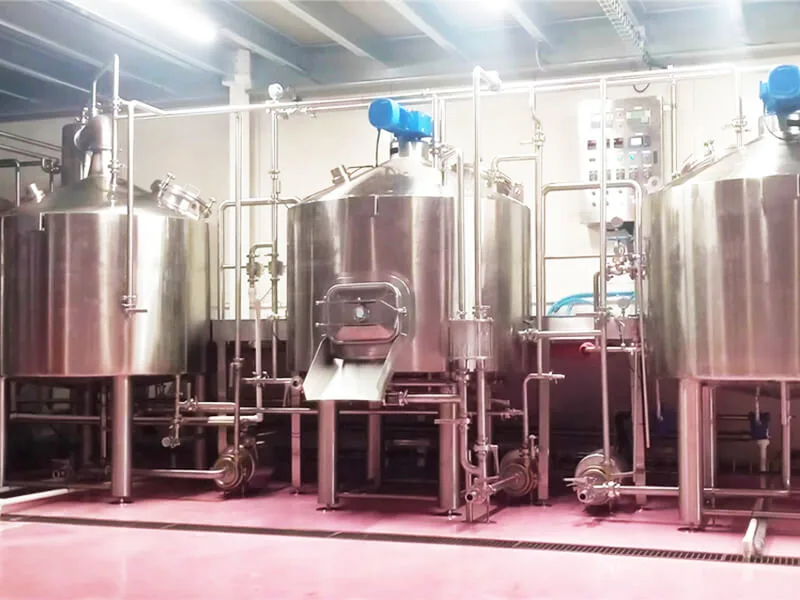
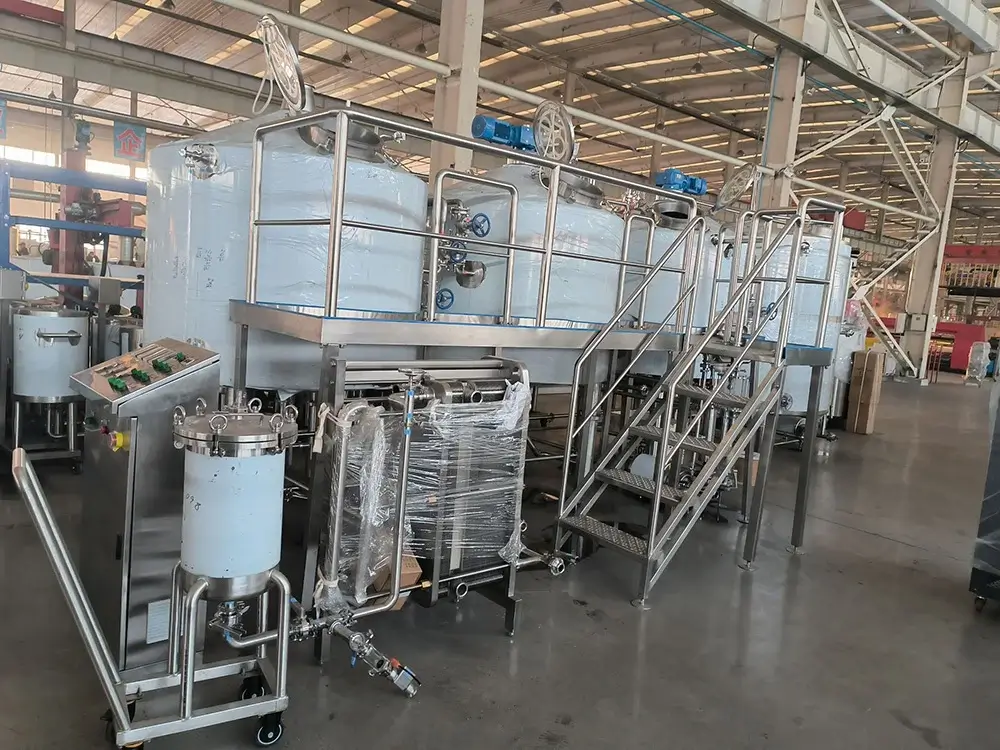
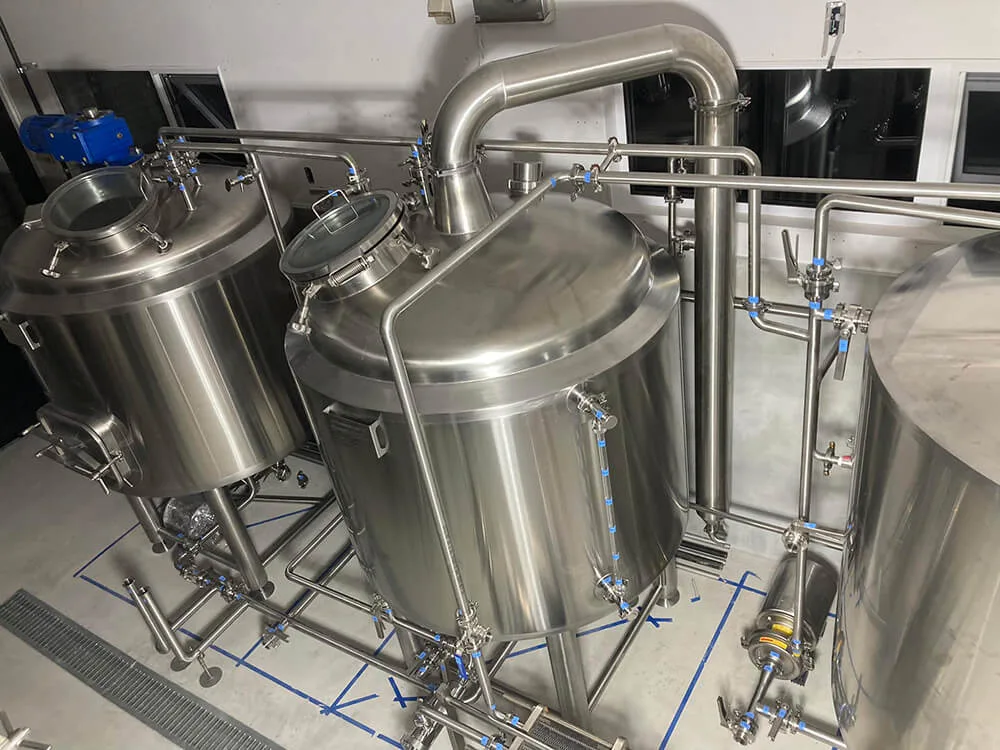
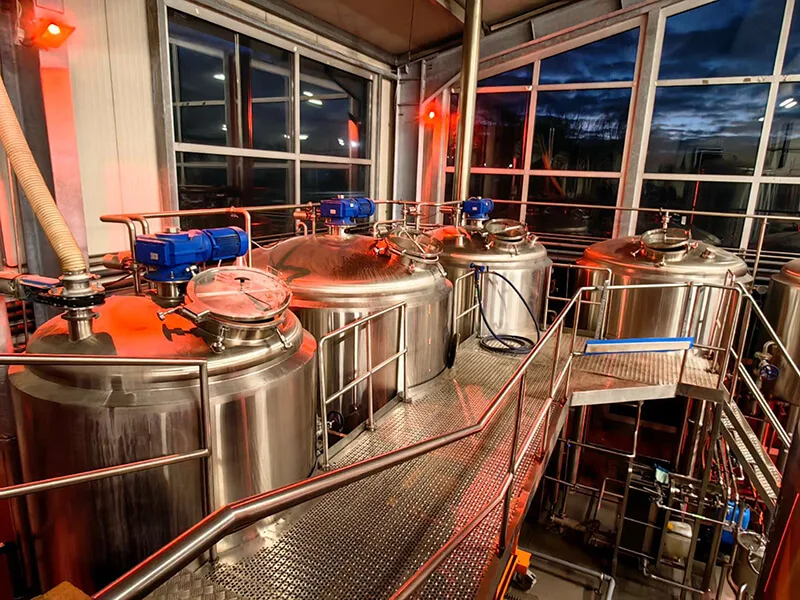
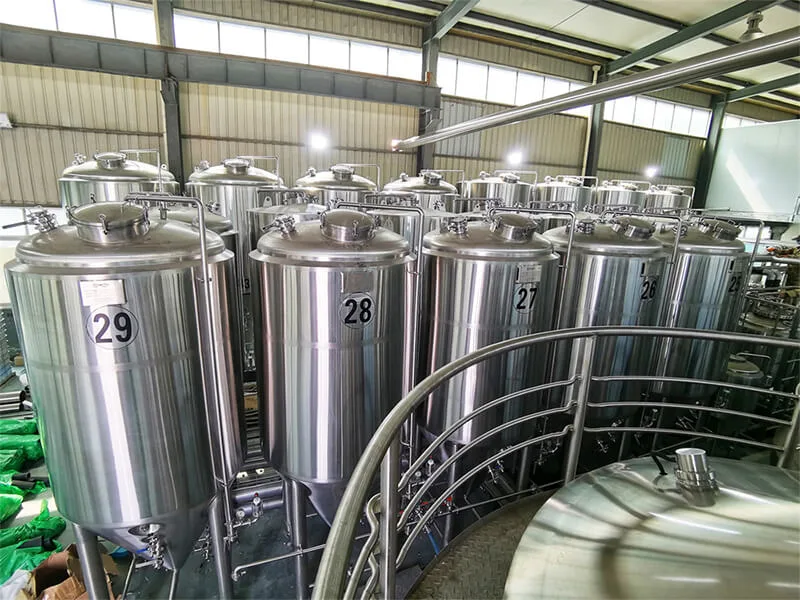
Mature turnkey brewing systems adopt modular design, consisting of five core units that form a closed-loop production system. The first is the raw material processing unit, equipped with malt mills and conveying devices to achieve precise milling and dust-free transportation, ensuring efficient mashing. The second is the mashing and brewing unit, composed of mash tun, boiling kettle, whirlpool tank and cold water tank, completing the core wort preparation process. The third is the fermentation and temperature control unit, including fermenters, constant-temperature refrigeration units and high-precision temperature sensors to accurately regulate fermentation temperature and pressure, determining the final beer flavor. The fourth is the post-processing unit, fitted with filtration devices, foam stabilization equipment and CO2 pressure regulation systems to optimize beer taste and clarity. The fifth is the sterilization and filling unit, equipped with CIP cleaning systems, sterilization equipment and keg/bottling lines to guarantee food safety and standardized packaging.
In terms of materials and craftsmanship, mainstream turnkey equipment adopts food-grade 304 and 316L stainless steel with mirror-polished inner surfaces. This design eliminates sanitary dead corners, delivers excellent corrosion resistance and easy cleaning, and extends the service life to more than 15 years. All welding processes comply with food hygiene standards to prevent microbial growth in gaps and meet national food safety regulations. For control systems, small-scale units adopt simple electric control panels for easy operation, while medium and large-scale production lines are equipped with PLC intelligent control systems to realize automatic operation and real-time parameter monitoring, significantly reducing labor dependence.
3. Brewery Scale and Turnkey Configuration Standards
Turnkey brewing equipment is not a fixed standardized package but a customized solution tailored to a brewery’s production capacity and operational positioning. Equipment combinations, unit specifications and supporting systems vary greatly according to factory scale, and precise configuration matching is critical to stabilizing output, controlling costs and adapting to actual production scenarios. The industry categorizes breweries into four types by daily and annual output, with dedicated turnkey configurations for each category.
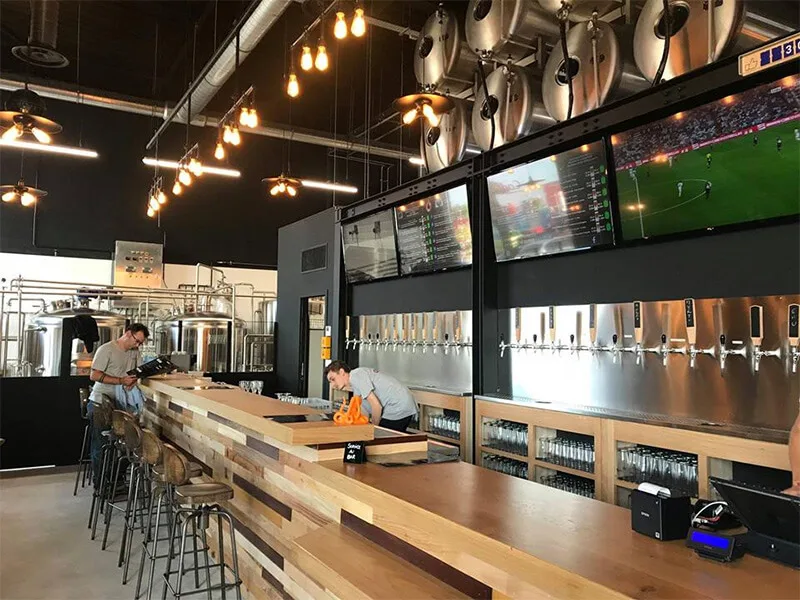
Micro-brewing scenarios mainly apply to catering stores and experience-based mini breweries with a daily output of 50 to 500 liters. The core configuration adopts an integrated mashing and fermentation unit with simplified pipelines and auxiliary equipment. Without complex filling systems, it focuses on draft beer sales, featuring small footprint, simple operation and low investment, perfectly suited for small-scale experiential operation.
Small commercial craft breweries with a daily output of 1 to 5 tons represent the mainstream market configuration. They adopt two-vessel or three-vessel mashing systems, matched with standardized fermenter groups, independent refrigeration systems, semi-automatic CIP cleaning equipment and basic filling devices. This setup supports small-batch and multi-category beer production, balancing operational flexibility and mass production capacity for regional craft beer brands.
Medium-sized mass-production breweries have a daily output of 5 to 20 tons, equipped with four-vessel mashing systems, full-automatic temperature and pressure control systems, high-capacity fermenters, precision filtration equipment and automatic filling lines. Supporting independent power distribution, refrigeration and sewage treatment systems, they deliver stable large-scale production for national craft beer brands and medium-sized beer manufacturers.
Large industrial breweries with a daily output of over 20 tons adopt integrated large-scale mashing units and fully automated linked production lines. Equipped with cloud data monitoring systems, full-automatic CIP cleaning systems and sterile filling workshop facilities, they realize unmanned and standardized mass production for large-scale beer enterprises.
All configurations follow the principle of “capacity matching and moderate redundancy”, avoiding quality problems caused by equipment overload and resource waste from excessive redundancy. Meanwhile, reserved upgrade space allows additional units and automated system updates to adapt to future capacity expansion.
4. Facility Requirements for Turnkey Brewing Systems
The stable operation of turnkey brewing systems relies on standardized supporting facilities including sites, water and power supply, and environmental control. Perfect infrastructure maximizes equipment performance, reduces operational failures and prolongs service life, serving as a prerequisite for official brewery operation. Most operational stalling and equipment faults in startup breweries stem from unreasonable pre-construction facility planning.
For site layout, sufficient space shall be reserved according to equipment specifications, with clear functional division of brewing area, fermentation area, filling area, raw material warehouse and finished product storage area. The ground must be anti-slip, anti-corrosive and waterproof, and wall surfaces shall adopt easy-to-clean food-grade materials. Maintenance passages for pipelines and equipment must be reserved, and floor height and load-bearing capacity shall meet the installation and operation requirements of large tank equipment to avoid commissioning obstacles caused by site limitations.
Water and power supply are core basic guarantees. The water supply must conform to food production standards with stable water pressure and purified water quality, equipped with a circulating water system to meet the water demand of mashing, cleaning and cooling processes. The power supply shall be configured with dedicated circuits and voltage stabilizers according to total equipment power, and medium and large production lines require three-phase industrial power to prevent equipment shutdown and parameter deviation caused by voltage fluctuation. In addition, independent drainage systems and pre-treatment facilities for brewing wastewater are required to meet environmental discharge standards.
In terms of environmental supporting facilities, fermentation workshops need constant temperature, constant humidity, dust-proof and sterile management to prevent microbial contamination from affecting fermentation quality. Ventilation equipment shall be installed to discharge water vapor and peculiar smell generated during brewing. Independent refrigeration rooms, power distribution rooms and dry and ventilated raw material warehouses are necessary to prevent moisture deterioration of malt and hops. Mass-production breweries also need complete fire-fighting facilities to comply with industrial safety specifications.
5. How to Select a Turnkey Brewing Equipment Supplier
A supplier’s comprehensive strength directly determines equipment quality, project delivery effect and long-term operation and maintenance costs, which is the core link in building a high-quality brewing production line. The market features uneven supplier qualifications, technical capabilities and service levels. Buyers should avoid focusing solely on low prices and conduct comprehensive screening from five dimensions: qualification, technical strength, project cases, service system and customization capability.
First, verify supplier qualifications and production capacity. Formal manufacturers must hold valid food machinery production certifications and industry inspection credentials, with independent production workshops and R&D teams to support self-designed and self-manufactured equipment, rather than OEM products. On-site factory inspections are recommended to verify production craftsmanship and material quality, preventing shoddy and substandard equipment.
Second, prioritize suppliers with rich industry experience and mature practical cases. Manufacturers with long-term engagement in the brewing equipment industry and numerous successful cases of similar-scale breweries are more reliable. Field visits to their cooperative breweries can intuitively verify equipment operation stability, capacity compliance and flavor adaptability, avoiding risks brought by insufficient practical experience and defective equipment design.
Customization and process adaptation capabilities are key evaluation indicators. High-quality suppliers avoid rigid template solutions. They can optimize equipment parameters, pipeline layout and temperature control logic according to clients’ site size, capacity planning and beer categories (pale lager, stout, fruit craft beer, etc.), while providing mature brewing formula support to help clients launch high-quality products quickly.
Finally, evaluate the full-cycle service system. A complete turnkey service covers pre-project site planning, scheme design, equipment manufacturing, logistics transportation, on-site installation, commissioning and production launch, staff technical training, long-term technical guidance and equipment maintenance. Many low-end suppliers only sell equipment without installation, commissioning and technical training, resulting in low equipment utilization and delayed production launch for buyers.
6. Cost Analysis of Turnkey Brewing Systems
The total investment of a turnkey beer brewing system covers multiple dimensions rather than mere equipment procurement fees, including equipment purchase, installation and commissioning, site supporting construction, operation and maintenance consumables, and personnel training costs. Production lines with different capacities and configuration grades have huge cost gaps, and a clear cost structure analysis helps investors formulate reasonable budgets and control return on investment.
Core equipment procurement accounts for 60% to 70% of the total investment. The cost of micro-brewing equipment ranges from tens of thousands to hundreds of thousands of yuan. Small commercial craft brewing production lines cost 800,000 to 3 million yuan, medium-sized mass-production lines cost 3 to 10 million yuan, and large industrial production lines require an investment of over 10 million yuan. Equipment automation level, material specifications and manufacturing craftsmanship are core price factors. Fully intelligent automatic production lines are about 30% more expensive than semi-automatic equipment, and 316L stainless steel equipment has higher costs than ordinary 304 stainless steel products.
Supporting construction costs account for 15% to 20% of the total investment, including site renovation, water and power pipeline laying, refrigeration system construction, sterile environment transformation and environmental protection facility matching. The supporting renovation cost of old factories is generally higher than that of newly built factories, and personalized site layout will also increase construction costs moderately.
Service and operation and maintenance costs account for 10% to 15%, covering installation and commissioning fees, technical training fees, first-year warranty services, as well as annual maintenance, consumable replacement (sealing rings, filter elements, cleaning agents) and equipment inspection fees. Formal turnkey projects include free installation, commissioning and initial training, with controllable long-term maintenance costs. The annual maintenance expense is about 3% to 5% of the total equipment value.
Overall, although turnkey solutions require higher initial investment than scattered equipment procurement, they eliminate implicit costs such as equipment adaptation debugging, process exploration and multi-supplier after-sales coordination. They deliver higher overall cost performance and better budget controllability, making them more suitable for large-scale brewery investment and construction.
7. Maintenance Guidelines for Turnkey Beer Brewing Equipment
Standardized and scientific daily maintenance is essential to ensure stable equipment operation, extend service life and maintain consistent beer quality. Turnkey brewing systems are sophisticated integrated structures consisting of mechanical, electric control, temperature control and pipeline systems, requiring a standardized and normalized maintenance system divided into daily inspection, periodic maintenance and annual overhaul.
Daily basic maintenance is mandatory after each production run. The CIP in-place cleaning system must be activated to fully clean and disinfect mashing equipment, fermenters, pipelines and filling devices, eliminating residual malt and beer liquid to prevent bacterial contamination of subsequent production batches. Daily inspections shall be conducted on equipment pressure, temperature, liquid level and other core parameters, with timely troubleshooting of pipeline leakage, abnormal noise of water pumps and motors. Equipment surfaces shall be kept clean and dry at all times.
Regular maintenance is carried out on a weekly and monthly basis. Weekly work includes inspecting and replacing aging or damaged vulnerable parts such as sealing rings, gaskets and filter components to prevent liquid leakage and bacterial intrusion caused by poor sealing. Monthly maintenance covers calibration of refrigeration units, temperature sensors and electric control systems, dust cleaning of refrigeration equipment, circuit stability inspection and lubrication of transmission parts to ensure accurate operating parameters and smooth mechanical operation.
Annual in-depth overhaul requires scheduled shutdown for comprehensive internal inspection of core equipment, detection of tank welds and pipeline aging, and overall debugging and upgrading of control, refrigeration and cleaning systems to eliminate potential hidden faults. Meanwhile, equipment operating data is analyzed to optimize operational parameters and adapt to regular production rhythms.
In addition, all operations must comply with equipment specifications, prohibiting illegal operation and overload production. Operators must hold valid certificates and be proficient in maintenance specifications. A complete file of equipment operation, maintenance and overhaul records shall be established for traceable management, minimizing equipment downtime risks.
8. Eight Core Innovations of Turnkey Brewing Equipment
With the upgrading of the craft beer industry and iteration of industrial intelligent manufacturing technology, new-generation turnkey beer brewing equipment has overcome the technical shortcomings of traditional equipment. It achieves innovative upgrades in intelligence, energy saving, sanitation and adaptability, greatly improving production efficiency and product quality, with eight core innovative advantages.
1. Intelligent automatic temperature control system. Replacing traditional manual temperature adjustment, it is equipped with high-precision temperature sensing modules. Pre-set fermentation temperature curves for different beer types realize automatic full-process temperature regulation for mashing, fermentation and cooling, with a temperature error within ±0.5℃, completely solving flavor instability caused by manual temperature control deviations.
2. Integrated CIP in-place cleaning technology. The upgraded closed-loop cleaning system supports full-pipeline and full-tank automatic cleaning, acid-base disinfection and water rinsing without equipment disassembly. It achieves dead-angle-free cleaning, reduces water and chemical consumption by more than 30%, shortens cleaning cycles and improves production turnover efficiency.
3. Modular flexible configuration design. The detachable modular structure allows flexible addition of fermenters and expansion of mashing units according to capacity demands, without replacing the entire production line. It adapts to both small-batch customized production and large-scale mass production, reducing subsequent renovation and upgrading costs.
4. Dust-free precision milling technology. The fully enclosed dust-free malt mill features adjustable and uniform milling fineness according to malt types and brewing processes, improving wort extraction rate, reducing raw material waste and eliminating on-site dust pollution.
5. Energy-saving circulating refrigeration system. Equipped with waste heat recovery and water circulation reuse devices, it recycles heat generated during mashing and boiling for cold water preheating, reducing overall energy consumption by 25% to 35% and cutting long-term operational energy costs for breweries.
6. Cloud-based data monitoring system. Mid-to-high-end equipment is integrated with IoT cloud technology to synchronize real-time equipment operation, production and energy consumption data. Remote monitoring via mobile phones and computers and automatic abnormal alarm functions realize intelligent production management and facilitate process optimization through data analysis.
7. Aseptic sealing technology. Equipment interfaces adopt sanitary quick-fitting structures with ultra-fine polished inner walls and negative pressure anti-pollution design, fundamentally preventing microbial contamination, improving beer stability and extending shelf life.
8. Multi-category process adaptation capability. The system is pre-installed with diverse process programs for craft beer and industrial beer, supporting rapid switching between lager, stout, wheat beer and fruit beer production with minimal parameter adjustment, meeting diversified market product demands.
9. Frequently Asked Questions
Q1: What is the core difference between turnkey brewing equipment and ordinary customized equipment?
The core difference lies in service completeness and equipment compatibility. Ordinary customized equipment only provides single or multiple standalone devices without overall systematic planning, requiring buyers to complete equipment matching, pipeline docking and process debugging independently. In contrast, turnkey solutions deliver full one-stop services including scheme design, equipment matching, installation commissioning and after-sales operation guidance. All equipment is pre-tested for compatibility and process adaptability by manufacturers, enabling faster production launch and lower failure rates.
Q2: Is a turnkey solution necessary for small craft breweries?
It is highly necessary. Most small brewery teams lack professional experience in equipment planning and process debugging. Scattered equipment procurement easily leads to compatibility problems, prolonged construction cycles and increased trial-and-error costs. Turnkey solutions feature controllable investment and fast project delivery, helping startup breweries put into production quickly and avoid technical and equipment risks, making it the most cost-effective factory construction mode.
Q3: Can turnkey equipment be upgraded and expanded in the later stage?
Yes. Turnkey brewing systems from formal brands reserve complete expansion interfaces and upgrade space. The modular design supports subsequent addition of fermenters, upgrade of automatic control systems and installation of new filling equipment without replacing core main units, enabling phased upgrades to adapt to enterprise capacity growth and long-term development.
Q4: What is the service life of the equipment? What are the key factors affecting service life?
High-quality food-grade stainless steel turnkey equipment has a standard service life of 15 to 20 years. The core factors affecting lifespan are daily maintenance, water quality conditions and operational standardization. Incomplete long-term cleaning, irregular operation and water corrosion will greatly shorten equipment service life, while standardized maintenance can sustain optimal equipment performance for a long time.
Q5: Does the turnkey package include brewing technical training and formula support?
Complete turnkey services from formal suppliers include free professional technical training, covering equipment operation, process debugging, daily maintenance and fault troubleshooting. Basic standard brewing formulas are provided for free, and high-quality suppliers can customize exclusive flavor formulas according to client demands to help create differentiated market products.
10. Conclusion
Amid the refined, standardized and intelligent development of the global beer industry, turnkey beer brewing equipment solves the core industry pain points of high factory construction thresholds, difficult equipment matching, cumbersome process debugging and high operational costs, relying on its core advantages of one-stop delivery, strong adaptability, stable quality and convenient maintenance. It has become the optimal solution for all types of brewery construction projects.
Customized turnkey configuration schemes can accurately adapt to operational scenarios ranging from micro in-house brewing stores to large-scale industrial breweries. Supported by continuous technological innovation, the equipment’s advantages in intelligence, energy conservation and product diversification are constantly highlighted. For investors, reasonable capacity matching, reliable supplier selection and standardized daily maintenance can maximize the value of turnkey systems, shorten production cycles, stabilize product quality and control operational costs, laying a solid foundation for long-term stable brewery operation. In the future, with the continuous iteration of intelligent manufacturing technology, turnkey brewing systems will develop toward higher intelligence, better energy efficiency and stronger flexibility, empowering high-quality development of the global beer brewing industry.
Have questions about your brewery equipment project? You can tell us your requirements for the brewery, and we will provide you with a turnkey solution within 24 hours.