How to Design a Small Commercial Winery | Equipment & Process Guide

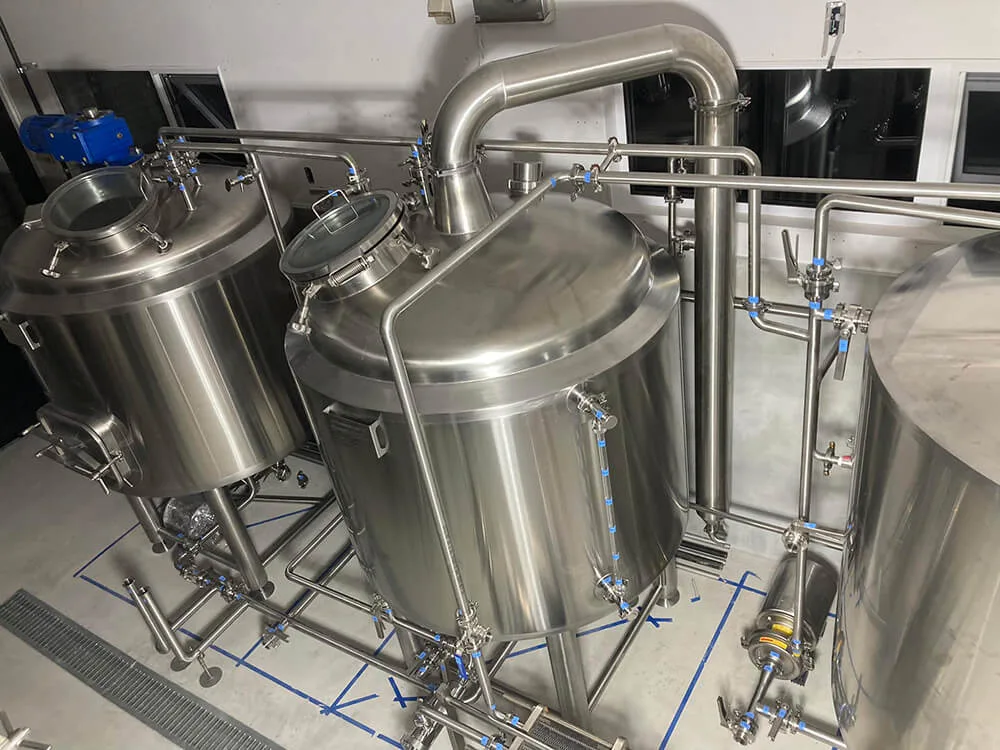
50l winery equipment 1

Designing a small commercial winery requires more than choosing a few fermentation tanks. The production capacity, grape processing method, fermentation process, aging, blending, filtration, cooling, cleaning, and packaging should be considered as one integrated system.

For a small winery, the objective is usually to create a system that is compact, practical, easy to operate, and flexible enough to support future growth.

The right configuration depends on the wine styles, annual production target, batch size, available building space, utilities, labor, and production process.

1. Define Your Winery Production Target

The first step is to determine how much wine you plan to produce.

Your production target affects:

  • Grape processing capacity
  • Fermentation tank capacity
  • Aging and storage capacity
  • Cooling requirements
  • Filtration capacity
  • Packaging capacity
  • CIP system size

It is important to distinguish between tank capacity and annual production.

For example, a 1,000L fermentation tank does not mean that a winery can only produce 1,000L of wine per year. Multiple tanks and production cycles can significantly increase annual output.

For small wineries, several smaller tanks can also provide greater flexibility for different grape varieties, recipes, and fermentation batches.

2. Map the Complete Wine Production Process

Before selecting equipment, define the complete production route.

A typical small commercial winery may follow:

Grape Receiving → Crushing/Destemming → Pulping or Pressing → Buffering → Fermentation → Aging → Blending → Filtration → Storage → Packaging

Not every winery needs every process or machine. The configuration should be based on the actual wine styles and production method.

The equipment layout should follow the process flow as much as possible. This reduces unnecessary material handling and makes cleaning and maintenance easier.

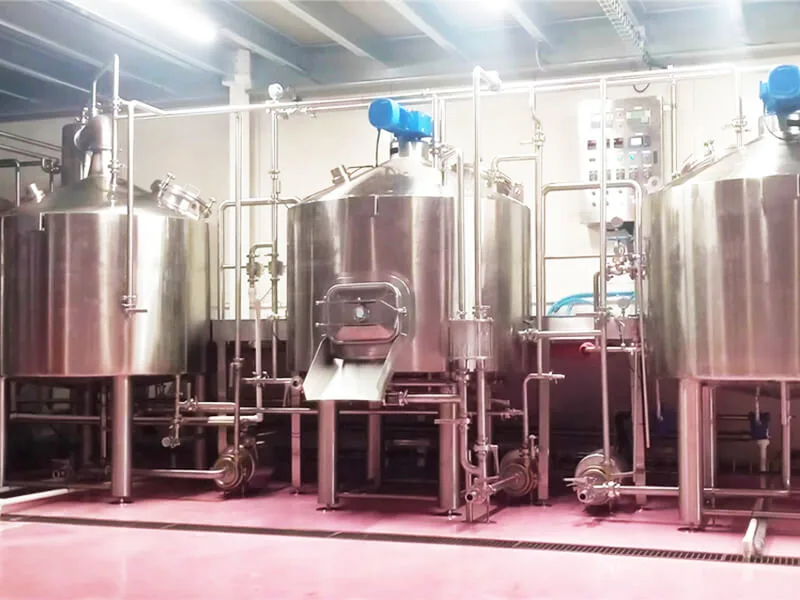
3. Choose the Right Fermentation Tanks

Fermentation tanks are at the center of winery production.

Stainless steel tanks are widely used because they provide:

  • Hygienic surfaces
  • 耐腐蚀性
  • Easy cleaning
  • 温度控制
  • Long service life
  • Flexible capacity options

For a small winery, using several tanks instead of one large vessel can make production more flexible.

For example, separate tanks can be assigned to different grape varieties, batches, or wine styles.

Jacketed fermentation tanks can also provide temperature control during fermentation, which is important when consistent fermentation conditions are required.

50l winery equipment 5

4. Plan Fermentation and Aging Capacity Together

Fermentation capacity should not be considered independently from aging and storage capacity.

After fermentation, wine may remain in tanks for clarification, maturation, blending, or temporary storage before filtration and packaging.

A practical system may therefore include:

Fermentation Tanks → Aging Tanks → Blending Tank → Filtration → Finished Wine Storage

The required number of tanks depends on:

  • Annual production
  • Harvest season
  • Fermentation time
  • Aging time
  • Tank turnover
  • Number of wine varieties

If a winery processes several grape varieties, multiple smaller tanks can provide more production flexibility.

5. Design the Pre-Treatment System

The front end of the winery needs to match the downstream fermentation capacity.

Depending on the raw materials and wine style, pre-treatment may include:

  • Destemming
  • Crushing
  • De-stoning
  • Pulping
  • Pressing
  • Buffering
  • Juice transfer

For example, a fruit wine production system may require additional fruit processing compared with a traditional grape winery.

The processing equipment should be selected according to the expected raw material volume and batch size.

Oversized pre-treatment equipment can increase investment and space requirements, while undersized equipment may become a production bottleneck.

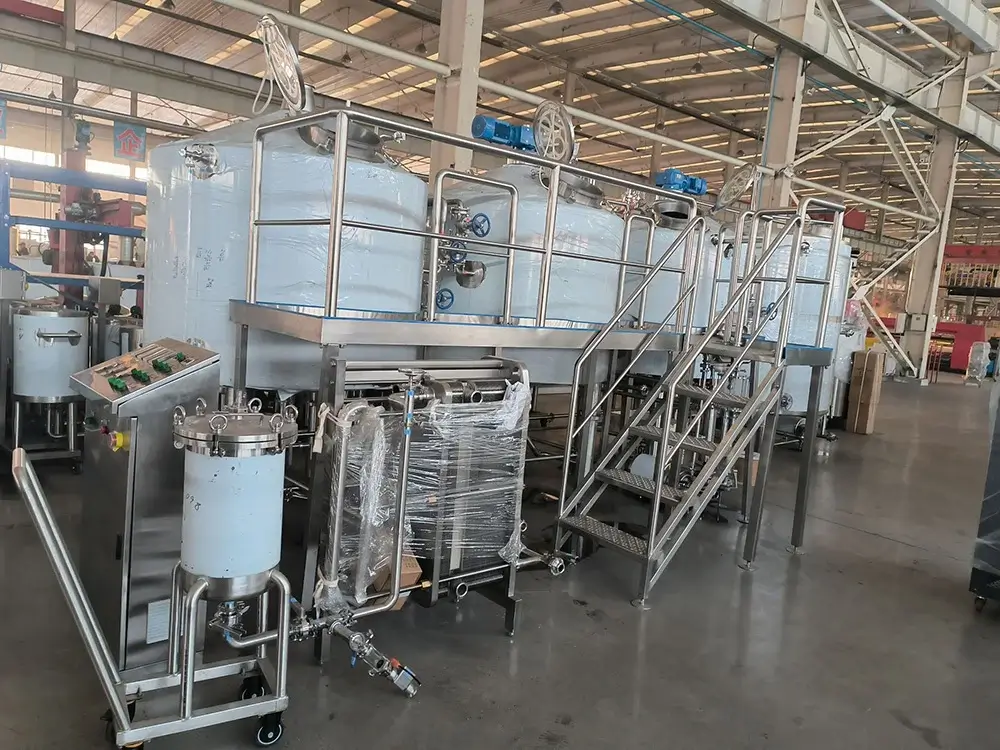
6. Use Buffer Tanks to Connect Different Process Stages

Buffer tanks can provide useful flexibility between raw material processing and fermentation.

They can temporarily hold juice or processed material before it is transferred to fermentation tanks.

For small production systems, a properly sized buffer tank can help coordinate equipment with different processing capacities.

Tank material, working volume, temperature control, fittings, and transfer connections should be selected according to the product and process.

7. Control Fermentation Temperature

Temperature control is one of the key considerations in winery design.

Depending on the wine and fermentation process, fermentation tanks may require cooling.

A typical cooling system can include:

  • 乙二醇冷水机组
  • Cooling tank or buffer tank
  • Circulation pumps
  • Jacketed fermentation tanks
  • Temperature sensors
  • 控制系统

The cooling capacity should be calculated according to the number and size of tanks, fermentation conditions, ambient temperature, and production schedule.

For small commercial wineries, centralized cooling can provide temperature control for multiple tanks while keeping the system relatively compact.

8. Plan Aging and Storage Tanks

After fermentation, wine may require additional time for aging, clarification, or stabilization.

Aging tanks can be designed with temperature control when required.

The capacity should be based on the expected wine volume and residence time.

For example, if wine remains in storage for several weeks or months, storage capacity may need to be significantly greater than the volume processed in a single fermentation batch.

This is one reason why winery equipment design should consider the complete production cycle rather than only fermentation capacity.

9. Include Blending and Filtration

Blending and filtration can be important stages before final storage or packaging.

A blending tank can provide controlled mixing of different wine batches or ingredients.

Depending on the product requirements, filtration may include:

  • Cartridge or duplex filtration
  • Membrane filtration
  • Other suitable sanitary filtration systems

The filtration system should be selected according to the required flow rate, wine characteristics, and final product specifications.

For smaller wineries, modular filtration equipment can provide flexibility without requiring a large footprint.

10. Design the CIP Cleaning System

Cleaning should be considered from the beginning of the winery design.

Tanks, pumps, transfer lines, filtration equipment, and other process components require regular cleaning and sanitation.

A CIP system may include:

  • CIP tank
  • Cleaning pump
  • Spray devices
  • Piping
  • 阀门
  • 温度控制
  • 控制系统

The size and configuration depend on the number of tanks and equipment that need to be cleaned.

For a compact winery, a properly designed CIP system can improve cleaning consistency while reducing manual handling.

11. Consider Automation for Better Process Control

Even a small winery can benefit from automation.

A control system can monitor and control:

  • 发酵温度
  • 冷却
  • 泵的运行
  • 罐体温度
  • Transfer operations
  • CIP procedures

For example, PLC-based control with an HMI touchscreen can allow operators to monitor several fermentation tanks from a central interface.

The appropriate automation level depends on the production scale, labor availability, process complexity, and budget.

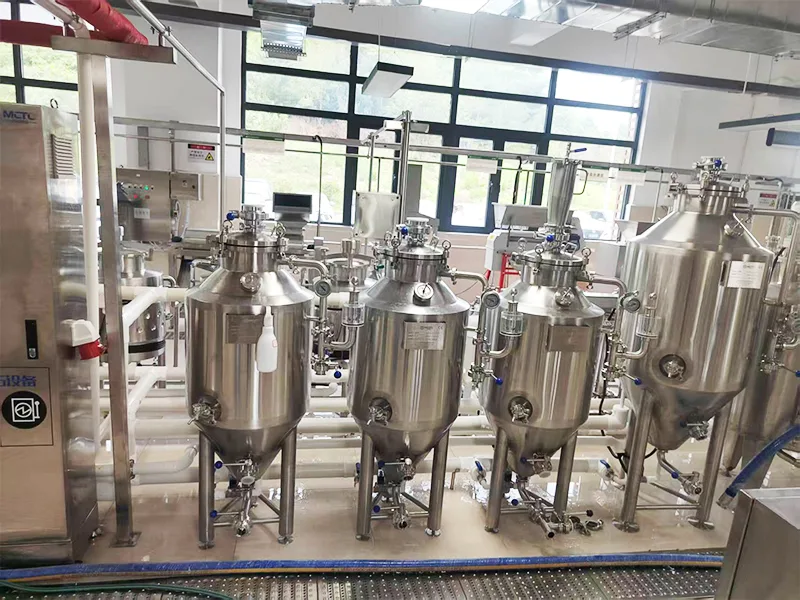
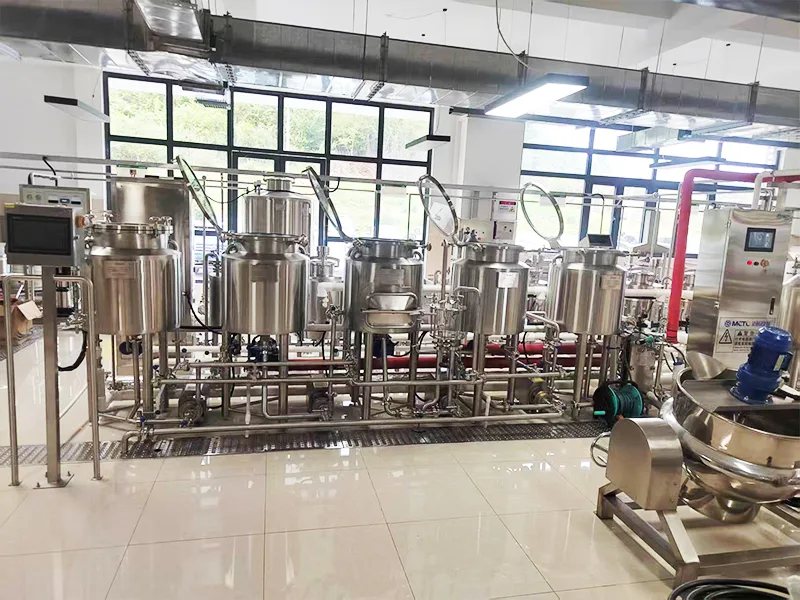
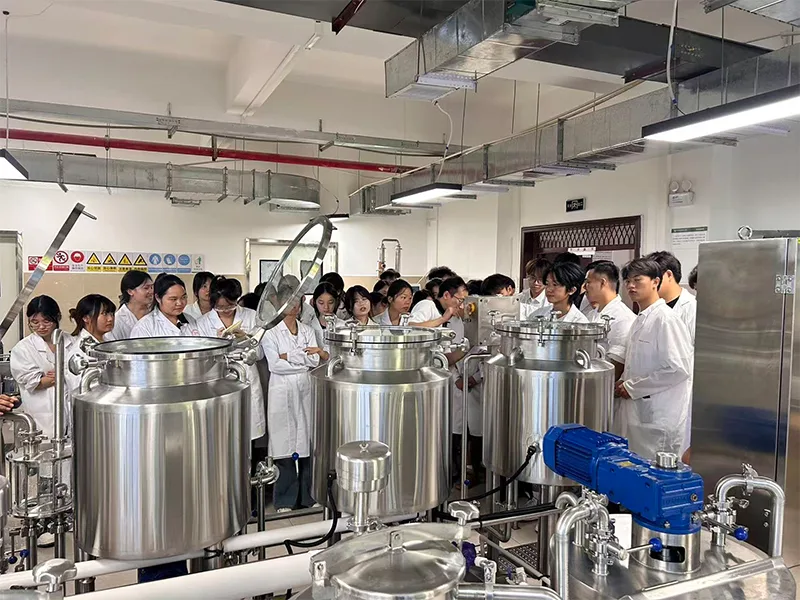
12. Real Project Example: A 50L Fruit Wine Training Production System

A practical example of small-scale winery system design can be seen in a recent METO project for Guizhou Vocational College of Food Engineering in China.

The project was developed as part of a food biotechnology comprehensive training center and included a dedicated 50L fruit wine brewing training system.

Although the project was designed for teaching and process training rather than commercial production, its configuration demonstrates how a complete small-scale wine process can be organized around a compact production capacity.

The fruit wine system covers:

Pre-Treatment → Fermentation → Aging → Blending → Filtration → CIP Cleaning

Its core configuration includes:

  • Destemmer-crusher
  • De-stoning pulper
  • 50L buffer tanks
  • 50L sealed press with nitrogen protection
  • Four 50L fermentation tanks
  • Two 50L aging tanks
  • 50L blending tank
  • Duplex filtration
  • Membrane filtration
  • Material transfer pumps
  • 100L CIP system
  • Siemens PLC and touchscreen control

The fermentation tanks use stainless steel construction with jacketed cooling and temperature control. The aging tanks also include temperature control, while the sealed pressing and transfer design supports reduced oxygen exposure during processing.

This project demonstrates an important principle for small winery design: equipment capacity should be matched to the process flow rather than selected as isolated machines.

The same design principle can be applied when developing a larger commercial winery. The equipment capacities can be increased while maintaining the same basic process logic.

50l winery equipment 3

13. Design the Winery Layout Around the Process

A small commercial winery should make efficient use of available space.

A typical layout may include:

Raw Material Area
Grape or fruit receiving, crushing, destemming, and processing.

发酵区
Fermentation tanks and temperature-control equipment.

Aging and Storage Area
Aging tanks, storage tanks, and finished wine holding.

Filtration and Blending Area
Blending, filtration, and transfer equipment.

Packaging Area
Bottling, labeling, and finished-product handling.

Utility Area
Cooling, CIP, water treatment, electrical equipment, and other utilities.

Adequate working space should be left around tanks for operation, inspection, cleaning, and maintenance.

Before ordering equipment, also check:

  • Door dimensions
  • Ceiling height
  • Floor loading
  • 排水
  • Equipment access
  • Utility connection locations

14. Plan Utilities Before Equipment Installation

The site should be prepared before equipment arrives.

Depending on the winery configuration, utilities may include:

  • Process water
  • Electrical power
  • 冷却
  • Compressed air
  • 排水
  • 通风
  • Cleaning utilities

The exact requirements depend on the equipment configuration and local conditions.

Water and drainage are particularly important because winery operations involve frequent cleaning and liquid transfer.

Electrical requirements should include pumps, cooling systems, control cabinets, filtration equipment, and packaging machinery.

15. Plan for Future Expansion

A small winery may eventually increase production.

When designing the initial system, consider whether the site can accommodate:

  • 额外的发酵罐
  • Larger aging tanks
  • Increased cooling capacity
  • Additional storage
  • Larger CIP systems
  • Higher-capacity filtration
  • Packaging upgrades

A modular design can make future expansion easier.

For example, a winery may begin with several 500L or 1,000L fermentation tanks and later add 2,000L, 5,000L, or larger vessels.

Leaving suitable space and utility capacity during the initial project can reduce the cost and disruption of future expansion.

16. Work with a Winery Equipment Manufacturer

A small commercial winery is an integrated production system rather than a collection of individual tanks.

Fermentation, aging, blending, filtration, cooling, CIP, transfer, and packaging should be designed together.

Working directly with a winery equipment manufacturer can help coordinate:

  • Equipment capacity
  • Tank configuration
  • Process layout
  • Utility requirements
  • Piping connections
  • 制冷量
  • CIP design
  • 自动化
  • Installation requirements

METO designs and manufactures stainless steel tanks and customized beverage processing equipment for wine, fruit wine, beer, kombucha, and other fermentation applications.

Its equipment range can cover fermentation tanks, aging tanks, storage tanks, blending tanks, filtration systems, CIP systems, cooling systems, pumps, and control systems.

The 50L fruit wine training project at Guizhou Vocational College of Food Engineering is one example of how METO can integrate multiple process stages into a complete compact system.

For commercial winery projects, the same engineering approach can be scaled to larger capacities according to the customer’s production target and site conditions.

Small Commercial Winery Equipment Checklist

Before requesting a quotation, prepare the following information:

ItemWhat to Confirm
Annual productionTarget wine output
Raw materialsGrapes, fruit or other materials
Wine stylesRed, white, rosé, fruit wine, etc.
Batch sizeTarget volume per production cycle
发酵Tank size and quantity
AgingRequired storage and aging capacity
冷却Temperature-control requirements
FiltrationRequired filtration method and flow rate
清洁Manual or CIP
包装Bottling requirements
BuildingFloor space and ceiling height
公用设施Water, electricity, cooling and drainage
ExpansionFuture production target

Final Considerations

Designing a small commercial winery starts with the production process and target output, not simply the size of the fermentation tanks.

A practical system should connect raw material processing, fermentation, aging, blending, filtration, cleaning, cooling, and packaging into one coordinated workflow.

The 50L fruit wine training system supplied by METO demonstrates how even a compact production platform can cover the complete process from raw material pre-treatment through fermentation, aging, blending, filtration, and CIP cleaning.

For commercial projects, this same process-based approach can be scaled to larger tank capacities and production targets.

If you are planning a small winery or fruit wine production project, provide your target capacity, raw materials, wine styles, available space, and future production plans. METO can develop a customized winery equipment configuration around your process.

滚动至顶部

获取报价

联系我们