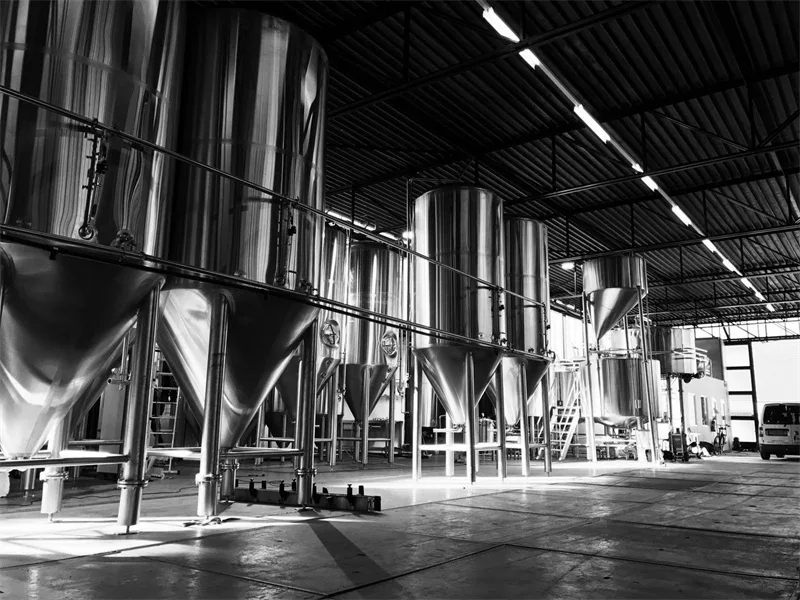
A beer fermentation tank is the sealed vessel where wort transforms into beer. It’s far more than just a container—it’s a meticulously engineered environment that nurtures yeast, converting simple sugars into a complex tapestry of flavors and aromas. A food-grade conical stainless steel fermenter provides the optimal environment for yeast, ensuring a clean fermentation process, easy yeast harvesting, and a seamless transition from primary fermentation to maturation—all while preserving the delicate aroma and flavor profile of your brew.
Faced with a dizzying array of equipment on the market, how do you choose the perfect fermentation tank for your brewery? This decision impacts not just your production capacity but the very soul of every drop of beer you craft.
How to Choose the Right Stainless Steel Fermentation Tank for Your Brewery
Choosing a fermentation tank goes far beyond just capacity. It needs to perfectly align with your production rhythm, beer styles, and long-term operational strategy.
Production Capacity Planning and Brewing Rhythm
The total fermentation capacity should typically be 3 to 6 times the single-batch output of your brewhouse to ensure continuous production. For example, a 500L brewhouse should ideally be paired with 1500L to 3000L of total stainless steel fermenter capacity.
When considering quantity versus flexibility, opting for a few very large tanks might lower the per-unit investment, but multiple medium-sized tanks offer superior flexibility. They allow you to brew various beer styles simultaneously and minimize financial loss if a single tank faces a contamination risk.
Geometric Design: Height-to-Diameter Ratio and Cone Angle
A taller tank increases the hydrostatic pressure on the yeast, which can suppress ester formation and stress the yeast. A balanced H/D ratio ensures stable yeast activity, leading to high batch-to-batch flavor consistency.
The standard cone angle is typically 60°. However, if your brewery plans on substantial yeast harvesting and repitching, a steeper 70° angle is recommended. This significantly improves yeast sedimentation and discharge efficiency, reducing the fermentation tank’s turnaround time.
Material Quality, Craftsmanship, and Pressure Rating
The tank body must be made of food-grade stainless steel. SS304 is the standard choice, offering excellent value. If your budget allows or your local water has higher acidity, SS316L offers superior corrosion resistance and a longer equipment lifespan.
A higher mechanical polishing precision with a lower Ra value—ideally Ra ≤ 0.4μm—creates an exceptionally smooth surface that resists microbial adhesion, drastically simplifying the cleaning process.
Modern craft brewing often requires unitank carbonation or pressure fermentation for certain Lagers or IPAs. Your stainless steel fermenter must have an adequate pressure rating, typically between 0.5 and 1.5 bar, and be equipped with a reliable pressure relief valve.
Temperature Control and Cooling System Design
For taller fermentation tanks, choosing one with multiple independently controlled cooling zones—such as upper, middle, and lower—is highly recommended. This design precisely manages the intense heat generated during peak fermentation, avoiding temperature overshoot and significantly reducing energy consumption.
A high-quality polyurethane foam insulation layer, typically around 100mm thick, is crucial. It guarantees absolute temperature stability, protecting the beer quality from external environmental fluctuations.
Hygienic Configuration and User-Friendly Details
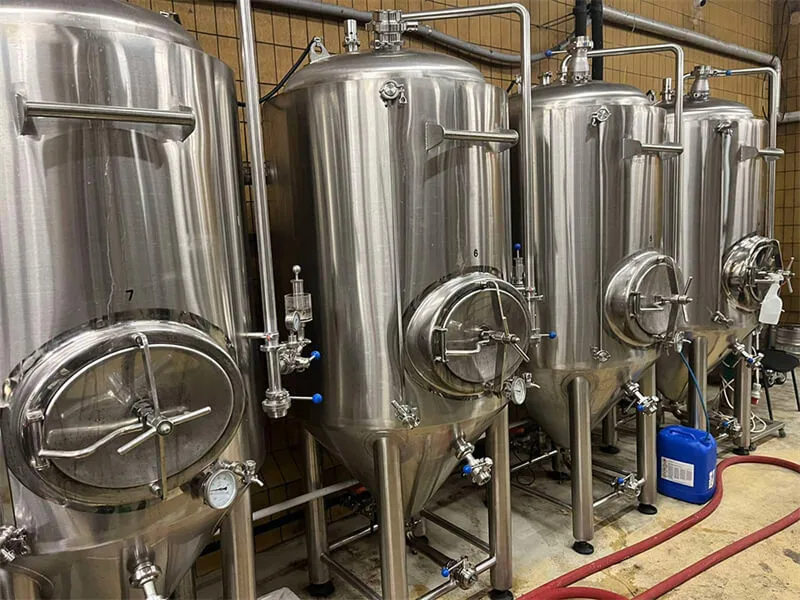
We strongly recommend selecting a stainless steel fermenter with a manway. A manway allows personnel to enter the tank for manual high-pressure washing and visual inspection, which is far more thorough at removing stubborn beer stone than relying solely on a CIP spray ball. This drastically reduces contamination risk.
Check for the standard inclusion of a sight glass, sampling valve, dry-hopping port essential for IPA brewing, and a vacuum relief valve to prevent the tank from collapsing during cleaning.
Why Conical Fermenters Are the Industry Standard
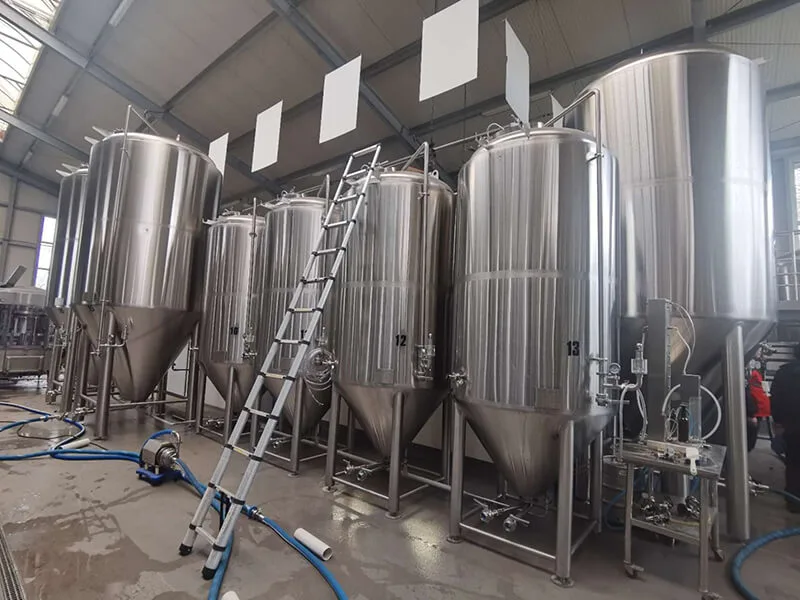
In modern breweries, the conical fermentation tank has become virtually standard equipment, with the unitank—capable of one-vessel processing—becoming increasingly popular.
Efficient gravity sedimentation allows yeast, proteins, and hop residue to naturally collect at the cone base for easy discharge, yielding clearer beer.
A modern conical stainless steel fermenter integrates primary fermentation, secondary maturation, carbonation, dry-hopping, and cold crashing all in one vessel. This eliminates the need to transfer beer between tanks, greatly minimizing oxidation and contamination risks.
The conical design also enables brewers to efficiently harvest clean, healthy yeast for propagation and repitching in subsequent batches—a significant advantage over flat-bottom fermenters.
How Precision Temperature Control Shapes Your Beer’s Flavor
Temperature is the most critical factor influencing yeast metabolism and the flavor compounds it produces. A fermentation tank with dimple plate or arcuate tube jackets, coupled with a glycol cooling system, can achieve precise temperature control of ±0.5°C.
Precise temperature control ensures yeast works in its optimal state, preventing the production of fusel alcohols that cause headaches and harsh flavors from excessive heat, or fermentation stall from overly cool conditions.
Different beer styles demand drastically different fermentation temperature profiles. Lagers require a low 8-12°C fermentation to maintain a clean, pure character, while Ales need 15-25°C to stimulate the production of fruity and floral esters.
In the late primary fermentation stage, a precise temperature ramp for a diacetyl rest effectively eliminates undesirable butterscotch flavors, accelerating maturation and shortening the overall brewing cycle.
After fermentation, the stainless steel fermenter must have the capability to rapidly drop the temperature to around 0°C. This cold crashing process precipitates residual yeast and proteins, significantly improving the beer’s colloidal stability.
Common Fermentation Tank Issues and Maintenance Guide
Owning a great piece of equipment is merely the starting point; scientific maintenance is what ensures long-term, reliable service.
Troubleshooting Common Failures
For temperature control malfunctions, check for blocked glycol lines, malfunctioning solenoid valves, and mis-calibrated temperature probes.
To address seal leaks, periodically inspect the gaskets on the manway door, sampling valve, and butterfly valve to prevent oxygen ingress or product leakage.
For pressure anomalies, ensure both the safety valve and the vacuum relief valve are unobstructed to prevent the fermentation tank from deforming due to negative pressure or over-pressurization.
Essential Maintenance and Upkeep Practices
Establish a standardized CIP cleaning process including rinse, alkaline wash, rinse, acid wash, and sanitize. Periodically perform a riboflavin test to verify that the spray ball provides complete, shadow-free coverage.
Regularly inspect the inner tank walls for scratches or rust spots. If necessary, perform an acid pickling and passivation treatment to prevent biofilm formation.
Check the insulation layer for moisture that leads to cooling capacity loss, and inspect jacket welds for cracks to ensure peak cooling efficiency.
Invest in the Right Stainless Steel Fermenter for Long-Term Brewing Success
Choosing a high-quality, precisely temperature-controlled stainless steel conical fermentation tank is a pivotal investment for increasing your brewery’s capacity, ensuring unwavering beer flavor stability, and achieving long-term profitability. Take the time to evaluate your specific brewing needs, and you will be rewarded with exceptional beer for years to come.
지금 바로 문의하세요 to discover how our brewery equipment and commercial craft brewing equipment can power your next brewery.