When scaling a craft brewery, success is rarely determined by recipes alone. The real challenge lies in engineering, execution, and long-term operational stability.
This case study showcases a fully integrated 5,000L brewery built for Craft Beer—demonstrating how a well-designed turnkey solution can deliver high productivity, consistent quality, and future scalability.
Project Overview: Designed for High Output and Flexibility
This brewery was built to meet aggressive production goals while maintaining the flexibility required for craft innovation.
Key Specifications
- Batch Size: 5,000 Liters (5KL)
- Daily Batches: 4–5
- Annual Capacity: 9,000 HL
- Brewhouse Configuration: 4-Vessel Fully Automatic
- Automation System: Siemens PLC + WINCC SCADA
This configuration allows the brewery to operate at near-industrial efficiency while retaining full control over recipe development.
The Production Journey: Unit by Unit
1. Malt Milling & Brewhouse: Precision at the Start
Consistency begins with raw material handling.
The system includes a dry milling unit (3,000 kg/h) integrated with:
- Malt elevator
- Flexible conveyor
- Grist hydrator
This ensures optimal grain conditioning, improved extract efficiency, and smoother lautering.
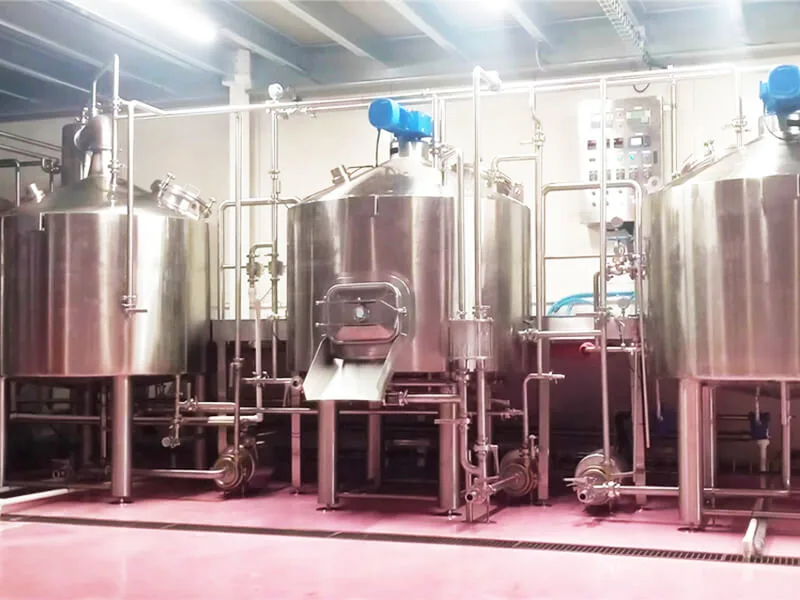
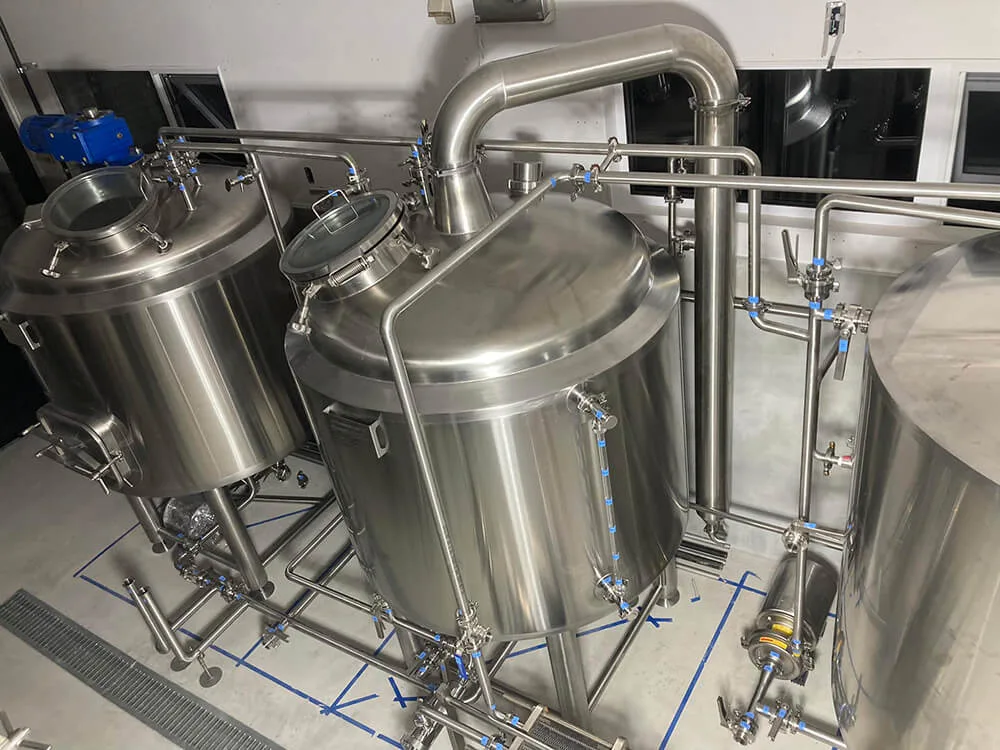
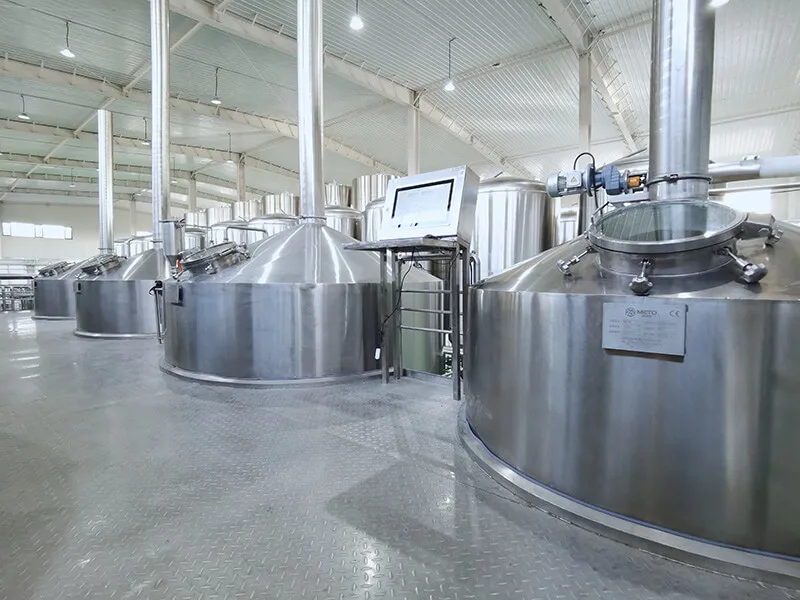
At the core is a 4-vessel brewhouse system:
- 泥浆池
- 烧结炉
- Brew Kettle
- 惠而浦水箱
This setup enables overlapping brewing cycles, significantly increasing daily output.
A pneumatic spent grain discharge system further improves:
- Labor efficiency
- Workplace safety
- Cleanliness
2. Fermentation System: Flexible Capacity for Growth
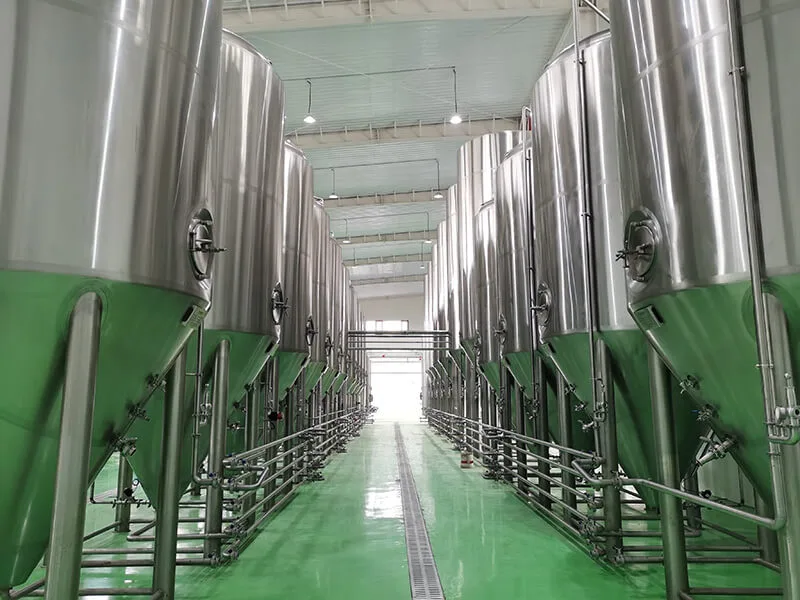
To support both flagship and seasonal beers, the brewery uses a mixed tank strategy:
- 5KL fermenters (small batch / pilot)
- 10KL & 20KL fermenters (core production)
- 10KL & 20KL bright beer tanks
This allows:
- Simultaneous multi-recipe production
- Efficient tank utilization
- Easy scaling as demand grows
A front-service pipeline corridor centralizes:
- Wort & beer lines
- CIP pipelines
- CO₂ and compressed air
- 排水
This design improves operational efficiency and simplifies maintenance.
3. Utility Systems: The Backbone of Consistency
Reliable utilities are essential for stable brewing conditions.
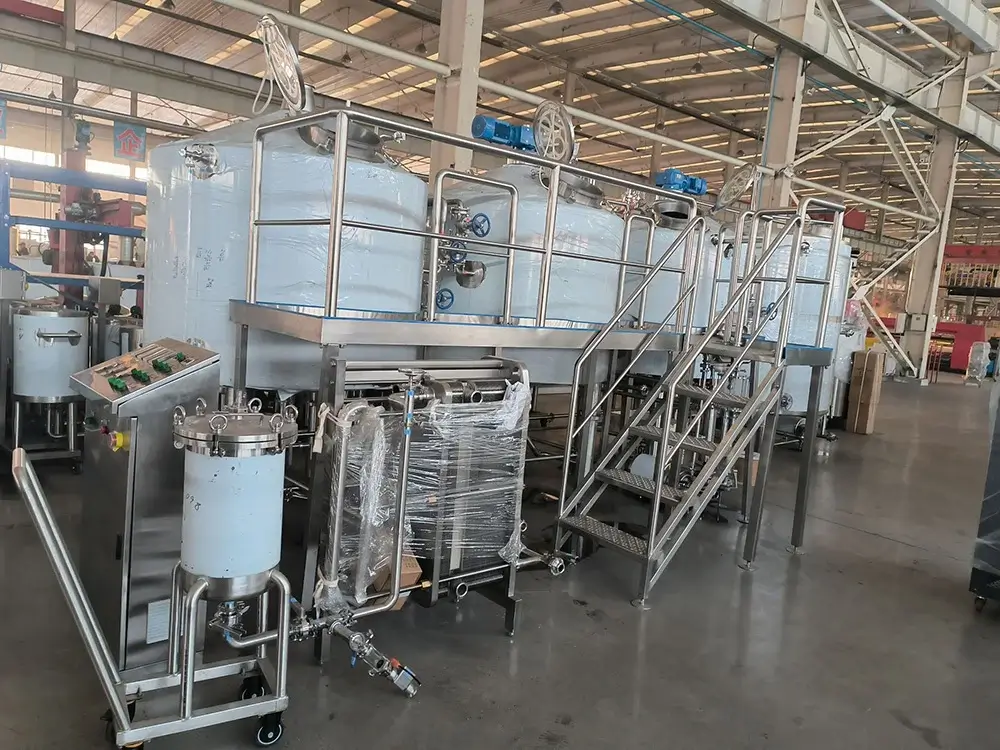
The system includes four 20KL tanks:
- Glycol ice water tank
- RO water tank
- 热水箱
- Brewing water tank
With dedicated pumps and stable supply, the brewery achieves:
- Consistent temperature control
- Stable water quality
- Reliable pressure for CIP and production
4. CIP System: Automated Hygiene Control
The fully automated CIP system includes 2KL tanks for:
- Alkali
- Acid
- Sanitizer
- 热水
福利包括:
- Automated cleaning cycles
- Traceable sanitation records
- 降低污染风险
This ensures every batch meets strict hygiene standards.
5. Intelligent Automation: Full Process Visibility
The entire brewing process is controlled by a Siemens PLC system with WINCC SCADA.
主要优势
- Real-time monitoring
- Automated brewing processes
- Data logging and traceability
This results in:
- Consistent batch quality
- Reduced human error
- Easier staff training
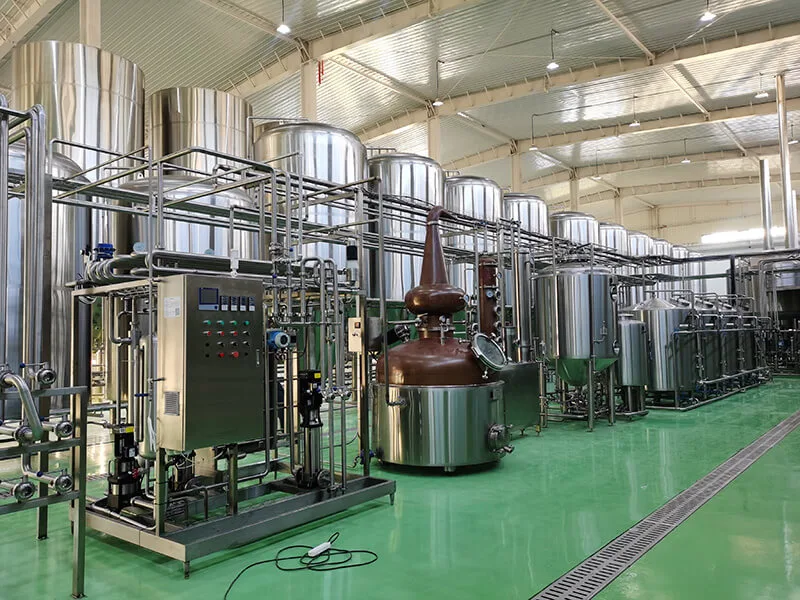
6. Distillation Integration: Expanding Product Lines
To support diversification, the brewery includes a multi-functional distillation system:
- Distillation kettle
- Column still
- 金酒篮
- 冷凝器
This enables production of:
- 手工烈酒
- Botanical distillates
- Experimental products
—without requiring a separate facility.
Engineering Design: Hygienic, Safe, and Scalable
All systems are connected through a segregated piping network:
- Wort lines
- Beer lines
- Yeast discharge
- CIP circuits
- CO₂ and compressed air
This ensures:
- Hygienic production standards
- Operational safety
- Easier future expansion
Installation, Commissioning & After-Sales Support
A successful brewery project depends not only on equipment—but on how it is delivered, installed, and supported.
1. Structured Project Timeline
The project follows a clear, milestone-driven schedule:
- Design & Engineering: 2–4 weeks
- Manufacturing & FAT: 8–12 weeks
- Logistics (Sea/Land): 4–6 weeks
- On-Site Installation: 3–5 weeks
- Commissioning & Trial Brewing: 2–3 weeks
- Final Acceptance: ~1 week
👉 Total Project Duration: 4–6 months
This ensures predictable delivery and faster time-to-market.
2. Professional Installation & Training
A dedicated on-site team typically includes:
- Mechanical engineers
- Welding & piping specialists
- Electrical & automation engineers
- Project supervisor
Training services include:
- Brewhouse operation
- Fermentation management
- CIP程序
- PLC system usage
- Maintenance routines
This enables the client team to operate independently from day one.
3. Complete Technical Documentation
Each project includes a full documentation package:
- P&ID diagrams
- Electrical schematics
- 设备手册
- PLC & SCADA documentation
- Maintenance plans
This supports:
- Efficient troubleshooting
- Staff training
- Long-term system management
4. After-Sales Service & Long-Term Support
The project includes a comprehensive after-sales framework:
Remote Support
- PLC diagnostics
- Process optimization guidance
- Real-time troubleshooting
Spare Parts Supply
- Critical spare parts list
- Fast global delivery
- Long-term compatibility
Annual Maintenance
- Optional on-site inspections
- Performance evaluation
- Preventive maintenance
Emergency Support
- Rapid-response technical assistance
- Priority troubleshooting
该项目为何重要
This 5,000L brewery demonstrates what a true turnkey solution should deliver:
High Throughput with Craft Flexibility
4–5 batches per day with a 4-vessel system.
Scalable Fermentation Design
Mixed tank sizes adapt to production needs.
Smart Automation
Siemens-based control ensures consistency and traceability.
Full Lifecycle Support
From design to after-sales service, everything is managed by one team.
Final Thoughts: Build for Growth, Not Just Launch
Scaling a brewery is not just about increasing capacity—it’s about building a system that can operate reliably, adapt to market demand, and maintain product quality over time.
This project shows how a well-engineered turnkey brewery can eliminate common risks and provide a strong foundation for long-term success.
If you’re planning a mid-to-large scale craft brewery, this is the level of integration, automation, and support you should expect.
Contact Meto today to learn more about our brewery solutions and find the brewery equipment for your brewery.