When scaling a craft brewery, success is rarely determined by recipes alone. The real challenge lies in engineering, execution, and long-term operational stability.
This case study showcases a fully integrated 5,000L brewery built for Craft Beer—demonstrating how a well-designed turnkey solution can deliver high productivity, consistent quality, and future scalability.
Project Overview: Designed for High Output and Flexibility
This brewery was built to meet aggressive production goals while maintaining the flexibility required for craft innovation.
Key Specifications
- Batch Size: 5,000 Liters (5KL)
- Daily Batches: 4–5
- Annual Capacity: 9,000 HL
- Brewhouse Configuration: 4-Vessel Fully Automatic
- Automation System: Siemens PLC + WINCC SCADA
This configuration allows the brewery to operate at near-industrial efficiency while retaining full control over recipe development.
The Production Journey: Unit by Unit
1. Malt Milling & Brewhouse: Precision at the Start
Consistency begins with raw material handling.
The system includes a dry milling unit (3,000 kg/h) integrated with:
- Malt elevator
- Flexible conveyor
- Grist hydrator
This ensures optimal grain conditioning, improved extract efficiency, and smoother lautering.
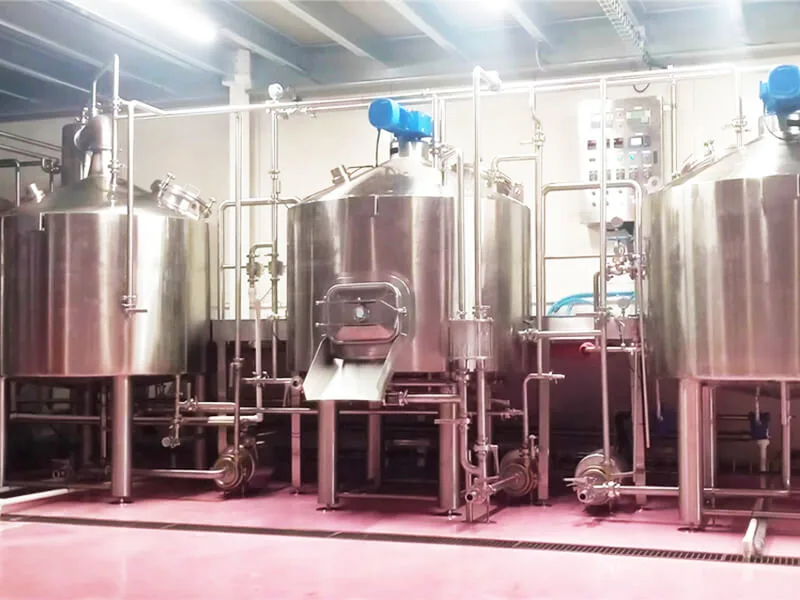
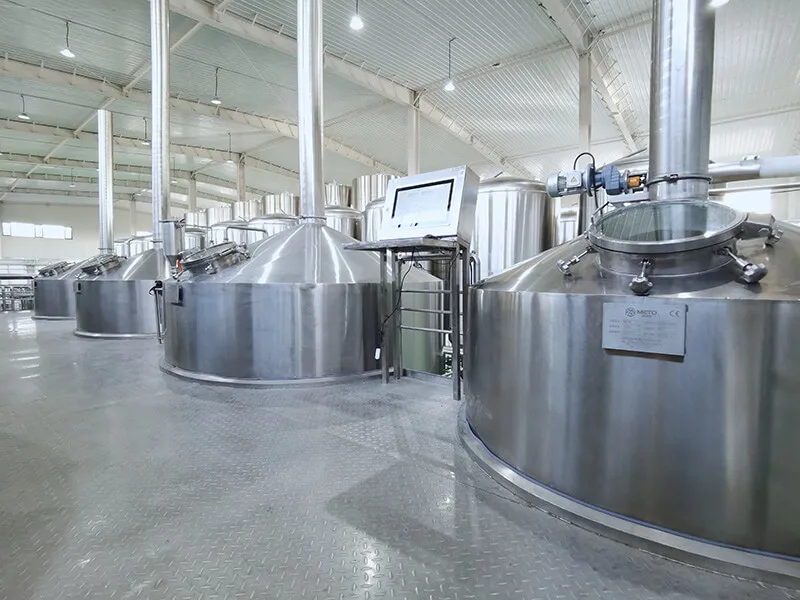
At the core is a 4-vessel brewhouse system:
- Tina de brassagem
- Tina de Lauter
- Brew Kettle
- Tanque de hidromassagem
This setup enables overlapping brewing cycles, significantly increasing daily output.
A pneumatic spent grain discharge system further improves:
- Labor efficiency
- Workplace safety
- Cleanliness
2. Fermentation System: Flexible Capacity for Growth
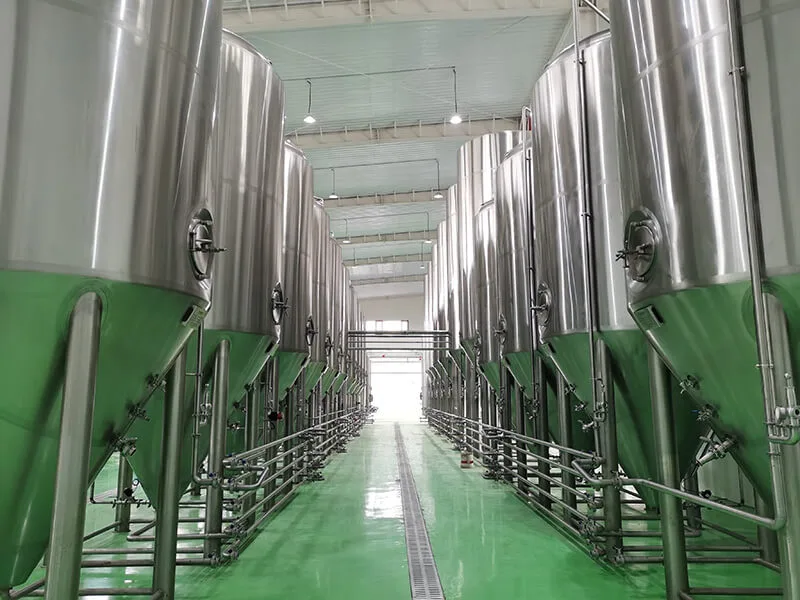
To support both flagship and seasonal beers, the brewery uses a mixed tank strategy:
- 5KL fermenters (small batch / pilot)
- 10KL & 20KL fermenters (core production)
- 10KL & 20KL bright beer tanks
This allows:
- Simultaneous multi-recipe production
- Efficient tank utilization
- Easy scaling as demand grows
A front-service pipeline corridor centralizes:
- Wort & beer lines
- CIP pipelines
- CO₂ and compressed air
- Drenagem
This design improves operational efficiency and simplifies maintenance.
3. Utility Systems: The Backbone of Consistency
Reliable utilities are essential for stable brewing conditions.
The system includes four 20KL tanks:
- Glycol ice water tank
- RO water tank
- Hot water tank
- Brewing water tank
With dedicated pumps and stable supply, the brewery achieves:
- Consistent temperature control
- Stable water quality
- Reliable pressure for CIP and production
4. CIP System: Automated Hygiene Control
The fully automated CIP system includes 2KL tanks for:
- Alkali
- Acid
- Sanitizer
- Hot water
Os benefícios incluem:
- Automated cleaning cycles
- Traceable sanitation records
- Risco reduzido de contaminação
This ensures every batch meets strict hygiene standards.
5. Intelligent Automation: Full Process Visibility
The entire brewing process is controlled by a Siemens PLC system with WINCC SCADA.
Principais vantagens:
- Real-time monitoring
- Automated brewing processes
- Data logging and traceability
Isto resulta em:
- Consistent batch quality
- Reduced human error
- Easier staff training
6. Distillation Integration: Expanding Product Lines
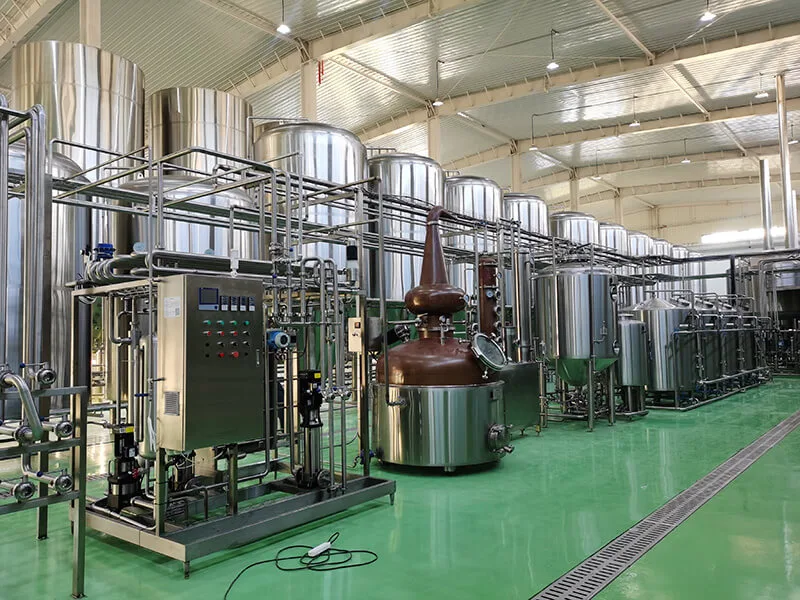
To support diversification, the brewery includes a multi-functional distillation system:
- Distillation kettle
- Column still
- Gin basket
- Condensador
This enables production of:
- Craft spirits
- Destilados botânicos
- Experimental products
—without requiring a separate facility.
Engineering Design: Hygienic, Safe, and Scalable
All systems are connected through a segregated piping network:
- Wort lines
- Beer lines
- Yeast discharge
- CIP circuits
- CO₂ and compressed air
This ensures:
- Hygienic production standards
- Operational safety
- Expansão futura mais fácil
Installation, Commissioning & After-Sales Support
A successful brewery project depends not only on equipment—but on how it is delivered, installed, and supported.
1. Structured Project Timeline
The project follows a clear, milestone-driven schedule:
- Design & Engineering: 2–4 weeks
- Manufacturing & FAT: 8–12 weeks
- Logistics (Sea/Land): 4–6 weeks
- On-Site Installation: 3–5 weeks
- Commissioning & Trial Brewing: 2–3 weeks
- Final Acceptance: ~1 week
👉 Total Project Duration: 4–6 months
This ensures predictable delivery and faster time-to-market.
2. Professional Installation & Training
A dedicated on-site team typically includes:
- Mechanical engineers
- Welding & piping specialists
- Electrical & automation engineers
- Project supervisor
Training services include:
- Brewhouse operation
- Fermentation management
- CIP procedures
- PLC system usage
- Maintenance routines
This enables the client team to operate independently from day one.
3. Complete Technical Documentation
Each project includes a full documentation package:
- P&ID diagrams
- Electrical schematics
- Equipment manuals
- PLC & SCADA documentation
- Maintenance plans
This supports:
- Efficient troubleshooting
- Staff training
- Long-term system management
4. After-Sales Service & Long-Term Support
The project includes a comprehensive after-sales framework:
Remote Support
- PLC diagnostics
- Process optimization guidance
- Real-time troubleshooting
Spare Parts Supply
- Critical spare parts list
- Fast global delivery
- Long-term compatibility
Annual Maintenance
- Optional on-site inspections
- Performance evaluation
- Preventive maintenance
Emergency Support
- Rapid-response technical assistance
- Priority troubleshooting
Why This Project Matters
This 5,000L brewery demonstrates what a true turnkey solution should deliver:
High Throughput with Craft Flexibility
4–5 batches per day with a 4-vessel system.
Scalable Fermentation Design
Mixed tank sizes adapt to production needs.
Smart Automation
Siemens-based control ensures consistency and traceability.
Full Lifecycle Support
From design to after-sales service, everything is managed by one team.
Final Thoughts: Build for Growth, Not Just Launch
Scaling a brewery is not just about increasing capacity—it’s about building a system that can operate reliably, adapt to market demand, and maintain product quality over time.
This project shows how a well-engineered turnkey brewery can eliminate common risks and provide a strong foundation for long-term success.
If you’re planning a mid-to-large scale craft brewery, this is the level of integration, automation, and support you should expect.
Contacte a Meto ainda hoje para saber mais sobre as nossas soluções para cervejarias e encontrar o equipamento adequado para a sua cervejaria.