A brewpub combines beer production with on-site service, allowing customers to enjoy freshly brewed beer in the same venue where it is made. Unlike a large commercial brewery, a brewpub must balance brewing capacity, available space, operating costs, and customer demand.
Choosing the right brewery equipment is essential for maintaining consistent beer quality and supporting daily operations. A typical brewpub may require a brewhouse system, fermentation tanks, glycol cooling equipment, a CIP cleaning system, and draft beer dispensing equipment. Depending on the business model, it may also need bright beer tanks, water treatment equipment, and a small packaging line.
As a brewery equipment manufacturer, METO provides customized brewing systems for different production capacities, facility layouts, and process requirements.
1. What Brewery Equipment Does a Brewpub Need?
A complete brewpub brewing system consists of several interconnected components. Each part has a specific function, from preparing the wort to fermenting, conditioning, and serving the finished beer.
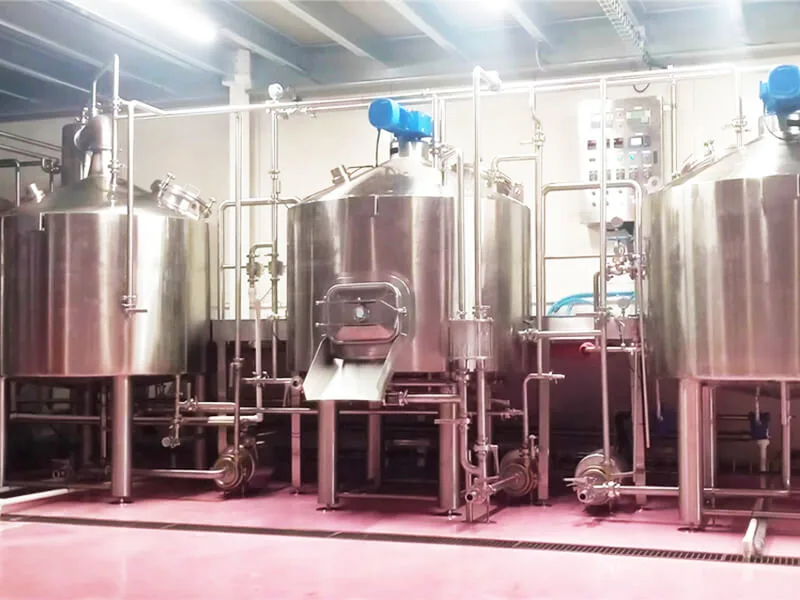
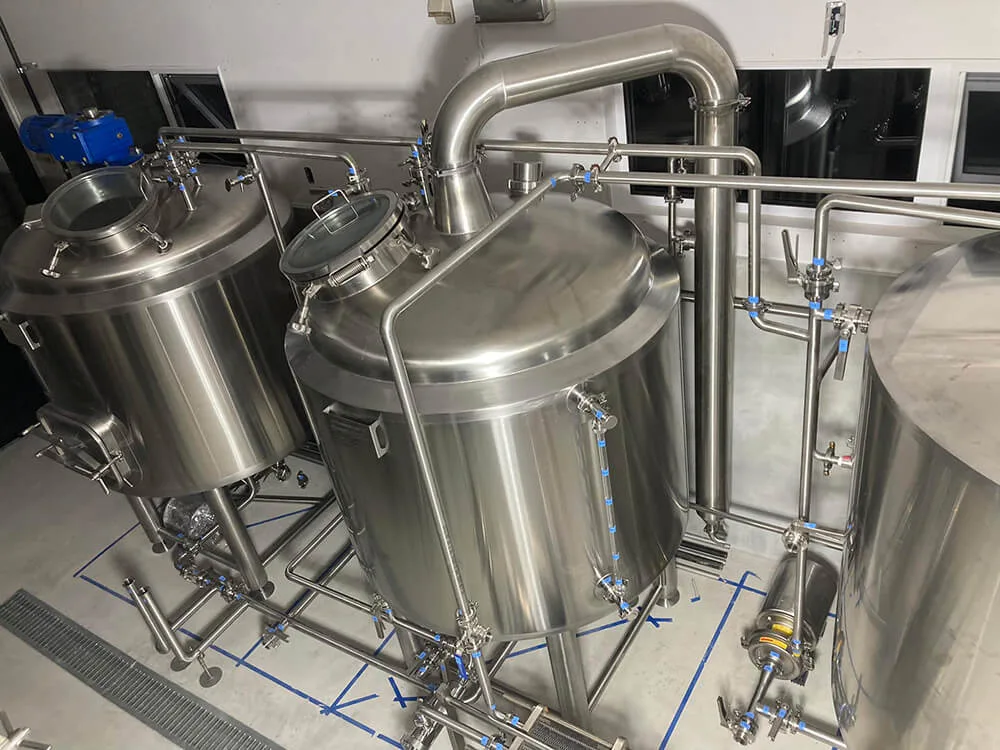
Brewhouse System
The brewhouse is where the main brewing process takes place. It typically includes a mash tun, lauter tun, brew kettle, and whirlpool vessel, although smaller systems may combine several functions into fewer vessels.
The main equipment may include:
- Malt milling equipment
- Mash and lautering vessels
- Wort boiling kettle
- Whirlpool vessel
- Wort heat exchanger
- Pumps, valves, and process piping
- Hot liquor tank and other brewing water tanks, as required
The configuration depends on the required batch size, brewing schedule, available floor space, and level of automation.
For a compact brewpub, an integrated brewhouse can help simplify the layout. A larger operation may benefit from a multi-vessel system that supports a more flexible production schedule.
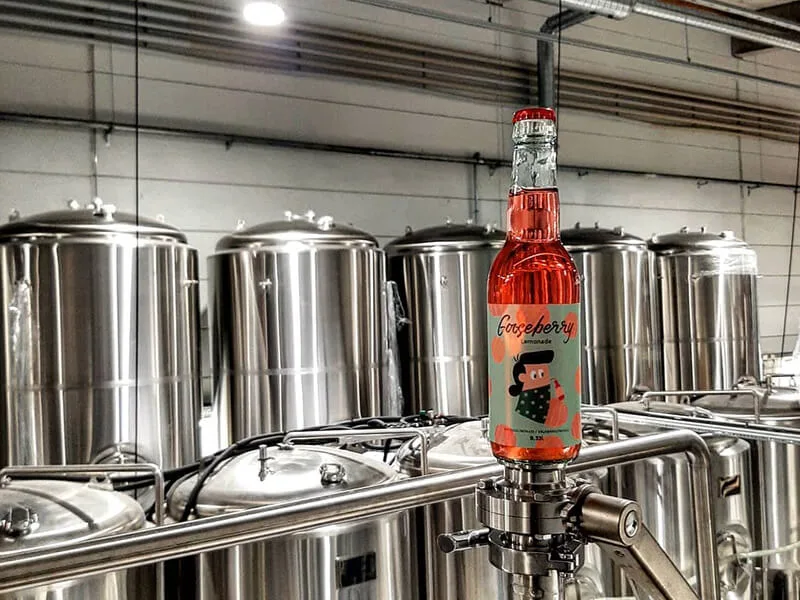
Fermentation Tanks
Fermentation tanks are essential for converting wort into beer. After the wort has been cooled and transferred to a fermenter, yeast converts the fermentable sugars into alcohol and carbon dioxide.
The number and capacity of fermentation tanks should be determined by the expected production volume, fermentation time, beer styles, and cleaning schedule.
For example, a brewpub producing several beer styles may need separate tanks for different recipes or fermentation cycles. Additional tanks may also be required for seasonal beers and specialty products.
When selecting fermentation tanks, consider:
- Tank working volume and total capacity
- Stainless steel grade
- Cooling jacket design and insulation
- Working pressure and design pressure
- Internal surface finish and cleanability
- CIP spray devices and drainage
- Temperature control requirements
The fermentation system should be designed to match the brewhouse rather than selected independently.
Glycol Cooling System
Temperature control is critical during fermentation and beer conditioning. A glycol cooling system typically includes a glycol chiller, insulated distribution piping, and a glycol reservoir or buffer tank where required.
The cooling system must be sized according to the number of tanks, their volumes, fermentation temperature requirements, ambient conditions, and the heat load during peak operation.
A system that is too small may struggle to maintain the required temperatures when multiple tanks are actively fermenting. An appropriately designed cooling system helps maintain stable process conditions and supports consistent beer production.
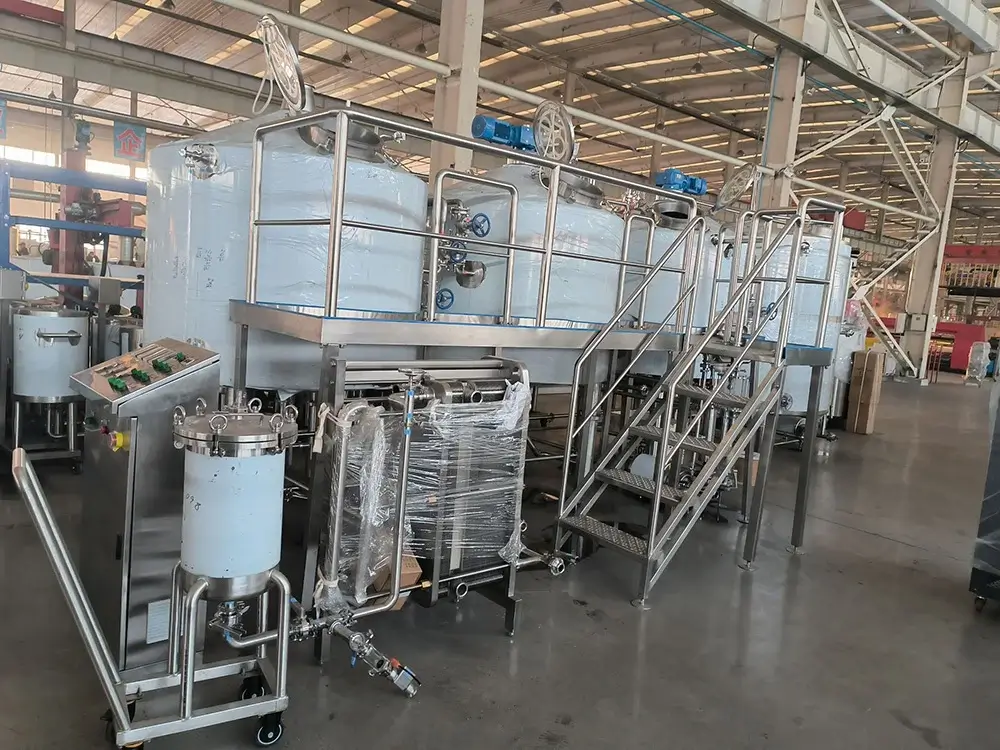
CIP Cleaning System
Cleaning is a major part of brewpub operations. A clean-in-place (CIP) system circulates cleaning solutions through compatible tanks, pipelines, and equipment without requiring complete disassembly.
Depending on the system design, a CIP unit may include a cleaning tank, pumps, valves, hoses or fixed piping, and provisions for different cleaning solutions.
When planning CIP equipment, consider the number of tanks, the cleaning sequence, the required flow rate, and whether several vessels need to be cleaned independently.
The cleaning process must also follow suitable procedures for chemical concentration, temperature, contact time, rinsing, and sanitation. Equipment design alone cannot replace proper operating and cleaning practices.
Bright Beer Tanks and Draft Dispensing Equipment
Some brewpubs transfer finished beer directly from fermentation tanks to serving equipment. Others use bright beer tanks for maturation, clarification, carbonation, or temporary storage before dispensing.
Bright beer tanks can help separate fermentation operations from serving schedules. This may be particularly useful when a brewpub offers multiple beer styles or experiences fluctuations in customer demand.
Draft dispensing equipment may include beer lines, regulators, taps, gas supply components, and suitable cooling arrangements. The final configuration depends on the serving area, distance between the tanks and taps, beer styles, and operating requirements.
2. Choosing the Right Brewhouse Capacity: 300L, 500L, or 1000L
Brewhouse capacity is one of the most important decisions when planning a brewpub. The system should match expected beer sales while leaving sufficient room for production growth.
300L Brewery Equipment
A 300L brewing system can be a practical option for small brewpubs, pilot brewing, and businesses testing their own beer recipes. It may suit venues with limited space or relatively modest beer demand.
A compact system can help reduce the space required for brewing equipment. However, the business should still account for fermentation tanks, cooling equipment, cleaning facilities, and safe access for operation and maintenance.
Actual output depends on brewing frequency, fermentation capacity, process losses, and the time required for each beer style.
500L Brewery Equipment
A 500L brewing system offers a flexible option for brewpubs that want to serve several house beers and maintain regular production.
It can support a range of brewing schedules without requiring the footprint of a larger system. The final configuration may include a multi-vessel brewhouse, several fermentation tanks, a glycol cooling system, and a CIP unit.
Fermentation tank quantity and working volume should be planned according to beer styles, fermentation time, and the intended production cycle.
1000L Brewery Equipment
A 1000L brewing system may suit brewpubs with higher expected demand, multiple sales channels, or plans to supply packaged beer in addition to on-site service.
The larger brewing capacity requires careful coordination with fermentation tanks, cooling equipment, storage, and packaging capacity. The facility must also provide sufficient room for equipment installation, cleaning, maintenance, and ingredient handling.
A larger brewhouse does not automatically guarantee higher sales or better profitability. The investment should be supported by a realistic demand forecast and an operating plan.
These capacities are starting points rather than fixed business categories. A smaller system may suit a high-demand specialty operation with frequent brewing, while a 1000L system may be excessive for a venue with limited beer sales.
Before choosing a system, estimate daily beer sales, operating days, brewing frequency, seasonal demand, and the number of beer styles you intend to offer.
It is also important to distinguish between brewhouse batch capacity and packaged beer output. Wort losses, fermentation losses, maturation requirements, and beer retained in tanks or pipelines affect the final volume available for sale.
3. How Many Fermentation Tanks Does a Brewpub Need?
The number of fermentation tanks depends on more than the size of the brewhouse. Brewing frequency, fermentation duration, beer variety, and tank turnaround time all influence the required quantity.
For example, a brewpub that produces several beer styles may need multiple tanks to keep different batches separate. Beers with longer fermentation or conditioning periods can occupy tanks for extended periods, reducing the capacity available for new batches.
When planning fermentation capacity, consider:
- Brewhouse batch volume
- Number of batches per week
- Average fermentation and conditioning time
- Tank working volume
- Number of beer styles
- Cleaning and turnaround time
- Expected peak demand
It is often more useful to calculate the required fermentation capacity first and then determine the number of tanks than to select a tank quantity based only on the brewhouse size.
A brewery equipment manufacturer can help coordinate tank sizes and quantities with the intended production schedule.
4. Additional Equipment for Brewpub Operations
Beyond the core brewing and fermentation system, a brewpub may need auxiliary equipment to support stable production and daily operations.
Water Treatment Equipment
Water quality influences the brewing process and the characteristics of the finished beer. Depending on the local water supply and target beer styles, a brewpub may require filtration, water treatment, or mineral adjustment equipment.
The treatment system should be selected based on a water analysis and the brewery’s process requirements.
Malt Handling and Storage
Malt handling equipment may include a mill, grain storage containers, conveyors, and a dust management arrangement where appropriate.
The design should consider ingredient storage, delivery access, milling frequency, and the distance between the storage area and the brewhouse.
Packaging Equipment
Not every brewpub needs a packaging line. A business that serves most of its beer on-site may focus on draft dispensing, while a brewpub selling takeaway beer or supplying other venues may require kegs, a keg washer, or canning and bottling equipment.
Packaging equipment should be selected according to the intended sales channels, target output, available labor, and storage capacity.
Control and Automation System
A brewing control system can help operators monitor temperatures, manage pumps and valves, and coordinate process steps. The level of automation can range from basic manual controls to a PLC-based system with a touchscreen interface.
The right choice depends on the production process, staffing, budget, and the level of control required. Automation should simplify operation and improve process consistency without introducing unnecessary complexity.
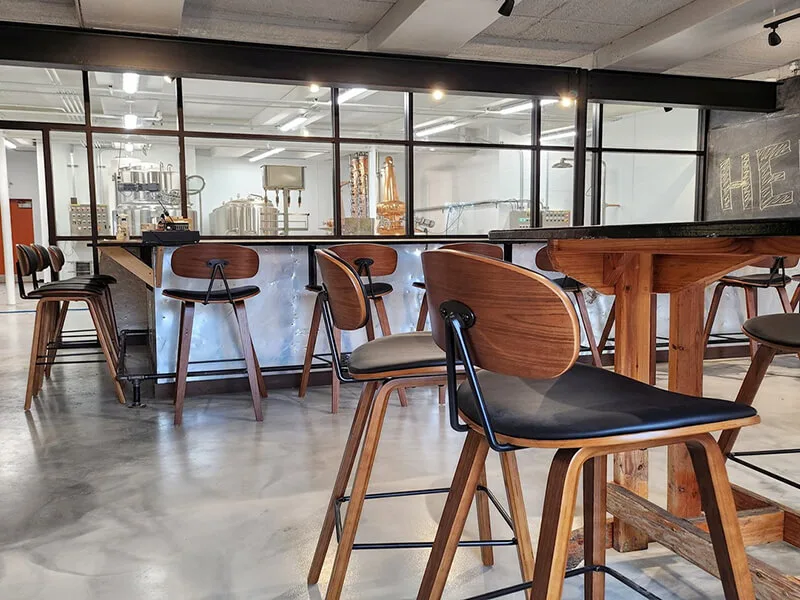
5. Planning the Brewpub Layout
A good equipment layout supports safe operation, efficient workflow, and convenient cleaning and maintenance.
Before finalizing the equipment design, assess the available floor area, ceiling height, drainage, ventilation, electrical supply, water supply, and heating utilities. The installation plan should also account for the movement of malt, cleaning materials, kegs, and finished beer.
The layout should provide adequate clearance around tanks and equipment for routine inspection, valve operation, and maintenance. Drainage and floor design are particularly important in wet processing areas.
It is also important to consider the route from brewing and fermentation to the serving area. Shorter and well-planned beer lines may simplify installation and maintenance, but line length, temperature control, pressure, and cleaning requirements must all be considered.
Where the brewpub is being built in an existing restaurant or commercial building, the equipment design should be reviewed against the site’s actual utility capacity and installation constraints before production begins.
6. What Affects the Cost of Brewpub Brewery Equipment?
The cost of a brewpub brewing system depends on its capacity, configuration, materials, automation level, and auxiliary equipment.
A compact 300L system and a 1000L system have different equipment requirements. However, capacity alone does not determine the final project cost.
Important cost factors include:
- Brewhouse vessel configuration
- Number, size, and specifications of fermentation tanks
- Glycol cooling capacity
- CIP system configuration
- Stainless steel grade and surface finish
- PLC controls and automation
- Malt handling and water treatment
- Bright beer tanks and packaging equipment
- Transportation, installation, and commissioning scope
A quotation should clearly define what is included and excluded. Buyers should confirm whether the price covers only the main brewing vessels or also includes tanks, pumps, piping, cooling, cleaning, controls, installation, and commissioning.
Comparing quotations on the basis of equipment scope and technical specifications makes it easier to understand the actual differences between suppliers.
7. How to Choose a Brewpub Brewery Equipment Manufacturer
Choosing a brewery equipment manufacturer involves more than comparing prices. The supplier should understand the brewing process and be able to coordinate the main equipment with the site’s production requirements.
Before placing an order, consider the following points.
Engineering and Customization
The manufacturer should be able to recommend a suitable brewhouse configuration, fermentation capacity, cooling system, and auxiliary equipment based on the planned production schedule.
The design should also reflect local installation conditions, utility availability, and applicable technical requirements.
Manufacturing Quality
Review the materials, welding quality, internal surface finish, insulation, tank fittings, and quality-control procedures. For pressure-rated vessels, confirm the relevant design conditions, testing requirements, and documentation.
Applicable certifications and compliance requirements vary by equipment type, pressure rating, electrical configuration, destination market, and installation conditions. These details should be confirmed for the specific project.
Installation and After-Sales Support
A well-designed system still requires proper installation, commissioning, and operator training. Before purchasing, clarify the installation scope, technical documentation, spare parts, troubleshooting support, and responsibilities of both parties.
Complete System Coordination
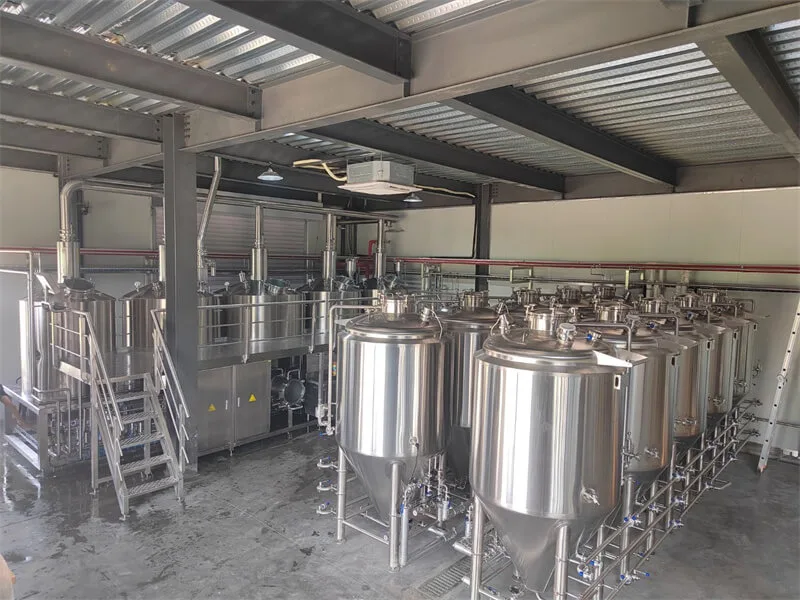
Brewhouse vessels, fermentation tanks, glycol cooling, CIP equipment, and controls should work together as a coordinated system. A supplier that can support the overall equipment design can help reduce the risk of mismatched capacities and incompatible connections.
8. Why Choose METO for Brewpub Brewery Equipment?
METO is a brewery and distillery equipment manufacturer providing equipment design, manufacturing, installation, commissioning, and after-sales support.
The company supplies brewing systems across a range of capacities, including compact systems for brewpubs and larger configurations for commercial brewing. Equipment packages can be developed around the customer’s brewing process, site conditions, production targets, and preferred level of automation.
Depending on the project, a brewpub system may include brewhouse vessels, fermentation tanks, glycol cooling, CIP cleaning equipment, pumps, piping, and control systems.
Rather than selecting equipment based on brewhouse capacity alone, METO can work with customers to evaluate the relationship between batch size, fermentation capacity, cooling requirements, and the planned production schedule.
The final configuration should be confirmed according to the customer’s beer styles, expected demand, available space, utilities, and project scope.
Frequently Asked Questions
What is the best brewery equipment capacity for a brewpub?
A 300L system may suit a small venue or pilot operation, while 500L and 1000L systems may suit brewpubs with higher production requirements. The best capacity depends on expected sales, brewing frequency, fermentation time, and available space.
Can a brewpub use a 300L brewing system?
Yes. A 300L system can be suitable for a small brewpub, provided the brewing schedule and fermentation capacity can meet expected demand. The owner should also consider peak sales periods and the possibility of future expansion.
Does a brewpub need bright beer tanks?
Not always. Some brewpubs serve beer directly from suitable fermentation tanks, while others use bright beer tanks for conditioning, carbonation, or storage before serving. The decision depends on the production process and serving requirements.
How many fermentation tanks are required for a 500L brewhouse?
There is no fixed number. Tank quantity depends on brewing frequency, fermentation and conditioning time, beer styles, and tank turnaround. The total fermentation capacity should be calculated from the planned production schedule.
Does a turnkey brewpub system include installation?
Not necessarily. The term “turnkey” can mean different things to different suppliers. Buyers should confirm whether the quotation includes equipment manufacturing, transportation, installation, commissioning, operator training, and after-sales support.
Conclusion
A successful brewpub needs more than a brewhouse. Fermentation tanks, glycol cooling, CIP cleaning, utilities, and beer dispensing equipment must be planned as part of a coordinated system.
Choosing between 300L, 500L, and 1000L equipment should begin with realistic sales estimates and a clear production plan. The right configuration should meet current demand while allowing practical operation, cleaning, and future growth.
METO provides customized brewery equipment solutions for brewpubs and commercial brewing projects. If you are planning a new brewpub or upgrading an existing brewing system, contact METO to discuss your production capacity, beer styles, facility layout, and equipment requirements.