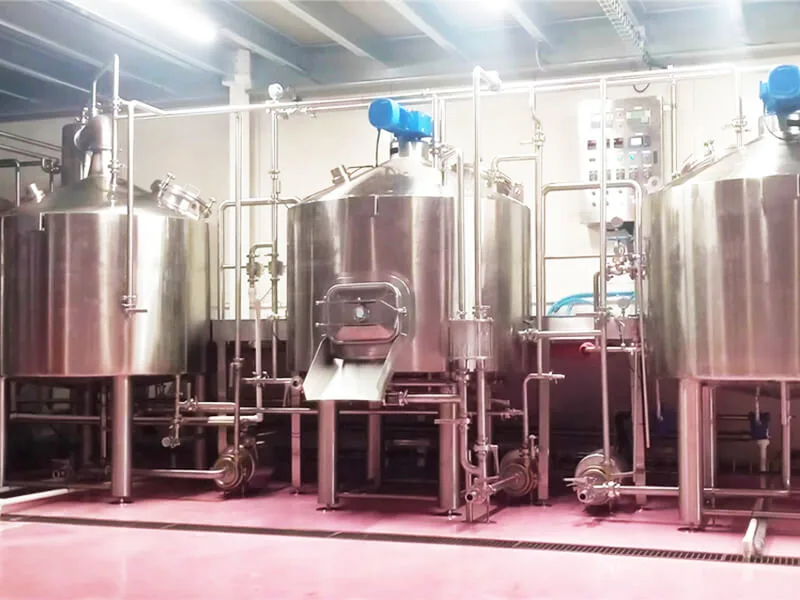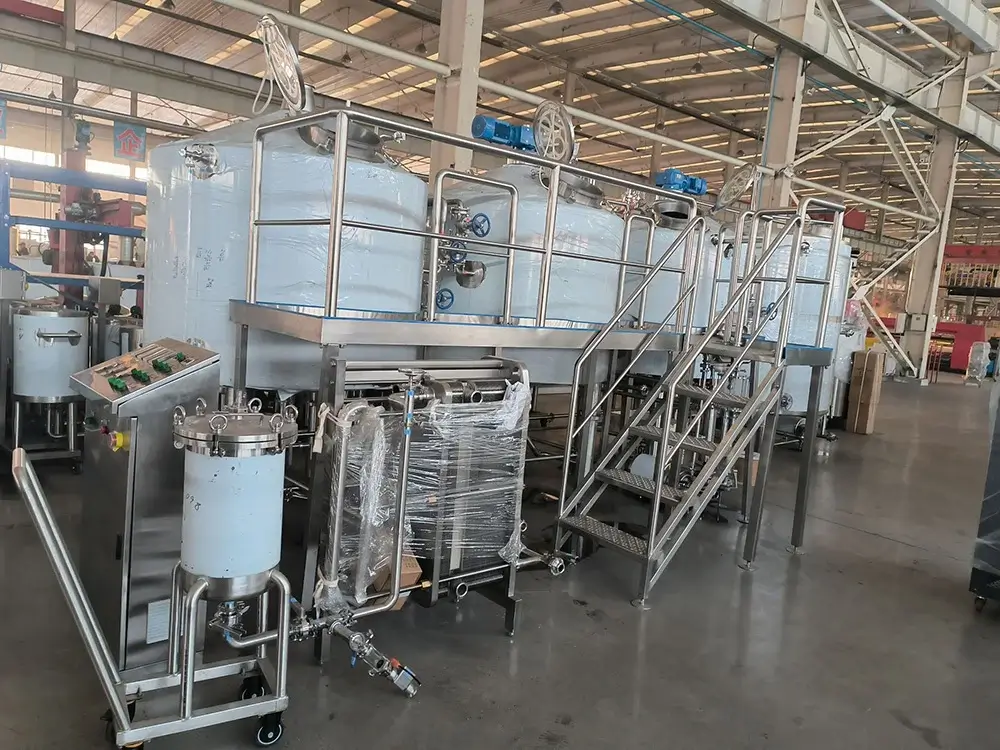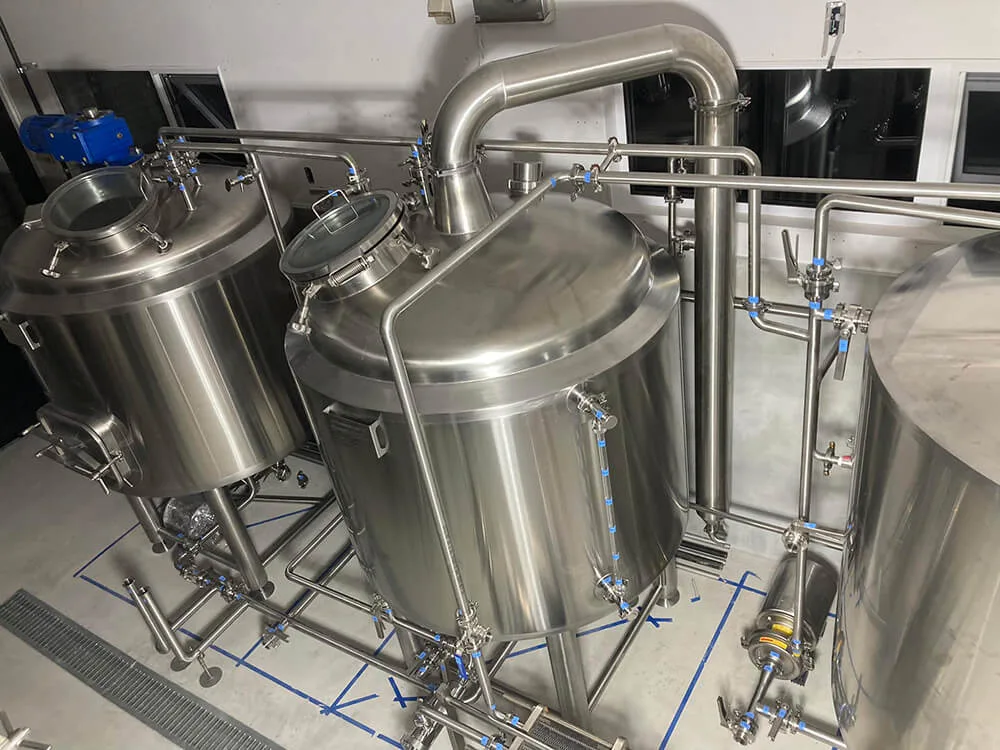
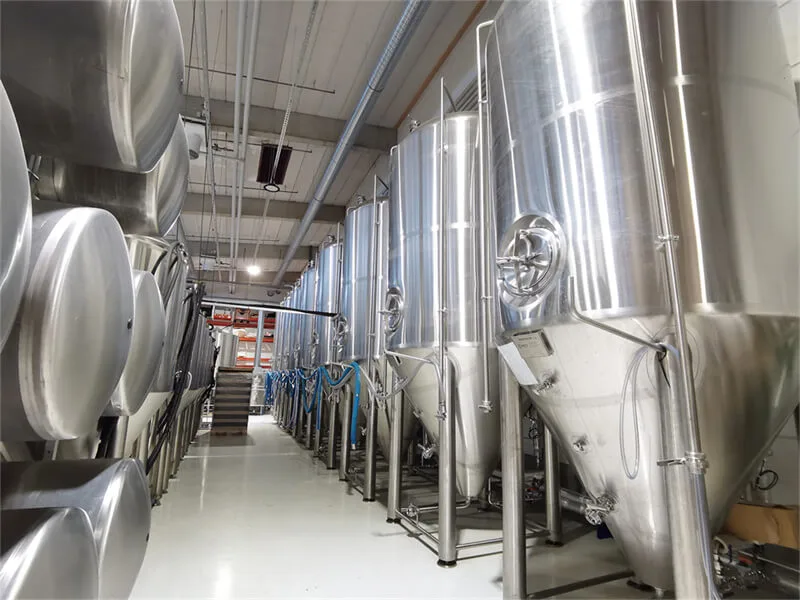
For most small and mid-sized breweries, limited space is an unavoidable challenge. Brewers must not only optimize fermenter layout for efficient operations and stable fermentation, but also leave room for future capacity expansion—avoiding costly retrofits and production downtime.
As the core equipment in any brewery, fermenters directly impact production efficiency, beer quality, and scalability. A well-designed, expandable fermentation system is essential for long-term growth.
This guide combines industry best practices to help breweries optimize fermenter layout in confined spaces while building a flexible, scalable fermentation system.
1. Fermenter Layout in Limited Space: Principles First, Then Design
The key to fermenter layout is not simply fitting more tanks into a space—it’s about balancing efficiency, safety, and scalability.
1.1 Prioritize Process Flow to Reduce Inefficiencies
The brewing process follows a clear sequence:
Raw Material → Mashing → Cooling → Fermentation → Conditioning
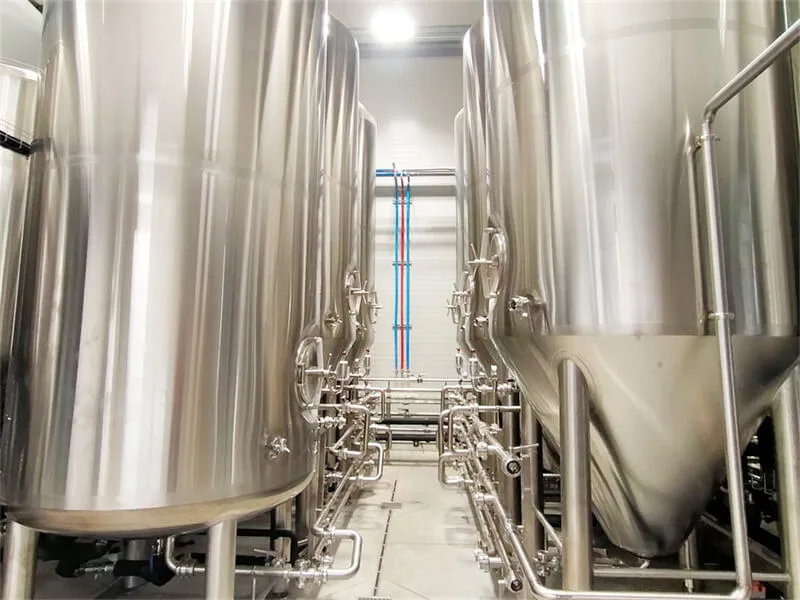
Your fermenter layout should align with this flow using a linear, short-distance design to:
- Minimize liquid transfer distance
- Reduce oxygen pickup and temperature fluctuation
- Improve operational efficiency
Best Practices:
- Position fermenters close to cooling systems and conditioning tanks
- Align fermenter inlets with wort outlet points
- Keep piping short and direct
- Maintain clear pathways:
- Main aisle ≥ 2 m
- Secondary aisle ≥ 1.5 m
Additionally, plan piping routes in advance to avoid overlaps and dead zones, ensuring easier cleaning and maintenance.
1.2 Choose Installation Methods That Maximize Space
Installation style has a major impact on space utilization.
Recommended approaches:
- Slab-mounted fermenters
- Lower installation cost
- More usable space underneath for piping and valves
- Vertical (multi-level) layout
- Ideal for ceiling heights ≥ 4.5 m
- Can increase space utilization by 50%+
- Wall-aligned arrangement (for large tanks)
- Maintain 0.8–1.5 m clearance from walls
- Keep spacing between tanks ≥ 1.5× tank diameter
- Indoor + outdoor combination
- Outdoor tanks save indoor space
- Insulated tanks maintain temperature stability
1.3 Match Tank Size to Actual Needs (Avoid Oversizing)
Choosing oversized fermenters in limited space often backfires.
Recommended strategy:
- Core production: 5–10 ton fermenters
- Flexibility: 1–3 ton fermenters for:
- Pilot batches
- Seasonal or specialty beers
Also consider compact fermenter designs with integrated:
- Temperature control
- Agitation systems
This reduces the need for additional equipment and saves space.
1.4 Ensure Safety & Compliance
Even in tight spaces, safety must never be compromised.
Key requirements:
- Anti-slip, corrosion-resistant flooring (e.g., epoxy)
- Proper load-bearing assessment
- Adequate ventilation and exhaust systems
- At least two emergency exits
- Fire safety spacing ≥ 1.5 m between critical equipment
2. Building a Scalable Fermentation System: Plan for Growth
A scalable system is built on modular design, allowing expansion without major reconstruction.
2.1 Reserve Space for Future Expansion
Plan for 1–3 years of growth by reserving space for additional fermenters.
Key considerations:
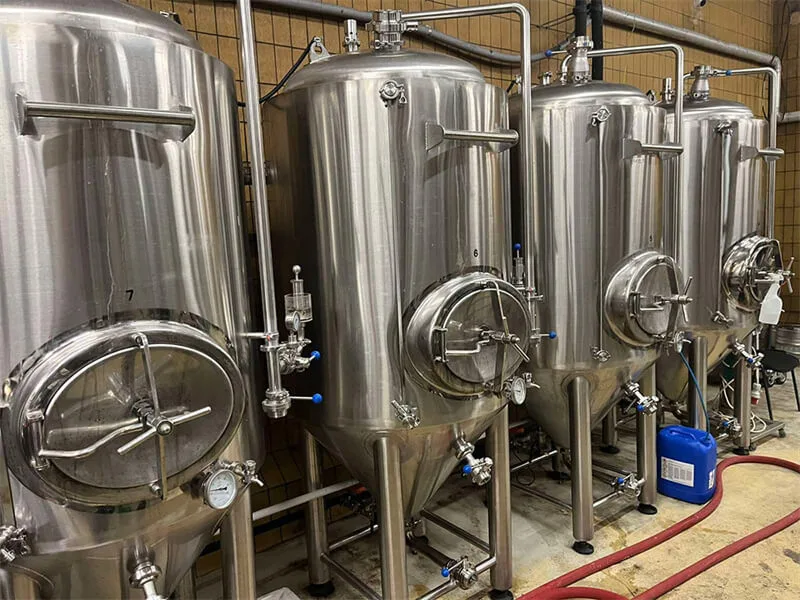
- Leave room for 2–3 additional tanks
- Reinforce flooring in advance
- Position expansion zones near existing utilities
Use pipeline loop designs to allow easy integration of new tanks.
2.2 Modular System Design (Plug-and-Play Expansion)
Divide the fermentation system into independent modules:
- Fermenter units
- Temperature control units
- Piping systems
- CIP (Cleaning-In-Place) systems
- Control systems
Advantages:
- Add new tanks without redesigning the system
- Faster installation
- Lower expansion cost
Example:
- Each fermenter has an independent temperature control module
- Standardized connections allow quick integration
- CIP system includes reserved cleaning ports
2.3 Infrastructure Planning (Avoid Costly Retrofits)
Future expansion depends on sufficient infrastructure.
Recommendations:
- Power supply: Reserve 30–50% extra capacity
- Water system: Ensure sufficient pressure and flow
- Cooling system: Pre-install extra refrigeration pipelines
A centralized automation system allows new fermenters to be integrated without adding new control hardware.
2.4 Select Compatible & Expandable Equipment
Avoid niche or incompatible equipment.
Choose:
- Industry-standard fermenter interfaces
- Adjustable-speed agitation systems
- Modular control systems
Optional solutions:
- Mobile fermenters
- Single-use fermentation systems
These offer greater flexibility and faster deployment.
3. Common Mistakes to Avoid
Many breweries make costly mistakes when planning fermenter layouts:
- Oversized tanks that limit usable space
- Disorganized piping systems
- No reserved infrastructure capacity
- Insufficient safety spacing
- Non-standardized equipment interfaces
Avoiding these pitfalls can save significant time and capital.
4. Conclusion: Limited Space, Unlimited Growth Potential
Limited space doesn’t have to limit your brewery’s growth.
A well-designed fermentation setup should focus on:
- Efficient layout (process-driven)
- Space optimization (smart installation)
- Future scalability (modular design)
There is no one-size-fits-all solution. The best design depends on your:
- Brewery size
- Production goals
- Brewing process
With the right strategy, even a compact brewery can achieve high efficiency, consistent quality, and scalable growth.
👉 Contact us today for a custom brewhouse system design tailored to your production goals, budget, and future expansion plans.