The world of craft spirits is where science meets art, and craftsmanship teams up with precision equipment. From milling grains to sealing bottles, every captivating small-batch whiskey or artisan gin relies on a carefully chosen distillery equipment system. Whether you’re a home distilling enthusiast or planning a commercial micro-distillery, understanding how to select the right distillery equipment is your foundation for success.
This comprehensive guide walks you through the entire craft spirit production process, breaks down the core types of distillation equipment, and shares a practical maintenance roadmap. Let’s help you invest in the right distillery equipment for the spirits you dream of making.
1. Understanding the Production Process: The First Step to Choosing Distillery Equipment
Before purchasing any kit, you need to understand the journey from raw grain to finished spirit. Craft spirits are born in four essential stages:
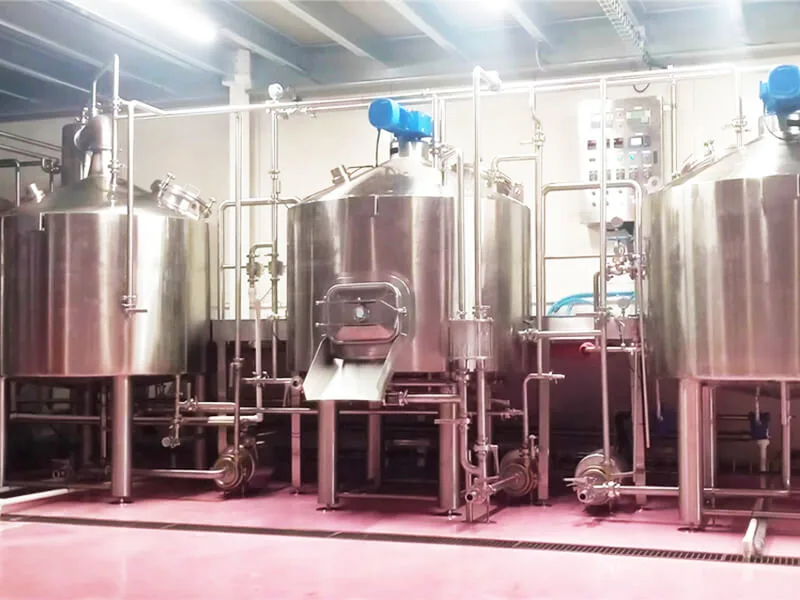
- Milling & Mashing: Grains are milled and mixed with hot water in a mash tun. This vessel, typically made of 304 stainless steel with a heated jacket and agitator, converts starches into fermentable sugars.
- Fermentation: The sugary wort is transferred to a fermenter, where yeast converts sugars into alcohol and CO₂, creating a low-alcohol liquid called “wash”. Temperature control, exhaust systems, and CIP (clean-in-place) capabilities are essential distillery equipment features here.
- Distillation: This is the heart of your operation. The wash is heated, separating and concentrating the alcohol based on boiling points. Choosing the right distillation equipment — a pot still, column still, or hybrid — defines your spirit’s character. We’ll dive deep into this below.
- Aging & Bottling: The resulting “new make” spirit can be aged in oak barrels to develop complexity, or filtered and bottled directly.
Distillation is where flavor, aroma, and purity are truly determined. This makes your choice of still the single most important distillery equipment decision you’ll make.
2. Core Distillery Equipment: Pot Still vs. Column Still vs. Hybrid Still
At the heart of every craft distillery lies a fundamental question: should you prioritize flavor or efficiency? Three main types of distillation equipment dominate the craft scene.
Pot Still: The Flavor Champion
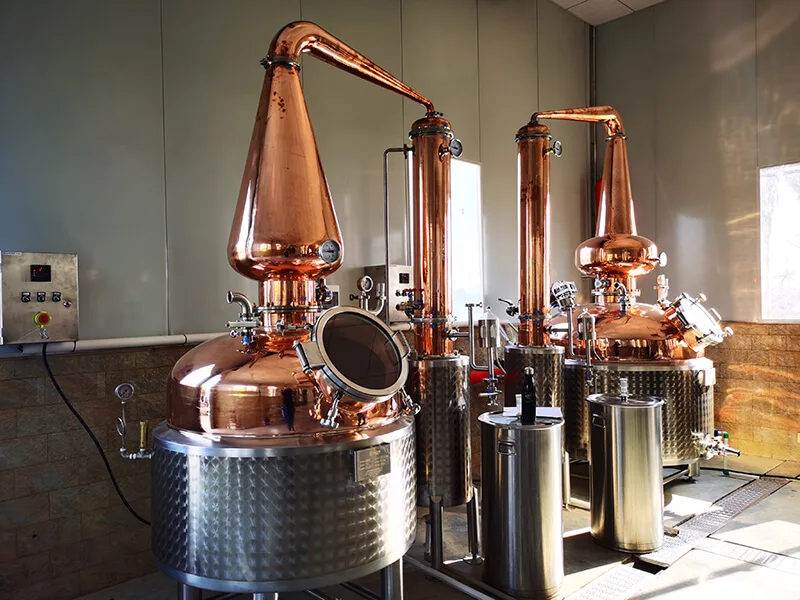
The oldest and most iconic design, a pot still consists of a heated pot (often copper), a swan neck, and a condenser. It operates in batches — each run is distilled, emptied, and cleaned before the next begins. Its “inefficiency” is its strength: a single distillation yields spirit at around 40-50% ABV, leaving behind rich congeners and the raw material’s distinctive character.
Best for: Whiskey, brandy, rum, and fruit brandies where layered flavor matters. Single malt Scotch whisky must legally be distilled in a pot still.
Column Still: The Purity Expert
Invented in the 19th century, a column still uses multiple internal plates for continuous rectification. It can achieve over 95% alcohol purity in a single continuous run, vastly outperforming a pot still in efficiency. The trade-off? High-purity neutral spirit comes with a much lighter flavor profile, making it ideal for spirits that demand a clean, crisp canvas.
Best for: Vodka, gin (the base spirit), and neutral alcohol.
Hybrid Still: The Flexible All-Rounder
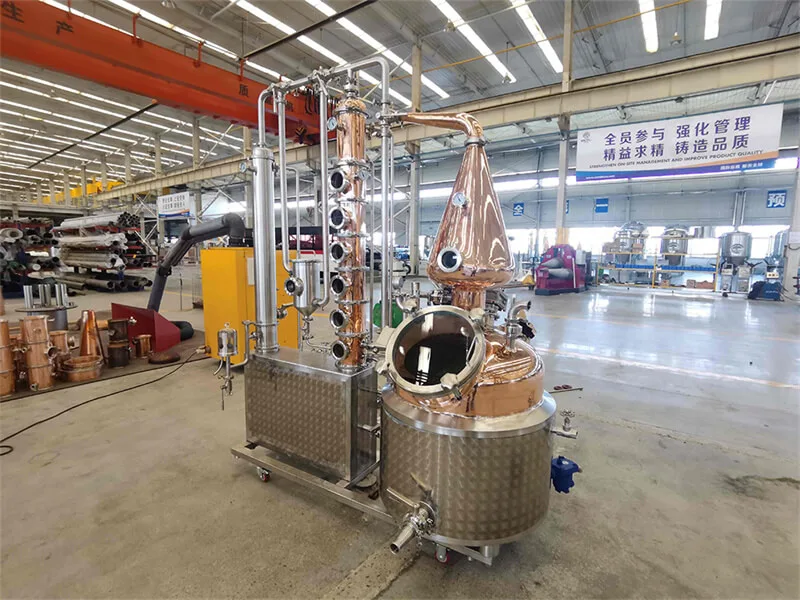
A hybrid still merges the flavor-preserving heart of a pot still with the rectification power of a column still. With removable plate sections, you can switch between modes. For a craft distillery producing a diverse portfolio — from bold whiskey to crisp vodka — a hybrid system is smart distillery equipment that saves both space and long-term capital.
Distillery Equipment Comparison:
| Feature | Pot Still | Column Still | Hybrid Still |
|---|---|---|---|
| Best For | Whiskey, Brandy, Rum | Vodka, Gin, Neutral Spirits | Flexible, All Categories |
| Flavor Profile | Rich, complex, grain/fruit forward | Clean, neutral, highly controllable | Adjustable by mode |
| Production Efficiency | Batch, low throughput | Continuous, very high | Moderate, switchable |
| Ease of Operation | Relies on artisan skill | Highly automatable | Moderate |
3. How to Choose the Right Distillery Equipment for Your Craft Distillery
The still is the star, but a complete distillery equipment system includes much more. Here’s a structured approach to selection.
(1) Let Your Spirit Type Dictate Your Equipment
- Whiskey / Brandy: A copper pot still is non-negotiable. Copper catalyzes ester formation and removes sulfur compounds, building the spirit’s signature aroma.
- Vodka: A high-efficiency column still with multiple plates is essential to reach the required purity, often paired with activated carbon filtration equipment.
- Gin: You need a still with a gin basket (botanical chamber) where vapor passes through juniper and botanicals to extract flavor.
- Rum: Flexible — a pot still yields heavy, funky rums, while a column still creates light, crisp white rums.
(2) Scale and Capacity Planning
Small craft distillery equipment batch sizes range from 50L to 3000L. For a 100L wash batch at 7% ABV, you’ll produce roughly 6-8 liters of pure alcohol — enough for 13-18 bottles of 40% spirit (750ml each). Always plan for at least 20% extra capacity to accommodate growth. Opt for modular distillery equipment: a system that lets you add fermenters or extend a column later saves a fortune in secondary investment.
(3) Copper vs. Stainless Steel: A Critical Material Decision
This distillery equipment choice affects both flavor and maintenance.
- Copper: Superior heat conductivity. Chemically active — it binds with sulfur compounds to remove off-flavors and catalyzes flavor-enhancing esterification. 63% of premium spirit producers use copper stills for this reason. It requires more care but is essential for flavorful spirits.
- Stainless Steel: Durable, cost-effective, and extremely easy to clean. It lacks copper’s flavor-altering chemistry, but this can be compensated by adding copper packing inside the column.
Best Practice: Many craft distillers choose a hybrid material strategy — stainless steel fermenters and storage tanks, with copper stills or copper components in the vapor path and condenser.
(4) Supporting Distillery Equipment Checklist
A complete production line needs these ancillary systems:
| System Module | Core Equipment | Selection Notes |
|---|---|---|
| Raw Material Handling | Grain mill, mash tun | Adjustable gap mill; mash tun needs heated jacket & agitator |
| Fermentation | Stainless steel fermenters, temp control | Conical fermenters with cooling jackets & CIP system |
| Distillation | Still + condenser + spirit receiver | Choose pot/column/hybrid based on your target spirit |
| Heating | Steam generator / electric / direct fire | Electric suitable for small setups; steam recommended for larger scale |
| Cooling | Cooling tower / chiller | Assess local water availability and drainage capacity |
| Bottling | Bottle washer, filler, corker, labeler | Manual/semi-auto for small batches; upgrade to automatic lines as you scale |
| Cleaning | CIP (Clean-in-Place) system | Must ensure all piping and tanks are fully sanitizable |
(5) Automation, Safety, and Compliance
Automation like PLC-controlled temperature management and automatic reflux ratio control makes your distillery equipment more precise without sacrificing the artisan’s touch. Safety is mandatory — pressure relief valves, temperature sensors, and emergency stops are must-haves. Before purchasing any distillery equipment, verify local building codes, fire safety regulations, health permits, and environmental discharge rules. Compliance is not an afterthought; it’s the license to operate.
4. Distillery Equipment Maintenance: A Practical Guide
Top-tier distillery equipment demands consistent care. Effective maintenance extends equipment life and ensures every batch tastes exactly as intended.
Daily Cleaning: A Non-Negotiable Ritual
Always rinse stills and pipes with warm water immediately after distillation before residues harden. Use soft brushes — never steel wool on copper or stainless steel. Flush glass components and condenser lines with deionized water 2-3 times after each use. For sticky residues, an ultrasonic cleaner works wonders on glass parts.
Special Care for Copper Stills
Copper is irreplaceable for flavor but demands gentle care. Never use chlorine-based cleaners, which cause corrosion. To restore tarnished copper, use a citric acid solution or a designated copper cleaner, then rinse thoroughly. Promptly remove acidic wash residues after every run to prevent surface etching.
Scheduled Maintenance Plan for Distillery Equipment
| Frequency | Maintenance Task | Key Notes |
|---|---|---|
| After Every Run | Flush piping, clean still interior | Clean while residues are still soft |
| Weekly | Disassemble & clean condenser (scale), inspect seals | Replace any cracked or worn gaskets |
| Monthly | Calibrate temperature sensors & automation | Contact the manufacturer if deviation > ±1°C |
| Quarterly | Deep clean kettle base & column packing; inspect condenser bundles; replace aging gaskets & O-rings | Perform chemical cleaning if needed |
| Biannually | Check vacuum system leak rate, verify automation parameters, inspect rupture discs | Ensure all safety devices are functional |
Also, inspect power cords and plugs monthly for wear, and clean dust from cooling fans to keep electrical components safe. Rubber gaskets are wear items — keep spares on hand and store them away from solvents.
Dealing with Scale Build-Up
Hard water is an invisible killer of distillery equipment efficiency. Scale on heating elements and condenser tubes reduces heat transfer dramatically.
- Heating plates: Wipe with a weak citric acid solution after cooling.
- Condenser tubes: Circulate a 5% citric acid solution for 2 hours to remove limescale and biofilm.
- Prevention: The best solution is installing a water softening system upfront to protect your entire distillery equipment setup.
Craft Your Spirit with the Right Distillery Equipment
From a passion project in a garage to a crafted bottle on a shelf, the journey is demanding. But in that moment when crystal-clear spirit drips from your condenser, carrying the scent of grain and oak, every decision and investment pays off. Choosing distillery equipment is the art of balancing flavor against efficiency, budget against ambition, and today’s needs against tomorrow’s vision.
We hope this guide helps you find the perfect distillery equipment to bring your spirits to life — and avoid costly wrong turns along the way. Here’s to your craft. Cheers.
Contact us today to discover how our brewery equipment and commercial craft brewing equipment can power your next brewery.