Choosing the right brewery equipment is one of the first major decisions when planning a new brewery or expanding an existing operation. The equipment affects production capacity, product flexibility, labor requirements, operating costs, and future expansion.
The terms craft brewery equipment and commercial brewery equipment are sometimes used interchangeably, but they can describe very different production requirements.
The main difference is not simply the size of the brewhouse. A suitable brewery system should be selected based on batch size, annual production, brewing frequency, fermentation capacity, available space, automation requirements, and future growth.
This guide explains the key differences between craft and commercial brewery equipment and how to determine which system is suitable for your project.
What Is Craft Brewery Equipment?
Craft brewery equipment is generally designed for small to medium-scale beer production where flexibility and product variety are important.
Typical systems may range from approximately 300L to 2000L per batch, although the actual configuration varies according to the brewery’s production plan.
Craft brewery systems are commonly used by:
- Cervejarias
- Microcervejarias
- Small independent breweries
- Pilot breweries
- Restaurants and hospitality businesses
- Breweries developing new beer recipes
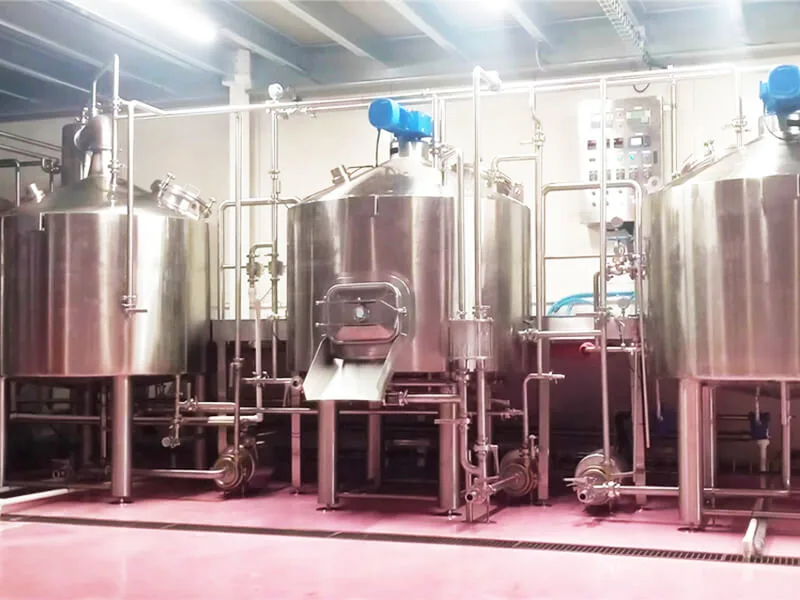
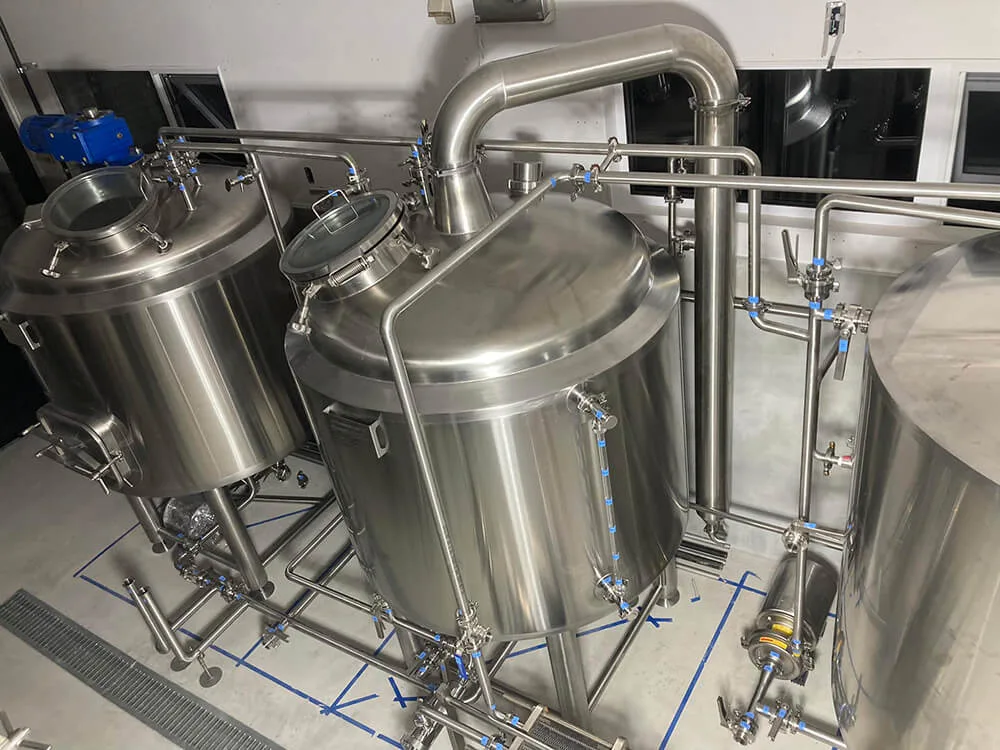
A craft brewing system may include a brewhouse, fermentation tanks, brite tanks, glycol cooling, CIP equipment, hot and cold water tanks, pumps, piping, and a control system.
The main advantage of a craft system is flexibility. Brewers can produce different beer styles without requiring the very large production infrastructure used by a high-volume commercial brewery.
What Is Commercial Brewery Equipment?
Commercial brewery equipment is designed for larger and more continuous production. It is typically used when a brewery needs higher output, more fermentation capacity, greater automation, and a scalable production system.
Commercial systems can start around 2000L per batch and extend to several thousand liters or more, depending on the project.
A commercial brewery may include:
- Large-capacity brewhouse
- Multiple fermentation tanks
- Brite beer tanks
- Hot liquor and cold liquor tanks
- Sistema de refrigeração a glicol
- Sistema de limpeza CIP
- Sistema de aquecimento a vapor ou elétrico
- Automated control system
- Yeast management equipment
- Water treatment
- Equipamento de embalagem
The focus is generally on production efficiency, process consistency, repeatability, and the ability to expand output as demand increases.
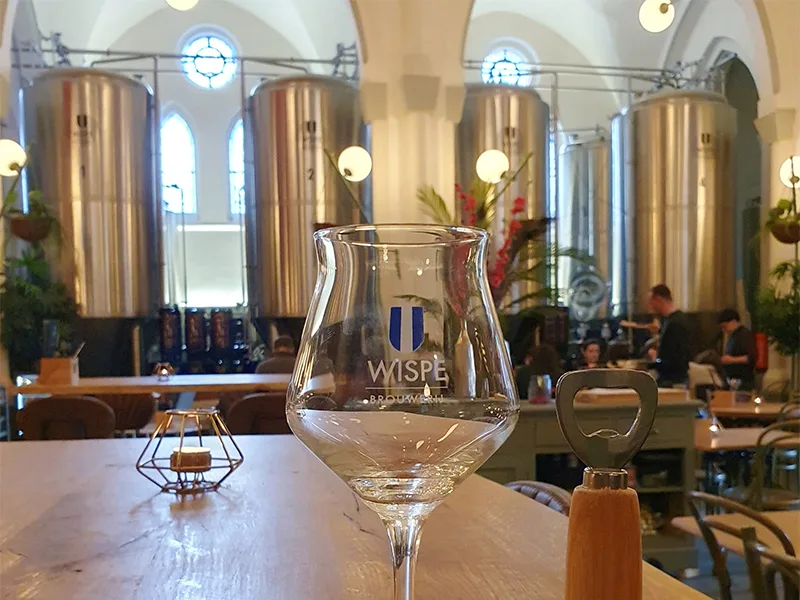
Craft Brewery Equipment vs Commercial Brewery Equipment
Although there is no single capacity that defines a craft or commercial brewery, several factors can be compared.
| Fator | Craft Brewery Equipment | Equipamento para cervejarias comerciais |
|---|---|---|
| Typical batch size | 300L–2000L | 2000L and above |
| Escala de produção | Pequeno a médio | Médio a grande |
| Product flexibility | Elevado | Medium to high |
| Automatização | Manual to PLC | PLC and automated systems |
| Fermentation capacity | Pequeno a médio | Médio a grande |
| Space requirement | Relatively compact | Larger production area |
| Investimento inicial | Generally lower | Generally higher |
| Expansion | Modular expansion | Designed for larger-scale growth |
| Production focus | Flexibility and specialty beers | Efficiency and production volume |
These ranges are only general references. A brewery should not choose equipment based on brewhouse capacity alone.
Brewhouse Capacity Is Not the Same as Annual Production
One of the most common mistakes when planning brewery equipment is assuming that brewhouse capacity directly represents annual production.
For example, a 1000L brewhouse does not necessarily mean that the brewery can only produce a fixed amount of beer per year.
Actual production depends on several variables:
- Batch size
- Number of brews per day
- Working days per year
- Fermentation time
- Número de tanques de fermentação
- Beer styles
- Packaging schedule
- Cooling capacity
- Cleaning time
For example, a brewery with a 1000L brewhouse and several fermentation tanks may achieve significantly higher annual production than a brewery using the same brewhouse with limited fermentation capacity.
This is why brewery equipment design should start with the target annual production, rather than simply selecting the largest brewhouse that fits the budget.
How to Choose the Right Craft Brewery Equipment
For a new craft brewery, a practical approach is to determine the production requirements first.
1. Define Your Target Production
Estimate how much beer you expect to produce annually.
Consider:
- Expected local demand
- Taproom sales
- Wholesale distribution
- Keg sales
- Bottled or canned beer
- Seasonal production
This provides a basis for selecting the brewhouse and fermentation capacity.
2. Choose the Batch Size
Common craft brewery configurations include 300L, 500L, 1000L, 1500L and 2000L systems.
A smaller brewhouse can be suitable for a brewpub or pilot brewery, while a larger system may be more appropriate for a brewery targeting wholesale distribution.
3. Calculate Fermentation Capacity
Fermentation capacity is just as important as brewhouse capacity.
If the brewhouse can produce more wort than the fermentation system can handle, the brewery may not be able to use its full brewing capacity.
The number and size of fermentation tanks should therefore be planned together with the brewhouse.
4. Consider Future Expansion
A brewery may start with a smaller brewhouse and expand fermentation capacity later.
For example, a 1000L brewery can potentially increase production by adding fermentation tanks, improving brewing frequency, or expanding supporting systems.
A modular design can make future expansion easier.
When Does a Brewery Need Commercial Brewery Equipment?
Commercial equipment becomes more relevant when production demand requires higher output and more consistent operation.
A commercial brewery may need larger equipment when:
- Beer is distributed to multiple markets
- Wholesale demand is increasing
- Production runs are frequent
- Multiple fermentation tanks are required
- Labor efficiency is becoming important
- Automated process control is needed
- Packaging volume is increasing
- Future expansion is already part of the business plan
At this stage, equipment selection should consider the entire production system rather than the brewhouse alone.
The brewhouse, fermentation system, cooling system, CIP system, water system, heating system, controls, and packaging line should work together.
Automation: Craft vs Commercial Brewing Systems
Automation is another important difference.
A small craft brewery may use manual or semi-automatic controls. This can provide flexibility and allow brewers to directly manage individual brewing steps.
As production increases, PLC-based automation becomes more valuable.
A brewery automation system can help control:
- Temperatura
- Funcionamento da bomba
- Valve sequences
- Wort transfer
- Fermentation conditions
- CIP procedures
- Arrefecimento
- Brewing recipes
Commercial breweries may use more extensive automation to improve process repeatability and reduce manual operations.
However, automation should be based on actual production requirements. A smaller brewery does not necessarily need the same level of automation as a large industrial facility.
Craft Brewery Equipment vs Commercial Brewery Equipment: Which Should You Choose?
There is no universal answer because the appropriate system depends on the brewery’s business and production model.
A 300L–500L system may be suitable for a brewpub, pilot brewery, or small-scale operation.
A 1000L–2000L system can provide more production capacity for a growing craft brewery.
For larger production requirements, a 2000L, 2500L, 3000L, 5000L or larger system may be considered, depending on annual production and the required number of brewing cycles.
The important point is to match the equipment with the entire production plan.
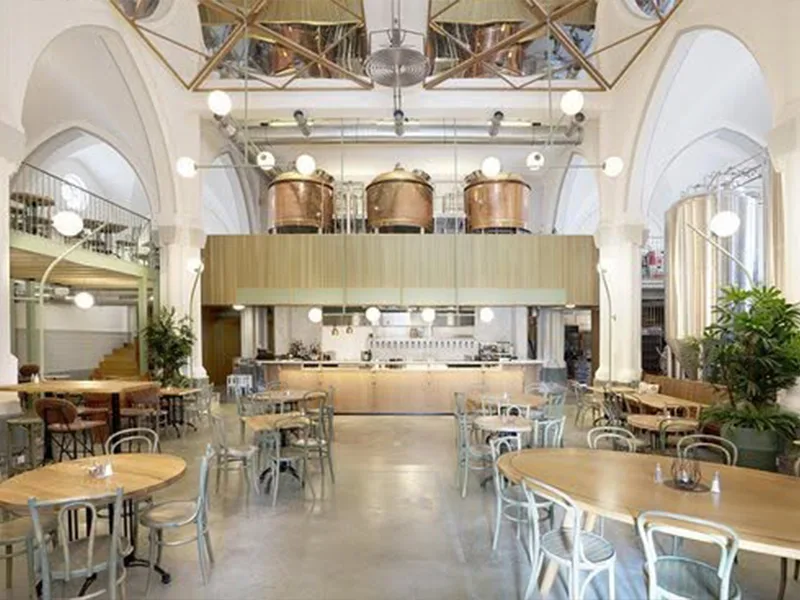
What Should Be Included in a Brewery Equipment Design?
A complete brewery project may require much more than a brewhouse.
Depending on the project, the system can include:
Cervejaria
Mash, lautering, boiling, whirlpool, and wort transfer equipment.
Sistema de fermentação
Conical fermentation tanks sized according to batch volume, fermentation time, and production targets.
Brite Beer Tanks
Used for beer maturation, carbonation, clarification, and preparation for packaging.
Sistema de arrefecimento
Glycol chillers, glycol tanks, heat exchangers, and related piping maintain the required process temperatures.
Sistema CIP
Cleaning-in-place equipment helps clean tanks, pipelines, heat exchangers, and other process components.
Hot and Cold Water System
Water tanks and heating/cooling equipment support brewing, cleaning, and process water requirements.
Sistema de controlo
Depending on the project, controls can range from manual operation to PLC-based automation.
Packaging System
Kegging, bottling, canning, or other packaging equipment can be integrated according to the brewery’s sales model.
Why Work with a Brewery Equipment Manufacturer?
For a complete brewery project, working directly with an experienced equipment manufacturer can simplify equipment integration and project coordination.
A manufacturer can evaluate the relationship between:
- Brewhouse capacity
- Fermentation volume
- Cooling capacity
- Heating requirements
- CIP capacity
- Automatização
- Utilidades
- Espaço disponível
- Future expansion
This is particularly important for turnkey brewery projects, where equipment from different suppliers needs to work together.
A manufacturer with engineering, fabrication, testing, installation, commissioning, and after-sales capabilities can also provide a more integrated approach to project execution.
Craft or Commercial Brewery: Plan the System Around Your Production Goals
The difference between craft brewery equipment and commercial brewery equipment is not simply about whether one system is small and the other is large.
The more important questions are:
- How much beer do you want to produce each year?
- What batch size do you need?
- How many brews will you make per day?
- How long is your typical fermentation cycle?
- How many fermentation tanks will you need?
- What level of automation do you require?
- What packaging method will you use?
- Do you plan to expand production later?
Once these factors are clear, the brewhouse, fermentation tanks, cooling system, CIP system, controls, and supporting equipment can be designed as one integrated system.
Brewery Equipment Manufacturer for Customized Brewing Systems
METO provides brewery equipment and integrated brewing systems for craft breweries, commercial breweries, brewpubs, pilot breweries, and growing beer producers.
Our equipment range can be configured according to batch capacity, production requirements, available space, automation level, and future expansion plans.
From brewhouses and stainless steel fermentation tanks to glycol cooling, CIP systems, water tanks, controls, and supporting equipment, the system can be engineered around the actual requirements of each project.
Planning a new craft brewery or expanding an existing commercial brewery?
Share your target annual production, desired batch size, number of brews per day, beer styles, available space, and packaging requirements with METO. Our engineering team can help develop a brewery equipment configuration based on your production goals.