For brewery startups, facility expansion projects, and contract beverage production enterprises worldwide, the success of a brewing facility does not rely on standalone equipment procurement. Many project failures or operational bottlenecks stem from a fragmented construction mindset — focusing merely on individual brewing tanks or packaging machines while ignoring systematic process coordination, layout rationality, and long-term operational scalability.
A high-performance modern brewery depends on a full-set brewery solution, a systematic engineering package that covers pre-project demonstration, overall layout design, core equipment matching, automated control, infrastructure construction, and full-life-cycle after-sales support. This guide elaborates on the complete logic of modern brewery planning, construction and optimization, providing standardized and customizable references for global brewery investors and operators of all scales.
1. Core Definition of a Professional Brewery Solution
A mature brewery solution is far more than a combination of mechanical equipment. It is an integrated engineering system tailored to production capacity, product positioning, site conditions and long-term development goals, running through the entire project from initial design, on-site construction, commissioning and production to subsequent operation optimization and capacity upgrading.
All modern brewing facilities are divided into three core functional zones, which constitute the basic framework of brewery construction and determine production efficiency and product stability:
Cold Block (Fermentation & Maturation Workshop): The core fermentation area for beer shaping and flavor stabilization, including conical fermentation tanks, bright beer tanks, glycol cooling systems and yeast management systems. Constant temperature and stable sterile environment in this zone are the core guarantees for consistent beer flavor.
Packaging Zone: The final finished product processing area, covering barrel washing, filling, sealing, labeling and packaging links. It supports flexible production modes from small-batch barrel filling to fully automatic bottle and can filling lines, adapting to diverse market sales channels.
2. Applicable User Groups and Project Scale Positioning
Modern brewery solutions support differentiated customized design according to project positioning and production scale, fully matching the needs of different global investors:
Start-up Micro Breweries & Brewpubs: Suitable for catering supporting, boutique craft beer sales and small-scale local retail. Such projects pursue fast construction, low investment cost and simple operation, and are mostly applicable to turnkey integrated solutions to realize rapid production and market launch.
Expansion-oriented Existing Breweries: For medium and small breweries with stable market demand that need capacity upgrading. The core demands include expanding fermentation capacity, upgrading old packaging lines, optimizing production processes, and solving the bottlenecks of insufficient output and single product structure.
Contract Brewers & Multi-beverage Producers: Enterprises engaged in OEM brewing, cider, kombucha and other fermented beverage production. The solution focuses on equipment versatility and process adjustability, realizing multi-product flexible production through modular configuration.
3. Seven Core Pillars of Modern Brewery Solutions
A standardized and efficient brewery project is built on seven mutually supportive core modules, covering all links from space design, production equipment, infrastructure to quality control and intelligent management:
3.1 Engineering and Layout Design
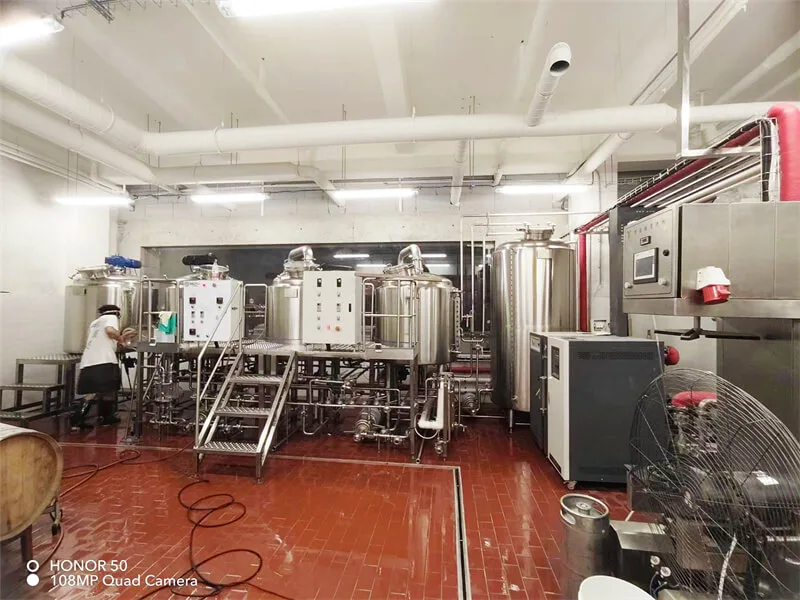
Scientific site layout is the premise of efficient production. Professional design takes production process flow as the core, reasonably divides functional areas, optimizes personnel and material circulation routes, avoids cross-contamination and operation redundancy, and reserves expansion space for future capacity upgrading and product iteration, realizing short-term practicality and long-term scalability.
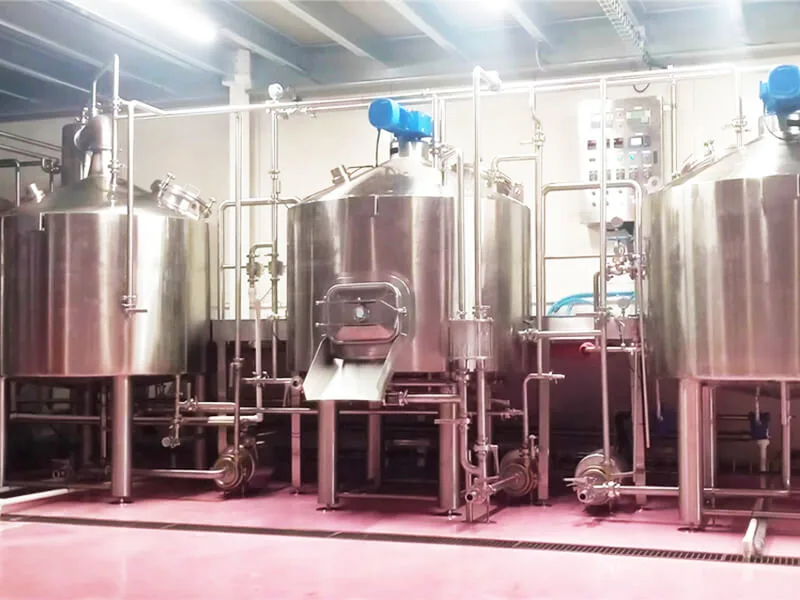
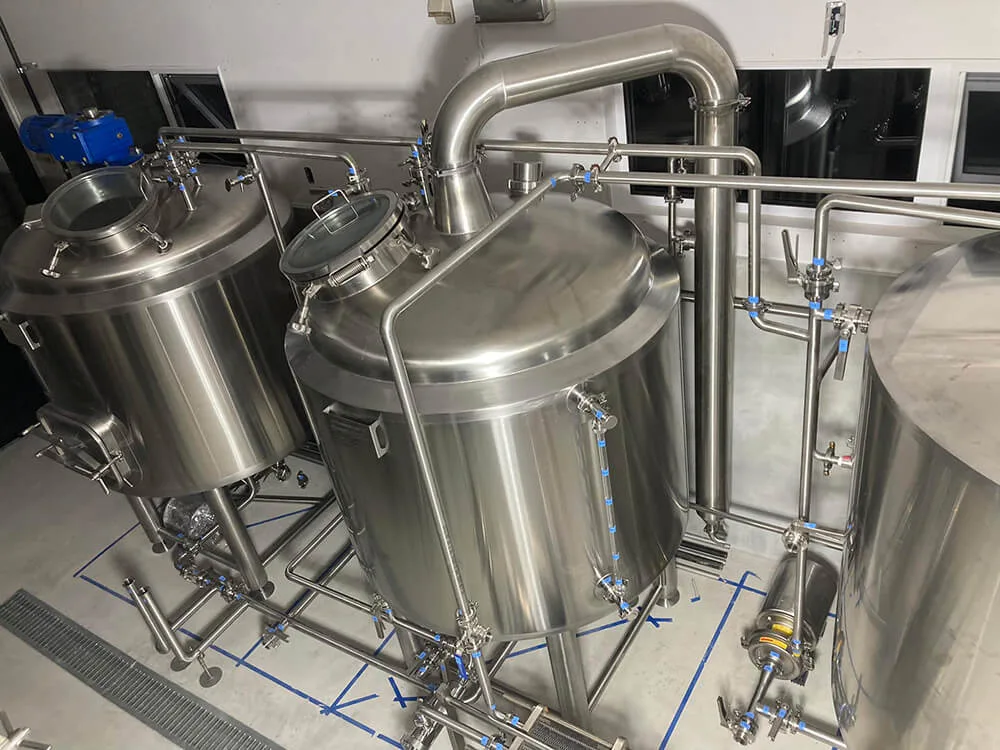
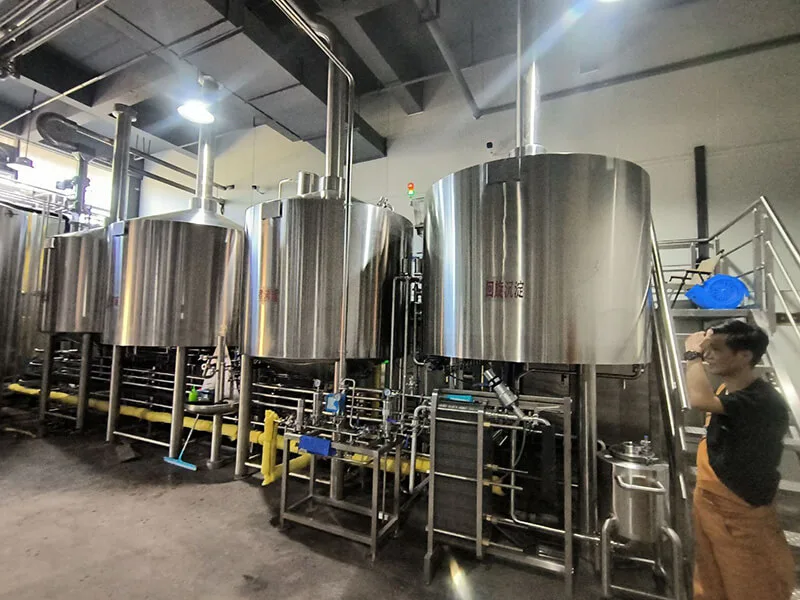
3.2 Hot Block Mashing System
Equipped with 2-vessel, 3-vessel and 4-vessel modular mashing systems, supporting electric heating and steam heating modes to adapt to different regional energy structures and cost budgets. The system realizes precise control of saccharification temperature, time and concentration, meets the brewing process requirements of various craft beers and industrial beers, and ensures high wort extraction rate and stable batch quality.
3.3 Cold Block Fermentation System
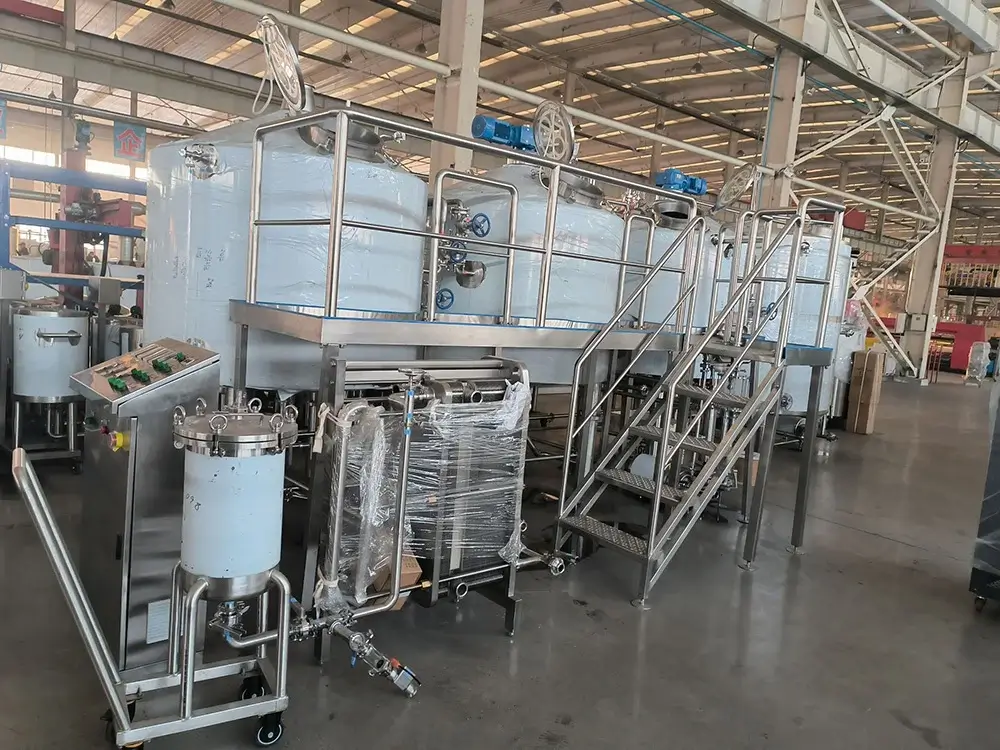
Adopts food-grade stainless steel conical fermentation tanks, matched with intelligent glycol constant-temperature cooling system, to realize segmented temperature control and pressure regulation in fermentation and maturation stages. Equipped with professional yeast propagation and management equipment, it standardizes yeast activation, cultivation and recycling processes, effectively reducing production costs and improving beer flavor consistency.
3.4 Finished Product Packaging Line
Covers full-range packaging solutions from basic manual and semi-automatic barrel filling lines to fully automatic bottle, can and barrel integrated packaging lines. According to market sales demands, it can flexibly configure washing, filling, capping, labeling, coding and packaging equipment to meet the production requirements of small-batch customized products and large-scale standardized products.
3.5 Utilities and Infrastructure
Including steam supply system, refrigeration system, water supply and drainage system, power distribution system and CIP automatic cleaning system. Perfect infrastructure configuration ensures stable operation of production equipment, realizes full-range sterile cleaning of pipelines and tanks, and eliminates quality risks caused by residual materials and bacterial contamination.
3.6 Automatic Control and Software System
Based on PLC core control, matched with HMI human-machine operation interface and SCADA data monitoring system, it realizes full-process automatic control of mashing, fermentation, cooling and cleaning. The supporting production and inventory management software can realize formula management, production schedule arrangement, raw material inventory tracking and finished product data statistics, improving digital operation efficiency.
3.7 Quality Assurance and Laboratory System
Equipped with professional brewing detection equipment, covering wort concentration, sugar degree, fermentation degree, microbial index and finished beer flavor and safety detection. A complete laboratory quality control system standardizes daily detection procedures, ensures that each batch of products meets international food safety standards and flavor specifications, and supports long-term brand quality stability.
4. Turnkey Solution vs Customized Engineering
In view of the different site conditions, project budgets and personalized demands of global customers, modern brewery solutions are divided into two mainstream modes to meet differentiated project needs:
4.1 Turnkey Full-service Solution
It is an one-stop integrated service dominated by a single professional supplier, covering project preliminary evaluation, scheme design, equipment manufacturing, on-site installation, commissioning, personnel training and formal production delivery. The advantages are clear project responsibility, highly matched supporting equipment, standardized construction process and short project cycle, which is the preferred choice for most start-up brewery projects.
4.2 Customized Engineering Solution
Aiming at old factory renovation, special building structure, special process requirements and other personalized scenarios, through professional system integration, realize adaptive matching of equipment and site, targeted optimization of production processes. It is suitable for expanded renovation projects and special customized production projects with complex on-site conditions and special product positioning.
5. Key Components of Turnkey Brewery Projects
As the most mainstream project cooperation mode for overseas customers, turnkey brewery projects have a complete closed-loop implementation system, and each link is the key to project success:
Feasibility Study & Business Case Demonstration: Combined with regional market demand, consumer preferences, energy cost and policy standards, confirm project positioning, production capacity scale and profit model, and provide data support for project investment decision-making.
Process & Utility Engineering Design: Accurately calculate the demand of water, electricity, steam and refrigeration resources, complete production process design, pipeline layout and infrastructure supporting design, to ensure the rationality and economy of project operation.
Equipment Specification Formulation & Supply: According to the production process requirements, customize stainless steel tanks, heat exchangers, control systems and supporting auxiliary equipment, and strictly control equipment processing standards and quality to meet long-term continuous production requirements.
On-site Installation, Commissioning & Staff Training: Complete on-site equipment assembly, pipeline docking and system debugging, conduct professional operation and maintenance training for factory employees, and ensure the team masters standardized production and daily maintenance skills.
Full-life-cycle Service & Upgrading Support: Provide long-term spare parts supply, regular equipment maintenance, process optimization guidance and capacity upgrading transformation services, escorting the sustainable operation and iterative development of the brewery.
6. Intelligent Automation & Digital Management System
Intelligentization is the core symbol of modern breweries, and also an important means to reduce labor costs and stabilize product quality. The modern intelligent brewing system realizes full-process digital management:
The core control system composed of PLC, SCADA and HMI realizes precise automatic control of key parameters such as mashing temperature, boiling time, fermentation temperature and pressure, avoiding quality fluctuation caused by manual operation errors. The production management software realizes full-life-cycle management from raw material warehousing, production processing to finished product delivery, and accurately tracks production data.
Equipped with IoT remote monitoring function, operators can view equipment operation status, production parameters and energy consumption data in real time through remote terminals, realize early warning of equipment faults and remote debugging, greatly reducing operation and maintenance costs and improving project operation efficiency.
7. Sustainable Production & Energy Efficiency Optimization
In the context of global energy conservation and environmental protection, sustainable production has become an important evaluation standard for modern brewery projects, and it is also a key factor to reduce long-term operation costs:
Water Resource & CIP Cleaning Optimization: Adopt circulating water recycling system and optimized CIP cleaning process, which can effectively reduce water consumption by more than 40% compared with traditional processes, realizing water resource recycling and reducing production water cost.
Energy Management & Heat Recovery System: Recycle and reuse the waste heat generated by wort boiling and fermentation cooling, convert waste heat into available heat energy for preheating and heating links, reduce energy waste, and achieve 10%-20% energy saving effect.
By-product & Waste Treatment: Equipped with professional brewer’s grain treatment and carbon dioxide recovery system, realize resource utilization of brewing by-products, standardize wastewater and waste gas treatment processes, meet international environmental protection emission standards, and realize green and sustainable production.
8. Professional Standards for Brewery Supplier Selection
The overall strength of the solution supplier directly determines the project quality, operation effect and long-term service guarantee. Overseas customers should focus on the following four core indicators when selecting partners:
Professional Technology & Project Experience: Prioritize suppliers with rich global brewery project cases, mature process technology and professional engineering team, which can accurately respond to the differentiated needs of different regions and different scale projects.
Full-range Supply & System Integration Capability: Verify whether the supplier has the ability of one-stop supporting from design, equipment manufacturing to system integration, avoid multi-supplier docking caused by equipment mismatch and process coordination problems.
Localized Service Network & Support Mode: Focus on the supplier’s overseas service system, including on-site installation, commissioning, after-sales maintenance and technical support capabilities, to ensure rapid response to on-site project problems.
Total Cost of Ownership: Do not only focus on the initial investment cost of equipment and construction, but comprehensively evaluate the long-term operation energy consumption, maintenance cost, equipment service life and upgrading space, to select the most cost-effective overall solution.
9. Standard 8-step Implementation Roadmap for Brewery Projects
A standardized implementation process is the key to ensure the on-time delivery and stable operation of the project. All modern brewery projects follow a mature 8-step construction and operation process:
Step 1: Concept Definition & Capacity Confirmation: Clarify project positioning, product types, target output and market positioning, and determine the core scheme direction of the brewery.
Step 2: Site Selection & Utility Condition Evaluation: Complete factory site selection, investigate and evaluate local water, electricity, steam, environmental protection policies and traffic conditions to lay a foundation for scheme design.
Step 3: Connect with Professional Solution Partners: Conduct in-depth communication with suppliers, put forward project demands, and obtain targeted preliminary design scheme and matching plan.
Step 4: Layout Approval & Budget Finalization: Confirm factory layout, equipment configuration and construction scheme, complete project budget evaluation and investment approval.
Step 5: Equipment Manufacturing & Factory Acceptance Test: Launch equipment customized production, complete factory performance testing and quality inspection to ensure equipment meets design standards.
Step 6: On-site Installation & System Commissioning: Complete on-site equipment assembly, pipeline docking, system debugging and linkage test to ensure stable operation of all modules.
Step 7: Professional Training & First Batch Brewing Test: Complete employee operation and maintenance training, carry out trial production and first batch of brewing tests, and optimize process parameters according to production results.
Step 8: Daily Operation Optimization & Capacity Expansion Reserve: Realize formal mass production, continuously optimize production efficiency and product quality, and reserve conditions for subsequent capacity expansion and product upgrading.
10. Configuration Comparison & Practical FAQ
10.1 Configuration Comparison of Different Scale Breweries
Brewpubs, micro-breweries and regional large-scale breweries have obvious differences in equipment configuration, automation level and packaging focus. Small-scale start-up projects focus on low investment, flexible operation and simple maintenance, with semi-automatic configuration and single packaging mode; medium and large-scale expansion projects focus on high efficiency, automation and continuous production, with full-automatic control system and multi-line packaging configuration to meet large-volume market supply demands.
10.2 Common Project Problems & Solutions
In overseas brewery projects, customers usually focus on project investment cost, construction cycle, automatic upgrading timing, and common construction pitfalls. Professional systematic solutions can effectively avoid common problems such as unreasonable site layout, mismatched equipment parameters, incomplete infrastructure and unstandardized processes, solve the pain points of low production efficiency and unstable product quality in later operation, and provide reliable guarantee for project long-term profitable operation.
Conclusion
The construction and operation of a modern brewery is a systematic engineering project rather than a simple equipment procurement. Only by taking the complete brewery solution as the core, relying on scientific layout design, standardized equipment matching, intelligent production control and perfect life-cycle service, can we build a high-efficiency, low-consumption, scalable and high-quality modern brewing facility. This guide provides a full-process professional reference for global brewery investment, construction and optimization, helping every customer avoid fragmented construction misunderstandings and realize sustainable profitability of brewery projects.