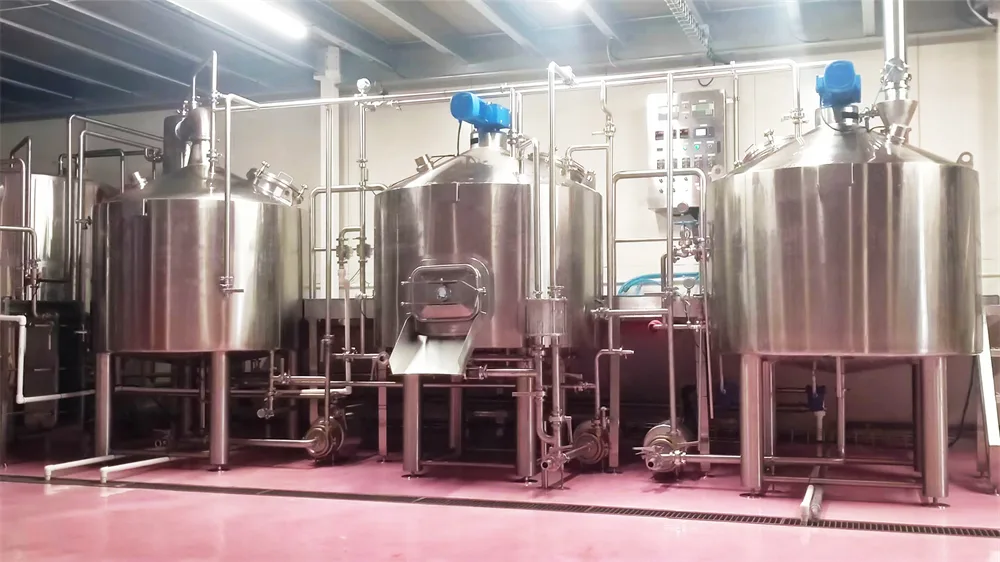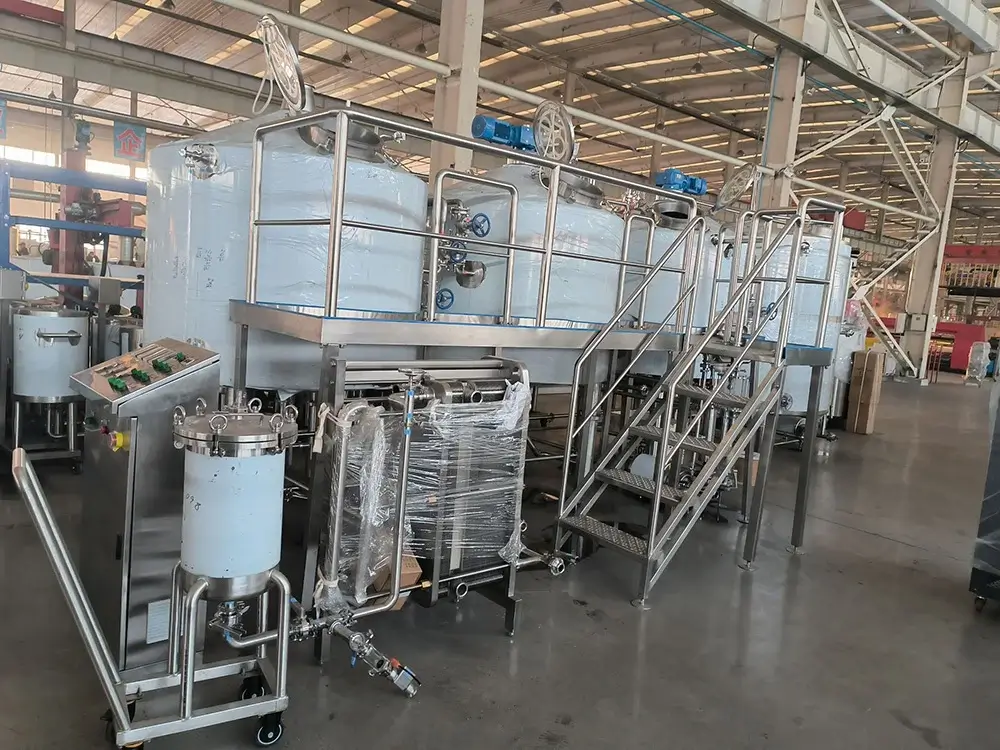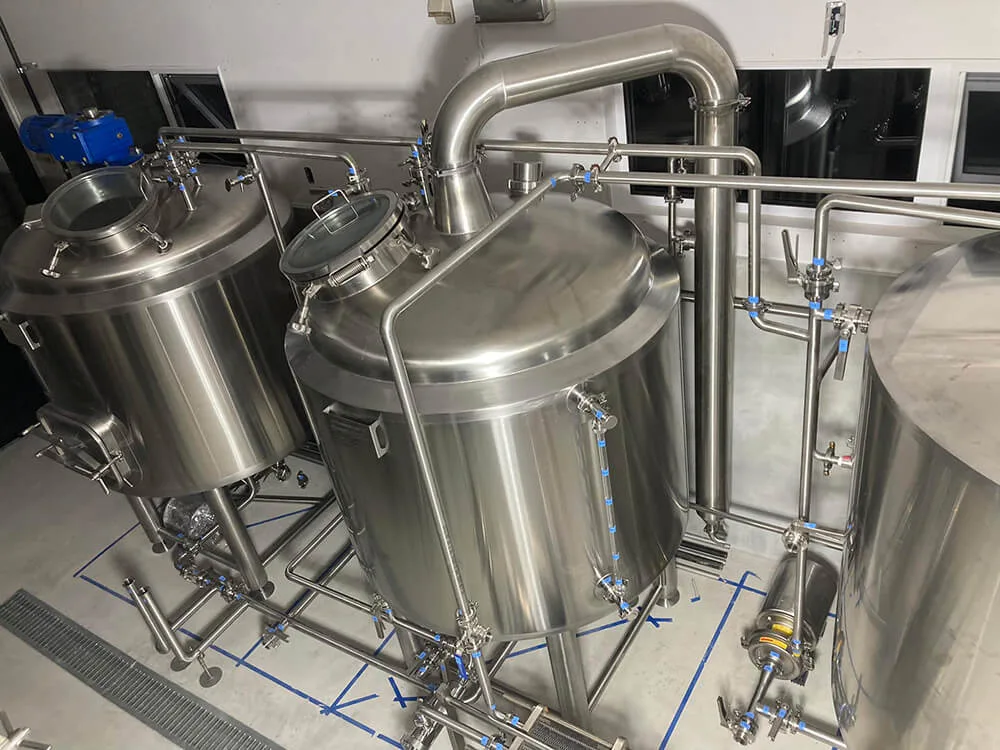
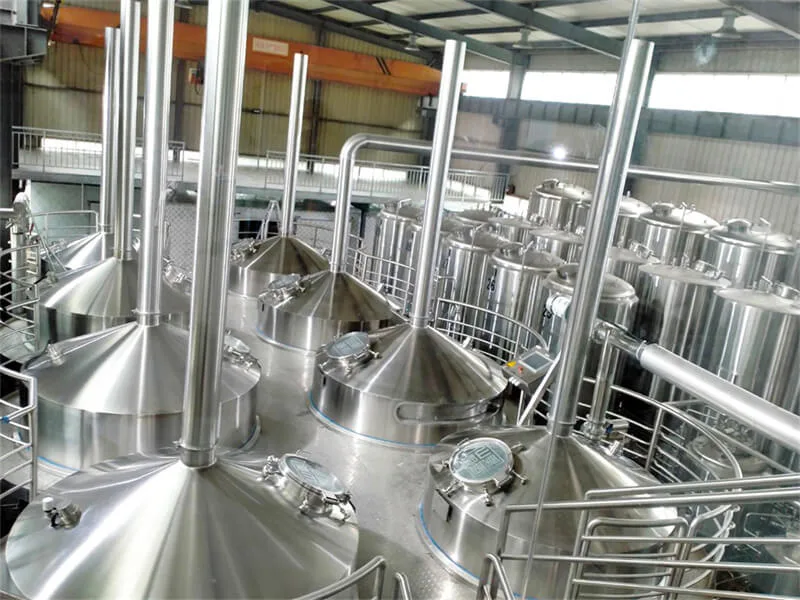
In the ever-evolving world of craft beer, consistency and quality are the currencies of success. For breweries operating with a 20HL (20-ton) brewhouse system, the margin for error is slim, but the potential for excellence is immense. The heart of this process lies in the mashing system—where starches transform into sugars, and the foundation of your beer’s flavor, body, and aroma is laid.
Whether you are upgrading an existing line or commissioning a new 20HL turnkey solution, optimizing your mashing workflow is critical. Here is how modern breweries are leveraging precision engineering and data-driven processes to elevate their craft.
1. The Art of Milling: “Crushed, Not Pulverized”
The journey to perfect wort begins before the water even hits the grain. In a 20HL system, uniformity is key.
- The Goal: Achieve a crush where the husk remains intact (to act as a natural filter bed) while the endosperm is fully exposed for enzymatic action.
- The Solution: Modern double-roll malt mills with adjustable gaps are essential. This ensures that regardless of the malt variety, the particle size distribution remains optimal, preventing stuck sparges and maximizing extraction efficiency.
2. Precision Temperature Control & Step Mashing
Gone are the days of guessing temperatures. Today’s 20HL systems utilize advanced PLC controls to execute complex step mashes with ±0.5°C accuracy.
🌡️ Protein Rest (45°C – 55°C)
Holding the mash at this range for 30–60 minutes activates β-glucanase and proteases.
- Benefit: Breaks down gum-like β-glucans and large proteins, significantly improving lautering speed and enhancing final beer foam stability.
🍬 Saccharification Rest (62°C – 68°C)
This is the core conversion phase. By holding here for 60–90 minutes, α-amylase and β-amylase work in tandem to convert starches into fermentable sugars (maltose, glucose).
- Optimization Tip: Adjusting the temperature within this window allows brewers to tweak the fermentability. Lower temps (~62°C) favor beta-amylase for a drier, more attenuated beer; higher temps (~68°C) favor alpha-amylase for a fuller body.
🛑 Mash Out (75°C – 78°C)
Raising the temperature halts enzymatic activity, locking in your sugar profile and reducing wort viscosity for easier filtering.
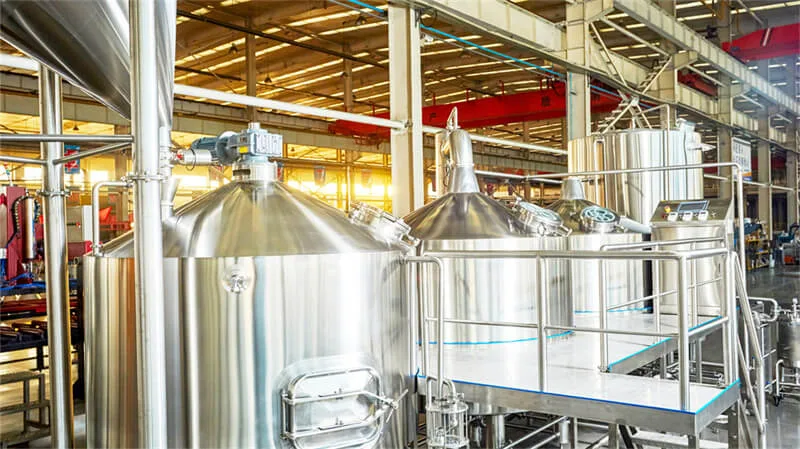
3. High-Efficiency Lautering & Sparging
Time is money, and oxygen is the enemy. In a 20HL setup, minimizing the time from mash-off to boil is crucial for preserving freshness.
- Filtration Speed: Advanced lauter tuns or membrane filter presses can reduce filtration time to 60–90 minutes with loss rates under 5%.
- Step Sparging: Using water strictly controlled at 78–80°C in a step pattern ensures maximum extraction of soluble solids without tannin pickup.
- Innovation Spotlight: Some 2026-era systems now feature centrifugal vortex designs that separate grain and wort up to 50% faster, achieving clarity levels above 95%.
4. Scientific Boiling & Hop Optimization
The boil is where flavor stabilizes and bitterness is calibrated.
- Boil Intensity: Maintain an evaporation rate of 8–12% over 60–90 minutes. This ensures proper protein coagulation (hot break) and the volatilization of unwanted compounds like DMS.
- Hop Timing: Precision is vital. Early additions drive bitterness (IBUs), while late and whirlpool additions preserve volatile aromatics.
- Low-Pressure Boiling: Cutting-edge systems now offer low-pressure boiling (92–95°C). This gentler process retains delicate hop aromas that traditional vigorous boiling might strip away, while energy recovery systems can cut thermal energy consumption by 30%.
5. The Digital Edge: IoT & Smart Automation
The biggest differentiator in 2026 is connectivity. A smart 20HL brewhouse is not just a set of tanks; it’s a data hub.
- Real-Time pH Monitoring: Automated dosing systems adjust pH dynamically to ensure peak enzyme activity, reducing batch-to-batch variation.
- Oxygen Exclusion: Integrated nitrogen dosing systems create an inert atmosphere during transfer and sparging, preventing oxidation and keeping flavors “fresh from the field.”
- Recipe Management: Cloud-based platforms allow brewers to store, replicate, and tweak recipes remotely, ensuring that a Stout brewed in January tastes identical to one brewed in June.
6. Rigorous Quality Control (QC)
Optimization means nothing without verification. A robust QC protocol covers the entire lifecycle:
- Raw Material Inspection: Sensory and lab analysis of malt, hops, and water before they enter the silo.
- Process Monitoring: Real-time tracking of gravity, pH, and temperature at every critical control point (CCP).
- Final Product Analysis: Regular testing for ABV, original gravity, color (EBC/SRM), and bitterness (IBU) to ensure alignment with style guidelines.
Conclusion
Optimizing a 20HL craft brewhouse is about blending traditional brewing wisdom with modern engineering. By focusing on precise milling, stepped temperature control, efficient filtration, and smart automation, breweries can consistently produce high-quality beers that stand out in a crowded market.
Are you ready to upgrade your brewing potential? The technology of 2026 offers tools that not only improve quality but also enhance sustainability and profitability.