Fruit wine production is becoming an important opportunity for wineries, beverage manufacturers, agricultural businesses, and craft beverage producers looking to develop new products. From apple cider and pear wine to blueberry, plum, cherry, and other specialty fruit wines, each product requires equipment that supports reliable fermentation, hygienic processing, and consistent product quality.
For commercial producers, selecting the right fruit wine production equipment is not simply a matter of purchasing fermentation tanks. The complete system should be designed around the fruit raw materials, production capacity, fermentation requirements, cleaning procedures, and future expansion plans.
As a manufacturer of stainless steel fermentation and beverage processing equipment, METO provides equipment solutions for different fruit wine production requirements, from small-batch development to commercial manufacturing.
1. What Equipment Is Needed for Fruit Wine Production?
A commercial fruit wine production line typically includes raw material processing equipment, fermentation tanks, transfer pumps, storage tanks, cleaning systems, and optional clarification and filling equipment. The exact configuration depends on the fruit type and the intended production process.
Fruit Processing Equipment
Fruit preparation is the first stage of production. Depending on the raw material, the process may require washing, sorting, crushing, destoning, pulping, or juice extraction equipment.
Apples and pears may require crushing and pressing systems, while berries and stone fruits may need different processing arrangements. Equipment selection should consider the fruit’s texture, seed content, pulp characteristics, and desired juice yield.
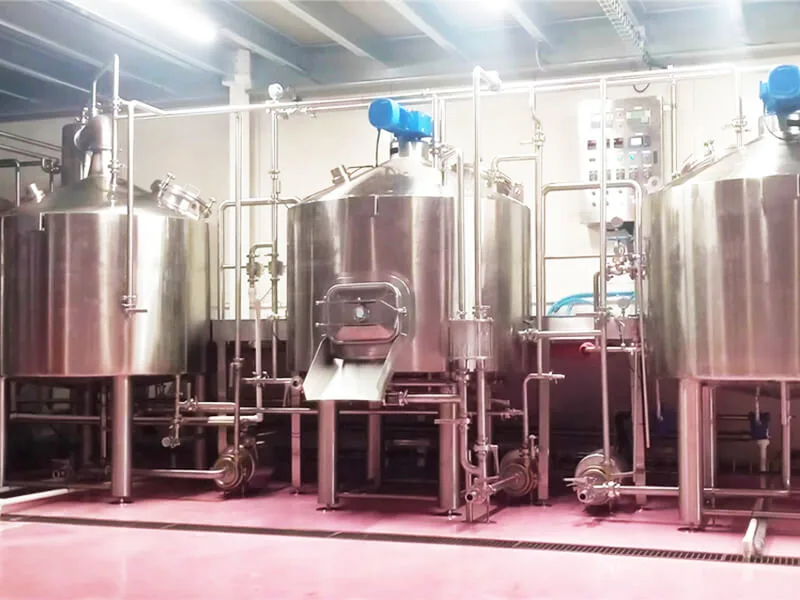
Stainless Steel Fermentation Tanks
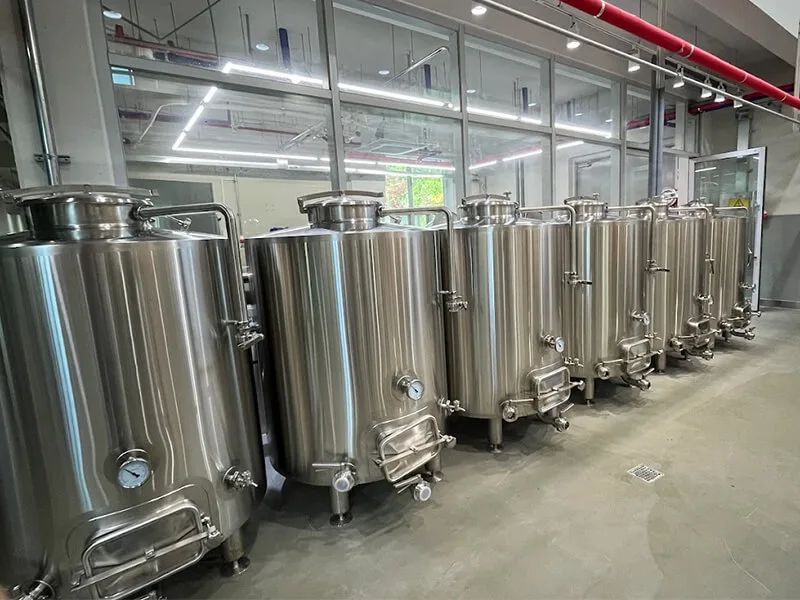
Fermentation tanks are the core equipment in a fruit wine production system. They provide a controlled environment in which yeast converts fermentable sugars into alcohol.
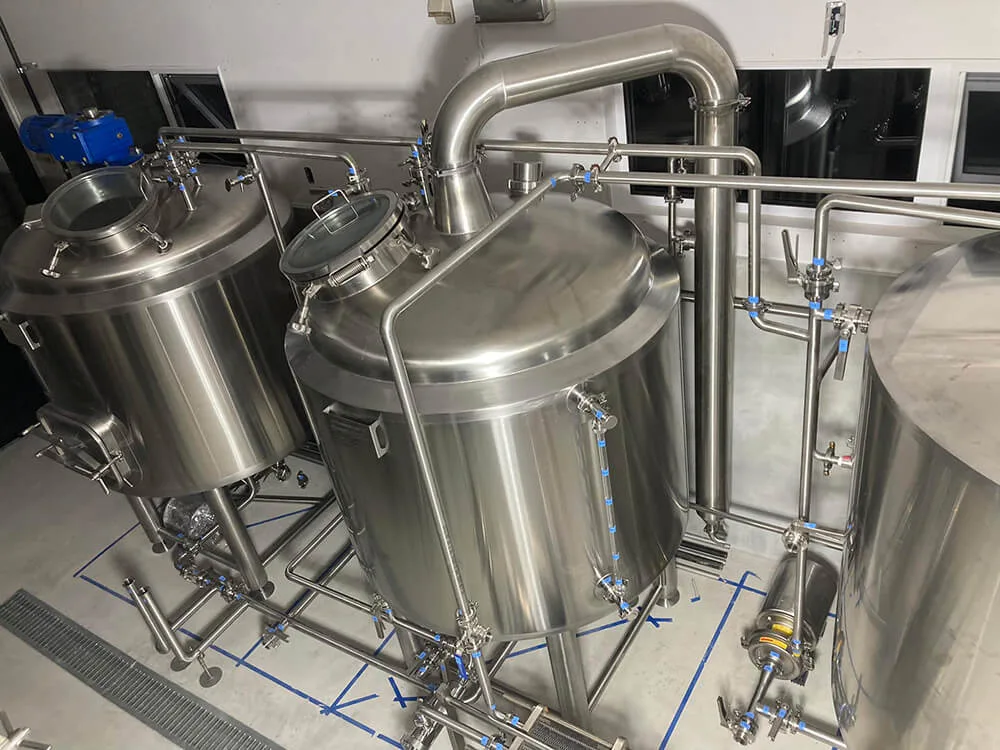
For commercial applications, stainless steel tanks can be designed with cooling jackets, temperature sensors, sanitary valves, sampling ports, and suitable drainage structures. These features help producers manage fermentation conditions and maintain hygienic production.
Tank design should also account for foam formation, pulp accumulation, sediment removal, and the space required for cleaning and maintenance.
Storage and Maturation Tanks
After primary fermentation, fruit wine may require settling, maturation, blending, or stabilization before filtration and packaging.
Stainless steel storage tanks help protect the product from unwanted contamination and provide a practical solution for holding wine between processing stages. Depending on the product, optional features may include cooling, insulation, sampling ports, and controlled gas connections.
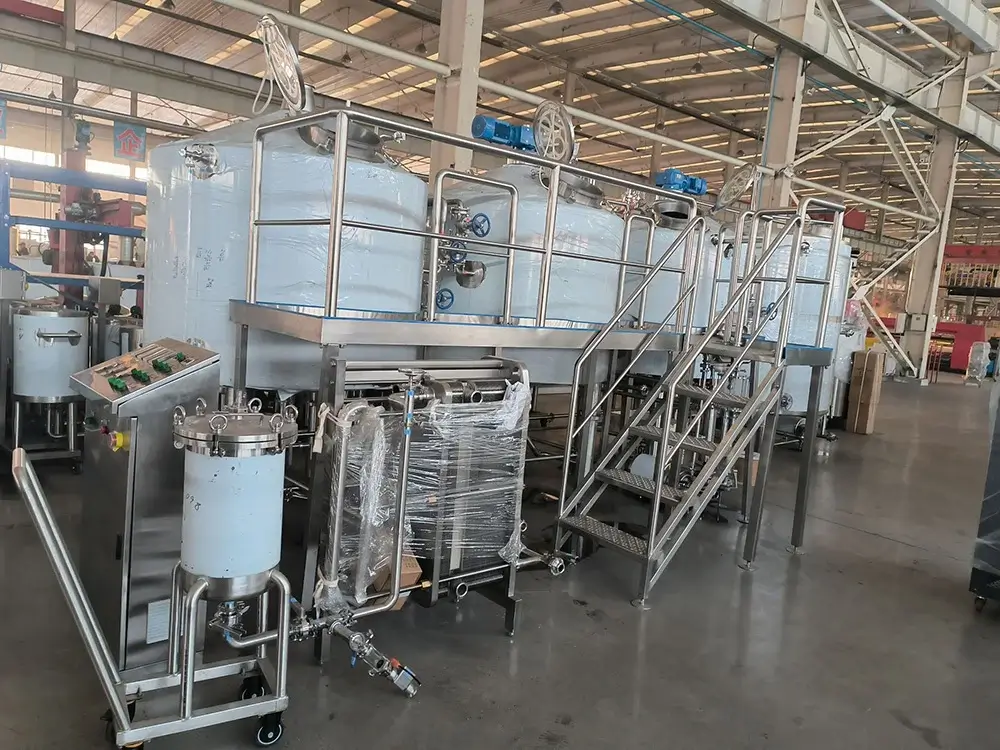
Pumps, Piping, and Cleaning Systems
Food-grade transfer pumps and sanitary piping connect the main production stages. Correctly designed transfer routes help reduce unnecessary handling and make the production process easier to manage.
A clean-in-place (CIP) system can circulate suitable cleaning solutions through compatible tanks, pipelines, and fittings. The CIP configuration should be designed according to the equipment layout, cleaning requirements, and applicable food-processing standards.
For producers planning a complete facility, METO can help coordinate the main vessels and supporting equipment as an integrated system rather than treating each tank as an independent purchase.
2. Why Choose Stainless Steel Fruit Wine Fermentation Tanks?
Material selection has a direct influence on equipment durability, sanitation, and long-term operating requirements.
Stainless steel is widely used in commercial beverage processing because it offers corrosion resistance, a durable surface, and compatibility with established cleaning procedures when properly specified and maintained.
주요 이점은 다음과 같습니다:
Hygienic construction: Properly finished product-contact surfaces and sanitary connections support effective cleaning and reduce areas where residues can accumulate.
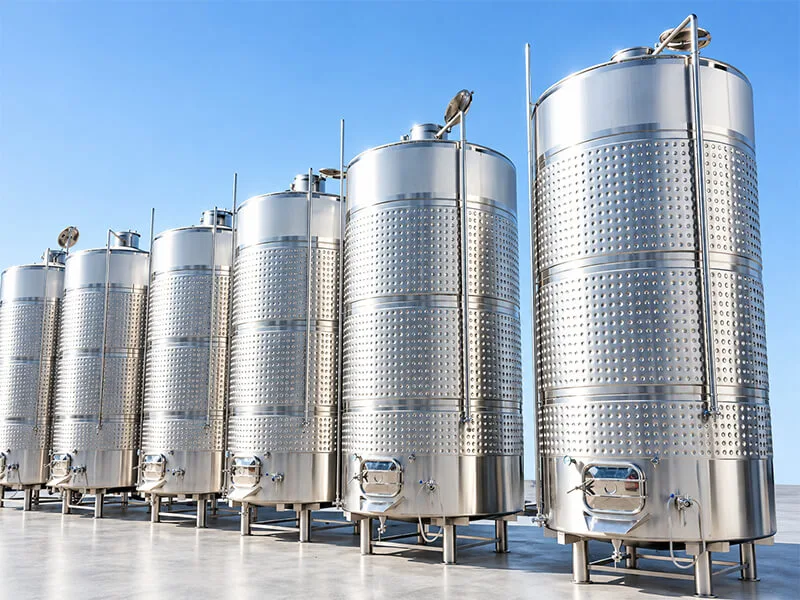
Temperature control: Tanks equipped with cooling jackets can work with an external chiller to remove fermentation heat and maintain the selected process temperature.
Product flexibility: The same facility may be configured to process different fruit wine varieties, provided the vessels, cleaning procedures, and production parameters are suitable for each product.
Long-term durability: Appropriate stainless steel grades, sound welding, and correct maintenance help extend equipment service life.
Production scalability: Modular tank arrangements allow producers to add fermentation or storage capacity as production demand increases.
METO can manufacture stainless steel tanks using SUS304 or, where the product chemistry and operating conditions require it, SUS316L. The appropriate material should be selected according to acidity, chloride exposure, cleaning chemicals, and other relevant process conditions.
3. How Does Temperature Control Affect Fruit Wine Fermentation?
Temperature management is one of the most important considerations when designing fruit wine fermentation equipment.
Yeast activity produces heat during fermentation. If the temperature rises beyond the selected process range, fermentation performance and the final aroma profile may be affected. Excessively low temperatures can also slow yeast activity or interfere with fermentation completion.
A jacketed fermentation tank uses circulating cooling water or glycol solution to regulate the temperature of the product. A temperature sensor and controller can monitor conditions and activate the cooling system when necessary.
Different fruit wines have different fermentation requirements. The following values are illustrative starting points, not universal operating specifications.
| Product type | Example fermentation range |
|---|---|
| Apple wine or cider | 15–22°C |
| Berry fruit wine | 15–22°C |
| Plum or stone-fruit wine | 15–24°C |
| Red grape wine with skin contact | 22–28°C |
The actual operating temperature should be determined by the fruit variety, yeast strain, sugar concentration, desired flavor profile, and production method.
When designing a commercial system, the cooling capacity should be calculated based on batch volume, fermentation heat load, target temperature, ambient conditions, and the required cooling time. A tank jacket alone cannot guarantee temperature stability if the supporting chiller is undersized.
4. How to Select the Right Fruit Wine Production Capacity
Choosing production capacity requires more than estimating how much wine a business intends to sell each month. Producers must also consider fermentation duration, maturation time, cleaning cycles, seasonal raw material availability, and the number of batches processed simultaneously.
For example, a business processing large quantities of apples during harvest may need substantial receiving and juice-processing capacity, while a specialty berry wine producer may prioritize flexible batch sizes and separate tanks for different fruit varieties.
The following table provides a preliminary planning framework. It is not a fixed equipment-sizing standard.
| Production stage | Typical planning consideration |
|---|---|
| Pilot production | Small tanks for recipe development and product testing |
| Small commercial production | Multiple fermentation tanks for different batches |
| Growing production facility | Dedicated fermentation and storage capacity with coordinated cooling |
| Large commercial facility | Integrated processing, fermentation, storage, cleaning, and packaging systems |
When calculating tank capacity, consider the difference between nominal volume and actual working volume. Fermentation may require additional headspace for foam, carbon dioxide release, or fruit pulp, depending on the process.
The number of tanks is equally important. If fermentation takes several weeks and the facility must receive new fruit every few days during harvest, a single large tank may not provide sufficient scheduling flexibility.
METO can develop equipment configurations according to target output, batch size, product types, fermentation cycles, and available installation space.
5. Essential Features to Consider When Ordering Fruit Wine Equipment
Before purchasing equipment from a manufacturer, buyers should confirm the technical requirements of the entire production system.
Tank Material and Surface Finish
Confirm the stainless steel grade, product-contact material, welding quality, internal surface finish, and compatibility with the intended cleaning process.
Cooling Jacket and Insulation
Specify the required fermentation temperature range, cooling medium, jacket configuration, insulation requirements, and connection points for the chiller.
Sanitary Design
Review the manway, sampling valve, discharge outlet, internal drainage, spray devices, and other components that contact the product or cleaning solutions.
Automation and Monitoring
Depending on the project budget and process requirements, tanks can incorporate temperature sensors, digital controllers, PLC-based operation, and centralized monitoring.
Automation can reduce routine manual adjustments, but the control system should match the actual production process. Not every small facility needs a fully automated line.
Installation and Utilities
Equipment layout should account for floor loading, drainage, electrical supply, water, cooling capacity, access for maintenance, and safe operator movement.
For international projects, buyers should also confirm shipping dimensions, installation responsibilities, documentation, and applicable local requirements before production begins.
6. Why Work Directly with a Fruit Wine Equipment Manufacturer?
Working directly with an equipment manufacturer can simplify communication between the production process, tank design, fabrication, and project installation.
As a trade and manufacturing integrated company, METO focuses on stainless steel beverage and fermentation equipment, including fruit wine tanks, wine storage tanks, mixing tanks, and supporting systems.
Our project approach can include:
- Process-based equipment selection: Matching tank functions and capacities to the customer’s intended fruit wine production process.
- Customized tank design: Configuring vessel dimensions, connections, cooling arrangements, and optional accessories according to project requirements.
- Integrated equipment planning: Coordinating fermentation vessels with cooling, transfer, and cleaning systems.
- Manufacturing and quality control: Applying appropriate fabrication, inspection, and testing procedures according to the equipment specifications.
- Project support: Assisting with equipment documentation, installation planning, and commissioning arrangements according to the agreed project scope.
Equipment configuration, certification, and engineering requirements should be confirmed for each project, as they vary according to vessel design, operating conditions, destination market, and installation requirements.
Choosing a manufacturer with relevant engineering and fabrication capabilities helps buyers evaluate the entire production system instead of comparing equipment based only on tank price.
7. How to Plan a Fruit Wine Production Line for Your Business
A successful project begins with a clear understanding of the product and production objectives.
Before requesting a quotation, prepare the following information:
- Fruit type: Apples, pears, grapes, berries, plums, or a combination of fruits.
- Target production: Planned output per batch, day, month, or year.
- Production process: Juice fermentation, pulp fermentation, blending, maturation, or other required stages.
- Tank requirements: Fermentation volume, storage volume, number of tanks, and temperature-control needs.
- Automation level: Manual operation, semi-automatic control, or integrated PLC control.
- Destination market: Installation location, available utilities, and applicable technical requirements.
These details allow the manufacturer to assess tank sizing, cooling requirements, equipment connections, and the overall production layout before finalizing the proposal.
결론
Choosing the right fruit wine production equipment is essential for building a reliable, hygienic, and scalable beverage manufacturing operation. From fruit processing and fermentation to storage, cleaning, and packaging, each stage should be designed around the characteristics of the product and the producer’s operational goals.
Stainless steel fermentation tanks, appropriate temperature control, sanitary transfer systems, and a properly sized supporting infrastructure form the foundation of a practical commercial fruit wine facility.
As a fruit wine equipment manufacturer, METO can help you plan a customized equipment solution based on your fruit varieties, production capacity, process requirements, and future expansion goals.
Planning a new fruit wine production line or upgrading your existing facility? METO에 문의 to discuss your project requirements and receive an equipment proposal tailored to your production needs.
Frequently Asked Questions
What equipment is needed to produce fruit wine commercially?
A typical production line may include fruit washing and crushing equipment, juice extraction equipment, stainless steel fermentation tanks, transfer pumps, storage tanks, a cooling system, and CIP cleaning equipment. Clarification and filling systems can be added according to the final product and packaging requirements.
What material is suitable for fruit wine fermentation tanks?
SUS304 stainless steel is suitable for many food and beverage applications. SUS316L may be considered for more demanding product chemistry or cleaning conditions. The final material selection should be based on the actual process environment.
Can one production line make different types of fruit wine?
Yes, a suitably designed production line can process multiple fruit wine varieties. However, differences in raw materials, fermentation conditions, cleaning requirements, and product scheduling must be considered to prevent cross-contamination and maintain product consistency.
How do I determine the number of fermentation tanks required?
The number depends on batch volume, fermentation duration, maturation time, production frequency, cleaning downtime, and seasonal demand. A production schedule should be prepared before deciding the number and capacity of tanks.
Can METO customize fruit wine production equipment?
METO can discuss customized tank capacities, materials, cooling systems, fittings, automation options, and supporting equipment according to the project’s technical requirements. Final specifications depend on the agreed process design and installation conditions.