Choosing the right kombucha brewing equipment is an important step when starting or expanding a commercial kombucha business. The equipment must match the production target, fermentation process, available space, and future growth plans.
For beverage manufacturers, kombucha brands, and fermentation businesses, selecting equipment involves more than choosing tank capacity. A well-designed system should support consistent production, efficient cleaning, reliable temperature control, and flexible process management.
As a beverage equipment manufacturer, METO provides customized stainless steel tank solutions and brewing systems designed around different production requirements. This guide explains the key factors to consider when selecting commercial kombucha brewing equipment.
1. Define Your Kombucha Production Requirements
Before selecting equipment, determine how much kombucha you plan to produce and how your production process will operate.
Important factors include:
- Target production volume: Estimate your daily, weekly, or monthly output.
- Batch size: Determine the volume of kombucha processed in each batch.
- Fermentation time: Consider the time required for primary fermentation and any additional maturation or conditioning stages.
- Product range: Decide whether you will produce one standard kombucha product or multiple flavors and formulations.
- Future expansion: Consider whether production will increase as your customer base grows.
These factors influence tank capacity, tank quantity, cooling requirements, transfer arrangements, and the level of automation needed.
It is also important to distinguish between tank capacity and finished product output. Fermentation time, cleaning cycles, filling operations, and production scheduling all affect the actual output of a kombucha facility.
2. Understand the Essential Equipment for Commercial Kombucha Production
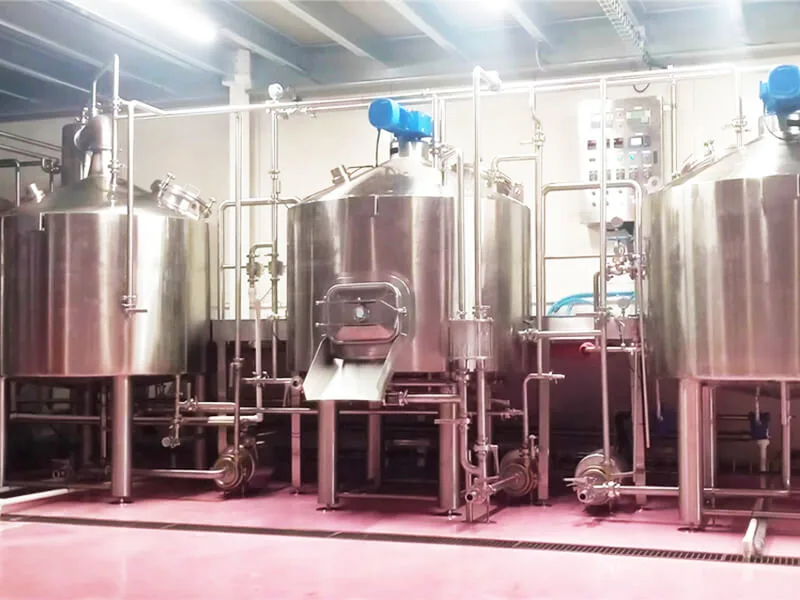
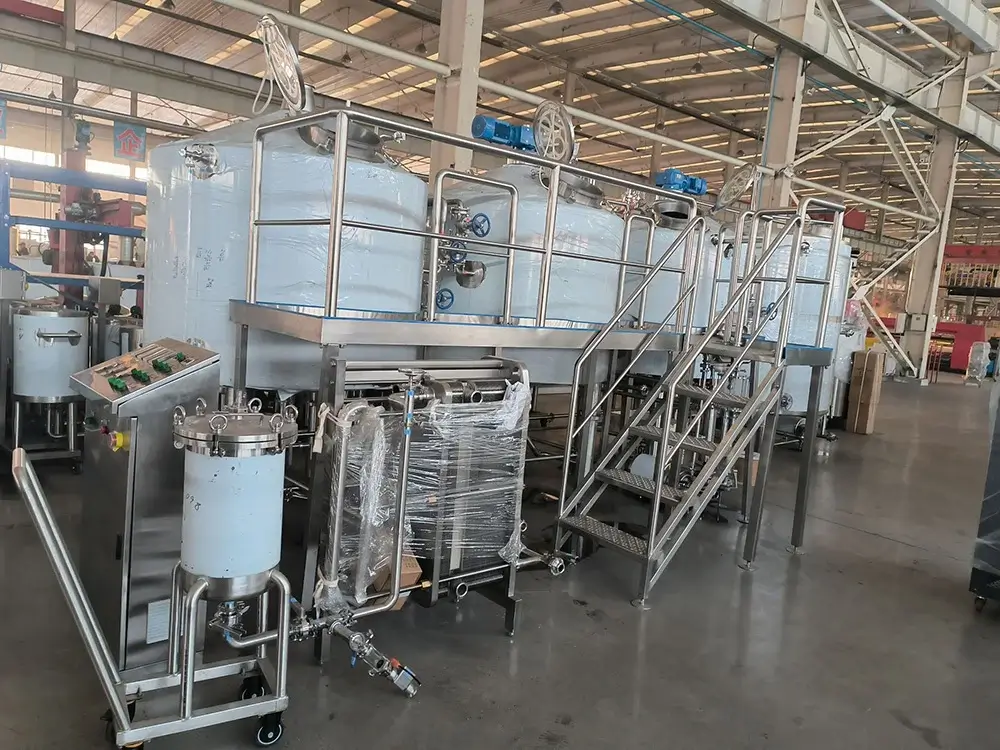
A commercial kombucha production system may include several types of equipment. The exact configuration depends on the recipe, fermentation method, and packaging requirements.
Tea Preparation and Mixing Tanks
Tea preparation equipment is used to prepare tea and dissolve sugar according to the production process. A stainless steel mixing tank may be suitable for combining ingredients and preparing the liquid before fermentation.
When selecting a mixing tank, consider its working volume, mixing requirements, heating method, discharge arrangement, and ease of cleaning.
Kombucha Fermentation Tanks
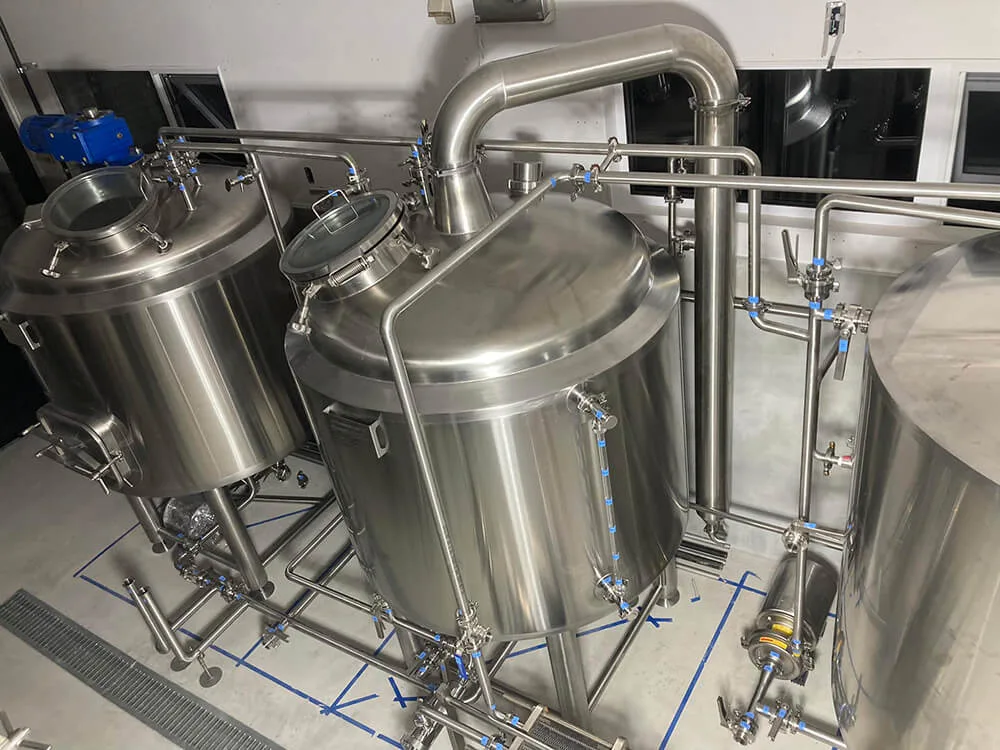
Fermentation tanks are central to commercial kombucha production. They provide a controlled vessel for fermentation and must be designed according to the intended process.
Key considerations include tank capacity, material quality, temperature management, sanitary connections, and cleaning access.
Unlike conventional beer fermentation, kombucha fermentation commonly involves a symbiotic culture of bacteria and yeast. Traditional primary fermentation often requires oxygen exchange, so the tank design must suit the chosen culture and fermentation method. A sealed, pressure-rated vessel should not automatically be treated as the best option for every fermentation stage.
Storage and Conditioning Tanks
Additional tanks may be needed for blending, temporary storage, cooling, or product conditioning before packaging.
If the production process includes secondary fermentation or carbonation, the equipment must be selected according to the intended pressure, product characteristics, and process controls.
Cooling and Temperature Control Systems
Temperature affects fermentation activity and product consistency. Depending on the process, a cooling system, temperature sensors, and control equipment may be required.
The cooling capacity should be determined by the number and size of tanks, the required temperature range, ambient conditions, and the heat load generated during production.
CIP Cleaning System
A cleanable system is essential for beverage manufacturing. A clean-in-place (CIP) system can help clean tanks and connected pipelines without dismantling the entire installation.
Its configuration should match the equipment layout, internal surfaces, piping arrangement, cleaning chemistry, and sanitation procedures. Cleaning effectiveness must be verified for the actual process.
3. Choose the Right Fermentation Tank Capacity
Tank capacity is one of the most important decisions when purchasing kombucha brewing equipment.
A tank that is too small may restrict production, while an oversized tank can increase initial investment and leave capacity unused.
Consider the following factors:
- Batch volume: Determine the actual working volume required for each batch.
- Fermentation duration: Longer fermentation cycles may require more tanks to maintain a regular production schedule.
- Headspace and process requirements: The usable volume may differ from the tank’s nominal capacity.
- Cleaning and turnaround time: Allow time for emptying, cleaning, inspection, and preparation between batches.
- Expansion plans: Leave room for additional tanks or supporting equipment when future growth is expected.
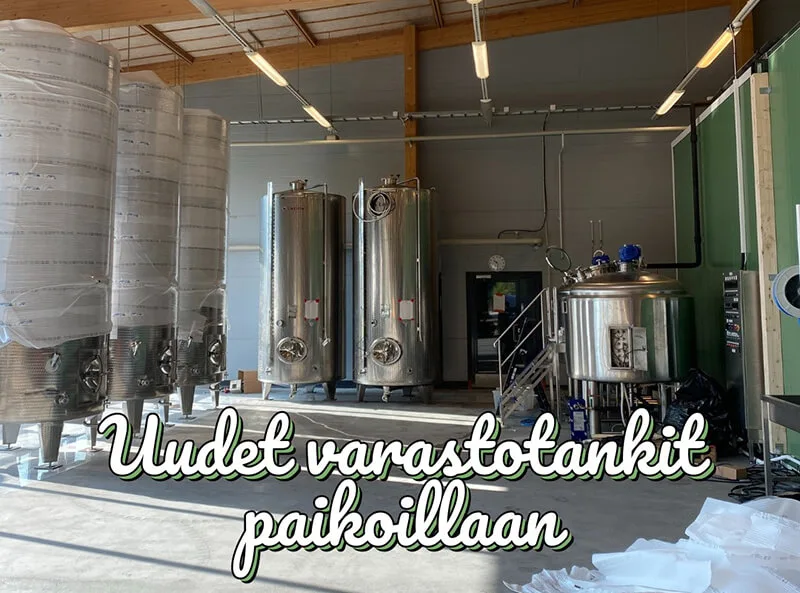
For example, a producer targeting a higher weekly output may need several fermentation tanks operating on staggered schedules rather than one large tank. This arrangement can provide greater flexibility for different recipes and production cycles.
The final tank configuration should be calculated from the required output, fermentation time, and operating schedule rather than tank volume alone.
4. Select Suitable Stainless Steel Materials
Material selection affects equipment durability, hygiene, maintenance, and long-term operating costs.
Stainless steel is widely used in commercial beverage processing because it offers good corrosion resistance, durability, and cleanability when properly specified and maintained.
Stainless Steel 304
Stainless steel 304 is commonly used for beverage tanks and processing equipment. It can be suitable for many kombucha applications, provided the operating conditions and cleaning chemicals are compatible with the material.
Stainless Steel 316L
Stainless steel 316L offers improved resistance to certain corrosive environments due to its molybdenum content. It may be considered when the product composition, cleaning conditions, or other process requirements justify the additional cost.
The appropriate material should be selected according to acidity, cleaning chemicals, operating temperature, and other relevant conditions.
Surface Finish and Sanitary Design
Material grade is only one part of equipment quality. Internal surface finish, weld quality, drainage, fittings, and cleaning access also affect hygienic performance.
When evaluating a manufacturer, ask about material traceability, surface treatment, welding procedures, inspection methods, and the suitability of product-contact components for your application.
5. Consider Temperature Control and Automation
Commercial production often requires consistent operating conditions across multiple batches.
A suitable control system can help operators monitor and manage important process parameters.
Depending on production requirements, equipment may include:
- Temperature sensors and control instruments
- Automated heating or cooling control
- PLC-based control panels
- Process monitoring and alarm functions
- Automated pumps and transfer controls
- Batch records and data monitoring, where required
Not every kombucha producer needs a fully automated system. Smaller operations may prefer basic instrumentation and manual control, while larger facilities may benefit from centralized monitoring and automated process management.
The right automation level depends on production volume, labor availability, process complexity, and budget.
6. Plan the Complete Production Line
Purchasing individual tanks without considering the entire production process can create layout and operational problems.
Before finalizing an equipment order, review the complete process from ingredient preparation to packaged product.
A commercial kombucha line may include:
- Tea preparation and ingredient mixing
- Primary fermentation
- Blending or secondary processing, if required
- Cooling and temporary storage
- Filtration, if appropriate for the product
- Filling, sealing, and packaging
- CIP cleaning and sanitation facilities
Not every production line requires all these stages. Equipment selection should follow the actual recipe and process flow.
The layout should also consider operator access, drainage, utility connections, product transfer distances, cleaning access, and the separation of relevant production areas.
For overseas projects, it is advisable to confirm electrical specifications, utility requirements, applicable pressure-vessel rules, and local installation requirements before manufacturing begins.
7. Evaluate the Manufacturer’s Engineering and Customization Capabilities
Choosing a suitable equipment manufacturer is as important as selecting the equipment itself.
A manufacturer should be able to understand your process requirements and translate them into an appropriate equipment configuration.
When comparing suppliers, consider:
- Manufacturing capability: Check whether the supplier has the facilities and technical expertise to manufacture the required tanks and supporting equipment.
- Customization: Confirm whether tank dimensions, connections, insulation, cooling arrangements, and control systems can be adapted to your project.
- Quality control: Ask about material verification, welding inspection, surface finishing, pressure testing where applicable, and final inspection.
- System integration: Determine whether the supplier can coordinate tanks, pumps, pipelines, cooling systems, and cleaning equipment.
- Technical support: Clarify the scope of documentation, installation guidance, commissioning, training, and after-sales service.
For international buyers, communication and technical documentation are also important. Drawings, equipment specifications, utility requirements, and agreed acceptance criteria should be confirmed before production.
8. Balance Initial Investment and Long-Term Operating Costs
The lowest equipment price does not necessarily represent the best overall value.
A commercial kombucha system should be evaluated based on its expected service life, production capacity, cleaning efficiency, maintenance requirements, and ability to support future expansion.
When reviewing quotations, compare the same scope of supply. Check whether each quotation includes tanks, control systems, cooling equipment, pumps, pipelines, CIP equipment, installation support, and other required components.
A phased investment may be appropriate for a new business. For example, a producer could initially install the essential preparation and fermentation equipment while planning connections and floor space for future expansion.
However, the initial configuration must still meet the hygiene, process-control, and safety requirements of the intended production method.
Why Choose METO for Kombucha Brewing Equipment?
METO is a beverage and fermentation equipment manufacturer providing customized stainless steel tanks and integrated equipment solutions for different production requirements.
Our engineering approach focuses on matching equipment design to the customer’s process, capacity, layout, and operational needs.
Depending on the project, solutions may include:
- Customized stainless steel fermentation and storage tanks
- Mixing and processing equipment
- Temperature control and cooling arrangements
- CIP cleaning systems
- Automated control options
- Equipment integration and project support
From initial equipment planning to manufacturing and technical coordination, METO works with customers to develop solutions that fit their production objectives.
The final configuration is determined by the required capacity, fermentation method, product characteristics, local requirements, and project scope.
If you are planning a new kombucha facility or upgrading an existing production line, sharing your target output and process requirements is a practical first step toward selecting the right equipment.
Frequently Asked Questions
What equipment is needed to start commercial kombucha production?
A typical setup may include tea preparation or mixing equipment, fermentation tanks, suitable temperature-control equipment, transfer pumps, cleaning facilities, and filling equipment. The exact configuration depends on production volume, fermentation method, and packaging requirements.
Which stainless steel is suitable for kombucha fermentation tanks?
Stainless steel 304 is commonly used in beverage equipment, while 316L may be appropriate for more demanding corrosive conditions. The selection should consider product acidity, cleaning chemicals, temperature, and the intended service conditions.
How many fermentation tanks does a commercial kombucha facility need?
The number depends on batch size, fermentation duration, target output, and turnaround time. Producers should calculate the required working capacity and production schedule before deciding on tank quantity.
Does kombucha production require a temperature-control system?
Temperature monitoring and control can help maintain consistent fermentation conditions. The required system depends on the culture, recipe, target fermentation profile, ambient conditions, and desired level of process control.
Can kombucha brewing equipment be customized?
Yes. Depending on the manufacturer and project scope, tank dimensions, working volume, connections, cooling arrangements, control systems, and supporting equipment can be customized to suit the production process and facility layout.
What information should I provide when requesting a quotation?
Prepare your target production volume, expected batch size, fermentation method, product range, desired automation level, available installation space, local electrical requirements, and any specific material or cleaning requirements. These details help the manufacturer recommend an appropriate system.
결론
Choosing the right kombucha brewing equipment requires a clear understanding of production targets, fermentation conditions, tank capacity, material selection, cleaning procedures, and future expansion plans.
A well-planned system can support consistent production, efficient operation, and more flexible capacity management. Working with an experienced equipment manufacturer also helps ensure that tank design and supporting systems match the actual process.
Planning a commercial kombucha production line? METO에 문의 to discuss your production capacity, fermentation process, and customized equipment requirements.