As labor costs continue to rise and consumers demand higher-quality craft beverages, traditional brewing is rapidly moving toward automation and smart manufacturing. For small breweries, automated brewing systems offer a practical way to improve product consistency, reduce labor dependency, and increase production efficiency.
From craft beer breweries to small distilleries and cider producers, automated brewing technology is becoming an essential investment for scaling production while maintaining quality. This article explains what automated brewing systems are, the key automation technologies used in small breweries, essential brewing equipment, and the advantages and disadvantages of brewery automation.
What Is an Automated Brewing System?
An automated brewing system is an integrated brewing solution that combines industrial automation, intelligent sensors, PLC control systems, and precision mechanical equipment to automate the entire brewing process.
These systems can manage:
- Raw material handling
- Mashing and lautering
- Fermentation control
- Filtration
- Cleaning and sanitation
- Filling and packaging
- Data monitoring and production traceability
At the core of most systems is a PLC (Programmable Logic Controller), which continuously monitors brewing parameters such as:
- Temperature
- pH value
- Pressure
- Dissolved oxygen
- Flow rate
Using real-time data, the system automatically adjusts steam pressure, cooling water flow, agitation speed, and fermentation conditions to ensure stable and repeatable brewing results.
In simple terms, an automated brewing system acts like a “digital brewmaster,” transforming traditional experience-based brewing into a measurable and repeatable process with minimal manual intervention.
Key Automation Technologies for Small Breweries
For small breweries with production capacities ranging from 300L to 5000L per batch, automation solutions are typically designed to be modular, cost-effective, and easy to operate.
1. Intelligent Temperature Control Technology
Temperature control is one of the most critical factors in brewing because it directly affects flavor, alcohol content, fermentation efficiency, and product stability.
Modern automated brewing systems use PID temperature control technology to maintain precise brewing temperatures throughout the process.
Typical applications include:
- Step mashing control (45°C → 68°C → 78°C)
- Fermentation temperature stabilization within ±1°C
- Automatic cooling jacket regulation
- Remote temperature monitoring through mobile apps
Accurate temperature control helps breweries reduce flavor inconsistencies and improve batch repeatability.
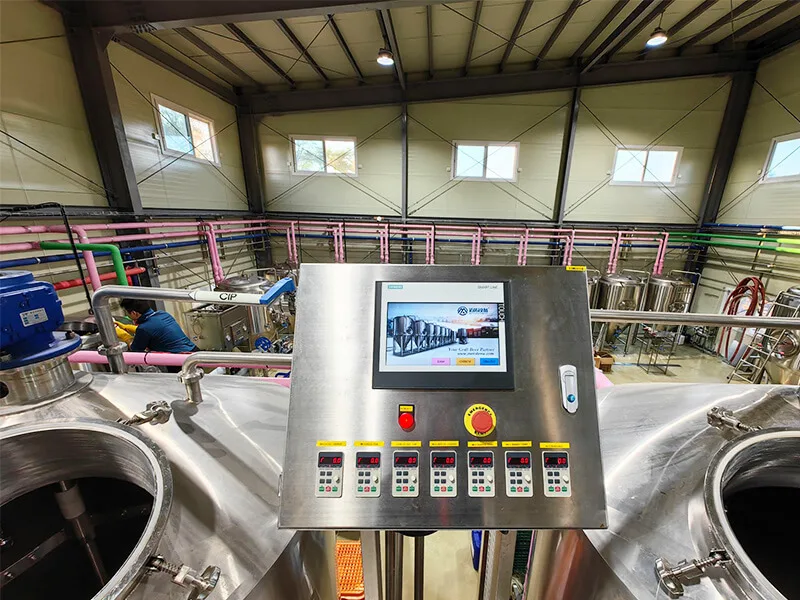
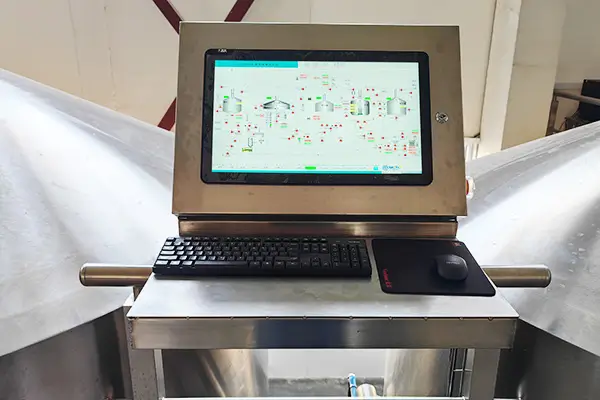
2. PLC Control and Recipe Management Systems
Most modern small brewery automation systems are equipped with PLC control panels from brands such as Siemens.
These systems provide:
- Automated brewing sequences
- Built-in brewing recipes
- Custom recipe storage
- One-touch production switching
- Real-time monitoring and alarm systems
Brewers can store multiple recipes for beer, cider, fruit wine, or spirits and quickly switch between products, making automation ideal for small-batch and multi-product breweries.
3. Automatic CIP Cleaning and Energy-Saving Technology
CIP (Clean-in-Place) systems are essential for maintaining brewery hygiene and reducing downtime.
Automated CIP systems typically include:
- Acid tank
- Caustic tank
- Hot water tank
- Circulation pumps
- 자동 청소 프로그램
Compared with manual cleaning, automated CIP systems can:
- Reduce cleaning time by over 50%
- Improve sanitation consistency
- Minimize contamination risks
- Lower labor requirements
Many modern brewing systems also integrate heat recovery technology to recycle thermal energy from brewing or distillation processes, improving overall energy efficiency by more than 30%.
Essential Automated Brewing Equipment for Small Breweries
A typical small automated brewery system usually includes five core equipment modules. For breweries producing 300L–500L per batch, the average investment ranges from USD 20,000 to USD 50,000 depending on configuration and automation level.
1. Raw Material Handling Equipment
Automatic Grain Feeding System
Automatic conveyors transport malt or grain directly into the brewhouse, reducing manual handling and improving efficiency.
Key benefits:
- Reduced labor intensity
- Improved material handling efficiency
- Reduced dust contamination
Automated Cooking or Gelatinization Kettle
Used for grain cooking, gelatinization, and mash preparation with precise temperature control to avoid uneven heating.
2. Automated Brewhouse Equipment
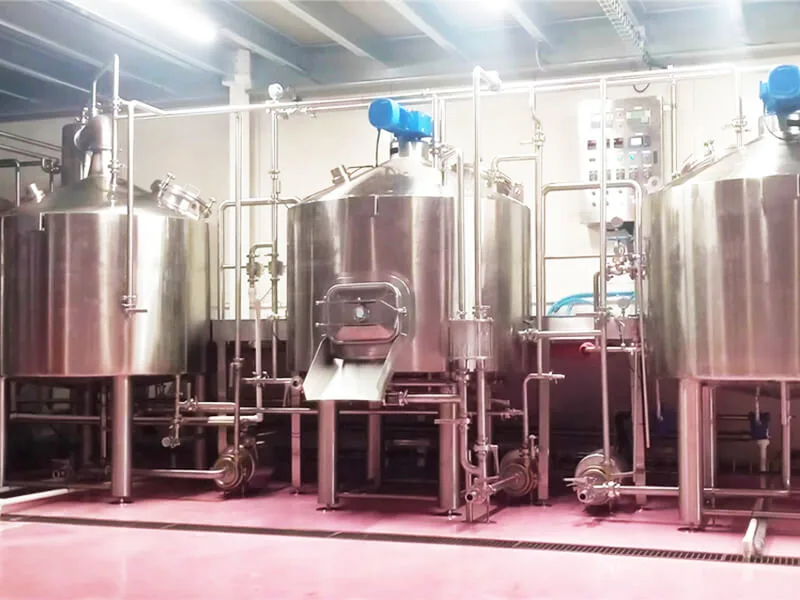
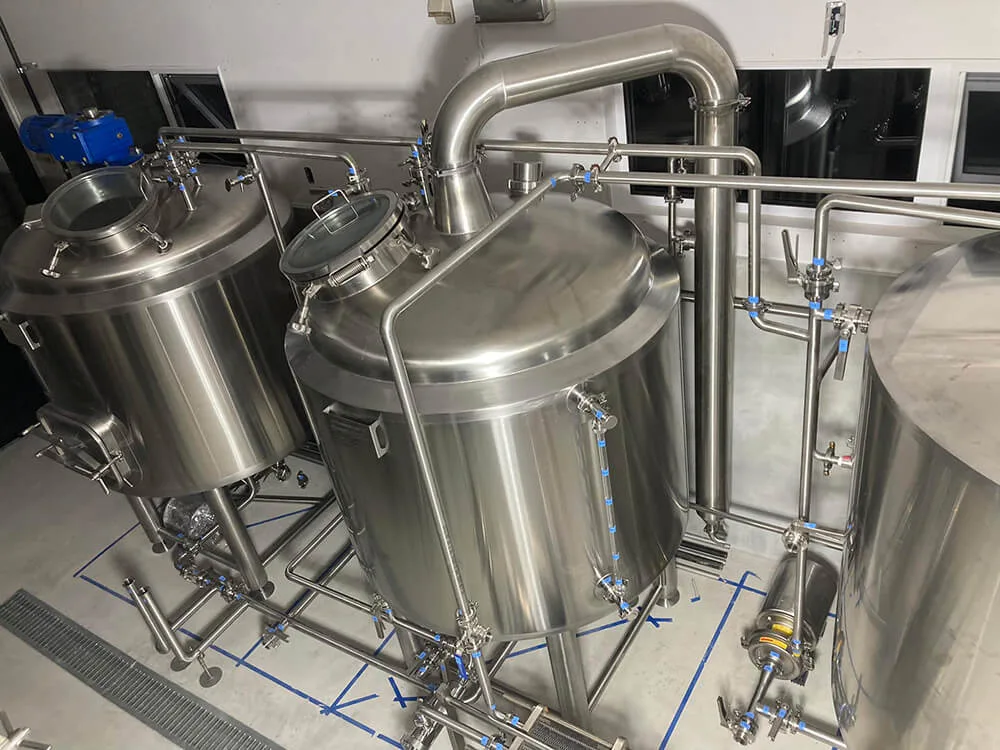
Three-Vessel Brewhouse System
A typical automated brewhouse includes:
- Mash tun
- Lauter tun
- Whirlpool tank
These systems automate:
- 매싱
- Wort filtration
- Wort transfer
- Whirlpool separation
- Temperature regulation
- Agitation control
Most systems are manufactured using food-grade 304 stainless steel for durability and sanitation.
3. Automated Fermentation Equipment
원뿔형 발효 탱크
Automated fermentation tanks are equipped with:
- Cooling jackets
- Digital temperature controllers
- Pressure monitoring systems
- Automatic pressure relief valves
- Yeast collection functions
Small breweries typically operate multiple 500L–1000L fermenters simultaneously to support continuous production.
4. Filtration and Filling Equipment
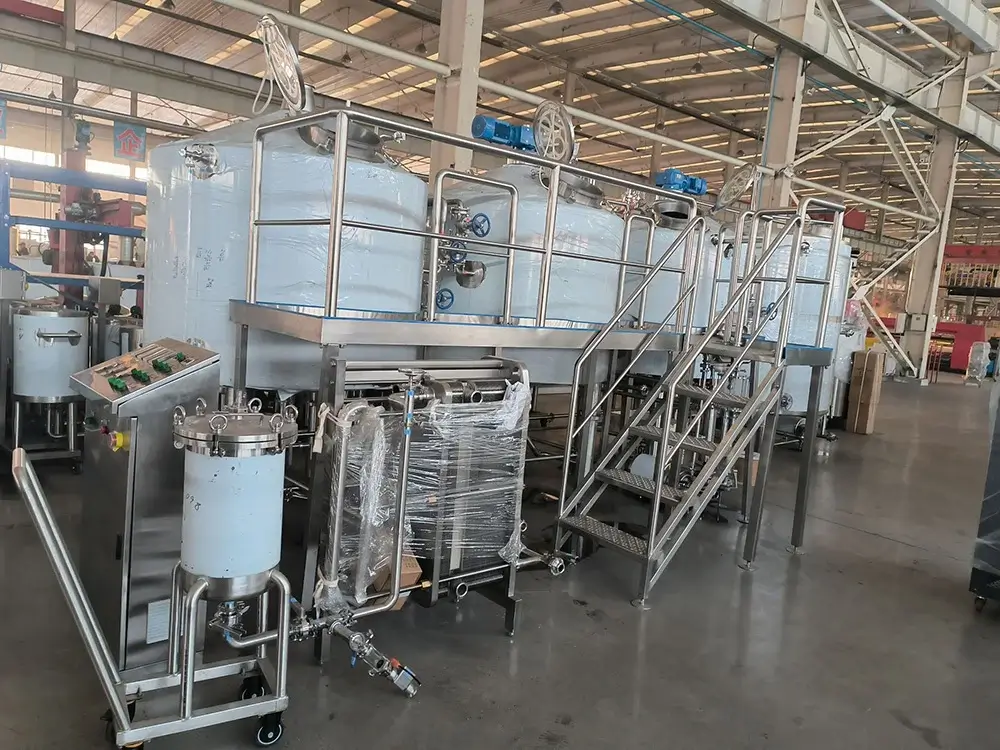
Precision Membrane Filtration System
Membrane filters remove impurities and improve beverage clarity with filtration precision down to 0.45μm.
Suitable for:
- 수제 맥주
- 과일 와인
- Kombucha
- Cider
Semi-Automatic Filling Machine
Integrated systems can perform:
- Bottle rinsing
- Filling
- Capping
Typical filling capacity ranges from 200–500 bottles per hour.
5. Auxiliary Brewing Equipment
Glycol Chiller System
Provides stable low-temperature cooling for fermenters and bright tanks.
Automated CIP Cleaning System
Ensures brewery sanitation through programmable cleaning cycles.
PLC Central Control Cabinet
The main automation hub that manages:
- Equipment control
- Process monitoring
- Alarm systems
- Data recording
- Recipe management
Advantages of Automated Brewing Systems
Consistent Product Quality
Automation minimizes human error by maintaining stable brewing parameters throughout production.
Benefits include:
- Improved flavor consistency
- Reduced batch variation
- Lower product rejection rates
- Better brand reliability
Lower Labor Costs
Traditional small breweries often require multiple operators throughout the brewing process. Automated systems can reduce labor requirements significantly.
Advantages include:
- Reduced staffing needs
- Lower operational costs
- Easier production management
- Reduced dependence on highly experienced brewers
Higher Production Efficiency
Automated systems can operate continuously with minimal supervision.
This results in:
- Faster brewing cycles
- 생산 능력 향상
- Reduced downtime
- 에너지 소비 감소
Easier Operation
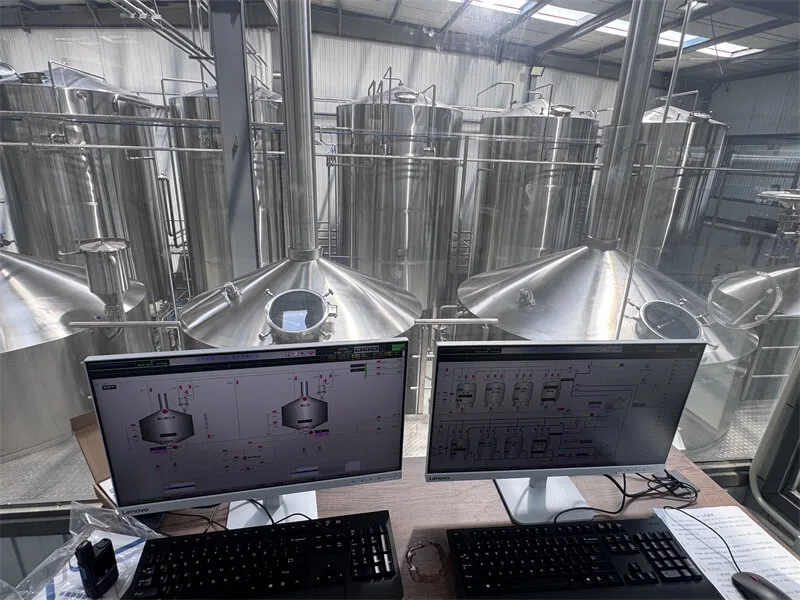
Modern automation systems feature user-friendly touchscreen interfaces and pre-programmed brewing processes.
Even new operators can quickly learn to:
- Start brewing programs
- Monitor production
- Adjust recipes
- Respond to alarms
Remote monitoring also allows brewery owners to oversee operations from mobile devices.
Disadvantages of Automated Brewing Systems
Higher Initial Investment
Compared with manual brewing equipment, automated systems require a larger upfront investment. This can create financial pressure for startups or small breweries with limited budgets.
Higher Maintenance Requirements
Automated systems contain complex components such as:
- PLC controllers
- Sensors
- Pumps
- 밸브
- Refrigeration systems
These components require professional maintenance and technical support.
Unexpected equipment failures may also interrupt production schedules.
Reduced Flexibility for Experimental Brewing
Automated brewing relies heavily on preset brewing programs, which may limit spontaneous recipe adjustments during production.
For highly experimental craft breweries focused on unique flavors and manual brewing artistry, excessive automation may reduce creative flexibility.
Demand for Skilled Operators
Modern brewery automation requires staff who understand both brewing processes and automation technology.
Many small breweries face challenges finding operators with both technical and brewing expertise.
결론
Automated brewing systems are becoming an increasingly important solution for small breweries seeking higher efficiency, stable product quality, and long-term growth.
Although brewery automation requires higher upfront investment and technical maintenance, the long-term benefits often include:
- Reduced labor costs
- Improved brewing consistency
- Better energy efficiency
- Increased production capacity
- Stronger market competitiveness
For many small breweries, the best approach is gradual automation. Instead of investing immediately in a fully automated brewery, companies can begin with core automated equipment such as:
- Smart fermentation tanks
- PLC control systems
- Automated CIP systems
- Temperature control modules
This phased approach helps balance investment costs while improving operational efficiency and brewing quality over time.
양조장 장비 프로젝트에 대해 궁금한 점이 있으신가요? 다음을 수행할 수 있습니다. 알려주세요 양조장에 대한 요구사항을 알려주시면 24시간 이내에 턴키 솔루션을 제공해 드립니다.