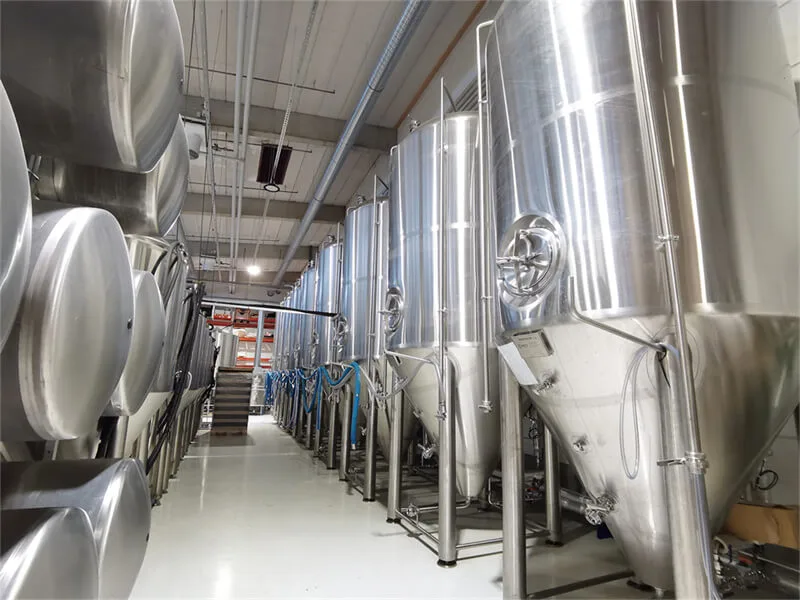
Choosing the right number of fermentation tanks is one of the most important decisions when planning a brewery. A brewhouse may determine how much wort you can produce per batch, but fermentation capacity determines how much beer the brewery can keep moving through the production cycle.
A 1000L brewhouse, for example, does not automatically mean that one 1000L fermenter is enough. The required number of fermentation vessels (FVs) depends on fermentation time, brewhouse schedule, beer styles, tank working volume, packaging requirements, and future production targets.
For a new brewery, the goal is not simply to install as many fermenters as possible. The better approach is to match fermentation capacity with the actual brewing schedule and leave a practical path for expansion.
What Determines the Number of Fermentation Tanks?
Several factors should be considered before deciding how many FVs a brewery needs.
Brewhouse Batch Size
The first factor is the actual wort production per brew.
A brewery producing approximately 500L, 1000L, or 2000L of wort per batch will have very different fermentation requirements. However, the brewhouse batch size should not be used alone to determine FV quantity.
The brewery may brew once per day, twice per day, or several batches per day. A 1000L brewhouse running two batches per day can produce approximately 2000L of wort per brewing day, creating a much greater demand for fermentation capacity than the same brewhouse running one batch per day.
Fermentation Time
Fermentation time has a direct effect on tank turnover.
If a beer occupies a fermenter for 7 days, the tank can generally receive a new batch more frequently than a beer that requires 14 or 21 days before the tank becomes available.
For this reason, breweries producing lagers or beers with longer fermentation and conditioning periods may need more fermentation capacity than breweries producing faster-turnover beer styles.
A simple planning concept is:
Required fermentation capacity ≈ daily wort production × average tank occupancy days
This provides a starting point, but actual tank sizing should also account for working volume, headspace, production fluctuations, cleaning time, and the brewery’s operating schedule.
How Many FVs Does a 1000L Brewery Need?
A 1000L brewhouse can be configured in many different ways.
For a brewery brewing approximately one batch per day, a starting configuration might use several fermentation tanks around the brewhouse batch size. If the brewery brews two or more batches per day, additional fermentation capacity will normally be required.
For example, a brewery with:
- 1000L brewhouse
- 1 brew per day
- 7–10 day fermentation cycle
- Several beer styles
may require approximately 7–10 tanks to maintain a continuous brewing schedule, depending on the actual working volume and production plan.
If the same brewery produces two 1000L batches per day, the required fermentation capacity can increase significantly.
This is why asking only “How many 1000L fermenters do I need?” is not enough. The better question is:
How much wort will be produced, and how long will each batch occupy the fermenter?
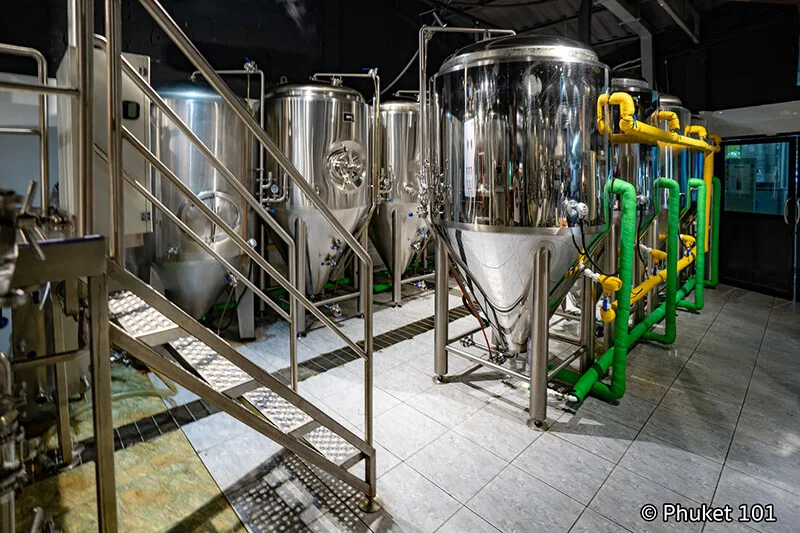
What About a 500L Brewery?
A 500L brewery generally has a lower production requirement, making it suitable for brewpubs, pilot breweries, small commercial breweries, and businesses developing new beer products.
A typical configuration may use several 500L fermentation tanks, with the exact number depending on:
- Brews per day
- Fermentation time
- Beer styles
- Packaging frequency
- Expected sales volume
- Future production targets
For a small brewery, starting with fewer tanks and adding FVs later can be more economical than installing excessive fermentation capacity from the beginning.
How Many Fermenters Does a 2000L Brewery Need?
A 2000L brewhouse requires substantially more fermentation capacity when operated at a commercial production schedule.
For example, if the brewery produces four 2000L batches per week and the average fermentation cycle is 10 days, the fermentation system needs enough working volume to hold multiple batches simultaneously.
The important point is that brewhouse capacity and fermentation capacity should be planned as one production system.
A 2000L brewhouse with insufficient fermentation capacity may remain underutilized. On the other hand, installing significantly more FV capacity than the brewery can supply may increase the initial investment without improving production.
Why Can a 5000L Brewhouse Need More Fermentation Capacity?
Larger brewhouses often operate at higher production rates.
A 5000L brewhouse running multiple batches per day can quickly fill the available fermentation tanks. If fermentation takes 10–14 days, several batches may remain in the tanks at the same time.
For example, if a brewery produces 10,000L of wort per day, a 10-day average tank occupancy could theoretically require around:
10,000L × 10 days = 100,000L of fermentation working capacity
The actual configuration could consist of different tank sizes rather than ten 10,000L tanks. The final design depends on production scheduling, tank working volume, beer styles, and packaging requirements.
This illustrates why large brewery projects should be designed around total fermentation capacity, not only the nominal brewhouse size.
Should Fermenters Match the Brewhouse Size?
Not necessarily.
A brewery may use:
- 500L brewhouse + 500L FVs
- 1000L brewhouse + 1000L or larger FVs
- 2000L brewhouse + 2000L or larger FVs
- Multiple FV sizes for different beer products
The fermenter should provide sufficient working volume while allowing appropriate headspace for fermentation.
Using different tank sizes can also improve production flexibility. For example, a brewery may use several standard-size FVs for core products and smaller tanks for seasonal or experimental beers.
Working Volume vs Total Tank Volume
When purchasing fermentation tanks, buyers should distinguish between nominal tank volume and working volume.
A tank advertised as 1000L does not necessarily mean that 1000L of wort should be filled into the vessel under every operating condition. Fermentation requires appropriate headspace, and the usable working volume depends on tank design and the product.
When comparing quotations, buyers should confirm:
- Total tank volume
- Recommended working volume
- Headspace
- Design pressure
- Cooling jacket configuration
- Insulation
- CIP system
- Outlet and valve configuration
This prevents different suppliers from quoting tanks that appear identical by name but have different usable capacities.
How Beer Styles Affect Fermentation Capacity
Different beer styles can require different fermentation and conditioning schedules.
A brewery producing mainly fast-turnover ales may achieve higher tank turnover than a brewery specializing in lagers or beers requiring extended conditioning.
The production plan should therefore consider:
Beer style → fermentation temperature → fermentation time → conditioning time → tank occupancy → required FV capacity
If a brewery plans to produce several beer styles simultaneously, it may also benefit from separate temperature control zones or a larger number of independent fermentation vessels.
How to Plan for Future Brewery Expansion
A new brewery does not always need to install its final production capacity on day one.
A more practical approach is to design the initial system so that additional fermenters can be added later.
When planning the brewery layout, reserve space for:
- Additional FVs
- Glycol piping
- Cooling capacity
- CIP connections
- Product piping
- Electrical connections
- Control system expansion
For example, a brewery starting with six 1000L FVs may reserve enough floor space and utility capacity for six additional tanks.
This approach can reduce the difficulty and cost of future expansion.
Fermentation Tanks Also Affect the Cooling System
Adding fermentation tanks is not simply a matter of finding additional floor space.
Each FV adds cooling demand. Therefore, fermentation capacity and glycol cooling capacity should be designed together.
When expanding the number of FVs, the brewery should check whether the existing:
- Glycol chiller
- Glycol tank
- Pumps
- Piping
- Heat exchanger or cooling circuit
- Control system
can support the additional cooling load.
An undersized cooling system can become a production bottleneck even when sufficient fermentation tanks are installed.
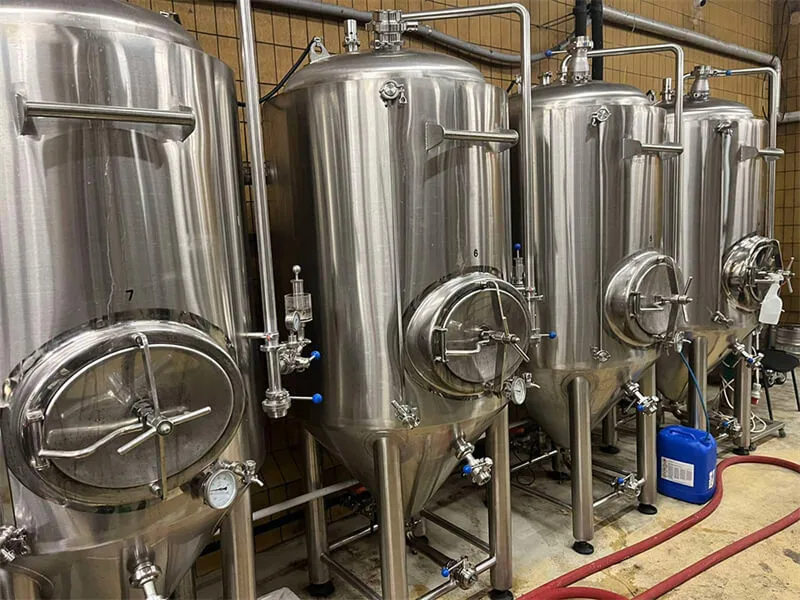
How METO Can Configure Your Fermentation System
The right FV quantity depends on the complete production plan rather than a single equipment specification.
For a brewery project, METO can evaluate the relationship between:
Brewhouse Capacity → Brews/Day → Fermentation Time → FV Quantity → Cooling Capacity → Packaging Schedule → Future Expansion
For a more accurate configuration, buyers should provide:
- Brewhouse capacity
- Target annual production
- Brews per day or week
- Average fermentation time
- Main beer styles
- Preferred FV size
- Packaging method
- Planned future expansion
This information allows the fermentation system, glycol cooling system, CIP system, and brewery layout to be designed as one integrated solution.
Get the Right Fermentation Tank Configuration
There is no universal number of fermenters for a 500L, 1000L, 2000L, or 5000L brewery. The correct quantity depends on how often the brewery brews, how long each batch occupies a tank, and how much production capacity is required.
Instead of selecting FVs based only on tank volume, plan the system around the entire production cycle.
Planning a new brewery or expanding an existing one? Send us your brewhouse capacity, target production, fermentation time, and brews per day. METO can help you develop a suitable fermentation tank configuration and supporting cooling system.