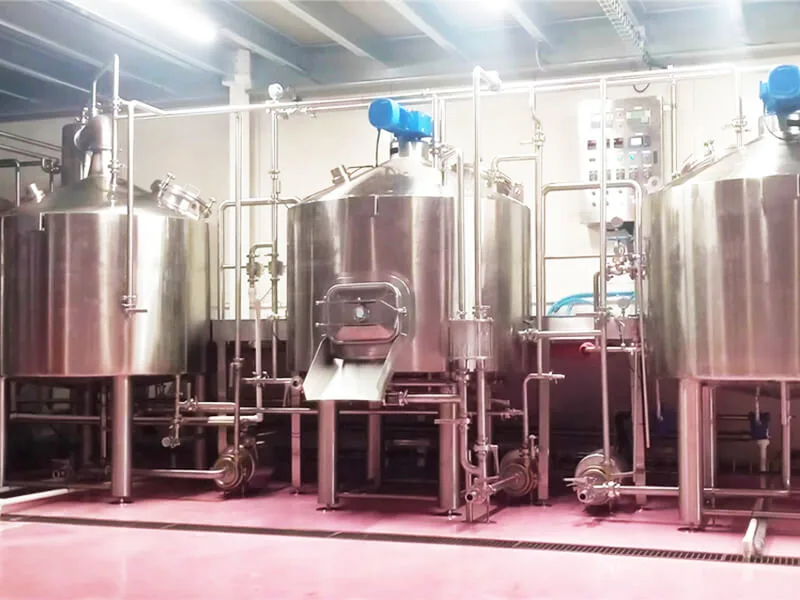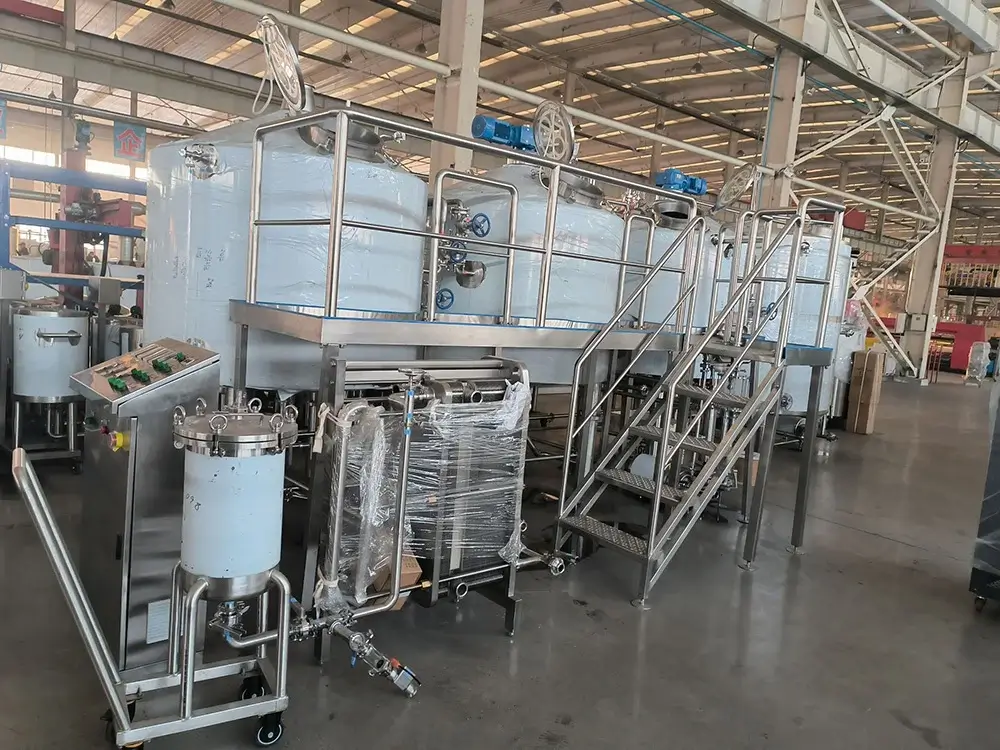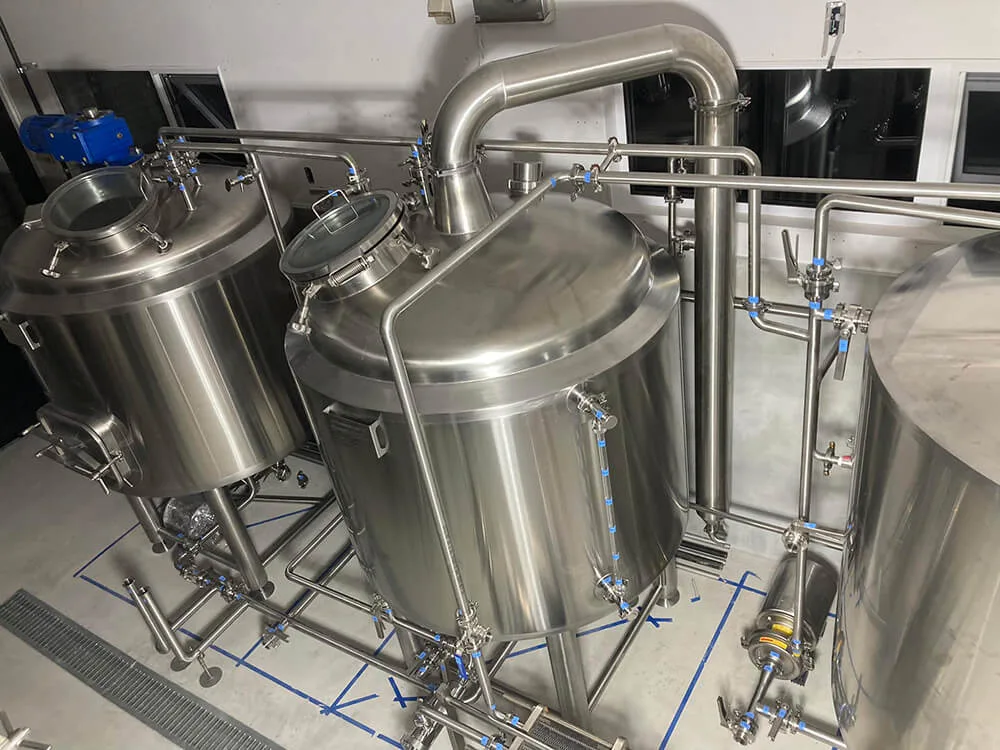
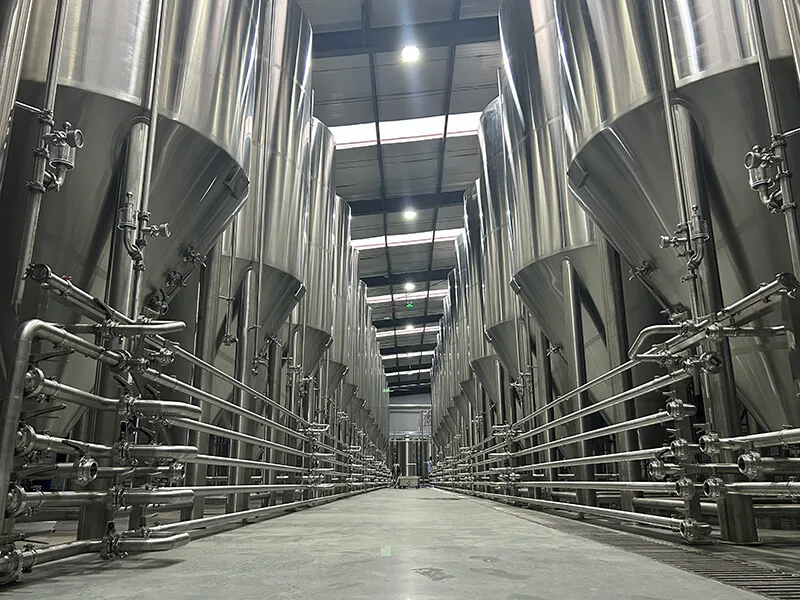
In the alchemy of craft brewing, where wort transforms into beer, the fermentation vessel is more than just a container—it is the crucible where flavor, aroma, and consistency are forged. While homebrewers might experiment with glass or plastic, any commercial operation aiming for scalability and uncompromising quality quickly realizes there is only one rational choice: food-grade stainless steel. This guide dissects the critical engineering, material science, and global compliance factors that differentiate a true professional-grade brewery fermentation tank from a mere commodity, helping you make an informed investment that will define your brand for the next two decades.
1. Why Food-Grade 304/316L Stainless Steel is Non-Negotiable
The choice of stainless steel, specifically 304 and its molybdenum-enhanced cousin 316L, is the foundation of modern sanitary brewing. This is not arbitrary; it is a decision rooted in the unforgiving chemistry of fermentation.
Absolute Sanitation & CIP Compatibility
Beer is a living product, vulnerable to contamination from wild yeast and bacteria. Stainless steel’s non-porous surface, finished to a sanitary polish, leaves no microscopic refuge for spoilage organisms. This surface integrity is critical for the efficacy of Clean-In-Place (CIP) systems. A properly engineered tank allows for high-velocity, turbulent cleaning spray without the operator needing to enter the confined space, adhering to strict HACCP standards. The result is microbiological certainty batch after batch, a non-negotiable requirement for commercial brewing.
Chemical Inertness & Corrosion Resistance
Fermenting beer creates a weakly acidic environment, typically around pH 4.0 to 4.5, exacerbated by the aggressive caustic and acid chemicals used in sanitation. Inferior materials can pit, corrode, and leach metallic ions, destroying your beer’s delicate flavor profile. 304 stainless steel provides excellent resistance to this corrosion, but for brewers pushing boundaries—such as those kettle-souring directly in a unitank or using highly saline water—316L stainless steel is specified. The addition of molybdenum in 316L creates a superior passive layer, rendering it virtually immune to pitting corrosion and guaranteeing a zero-metal-ion migration policy, thereby preserving the truest expression of your malt and hops.
Mechanical Integrity & Pressure Rating
Fermentation is an exothermic process that generates significant CO₂. A craft beer fermenter must be engineered not just as a tank, but as a precisely rated pressure vessel. It must safely withstand constant operating pressures typically ranging from 0.1 to 0.3 MPa, and in the case of a unitank, even higher for forced carbonation. This structural integrity, calculated with rigorous safety factors, eliminates the risks of deformation, seal failure, or catastrophic rupture, ensuring operator safety and allowing for advanced techniques like pressure fermentation and spunding.
Precise Thermal Dynamics
Yeast metabolism generates heat, which must be removed with pinpoint accuracy to hit target flavor profiles. Stainless steel’s inherent thermal conductivity, when paired with a well-designed cooling jacket, enables this control. The goal is not merely chilling the bulk liquid but managing the exothermic peak during high krausen to a control accuracy of ±0.5°C. This precision suppresses unwanted fusel alcohols and esters, guiding the yeast to produce a clean, consistent fermentation curve that defines your flagship beer.
2. Navigating Global Sourcing: A Compliance and Certification Matrix
For the B2B buyer sourcing brewery equipment manufacturer partners globally, a compelling price tag is meaningless without verifiable adherence to international codes. Certifications are your guarantee that the vessel’s design, materials, and fabrication meet stringent legal and safety requirements in your target market.
- North American Market (ASME): The ASME Boiler and Pressure Vessel Code (BPVC) certification, indicated by a “U” or “UM” stamp, is mandatory in the U.S. and Canada. It certifies that the tank’s design calculation and fabrication process, including welder qualifications, are independently audited. As a fermenter supplier, we provide complete data books with material traceability (MTRs) and Non-Destructive Testing (NDT) reports for every pressure-retaining component.
- European Union Market (PED & CE): To place equipment on the European market, a Pressure Equipment Directive (PED 2014/68/EU) compliance is legally required, which then allows for the CE marking. This involves a hazard analysis, conformity assessment, and often involves a Notified Body to audit modules like design, fabrication, and final inspection.
- Global Sanitary Standards (EHEDG & HACCP): Beyond pressure safety, the European Hygienic Engineering & Design Group (EHEDG) provides authoritative guidelines for hygienic equipment design. We engineer our tanks to be fully drainable, free of dead zones, and with materials and surface finishes that are cleanable to a microbiological level, seamlessly integrating with your HACCP plan. Presenting our NDT reports, which show 100% radiographic or dye penetrant inspection on critical welds, is what transforms a skeptical buyer into a lifelong client.
3. Manufacturing Excellence: The “Hardcore” Craft of Premium Tanks
A premium stainless steel beer fermentation tank is defined not by its polished exterior but by the hidden details of its metallurgy and fabrication.
Weld Integrity and Surface Finish
The weld seam is the most vulnerable point in any vessel. We employ advanced laser welding technology and automated orbital welding for pipework, achieving deep, narrow penetration with a minimal heat-affected zone. This prevents carbide precipitation (sensitization), which can lead to intergranular corrosion. Post-welding, the entire inner shell undergoes acid pickling and passivation. This chemical process dissolves any free iron and surface contaminants, while forcing the formation of a maximized, inert chromium oxide layer. The final surface is verified with a profilometer, consistently achieving an inner roughness of Ra ≤ 0.4μm, a specification that prevents biofilm adhesion and makes CIP cycles fast and reliable, directly contributing to a tank’s 10- to 20-year service life.
Optimized Cooling Jacket Design
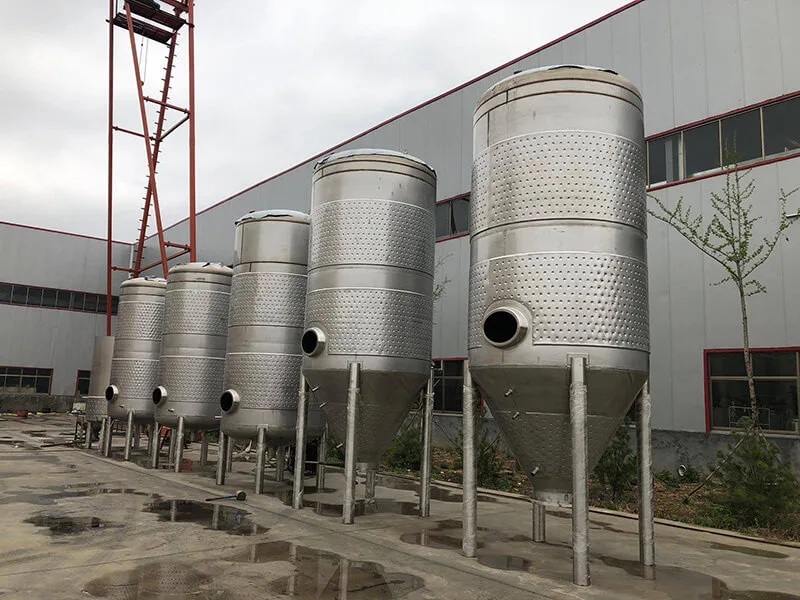
Efficient heat transfer is an economic and qualitative imperative. We engineer two primary jacket types. For top-fermenting ales with rapid, high-krausen heat peaks, a honeycomb (dimple) jacket on the sidewall and cone provides turbulent coolant flow and uniform heat extraction. For larger breweries with a focus on cold-conditioned lagers, we recommend a half-pipe coil jacket, which provides high-velocity coolant flow and structural reinforcement. This modular design philosophy extends to the insulation—high-density closed-cell polyurethane is clad in a protective stainless steel outer shell, minimizing cold loss even in the most demanding tropical climates.
4. Customization as a Competitive Edge: Your Brewery, Your Rules
Your brewery is unique; your equipment should be too. A genuine turnkey brewery solutions partner does not force your recipes into their catalog tanks but engineers vessels around your processes.
- Geometric Optimization: The conical bottom’s angle is critical. A standard 60° cone is excellent for yeast flocculation and discharge, while a steeper 70° cone is often specified for highly dense yeast strains or trub-heavy dry-hopped IPAs. We customize tank diameter-to-height ratios to influence ester profiles and yeast performance, tailoring the vessel geometry to whether you’re producing a clean lager or an expressive NEIPA (New England IPA).
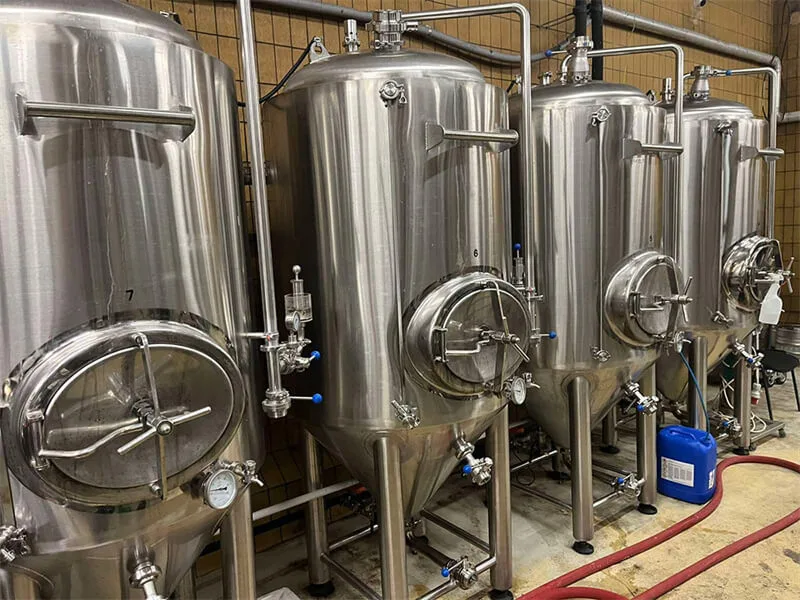
- Process-Specific Modules: For the modern IPA-dominant craft sector, we integrate a specialized, sealable dry-hop port with a purge system to introduce hops while aggressively preventing oxygen ingress (TDO pickup ≤ 10 ppb). For lager production, we design for precise, slow-cooling ramps during the diacetyl rest and extended cold-crashing phases.
- Intelligent Automation: Consistency is the holy grail of brewing. Our integrated PLC-controlled systems offer multi-zone temperature control, automated fermentation profile scheduling, and complete data historiography. This data traceability ensures that a perfect batch brewed in summer is identically replicated in winter, guaranteeing batch-to-batch consistency.
5. Case in Point: Total Cost of Ownership and ROI
A decision to purchase a tank is a 20-year partnership. The conversation must shift from upfront capital expenditure to total cost of ownership. A tank designed for true CIP operation reduces water, chemical, and downtime costs by up to 30% annually compared to one requiring manual intervention. A tank with a precisely engineered cooling system directly cuts chiller energy consumption. Furthermore, for our intercontinental clients, we have pioneered structural optimizations using finite element analysis (FEA) that can reduce overall vessel mass by up to 8% without compromising pressure integrity. This “weight-relief engineering” directly translates to lower ocean freight costs and easier on-site rigging, addressing a critical pain point for importers.
Conclusion & Call to Action
The stainless steel beer fermentation tank is the most impactful long-term capital investment you will make, second only to your building. It directly governs product safety, flavor profile, operational efficiency, and scalability. By selecting a PED compliant, ASME certified partner who champions sanitary design and precision manufacturing, you are not merely buying equipment; you are building the resilient, high-quality foundation of your brand.
We invite you to look beyond polished brochures. Visit our virtual factory tour, request a detailed material and welding data pack for a recent project, or connect with our process engineers for a confidential consultation.
[Contact Our Engineering Team Today | Request a Turnkey Project Quote | Download Full Technical Specifications]