After decades of industrial consolidation, something quiet is happening. Consumers are pushing back. They’re tired of the same anonymous “smooth” spirits lined up on every shelf. What they want now is flavor with a story—single malt from a Scottish glen, brandy from a family cellar in Cognac, bourbon from a rickhouse in Kentucky. They want to know who made it, where it came from, what it was made in. This shift isn’t a trend. It’s a return to something older and more honest.
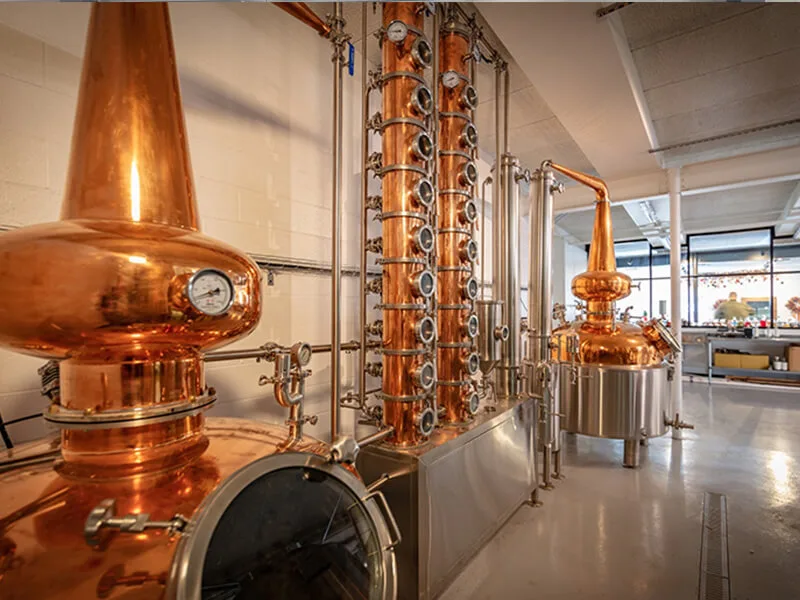
At the center of this return stands the still. Not the stainless steel columns running 24/7 in a factory somewhere, but the copper pot still sitting in a drafty stone building, hand-hammered, slightly uneven, glowing dully under a skylight. This equipment isn’t just machinery. It’s the physical limit of what a distiller can achieve with grain and water and yeast. It’s where heat meets wash, where vapor rises and falls, where a thousand small decisions about copper thickness and neck height and condenser design add up to something you can taste. For anyone serious about starting a distillery—or upgrading an existing one—understanding this equipment isn’t optional. It’s the foundation everything else rests on.
1. Craft Distillery Equipment: Where Flavor Gets Its Shape
Let’s be clear about what separates a craft distillery from an industrial ethanol plant. The difference isn’t romantic. It’s physical.
An industrial column still is designed for one thing: stripping everything out until what remains is as close to pure ethanol and water as possible. Neutral. Odorless. Flavorless. A blank slate. This makes perfect sense if you’re making vodka for millions of cases or neutral spirit for liqueurs and ready-to-drink cocktails. The philosophy here is elimination—remove the grain, remove the yeast character, remove the fermentation esters, remove anything that might vary from batch to batch. Efficiency and consistency are the gods, and they demand total sacrifice.
A craft distillery runs on a different philosophy. The goal isn’t to erase the raw material. It’s to concentrate and refine it. You want the barley’s nutty sweetness in your single malt. You want the sugarcane’s grassy funk in your rhum agricole. You want the grape’s floral lift in your brandy. These compounds—esters, phenols, aldehydes, higher alcohols—are impurities to an industrial distiller. To a craft distiller, they’re the whole point.
This difference shows up in the hardware. Pot stills have short columns or none at all. The vapor path is wide. The lyne arm slopes gently down. Reflux is minimized because reflux strips flavor. Copper is everywhere, not just for heat transfer, but because copper binds with sulfur compounds—those rotten-egg notes from fermentation—and removes them. Every design choice on a craft still tilts toward keeping what’s good and losing what’s bad, rather than losing everything and adding back what you want later. It’s a slower, less efficient, more expensive way to make spirits. And the results justify every penny.
2. What “Craft” Actually Means: Batch Operation and Human Judgment
The word “craft” gets thrown around a lot. It’s on bottles of mass-produced gin and supermarket bourbon. Let’s strip away the marketing and define what it means in terms of equipment.
Craft distilling equipment is batch equipment. You fill the mash tun. You run the conversion. You fill the fermenter. You charge the still. You distill. You empty it. You clean it. You do it again. Each cycle is discrete. Each batch has a beginning, a middle, and an end. This matters because it means the distiller can adjust between batches. The barley shipment was a little higher in protein? Adjust the mashing temperature. The fermentation ran hot? Take a wider heads cut. The last spirit run came out a bit heavy? Tweak the reflux just a touch. A continuous still doesn’t allow any of this. You set parameters and it runs. The product is the product.
The other piece is human intervention. In a big automated plant, the operator watches screens. The system controls flow rates, temperatures, cut points. In a craft distillery, the distiller is physically present. They’re looking through the sight glass at the rolling boil. They’re rubbing new-make between their palms to smell when the hearts have arrived. They’re tasting from the parrot to decide exactly when to switch from hearts to tails. This isn’t romantic nostalgia. It’s practical. No inline sensor can tell you what a trained nose knows in half a second. The equipment has to support this—with accessible sampling ports, with clear sight glasses, with manual bypass valves, with everything laid out so a human being can walk up and engage with the process directly.
This doesn’t mean rejecting technology. It means putting technology in its proper place: handling the repetitive, the precise, the tedious. Let the PID controller manage the coolant flow. Let the temperature probes log the fermentation curve. But let the distiller make the cuts.
3. The Five Systems of a Craft Distillery
A distillery isn’t just a still. It’s an integrated line of equipment, and each piece depends on the piece before it. Weakness anywhere flows downstream.
3.1 Raw Material Handling: Milling, Mashing, and the First Flavor Decisions
The first flavor decision happens before any heat is applied: how finely do you mill the grain? Too coarse, and the starch never fully gelatinizes. Your yield drops. Your cost per liter climbs. Too fine, and you get a sticky, compacted grain bed that won’t drain. The sparge water channels through cracks instead of rinsing the sugars evenly. You leave extract behind. Worse, you might get a stuck mash—a brewer’s nightmare that can shut down production for hours while you dig out a gluey mess. A quality roller mill with good gap adjustment isn’t glamorous. It’s essential.
Mashing is where enzymes do their work. Different temperatures activate different enzymes. Beta-amylase likes it cooler and gives you fermentable sugars for a drier, lighter spirit. Alpha-amylase likes it hotter and produces dextrins that carry through to a fuller mouthfeel. A mash tun with even heating—no hot spots that denature enzymes, no cold zones where conversion stalls—lets you dial in this balance batch after batch. The agitator matters too. Too fast and you shear the husks, releasing harsh tannins. Too slow and the temperature stratifies. These details show up in the final spirit.
For fruit spirits—brandy, eau de vie, grappa—the raw material handling looks different. You need crushers that release juice without grinding seeds (which dump bitter oils into the must). You need presses that extract efficiently without oxidizing the fruit. Time is the enemy here. Crushed fruit starts to brown and degrade within hours.
3.2 Fermentation: Where Flavor Is Born
Distillation doesn’t create flavor. It concentrates and selects from what fermentation has already built. A mediocre wash makes mediocre spirit, no matter how good the still.
The fermenter is where yeast turns sugar into ethanol, but yeast does far more than that. It produces esters—fruity, floral compounds. It produces higher alcohols—solvent-like, sometimes pleasant in trace amounts. It produces acids, aldehydes, sulfur compounds. The temperature during fermentation determines which of these dominate. Run hot, and you get more esters but also more fusel oils and solvent notes. Run cool, and you get a cleaner, slower fermentation, but you risk stalling if it gets too cold. A fermenter with well-designed cooling jackets—enough surface area, good glycol circulation, responsive controls—gives you command over this.
Material matters too. Stainless steel is standard, and for good reason. It’s cleanable, durable, inert. 304 is the minimum; 316L is better for long-term contact because the molybdenum resists pitting from acidic washes and chlorinated cleaners. But some distilleries—particularly in Scotland—still use wooden washbacks. Douglas fir or larch. They’re harder to clean. They harbor microbes in the grain of the wood. And those microbes contribute something to the fermentation that stainless steel cannot replicate. It’s a philosophical choice: absolute control versus living complexity.
The conical bottom has become standard for a reason. It lets you drop yeast after fermentation, either for disposal or for repitching into the next batch. The cone angle matters. Too shallow, and the yeast sits in a broad layer that’s hard to fully remove. A 60 to 70-degree cone lets the yeast slide down and out cleanly.
3.3 Distillation: Copper, Shape, and the Art of the Cut
The still is the distillery’s heart. No other piece of equipment carries as much mythology or as much genuine technical weight.
Copper. You’ll hear that copper is essential. It’s not marketing. Copper binds with volatile sulfur compounds—hydrogen sulfide, mercaptans, thiophenes—forming non-volatile copper sulfate that stays behind. Without enough copper contact, your spirit smells like burnt matches, cooked vegetables, rubber. This is why the lyne arm is long, why the condenser often includes copper mesh or baffles, why some distilleries throw copper offcuts into the pot. More copper contact equals a cleaner spirit. But there’s a tradeoff. Copper also catalyzes ester formation, which can be desirable or not depending on what you’re making. And copper wears down. Every distillation eats away a microscopic layer. Thin copper might save money upfront. It will cost you later in replacement and in the quality degradation you might not notice until it’s too late.
Shape. The still’s geometry dictates reflux. A tall, narrow neck forces vapor to rise through a long, cooling path. More of it condenses and falls back into the pot for redistillation. The result is a lighter, more refined spirit—think Speyside single malts with their floral, honeyed notes. A short, wide neck lets vapor pass through quickly. Less reflux. Heavier spirit. Think the oily, robust character of some Highland or Islay malts. The lyne arm angle matters too. An upward-sloping arm encourages more reflux; a downward slope sends vapor straight to the condenser. Some distilleries modify their lyne arms with water jackets for adjustable reflux control—a way to tune the still’s character without changing the pot.
Column stills are a different animal. Instead of passive reflux from the neck shape, you get active separation through plates or structured packing. Each plate is a mini-distillation. The more plates, the purer the output. For vodka, you might run 20 plates or more. For a flavorful white spirit, maybe just a few. For gin, the column often has a gin basket—a chamber where botanicals sit in the vapor path. The hot alcohol vapor passes through juniper berries, coriander seed, citrus peel, angelica root, extracting volatile oils without boiling the botanicals directly in the liquid. This gives a brighter, fresher gin character.
Condensers come in two main types. Shell-and-tube condensers are the modern standard—efficient, compact, easy to clean. Worm tubs are the traditional alternative—a coiled copper pipe submerged in cold water. Worm tubs provide more copper contact and a gentler condensation, which some distillers swear adds a heavier, more textural quality to the spirit. The cooling water management is just as important as the condenser itself. If your coolant temperature fluctuates, your condensation rate fluctuates, and your spirit character shifts throughout the run.
3.4 Maturation: Wood, Time, and Microclimate
New-make spirit right off the still is raw. It burns. The flavors are disjointed—sharp, green, unintegrated. Maturation is where they marry, mellow, and deepen.
The barrel is the primary tool. Oak species matters. American white oak (Quercus alba) is tight-grained, rich in vanillin and lactones, giving coconut, vanilla, and caramel notes. European oak (Quercus robur or petraea) is looser-grained, higher in tannins, giving spice, dried fruit, and structure. French oak sits somewhere between, prized for its fine grain and subtlety in brandy maturation. Barrel size determines the wood-to-spirit ratio. A 50-liter barrel matures spirit four times faster than a 200-liter barrel, but it also loses more to the angel’s share—evaporation through the wood. Small barrels are tempting for a startup that wants to release product quickly. The risk is over-oaking before the spirit has had time to properly integrate.
Previous fill matters enormously. A first-fill bourbon barrel is aggressive, dumping vanilla and caramel into the spirit within months. A refill barrel that’s held whisky for 20 years gives almost nothing, just a slow, oxidative mellowing. Sherry casks, port pipes, wine barriques, rum barrels—each carries residues of its previous contents that bleed into the new spirit. Managing a barrel program means buying different types, tracking their history, and blending across cask types to hit a target profile.
Warehouse conditions are part of the recipe. A dry warehouse evaporates water faster than alcohol, so the proof rises over time. A damp warehouse loses alcohol faster, so the proof drops. Temperature swings push spirit in and out of the wood, accelerating extraction but also increasing angel’s share. Some distilleries deliberately age barrels on upper floors where summer heat is more intense. Others prefer cool, steady ground-floor cellars. These decisions compound over years.
Not everything goes into wood immediately. Stainless steel holding tanks—inert, cleanable, with proper inert gas blanketing—are needed for collecting new-make, for proofing down before barreling, and for marrying batches before bottling. Undersized or poorly designed holding tanks create bottlenecks that ripple backward through the whole production schedule.
3.5 Filling and Bottling: The Last Mile
The filling line seems simple compared to the still. It’s where distilleries often try to save money. This is a mistake.
Oxygen is the enemy at this stage. In the barrel, slow oxygen ingress through the wood is beneficial—it softens tannins, polymerizes color compounds, rounds out harsh edges. In the bottle, oxygen is pure degradation. It flattens aromas. It creates oxidized off-notes—sherry-like, nutty, stale. A proper filling line minimizes dissolved oxygen pickup. Bottles are purged with nitrogen or CO2 before filling. Fill nozzles extend to the bottom and fill from below to reduce splashing. Headspace oxygen is minimized. These are not luxuries. They’re the difference between a spirit that tastes as good as it did in the barrel and a spirit that’s faded within months on the shelf.
For craft distilleries, the level of automation on the bottling line is a strategic decision. Full automation—inline rinsing, filling, corking, capping, labeling, all synchronized—is fast. It’s also expensive and inflexible. If you change bottle shapes, you may need new change parts. If you do small special releases, a fully automated line may not be worth the setup time. Many craft distilleries choose semi-automation: a manual loading station, an automatic filler, a manual corker or capper, a semi-automatic labeler. This keeps throughput reasonable while preserving flexibility. It also keeps more hands on the product, which, for a distillery that sells on craftsmanship, has its own value.
4. Beyond Grain: Craft Stills in the Wine World
Distilling equipment isn’t just for whisky and gin. There’s a long, deep connection between wine and spirits, and craft stills serve specific, irreplaceable roles in premium wine production—particularly fortified wines and grape-based spirits.
Port is the clearest example. The defining moment in Port production is the fortification: adding grape brandy to partially fermented must to kill the yeast and preserve residual sugar. The quality of that brandy determines the quality of the Port. If the brandy is rough—harsh, high in fusel oils, carrying off-notes from poor distillation—it stamps those flaws onto every bottle. A clean, well-cut brandy from a copper pot still does its job without leaving fingerprints. It stops the fermentation, locks in the sugar, and then steps back to let the fruit speak. The same principle applies to Sherry fortification, to Madeira, to vin doux naturel from southern France.
Grappa is an even more demanding application. Grappa is distilled from pomace—the skins, seeds, and stems left after pressing wine grapes. Pomace is unstable. It oxidizes fast. The skins still carry wild yeasts and bacteria. If you don’t distill it quickly, you lose the delicate varietal aromas and pick up off-flavors. Small copper batch stills are the only equipment that can handle this. They heat up fast. They process a charge quickly. They capture those fragile floral and fruity esters before they disappear. No continuous still can match this responsiveness.
For a winery thinking about adding spirits to its portfolio—an estate brandy, a pomace spirit, a fortified wine program—a small craft still opens up product categories that command higher margins and deepen the brand story. It’s a vertical integration play that more and more premium wine producers are making.
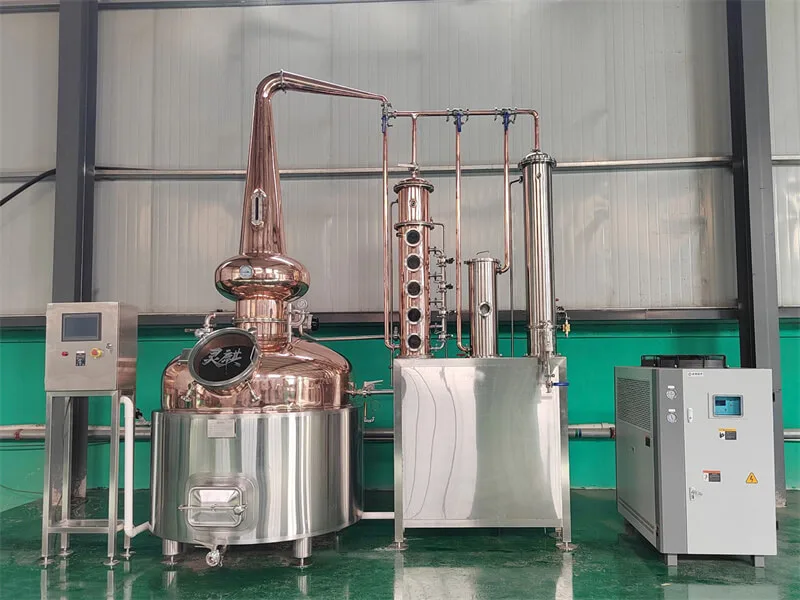
5. Choosing Equipment: A Seven-Point Framework
Buying distillery equipment is a long-term commitment. The still you install today will be making spirit long after you retire. Getting it right matters.
5.1 What Are You Making?
Start here. Before you look at a single piece of equipment, define the liquid. Single malt Scotch? You need a copper pot still, probably two—a larger wash still and a smaller spirit still, sized so that the low wines from one wash still charge fill the spirit still in one batch. Bourbon? You’ll likely use a column still with a doubler or thumper for the second distillation, and you’ll need to manage the continuous distillation of a grain-in mash. Rum? All copper is non-negotiable because molasses ferments dirty, throwing off huge amounts of sulfur that must be scrubbed. Gin? You need a vapor infusion path—either a gin basket in a column still or a Carter Head attachment on a pot still. Fruit brandy? You want a pot still with a gentle heating system that won’t scorch the fine solids in the fruit wine. The spirit dictates the equipment. Get the spirit clear first.
5.2 Scale and Capacity Matching
Size isn’t about ambition. It’s about what you can actually sell, plus some room to grow. Overbuying equipment is a classic startup mistake. A still that’s too big for your production volume means running partial charges. Partial charges expose heating surfaces to air and create scorching risks. They make reflux behavior unpredictable. They waste energy. A fermenter that’s half-empty has a massive headspace full of oxygen—exactly what you don’t want for anaerobic yeast metabolism.
Undershooting is just as painful. If your still is too small and the market responds, you’re running double shifts, your staff burns out, maintenance gets deferred, quality drifts. You spend all your time making spirit and none of it selling or improving.
A practical target: size your equipment for 30-50% above your realistic first-year sales volume. This gives you headroom without overextending. Make sure the pieces fit together mathematically—your mash tun should produce enough wort to fill your fermenter, your fermenter output should match your still charge size, your holding tanks should hold at least one full production run. A supplier who doesn’t walk you through these mass balance calculations isn’t doing their job.
5.3 Heating Method: Direct Fire, Steam, or Electric
The heat source shapes the spirit.
Direct fire—gas burners under the pot—is the oldest method. It creates intense, localized heat. This promotes Maillard reactions and subtle caramelization, especially if the wash contains residual solids. The result is a heavier, toastier spirit with a distinct “fire-copper” character. The downsides: you need thick, durable copper, constant agitation to prevent scorching, and meticulous temperature management. The fire risk is real. Insurance premiums reflect it.
Steam jacketing is the modern workhorse. Steam circulates through a jacket around the pot. Heating is even. Temperature control is precise. Scorching is almost impossible if the system is designed correctly. The tradeoff: you need a boiler, which adds cost, space requirements, and regulatory oversight. For most craft distilleries starting today, steam is the practical choice.
Electric heating uses immersion elements. Clean, quiet, responsive. No boiler room, no chimney, no combustion exhaust. Ideal for urban distilleries where space is tight and emissions are restricted. Electric gives you fine temperature control. The downside: element surface temperatures are high. With solids-laden washes, fouling and coking on the elements can still occur.
Some distilleries combine methods: steam for the stripping run where the wash is thick and solids-heavy, electric for the spirit run where precision matters most. There’s no single right answer. But the choice leaves a fingerprint on the spirit.
5.4 Materials and Build Quality
The material specifications on a quote sheet translate directly into spirit quality and equipment lifespan.
Stainless steel. 304 is the entry grade. It’s adequate for most contact surfaces. 316L costs more but contains molybdenum, giving it far better resistance to chloride pitting—relevant because fermenting washes are acidic and cleaning chemicals often contain chlorides. For fermenters and holding tanks that will hold liquid for extended periods, 316L is worth the premium. All welds must be pickled and passivated after fabrication to remove heat tint and restore the protective chromium oxide layer. Welds that aren’t properly treated will rust. It’s that simple.
Copper. Purity above 99%. The metal should be worked, not cast—hammered or rolled copper has a denser, more uniform crystal structure and transfers heat more evenly. Thickness is a direct tradeoff between upfront cost and decades of service life. Copper erodes. Every distillation, a few microns dissolve away. Thin copper saves money now and costs a replacement later. Thick copper costs more now and outlasts you.
Beyond the raw materials, look at the workmanship. Are interior surfaces polished smooth enough that a paper towel wiped across them comes away clean? Are there pits, crevices, sharp corners where solids can accumulate and bacteria can grow? Do the pipe runs have proper fall for complete drainage? Do the valves fully close and seat properly? These aren’t cosmetic questions. They’re sanitation questions. Poor finish work leads to contaminated batches.
5.5 Automation vs. Manual Control: Where to Draw the Line
Automation is not the enemy of craft. Badly applied automation is.
Use automation where precision and consistency matter and where human attention is wasted. Fermentation temperature control is the textbook example. A PID loop managing glycol flow through cooling jackets will hold temperature within a fraction of a degree. No human operator can match that by manually turning valves. Same for condenser coolant control. Same for data logging—every temperature probe, every pressure sensor, every flow meter feeding into a batch record system. This data is invaluable for troubleshooting and improvement.
Keep manual control where sensory judgment is required. The cuts. Heads to hearts. Hearts to tails. This is where the distiller’s experience, their nose, their palate, their feel for the spirit’s character makes the difference between a good batch and a great one. The equipment should provide easy access for sampling, clear sight glasses for watching the boil and the parrot, and simple manual valves for diverting flow. Don’t automate the art.
A well-designed craft distillery uses technology to handle the mundane so the distiller can focus on the meaningful.
5.6 Supplier Support: The Relationship After the Sale
The equipment is a one-time purchase. The relationship with the supplier is ongoing. Expect to need them for years.
Weld repairs. Gasket replacements. Adding a new tank and reconfiguring pipework. Troubleshooting a weird off-flavor that might be equipment-related. A good supplier answers the phone. A great supplier sends someone to look. The best suppliers have seen hundreds of distilleries and can tell you what worked for others in your situation. This institutional knowledge is worth more than a slight discount on the initial purchase.
When evaluating suppliers, ask for references. Not just one—several, and call them. Ask how the equipment has held up after three, five, ten years. Ask what happened when something broke and how the supplier handled it. Visit their facility if you can. See if they do their own fabrication or if they’re just reselling someone else’s equipment. A supplier with their own shop floor, their own welders, their own engineers is a different kind of partner than a sales office with a catalog.
5.7 Budget: First Cost vs. Lifetime Cost
Equipment is expensive. The temptation to save on the upfront price is strong. Resist it strategically.
Cheap copper that’s too thin will need replacement in a decade. The second purchase costs more than just the new still—it costs the downtime, the re-plumbing, the lost production. Cheap stainless with rough welds will cause a contamination event sooner or later. One spoiled batch of 500 liters can wipe out the savings from buying a cheaper fermenter. An undersized condenser will slow down every single distillation run, day after day, year after year. The cumulative time and energy costs dwarf the initial savings.
Think in terms of total cost of ownership. Purchase price plus installation plus annual energy consumption plus expected maintenance plus expected lifespan, all divided by the total liters produced over that lifespan. A well-built still that costs 30% more upfront often costs less per liter of spirit produced over its life.
And there’s the hidden cost: flavor degradation. A metallic note from cheap stainless leaching into the spirit. A sulfur note because copper contact was insufficient. These are not visible on a balance sheet. But they show up in sales, in reviews, in the reputation that took years to build.
6. Common Questions
Can I use the same still for whisky and gin?
Technically yes. Practically, it’s risky. Whisky leaves behind a layer of fatty acids, esters, and phenols on the copper surfaces and in the low spots of the piping. When you run gin through the same still, the hot alcohol vapor acts as a solvent, stripping these residues and carrying them into your gin. The result is a gin that tastes vaguely malty, slightly oily, lacking the crisp botanical clarity gin requires. If you must share equipment, you need a validated cleaning protocol between products—thorough hot water rinses, caustic cleaning, acid passivation, and sacrificial distillation runs. Many distilleries eventually buy dedicated gin stills because the contamination risk and cleaning overhead aren’t worth it.
Does more expensive equipment make better spirits?
Better equipment raises the ceiling. It doesn’t guarantee better spirits. A beautifully made copper pot still in the hands of someone who doesn’t understand cuts, fermentation management, or barrel selection will produce mediocre spirit. A basic but well-designed still operated by a skilled distiller will outperform expensive equipment run poorly. That said, poor equipment imposes a hard ceiling. If your still has inadequate copper contact, you’ll have sulfur notes you can’t eliminate. If your fermenter can’t hold temperature, you’ll get erratic fermentations. Good equipment removes constraints. It lets a skilled distiller’s talent express itself fully. It’s a necessary condition for excellent spirits, not a sufficient one.
7. Why Choose Us
We build equipment for people who take spirits seriously. Not as a hobby. Not as a side project. As a craft they intend to practice for decades.
Our stills are fabricated in our own workshop. The copper is thick—thicker than what you’ll find in catalog equipment built to a price point. The welds are pickled, passivated, and inspected. The polishing isn’t cosmetic; it’s a hygiene specification. Every vessel is designed for cleanability, for drainage, for accessibility. We’ve seen what happens when these things are overlooked—the contaminated batches, the stalled fermentations, the frustration—and we design to prevent it.
We don’t just sell equipment. We help you plan the layout. We do the mass balance calculations to ensure your mash tun, fermenters, and stills are properly sized relative to each other. We commission the equipment on your site and train your team on its operation. And we stay available afterward for the questions that inevitably come up once production is running.
The equipment you choose is the foundation your distillery will stand on for the next thirty, forty, fifty years. That’s the timeframe we build for. If that’s the timeframe you’re thinking in, we should talk.
¿Tiene preguntas sobre su proyecto de equipamiento de cervecería? Puede dinos sus requisitos para la fábrica de cerveza, y le ofreceremos una solución llave en mano en 24 horas.