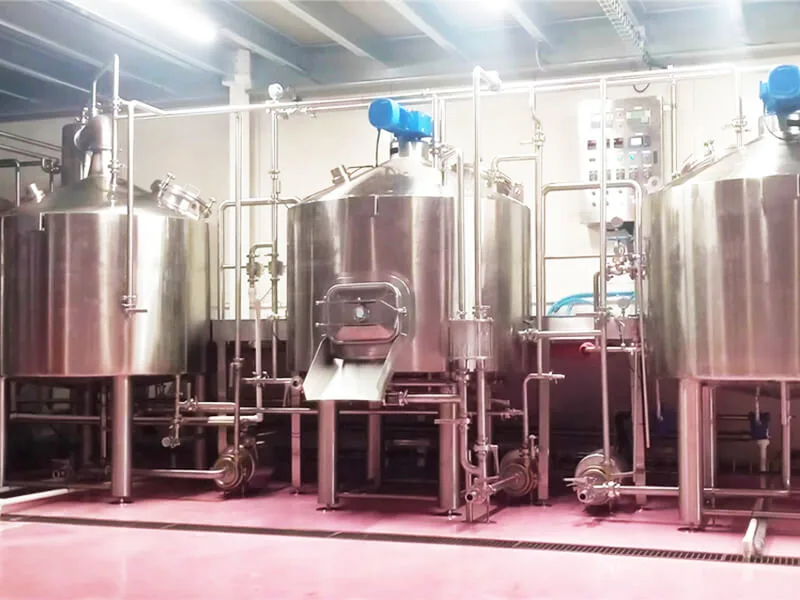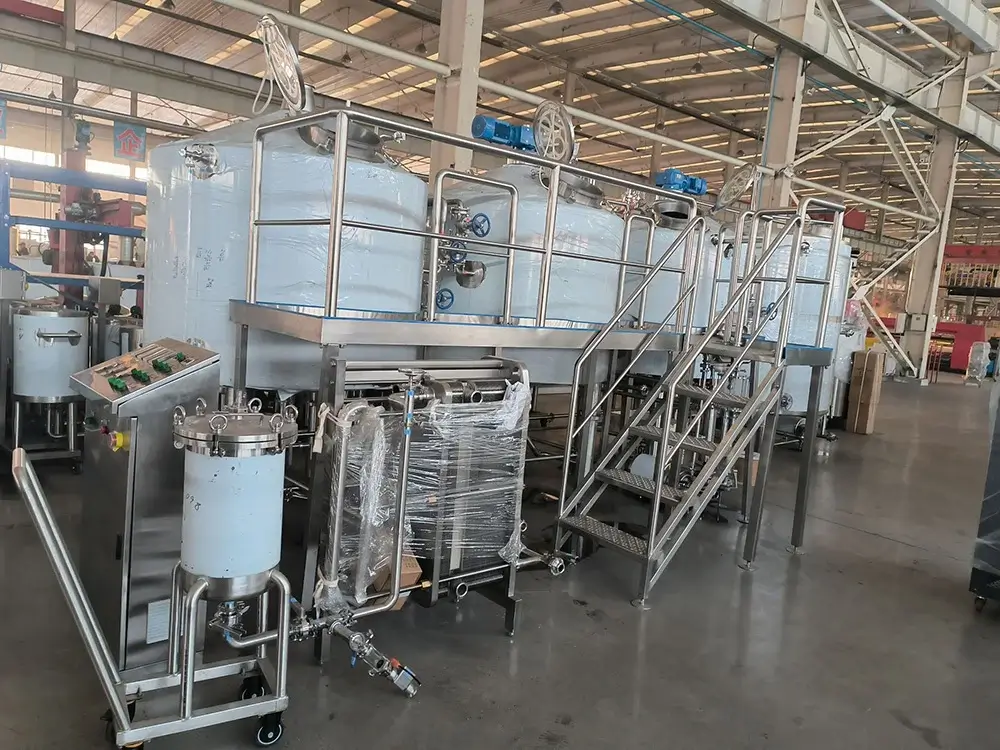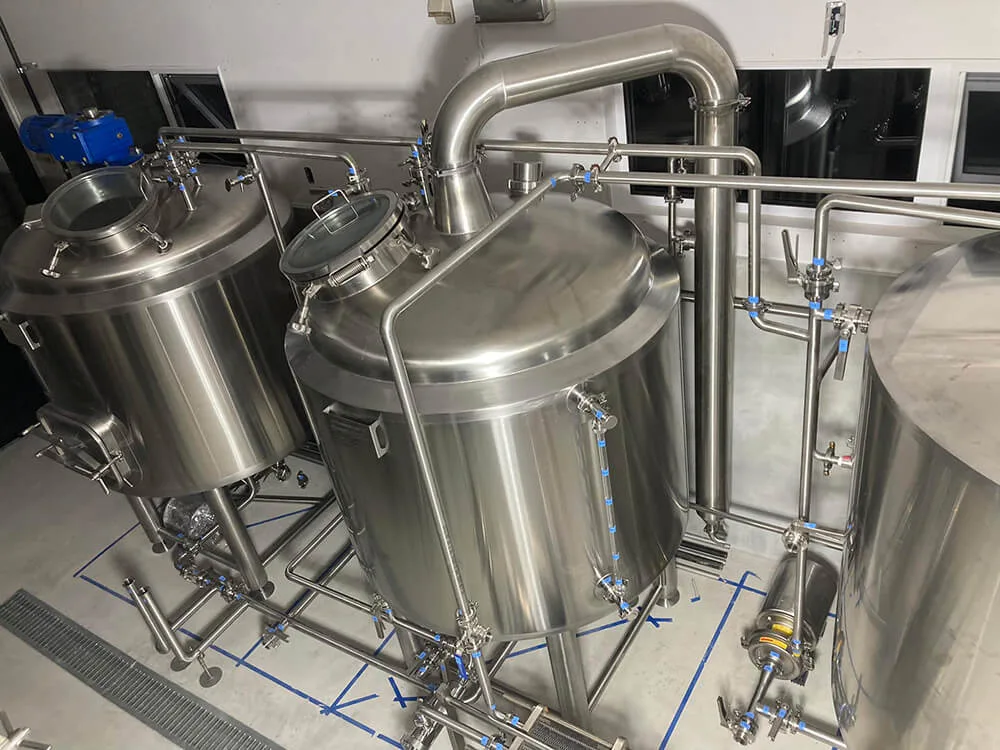
Kombucha has left the home kitchen behind. Not long ago, it was a homemade thing—brewed in gallon jars, covered with a square of cheesecloth, a SCOBY passed between friends. Now it sits on refrigerated grocery shelves next to craft beer and cold-pressed juice. It’s on tap at bars. There are kombucha taprooms. The shift from home tonic to commercial category happened fast.
Scaling up, however, is not simple multiplication. A five-liter jar on the counter and a five-hundred-liter tank in a production facility share almost nothing in terms of how they behave. The biology changes with scale. The risks compound. A home brewer can dump a batch that tastes off and shrug. A commercial brewer dumping five hundred liters of spoiled kombucha is looking at real money down the drain—ingredients, labor, production time, and the reputation hit if bad product ever reaches a customer.
At commercial scale, equipment is not just a container. It’s how you control the process. It manages temperature so the culture doesn’t stall or run away. It keeps airborne mold and fruit flies out while letting oxygen in. It ensures that batch twenty tastes like batch one. It protects the living culture that makes kombucha what it is. Get the equipment wrong, and you’ll fight it every single brew day. Get it right, and the process runs smooth enough that you can focus on flavor, not firefighting.
This guide covers what commercial kombucha equipment actually is, the characteristics that set it apart from home gear and from other beverage equipment, the core components of a production brewery, how to choose equipment that fits your operation, and what the numbers look like. Whether you’re putting together a small taproom setup or building a full production facility, the equipment decisions you make now will shape your product and your business for years.
1. What Is Commercial Kombucha Brewing Equipment?
Any vessel or machine used to make kombucha at scale is kombucha brewing equipment. But that broad definition hides what matters. Commercial kombucha equipment is built specifically for the needs of fermenting sweetened tea with a living culture of bacteria and yeast—a SCOBY.
Kombucha fermentation is aerobic. Beer and wine fermentations are anaerobic—oxygen is the enemy, and equipment is designed to exclude it. Kombucha needs the opposite. The acetic acid bacteria that give kombucha its characteristic tang need oxygen to do their job, converting ethanol into organic acids. If you seal a kombucha fermenter the way you seal a beer fermenter, the culture suffocates. Acetobacter goes dormant. What you end up with is sweet, slightly alcoholic tea, not kombucha. This fundamental biological requirement—airflow—shapes every piece of commercial kombucha equipment.
Then there is the acidity. Finished kombucha can drop below pH 3.0. That’s corrosive. Low-grade metals pit and rust. Chemical compounds leach into the liquid. Off-flavors develop—metallic, tinny, unpleasant. Commercial kombucha equipment is built from stainless steel for a reason. 304 at minimum. 316L for surfaces that see long-term contact. Every weld must be pickled and passivated after fabrication. This is not cosmetic. It’s the difference between a tank that lasts five years and one that still holds tight after twenty.
Kombucha is also a live product. The culture stays active through packaging and onto the shelf. This is part of the appeal—probiotics, live cultures, gut health claims. But it means the equipment has to support a production environment where beneficial bacteria and yeast thrive and spoilage organisms are kept out. Not easy. Open tanks, warm temperatures, sugar—these are conditions that mold and wild yeast love too. Commercial kombucha equipment balances access to oxygen with protection from contamination. It’s a careful design problem, not an afterthought.
2. What Makes Kombucha Equipment Different
Commercial kombucha equipment shares several characteristics that distinguish it from general-purpose tanks or equipment built for beer and wine.
Acid resistance sits at the top of the list. Kombucha is corrosive. It will eat through mild steel, raw aluminum, most low-grade alloys. The result is pitted surfaces, rust, metallic off-flavors, and eventually leaks. Food-grade stainless steel is the standard for good reason. 304 stainless can handle kombucha’s acidity. 316L, with its molybdenum content, offers better resistance to the pitting that chlorinated cleaners can cause. The interior surface finish matters too. A rough interior gives biofilm a place to anchor. A smooth, polished surface—Ra 0.8 micrometers or better, mirror finish—is easier to clean and harder for unwanted microbes to colonize.
Oxygen access is a deliberate design choice. Home brewers cover jars with cloth. Commercial brewers use open-top fermenters or vessels with breathable, filtered lids. Many facilities place open fermenters in a clean room under positive pressure—filtered air flows continuously into the room, keeping airborne contaminants out while supplying oxygen to the liquid surface. The geometry of the fermenter matters here. A tall, narrow tank has a small surface area relative to its volume. Oxygen transfer is limited. Fermentation slows. A short, wide tank exposes more surface area to the air. Oxygen uptake increases. Acid development speeds up. You’re trading floor space against fermentation speed, and there is no one correct answer—it depends on your throughput needs and your available square footage.
Cleanability is non-negotiable. Kombucha produces a cellulose pellicle—the rubbery SCOBY mat that floats on the surface. It grows into crevices. It sticks to fittings. If it dries on a surface, it hardens like glue. Equipment with dead legs, unpolished welds, threaded connections, or poorly draining low spots will eventually harbor mold or off-strain bacteria. Every surface that touches the product needs to be smooth and accessible for scrubbing. Every pipe run needs proper slope for complete drainage. CIP systems—clean-in-place spray balls and circulation loops—are standard at scale because manual scrubbing of large tanks is slow, inconsistent, and a job nobody wants.
Temperature control runs in both directions. You heat water to brew the tea—near boiling for black tea, lower for green. You cool the sweet tea before adding culture—hot liquid kills the SCOBY. You maintain fermentation temperature in a narrow band, usually 24°C to 29°C. Too cold, the culture goes dormant and fermentation drags. Too hot, the bacteria outpace the yeast and the kombucha turns aggressively sour, even vinegary. Commercial equipment integrates heating and cooling capability, usually through jacketed tanks connected to a glycol chiller. A fermenter without temperature control is a gamble. Ambient temperature swings in a production facility—summer heat, winter cold, heat thrown off by pumps and motors—will push fermentation in unpredictable directions.
3. Core Components of a Commercial Kombucha Brewery
A kombucha brewery is a system, not a collection of individual tanks. Each stage—brewing, primary fermentation, optional secondary fermentation, filtering, chilling, carbonating, packaging—requires specific equipment. The pieces must be sized to work together. A bottleneck anywhere backs up the whole line.
3.1 Brewing Kettle
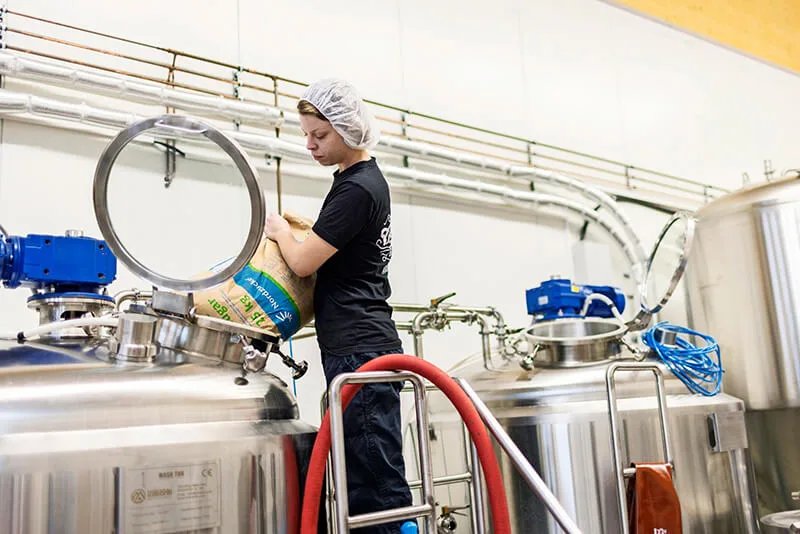
The brew day starts with sweet tea. At scale, the brewing kettle is a jacketed stainless steel vessel heated by steam or electric elements. It’s sized to produce concentrated tea that will be diluted with cold water before fermentation—this is more efficient than trying to boil the full batch volume.
Temperature control during brewing matters more than most people think. Green tea steeped too hot turns bitter. The heat pulls out excessive tannins that carry through to the finished product. Black tea brewed too cool under-extracts, leaving the kombucha thin and lacking the tea backbone that balances the acidity. A good brewing kettle holds temperature steady and provides gentle agitation—enough to move the tea leaves through the water for even extraction, not so much that it shears the leaves into fine dust that will end up suspended in the fermenter.
For organic certification, the kettle and all its contact surfaces, gaskets, and lubricants need to meet organic standards. This is a detail that catches people off guard. Retrofitting later is expensive. Ask the equipment manufacturer about organic compatibility before you buy.
3.2 Fermentation Vessels
The fermenter is where the transformation happens. Sweet tea goes in. Kombucha comes out. Everything else is support infrastructure.
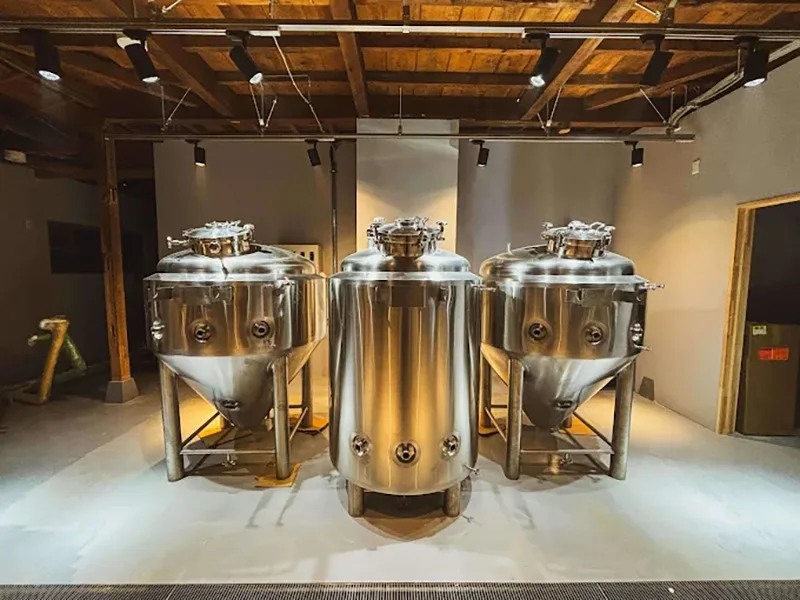
Commercial kombucha fermenters are open-top or covered with filtered, breathable lids. They are wider than they are tall to maximize oxygen transfer at the surface. Tank sizing is a production calculation. A 1,000-liter tank that needs three weeks to reach terminal acidity because of poor geometry or inadequate temperature control is worth less than a 600-liter tank that finishes in ten days. Fermentation cycle time multiplied by tank volume determines your weekly throughput. Size your tanks around your target output and your desired fermentation speed, not around what fits neatly on the floor.
Material is stainless steel with a high-grade interior polish. Sample ports let you pull liquid for pH checks without opening the lid. Temperature probes feed back to the glycol controller. The bottom drain is sized to handle sediment—yeast bodies, tea solids, small bits of SCOBY that break off during fermentation. A drain that clogs mid-transfer is a mess you only deal with once before you spec a better tank.
Some breweries use a two-stage fermentation model. Primary fermentation in large open tanks develops the base kombucha character. Then the liquid is transferred to a secondary tank where flavorings—fruit juice, herbs, spices—are added, and sometimes carbonation is built through a short secondary ferment under pressure. This approach requires careful tank sizing and scheduling so that primary tanks are emptying when secondary tanks are ready to receive, and packaging isn’t waiting on either.
3.3 Filtration
Filtration does several jobs in a kombucha brewery. It removes suspended solids—yeast clumps, SCOBY bits, tea particles—that make the product look cloudy and eventually settle as sediment in the bottle. It can reduce the yeast load to slow continued fermentation and alcohol production after packaging. And it can clarify the finished kombucha before carbonation and filling.
The tension is that kombucha is a live product. Filter too aggressively—sterile filtration at sub-micron levels—and you strip out the bacteria and yeast that make kombucha probiotic. Many commercial brewers use depth filtration through diatomaceous earth or plate-and-frame filters with food-grade cellulose pads. This removes visible solids and some yeast while allowing bacteria and flavor compounds to pass through. The resulting product is clear, stable, and still alive.
Filtration equipment needs to handle kombucha’s viscosity, which changes with sugar content and with fruit additions. Pectin from fruit can blind a filter quickly. A setup that runs clean for plain kombucha might slow to a crawl with a mango or peach flavor. Test your filtration on your actual product before committing to equipment.
3.4 Cooling Equipment
Fermentation generates heat. Yeast and bacteria metabolizing sugar in a large tank can push the core temperature several degrees above ambient. Unchecked, this leads to uneven fermentation—the center of the tank races ahead, the edges lag. Off-flavors develop. The culture stresses.
Cooling is usually handled by jacketed fermenters connected to a glycol chiller. Glycol is chilled below freezing and circulated through the jacket. A temperature controller monitors the tank and cycles the glycol flow to hold the setpoint. The chiller needs to be sized for the worst-case scenario—hottest summer day, all fermenters active, ambient heat and fermentation heat combining to push temperatures upward. Undersize the chiller and you’ll spend the summer watching your fermentation temperatures drift out of range.
Smaller operations sometimes use a walk-in cooler. The fermenters sit in a cold room, and ambient air temperature keeps them cool. This works at small scale but becomes inefficient as tank numbers grow. Dedicated glycol systems offer better control and lower energy costs at production scale.
3.5 Brite Tank
The brite tank is borrowed from beer brewing terminology, but the function translates. After fermentation and filtration, kombucha needs a holding vessel before packaging. The brite tank provides that buffer. It holds finished product at a chilled temperature, ready to feed the packaging line on demand. This decouples production from packaging—your filler runs on its own schedule, not tied to when a fermenter finishes.
Brite tanks for kombucha are pressure-rated if you’re packaging carbonated product. They’re jacketed for cooling. They often include a carbonation stone for forced carbonation. And they need the same material and finish standards as every other vessel in the brewery—stainless, polished, passivated, fully drainable.
Brite tanks also serve as blending vessels. You can combine batches here to even out flavor variations, adjust sweetness, add final flavorings. A well-sized brite tank smooths out the inconsistencies that are inevitable in live fermentation.
3.6 Heating and Cooling Infrastructure
Beyond the individual vessels, a kombucha brewery needs integrated heating and cooling systems. Hot water for tea brewing. Steam or electric power for the kettle. Glycol for the fermenters and brite tanks. Cold storage for finished product. HVAC for the production space.
The production environment matters more than many new brewers realize. Kombucha breweries are warm and humid by nature. Open tanks, warm liquid, ambient heat—these are ideal conditions for mold on walls, ceilings, equipment exteriors. A properly designed HVAC system manages humidity, maintains positive pressure in the fermentation area to keep airborne contaminants out, and provides enough air exchange to supply oxygen to open fermenters. A room full of premium fermenters is worthless if the air above them is full of mold spores. The building is part of the equipment set.
3.7 Packaging System
Packaging is where product meets container. Glass bottles, aluminum cans, stainless steel kegs—each format requires different equipment and carries different tradeoffs.
Glass looks premium and is traditional for kombucha. It’s also heavy, breakable, and transparent—clear glass on a brightly lit shelf exposes kombucha to UV light that can degrade flavor. Cans are light, unbreakable, impervious to light, and increasingly accepted by kombucha consumers. Kegs are the standard for taproom and bar sales.
The filling line needs to handle kombucha’s specific properties. Carbonated kombucha foams if agitated. A counter-pressure filler is standard—it pressurizes the container before filling, then fills under pressure to keep carbonation in solution and foam down. Line speed should match your production volume. A manual four-head filler works for a local brewery doing a few hundred bottles a week. A regional brand shipping thousands of cases needs automated rotary filling.
After packaging, finished product moves to cold storage. Kombucha is a live product. It keeps fermenting, slowly, in the package. Cold temperatures slow this process, preserving the intended flavor profile through distribution and onto the shelf. A brewery that ships and stores kombucha warm is asking for problems—over-carbonation, drifting flavor, alcohol levels that might creep past the legal limit.
4. Choosing Equipment: Four Things to Get Right
Equipment selection is a series of judgment calls. What you make, how much you make, what you can spend now, what you’ll need later. These four areas provide a framework.
4.1 Define Your Production Requirements
Get clear on the product before you look at equipment. What’s your weekly target volume, realistically? Are you making plain kombucha, flavored, or a mix? Still or carbonated? Kegs for local accounts or packaged for retail shelves? Do you need a secondary fermentation for flavor development, or are you adding flavor post-fermentation?
The answers define the equipment list. A brewery making still kombucha for kegs needs a brewing kettle, fermenters, a brite tank, and a keg washer-filler. A brewery making carbonated bottled kombucha for regional grocery needs all of that plus filtration, carbonation, a bottling line, and substantially more cold storage. The product dictates the equipment. Not the other way around.
Volume is the multiplier. A single 200-liter fermenter turning over every two weeks yields about 5,200 liters a year. If your sales target is 50,000 liters, you need roughly ten fermenters of that size—or fewer, larger tanks, or faster cycles. Be realistic about what you can sell. Many new breweries overestimate early sales and buy equipment that’s sized too small to reach the volume where the business pencils out.
4.2 Equipment Quality and Brand Reputation
Brand isn’t everything. But it usually correlates with something real. Established manufacturers have a track record. You can visit breweries running their equipment. You can ask about how it holds up over time. You can verify that the stainless is actually 304 or 316L, that the welds were properly passivated, that the glycol jacket doesn’t leak, that the temperature controller holds setpoint.
Cheap equipment from an unknown supplier is a bet. The low price looks good on the quote. But if the cooling jacket leaks glycol into your kombucha, if the interior polish is rough and impossible to clean properly, if the manufacturer vanishes when you need a replacement gasket—the savings disappear fast. Kombucha is a volume business with modest margins for most producers. Downtime costs money. Lost batches cost more. Equipment quality is not where you cut corners.
Look for equipment designed for kombucha specifically, or at minimum for acidic, aerobic fermentation. A general-purpose stainless tank built for still wine storage—sealed, anaerobic, inert—will fight you at every step if you try to use it for open kombucha fermentation.
4.3 Automation Level
Automation sits on a spectrum. Manual at one end: the brewer heats water, dumps tea, transfers liquid with a pump, checks pH with a handheld meter, fills bottles with a gravity filler. Fully automated at the other: PLC-controlled brew cycles, inline pH and temperature monitoring, automated transfers and CIP, high-speed rotary filling.
The right level depends on your labor costs, your volume, and your consistency needs. A two-person taproom brewery can run manual processes just fine. A regional brand doing thousands of cases a week cannot. But even small setups benefit from automating certain things—fermenter temperature control is the obvious one. A glycol system with automated temperature regulation pays for itself in saved labor and avoided batch loss.
Over-automating too early has its own risks. Automated systems cost more. They need people who know how to maintain them. They lock you into processes that might change as you learn what your market actually wants. Build automation in stages. Add it when volume demands it, not because it looks impressive.
4.4 Maintenance and After-Sales Support
Kombucha equipment is a long-term asset. Tanks have a service life measured in decades if maintained. But they need maintenance. Gasket replacements. Valve rebuilds. Pump servicing. Temperature probe recalibration. And sometimes something breaks at the worst possible moment.
The supplier’s support after the sale matters as much as the equipment quality. Do they stock spare parts? Can they overnight a replacement gasket or probe? Do they have people who can troubleshoot over the phone or come on-site? What does the warranty actually cover? Ask these questions before you sign. Call their existing customers. A slightly more expensive system from a supplier who answers the phone when you have a problem is a better investment than a cheaper system from someone who disappears after the invoice clears.
5. Cost and Return: What to Expect
Starting a commercial kombucha brewery is a capital-intensive undertaking. Equipment is the biggest single line item, but it’s not the whole picture. You need the facility, utilities, raw materials, labor, packaging, distribution, regulatory compliance, and enough working capital to operate before revenue covers costs.
For equipment, a basic small-brewery setup—brewing kettle, several fermenters, a brite tank, a chiller, basic filtration, manual or semi-auto packaging—runs somewhere between $50,000 and $150,000 depending on capacity and build quality. A full regional facility with automation, high-speed packaging, and extensive cold storage runs into the millions.
The return comes from kombucha’s premium retail price and from scaling fixed costs across more volume. Direct-to-consumer taproom sales carry the highest margin. Wholesale grocery distribution brings lower margins but higher volume. A well-designed equipment setup that runs efficiently and produces consistent product earns back its cost over time.
Underinvesting in equipment carries its own costs. Inconsistent product loses accounts. Contaminated batches are a write-off. Manual processes cap your throughput. Equipment failures stop production cold. The price of cheap equipment is not just the repair bill. It’s the sales you didn’t make, the accounts you lost, the time you spent fighting your own gear instead of building the business.
6. Common Questions
Can I use beer brewing equipment for kombucha?
Beer equipment can be modified for kombucha, but it’s not a drop-in solution. Beer fermenters are sealed for anaerobic fermentation. Kombucha needs open, aerobic conditions. The acid levels in kombucha are higher than in most beers, so material specs matter more. If you’re converting a brewery, expect to modify fermenters for open-top operation, verify all contact surfaces are acid-resistant, and set up a cleaning protocol that prevents cross-contamination between product lines. Many brewers who try to share equipment between beer and kombucha end up dedicating separate tanks to each.
What does a kombucha fermentation tank cost?
Prices vary with size, material grade, and features. A basic 200-liter open-top stainless tank might start around $2,000 to $4,000. A 2,000-liter jacketed tank with temperature control, sample ports, and a proper interior polish can run $15,000 to $30,000 or more. Custom features and premium brands increase the price. Get multiple quotes. Check references. The cheapest option is rarely the best value over a ten-year service life.
How long does commercial kombucha fermentation take?
Typical primary fermentation runs 7 to 21 days. Temperature, culture health, tank geometry, and target acidity all affect timing. Warmer temperatures and wide, shallow tanks with good oxygen access speed things up. Cooler temperatures and tall, narrow tanks slow things down. Most commercial brewers target a 10 to 14-day cycle.
Can I share a facility with another food or beverage business?
Shared facilities are possible but tricky. Kombucha’s open fermentation creates cross-contamination risk in both directions. Airborne acetic acid bacteria can drift into other products—beer, wine, fermented foods—and alter their flavor. Mold or wild yeast from neighboring operations can drift into your kombucha. If you share space, you need strict air handling segregation, rigorous sanitation, and ideally separate equipment sets. It’s simpler to have your own four walls.
7. Why Choose Us
We build kombucha equipment for people who depend on it. Not hobbyists. Not experimenters. Brewers whose livelihood rests on producing consistent, delicious, live kombucha batch after batch.
Our fermenters are fabricated from food-grade stainless with the interior polish, weld quality, and passivation that acidic, aerobic fermentation requires. Our temperature control holds setpoint. Our equipment is designed for cleanability—smooth surfaces, proper drainage, no dead legs. We’ve seen what happens when equipment is built to a price instead of a spec—the contamination, the temperature drift, the frustration—and we build to prevent it.
Beyond the tanks, we help with layout. We size vessels so your brewhouse, fermenters, and packaging line work as a system rather than a collection of bottlenecks. We commission on-site and train your people. We stay available for the questions that come up once production is running.
Kombucha is a living product. It needs equipment that respects that fact. That’s what we make. If you’re building a kombucha brewery you intend to run for years, let’s talk.
¿Tiene preguntas sobre su proyecto de equipamiento de cervecería? Puede dinos sus requisitos para la fábrica de cerveza, y le ofreceremos una solución llave en mano en 24 horas.