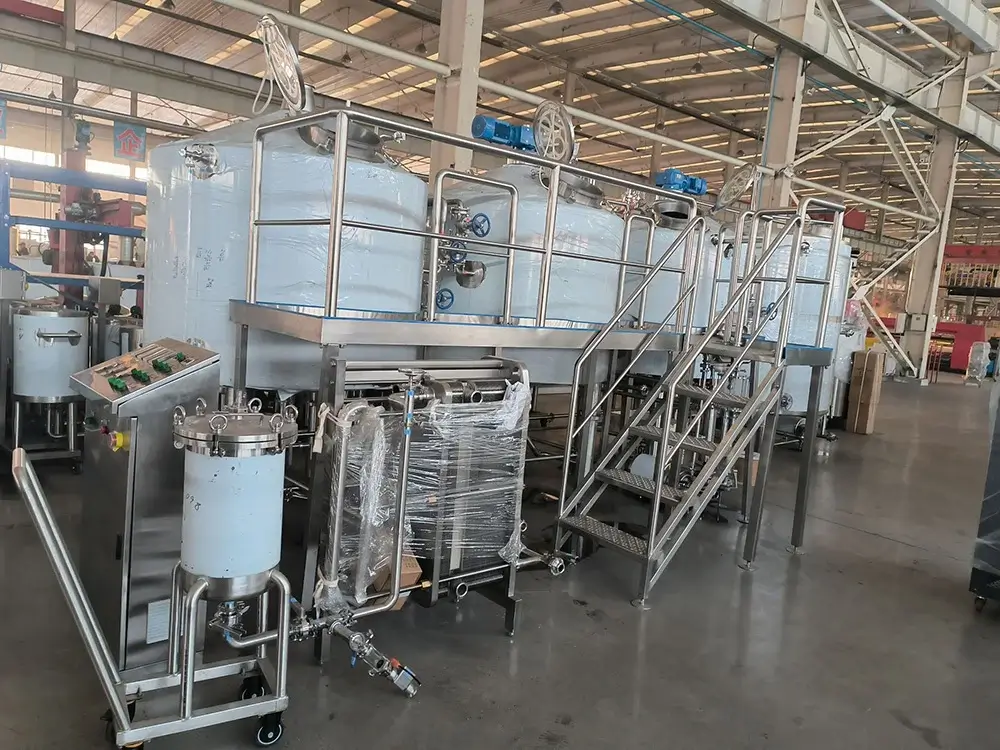
When planning a new brewery, buyers often come across the term “turnkey brewery equipment.” However, the meaning of turnkey can vary significantly between suppliers.
For some suppliers, turnkey may simply mean a complete set of brewing vessels. For others, it can include equipment design, production, piping, automation, installation, commissioning and operator training.
For an international brewery project, understanding what is actually included is important before comparing quotations or placing an equipment order.
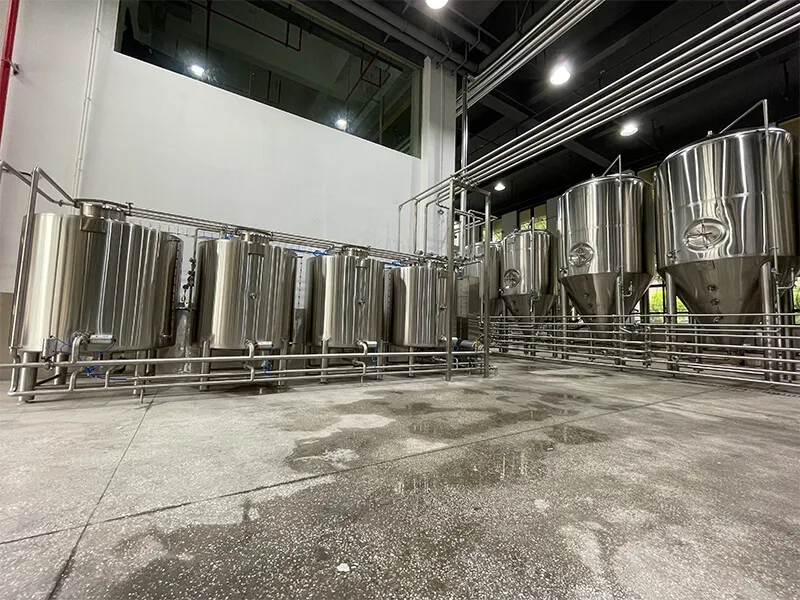
A well-planned turnkey brewery project should connect the major production systems into one integrated solution, from raw water and brewing to fermentation, cooling, CIP and final beer handling.
What Does “Turnkey Brewery” Mean?
A turnkey brewery is an integrated brewery equipment solution designed to reduce the amount of engineering and coordination required from the buyer.
Instead of purchasing individual tanks from different suppliers, the brewery equipment manufacturer coordinates the major systems according to the brewery’s production requirements.
A turnkey project may include:
- Brewery system design
- Sudhaus
- Fermentation tanks
- Tanks für helles Bier
- Hot and cold water systems
- Glycol cooling
- KVP-Anlage
- Pumps and piping
- Kontrollsystem
- Electrical integration
- Equipment testing
- Installation support
- Inbetriebnahme
- Operator training
The exact scope depends on the brewery size, automation level, local utilities and project requirements.
1. Brewery Process Design
A turnkey project should begin with process design rather than equipment production.
The manufacturer should first understand:
- Target annual production
- Brewhouse capacity
- Batches per day
- Beer styles
- Fermentation time
- Number and size of fermenters
- Packaging requirements
- Available factory space
- Heating method
- Kühlungsanforderungen
- Automatisierungsgrad
- Future expansion plans
These factors determine how the individual systems should work together.
For example, a 1,000L brewhouse does not automatically mean the brewery needs 1,000L of fermentation capacity. The number of fermenters, fermentation time and production schedule must also be considered.
2. Brewhouse System
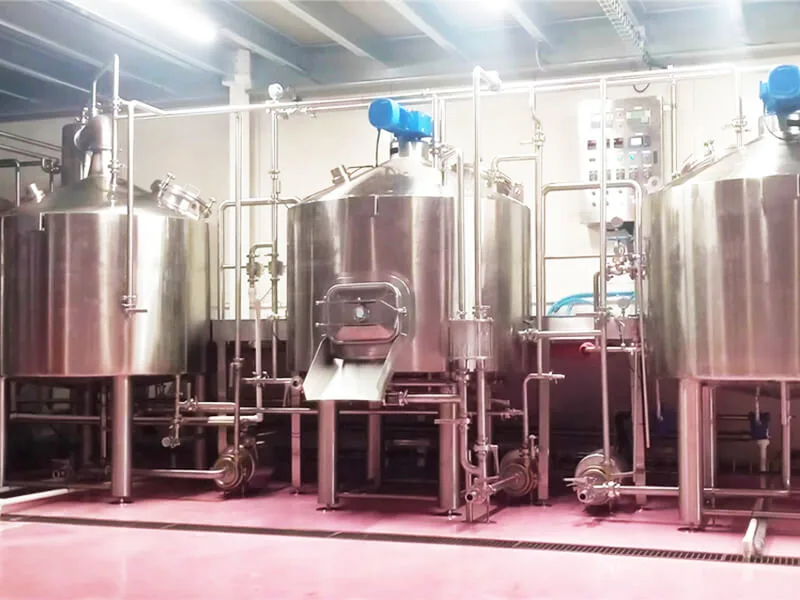
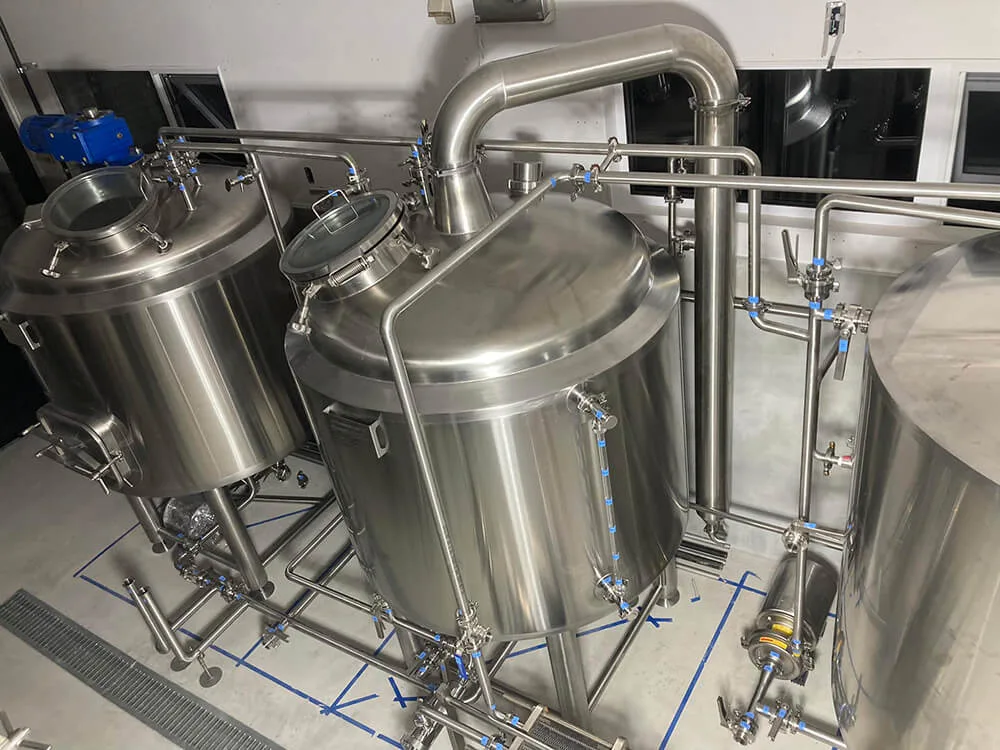
The brewhouse is the core of the brewing process.
Depending on the brewery size and production requirements, a turnkey system may include:
- Mill
- Mash tun
- Lauter tun
- Kettle
- Whirlpool
- Hot liquor tank
- Cold liquor tank
- Wort pumps
- Heat exchanger
- Wort aeration system
- Brewhouse control system
The brewhouse configuration can be customized according to production volume, available space, heating method and desired automation.
For example, smaller breweries may use a compact two-vessel or three-vessel system, while larger commercial breweries may require four-vessel or five-vessel configurations for higher production efficiency.
3. Fermentation and Cellar Equipment
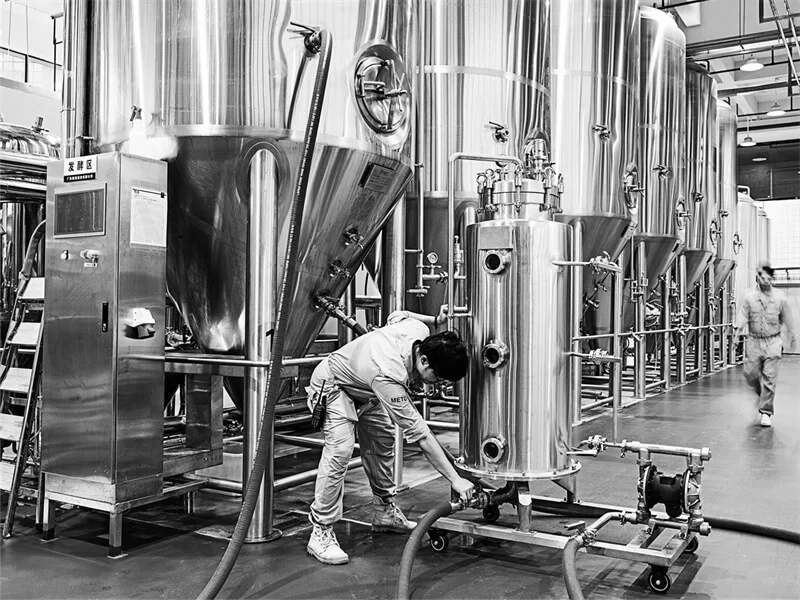
Fermentation is one of the most important parts of the brewery.
A turnkey brewery project may include:
- Konische Fermenter
- Tanks für helles Bier
- Horizontal lagering tanks
- Yeast handling equipment
- Kohlensäurezufuhrsysteme
- Tank temperature control
- Glycol piping
The number of fermenters should be determined based on production volume and fermentation time.
A brewery that produces several batches per day may require significantly more fermentation capacity than a brewery with the same brewhouse size but a slower production schedule.
4. Glycol Cooling System
A complete brewery cannot be properly designed without considering cooling requirements.
The cooling system may include:
- Glykolkühler
- Glycol storage tank
- Glykolpumpe
- Heat exchanger
- Glycol piping
- Tank cooling jackets
- Temperature control system
The chiller should be sized according to the actual cooling load rather than brewhouse capacity alone.
The calculation should consider the number and size of fermenters, fermentation temperature, cold crashing, wort cooling and the local ambient conditions.
For breweries in hot climates such as Thailand, cooling capacity and insulation require particular attention.
5. Hot and Cold Water Systems
Water is used throughout the brewing process and should be considered as part of the overall system.
Depending on the project, a turnkey solution may include:
- Hot liquor tank
- Cold liquor tank
- Brewing water pumps
- Water piping
- Water filtration
- Water treatment equipment
The hot water system should have sufficient capacity to support the planned brewing schedule.
Water treatment may also be required depending on the source water and the beer styles being produced.
6. CIP-Reinigungssystem
A brewery needs an effective cleaning system to maintain sanitation and production consistency.
A turnkey CIP system may include:
- CIP tanks
- Caustic tank
- Acid tank
- Hot water tank
- CIP pump
- Spray devices
- Cleaning pipelines
- Ventile
- Temperaturkontrolle
For larger breweries, the CIP system can be integrated with PLC control to manage cleaning sequences and reduce manual operation.
The final CIP configuration should be based on the number of vessels, tank volume, cleaning frequency and whether multiple cleaning circuits are required.
7. Pumps, Valves and Process Piping
Pumps and piping are sometimes overlooked when buyers compare brewery quotations.
However, they are essential for connecting the entire production system.
A turnkey brewery may require piping for:
- Wort
- Beer
- Water
- Glycol
- CIP
- Dampf
- Compressed air
- CO₂
The manufacturer should define the piping materials, connection standards, valve types and process routes according to the brewery design.
Proper piping design can improve cleaning efficiency, reduce product loss and make future maintenance easier.
8. Electrical System and PLC Automation
Automation can range from basic temperature control to a centralized PLC system.
A turnkey brewery control system may include:
- PLC
- HMI touchscreen
- Temperatursensoren
- Pressure sensors
- Durchflussmesser
- Automatic valves
- Pump control
- Heizungsregelung
- Glycol control
- CIP control
- Alarm functions
The automation level should match the brewery’s production scale and operating model.
A small brewpub may only need basic temperature and pump control, while a larger commercial brewery may benefit from centralized automation covering the brewhouse, cellar, cooling and CIP systems.
9. Factory Acceptance Testing
Factory testing is particularly important for international brewery projects.
Before shipment, the manufacturer can perform a factory acceptance process to verify that the equipment meets the agreed specifications.
Depending on the project scope, FAT may include:
- Equipment dimensions
- Tank configuration
- Welding quality
- Surface finish
- Pressure testing
- Pumps
- Ventile
- Sensors
- Control panels
- PLC functions
- Electrical components
- Water testing
- Documentation
A clear FAT procedure helps identify potential problems before the equipment leaves the factory.
10. Brewery Equipment Documentation
A turnkey project should not end with physical equipment alone.
International buyers may require technical documentation such as:
- Equipment drawings
- P&ID
- Electrical drawings
- Operation manuals
- Maintenance instructions
- Equipment specifications
- Material documentation where applicable
- Pressure test records
- Testing records
- Component lists
- Spare parts lists
The exact documentation depends on the equipment type, destination market and project requirements.
For projects involving pressure equipment or specific local regulations, the required documentation should be confirmed before manufacturing begins.
11. Shipping and Export Preparation
For an international turnkey brewery project, equipment must also be prepared for transportation.
The supplier may support:
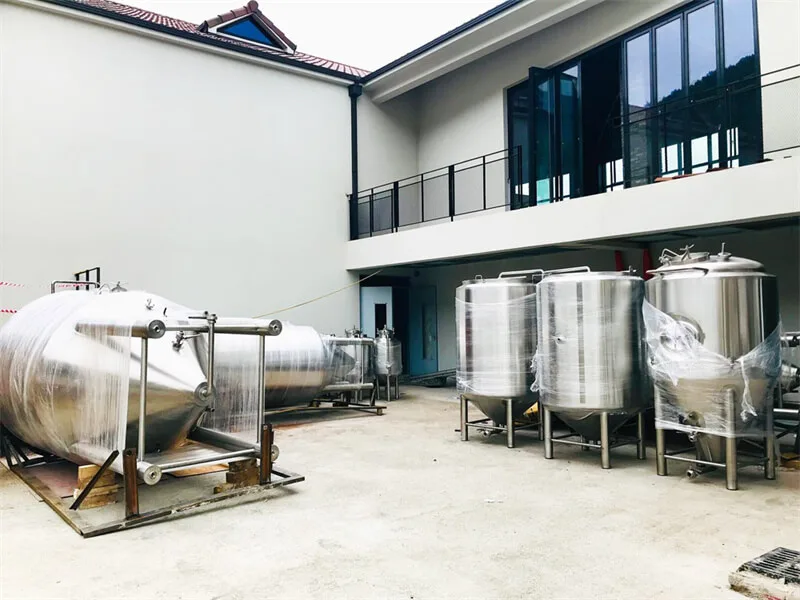
- Equipment packing
- Container loading
- Shipping dimensions
- Packing lists
- Commercial invoices
- Export documentation
- Loading photographs
- Shipping coordination
Large brewery vessels may require careful container planning because their dimensions and weight can significantly affect transportation costs.
12. Installation Support
Turnkey does not necessarily mean that the manufacturer physically installs every component at the customer’s factory.
The project scope should clearly state whether installation is:
- Fully handled by the manufacturer
- Supervised by the manufacturer
- Supported remotely
- Performed by the buyer’s local contractor
Installation support may cover:
- Equipment positioning
- Piping connections
- Electrical connections
- Utility connections
- Sensor installation
- PLC connection
- Glycol system connection
- CIP connection
For overseas projects, clear installation drawings and technical instructions can make local installation much easier.
13. Commissioning and Operator Training
After installation, the brewery system needs to be tested under actual operating conditions.
Commissioning may include:
Water testing → Utility testing → Equipment testing → Brewing trial → Temperature testing → CIP testing → Process adjustment
Operator training can then cover:
- Brewhouse operation
- Fermenter operation
- Temperaturkontrolle
- CIP procedures
- PLC operation
- Basic maintenance
- Safety procedures
This stage helps the brewery team become familiar with the equipment before commercial production begins.
14. What Is Usually Not Included?
One of the most important parts of evaluating a turnkey quotation is understanding what is not included.
Depending on the supplier, the following may be outside the standard equipment package:
- Brewery building
- Civil construction
- Entwässerung
- Local electrical installation
- Gas supply
- Steam boiler
- Air compressor
- Wasseraufbereitung
- Packaging equipment
- Laboratory equipment
- Taxes and import duties
- International freight
- Local permits
- Local engineering approval
Therefore, buyers should request a detailed scope of supply instead of assuming that “turnkey” means everything is included.
Turnkey Brewery vs Equipment Package
These two terms should not automatically be treated as the same.
An equipment package may provide the major brewing vessels and basic accessories.
A turnkey brewery project should provide a more integrated engineering solution.
| Equipment Package | Turnkey Project |
|---|---|
| Main vessels | Complete process design |
| Basic piping | Integrated piping design |
| Individual controls | Integrated automation |
| Equipment supply | Testing and commissioning support |
| Technical specifications | Drawings and documentation |
| Limited engineering | Project-level engineering |
The exact definition should always be confirmed in the commercial quotation and technical agreement.
How to Evaluate a Turnkey Brewery Supplier
When comparing suppliers, do not compare only the total price.
Ask each manufacturer to provide a detailed scope covering:
Equipment
What vessels and auxiliary equipment are included?
Engineering
Are process diagrams, layout drawings and piping plans included?
Automation
What level of PLC and automatic control is included?
Testing
What factory testing will be performed before shipment?
Installation
Does the supplier provide installation supervision or commissioning?
Documentation
Which technical and compliance documents are included?
After-Sales-Unterstützung
How will technical issues be handled after the brewery starts production?
A lower quotation may appear attractive but become more expensive if important systems or services are excluded.
Why Work with a Brewery Equipment Manufacturer?
A turnkey brewery project involves many interconnected systems.
Working with a manufacturer that understands the complete brewing process can reduce coordination between different equipment suppliers.
METO designs and manufactures brewery equipment and integrated brewing systems for different production scales and international markets.
Depending on project requirements, METO can integrate:
- Brewhouse systems
- Fermentation tanks
- Tanks für helles Bier
- Hot and cold water systems
- Glycol cooling
- CIP
- Prozessrohrleitungen
- PLC automation
- Electrical control
- Factory testing
- Installation and commissioning support
The system can be configured according to production capacity, beer styles, factory layout, utilities, automation requirements and future expansion plans.
FAQ
What does a turnkey brewery equipment project include?
A turnkey project can include equipment design, brewhouse, fermentation, cooling, CIP, piping, automation, testing, documentation, installation support and commissioning. The exact scope depends on the supplier and project agreement.
Does turnkey brewery equipment include the building?
Usually not. Civil construction, drainage and building work are often handled locally unless specifically included in the contract.
Does a turnkey brewery include packaging equipment?
Not necessarily. Filling, kegging, canning and bottling systems should be clearly listed in the quotation if required.
Does the manufacturer install the brewery?
This depends on the project. Installation can be fully handled, supervised by the manufacturer or completed by a local contractor with technical support from the equipment manufacturer.
Is turnkey brewery equipment more expensive?
The initial equipment investment may be higher than purchasing individual vessels, but an integrated project can reduce coordination work and help ensure that the major systems are properly matched.
Schlussfolgerung
A turnkey brewery equipment project should be more than a collection of stainless steel tanks.
It should connect process design, brewing equipment, fermentation, cooling, CIP, piping, automation, testing and commissioning into one coordinated system.
Before placing an order, international buyers should ask for a detailed scope of supply and clearly identify what is included, what is optional and what must be provided locally.
For a new brewery project, choosing an experienced brewery equipment manufacturer at the design stage can help ensure that the equipment, utilities, layout and automation work together from the beginning.
Wenn Sie vorhaben, eine Brauerei zu errichten, contact METO with your target capacity, beer styles, available space and production requirements. We can help develop a brewery equipment solution based on your project needs.