Introduction: Why Commercial Kombucha Production Requires Specialized Equipment
The global kombucha market continues to expand as consumers increasingly seek functional beverages with natural probiotics, low sugar content, and clean-label ingredients. Industry forecasts suggest that the kombucha sector will exceed several billion dollars in annual sales by the end of this decade, creating significant opportunities for beverage startups, contract manufacturers, and established drink brands.
While home brewing remains popular, commercial kombucha production introduces an entirely different level of complexity. Consistent product quality, microbial control, regulatory compliance, and production efficiency all depend heavily on the brewing equipment used.
For businesses planning to scale production, selecting the right kombucha brewing system is one of the most important investments. This guide explains the key equipment, process requirements, and selection criteria for successful commercial kombucha manufacturing.
Understanding the Commercial Kombucha Brewing Process
Commercial kombucha production typically consists of four major stages:
Tea Brewing and Sugar Dissolution
The process begins with preparing sweetened tea, which serves as the nutrient base for SCOBY growth.
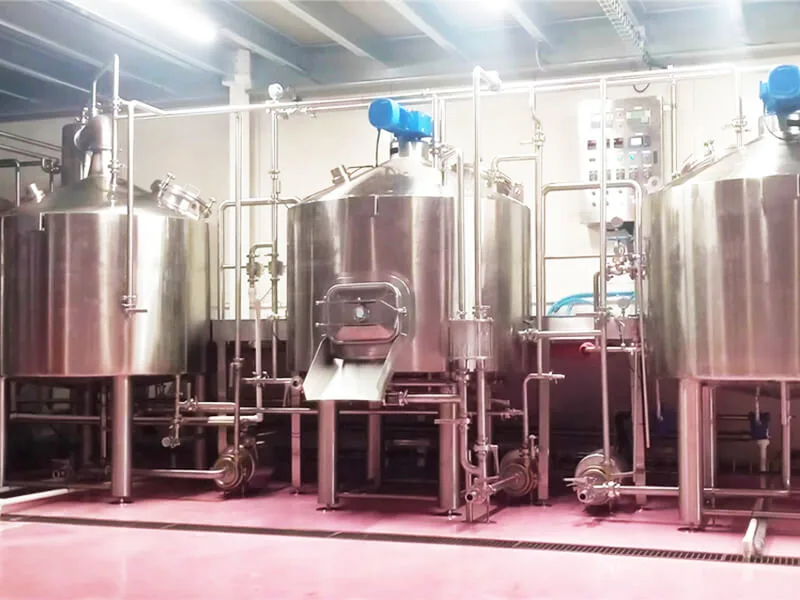
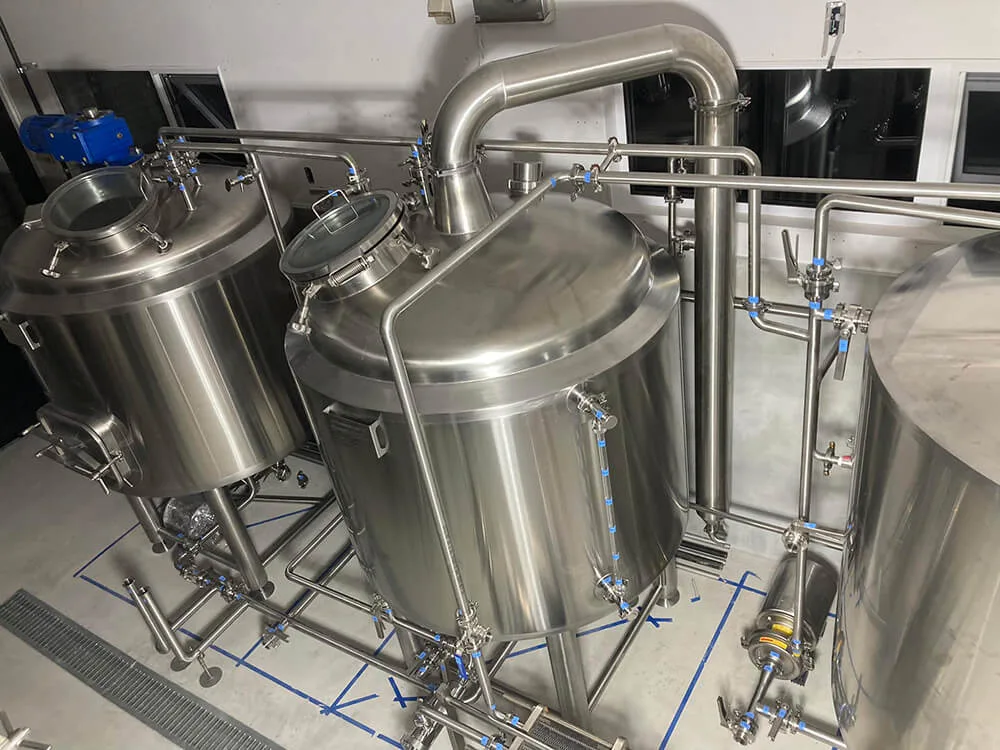
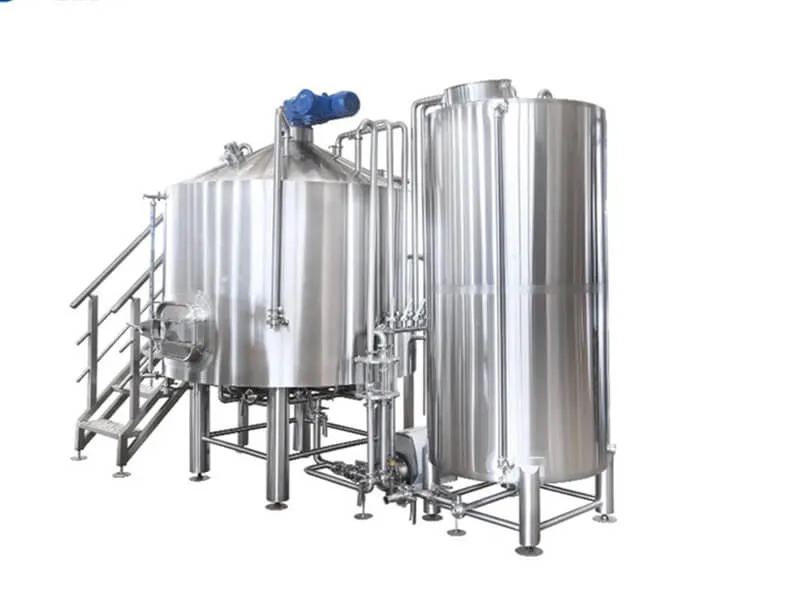
Modern kombucha brewing equipment typically includes:
- Stainless steel tea brewing kettles
- Automated mixing systems
- Steam or electric heating jackets
- Temperature control systems
- Plate heat exchangers for rapid cooling
After brewing, the tea must be cooled to approximately 20–30°C before inoculation. Rapid cooling reduces contamination risks and improves fermentation consistency.
Primary Fermentation
Primary fermentation is where SCOBY (Symbiotic Culture of Bacteria and Yeast) converts sugars into organic acids, probiotics, and characteristic kombucha flavors.
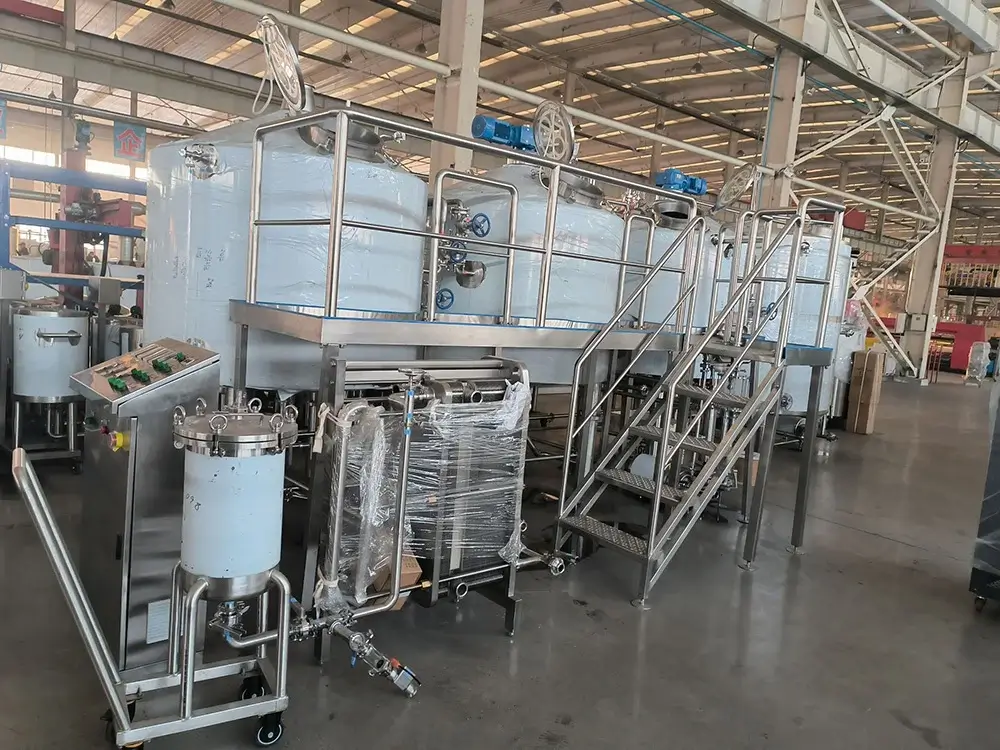
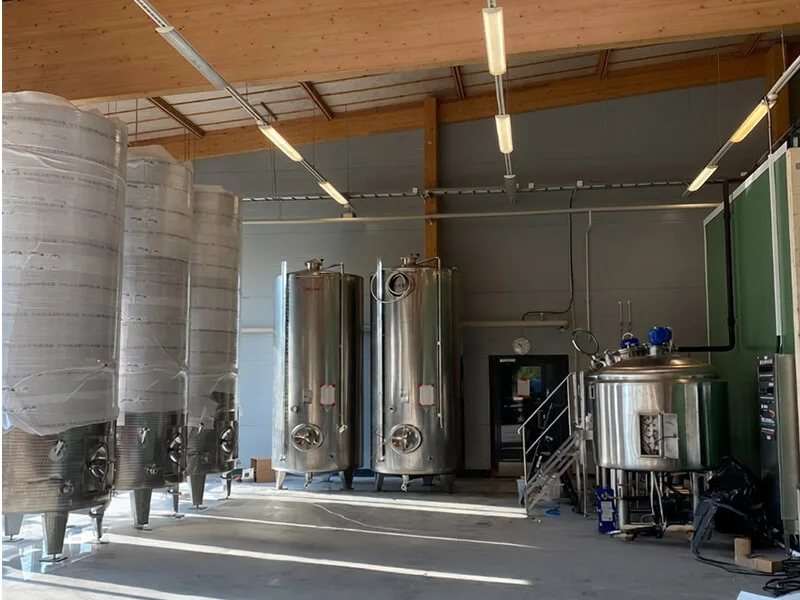
Closed Fermentation Tanks
Traditional commercial systems often use stainless steel fermentation vessels equipped with:
- Temperature control jackets
- Air filtration systems
- Sampling valves
- CIP cleaning ports
Advantages include:
- Better contamination protection
- Easier sanitation
- Consistent batch performance
Coolship and Open Fermenters
An increasing number of commercial producers are adopting coolship-style or open fermentation systems.
Compared with traditional closed tanks, coolships provide:
- Enhanced oxygen transfer
- Faster SCOBY activity
- More robust microbial development
- Potential fermentation time reductions of 30–50%
In many commercial applications, fermentation periods can decrease from approximately 10–14 days to as little as 5–7 days while maintaining flavor complexity.
Proper airflow management and sanitation protocols remain essential when using open fermenters.
Temperature-Controlled Fermentation
Temperature directly influences microbial activity and flavor development.
Most commercial kombucha producers maintain fermentation temperatures between 25°C and 30°C.
Temperature-controlled brewing systems help achieve:
- Consistent acidity levels
- Stable pH development
- Predictable fermentation cycles
- Improved batch-to-batch repeatability
Advanced systems integrate automated PLC controls and temperature sensors to eliminate manual adjustments.
Secondary Fermentation and Flavor Development
After primary fermentation, kombucha often enters a secondary fermentation stage.
During this phase, producers may add:
- Fruit juices
- Botanical extracts
- Natural flavors
- Essential oils
Common equipment includes:
- Flavor blending tanks
- Mixing vessels
- Pressure-rated fermentation tanks
- Carbonation systems
Secondary fermentation allows manufacturers to create differentiated products while developing natural carbonation.
Filtration, Pasteurization, and Packaging
The final processing stage prepares kombucha for commercial distribution.
Equipment may include:
- Multi-stage filtration systems
- Pasteurization units
- Bright tanks
- Bottle filling lines
- Can filling systems
- Labeling and packaging equipment
Depending on product positioning, producers may choose raw, unfiltered kombucha or shelf-stable pasteurized products.
Four Golden Standards for Choosing Commercial Kombucha Equipment
1. Food-Grade Materials and Superior Hygiene
Kombucha is naturally acidic, making material selection critical.
High-quality systems should utilize:
- Food-grade 304 stainless steel
- Food-grade 316L stainless steel
- Corrosion-resistant fittings
- BPA-free contact surfaces
Surface finish is equally important.
Professional fermentation tanks typically feature internal polishing levels of Ra ≤ 0.6 μm to minimize microbial attachment and improve cleanability.
Integrated CIP cleaning systems are highly recommended because they:
- Reduce labor requirements
- Improve sanitation consistency
- Minimize contamination risks
- Shorten cleaning cycles
2. Precision Process Control
As production volume increases, manual control becomes increasingly unreliable.
Modern kombucha brewing systems often include:
- Automated PLC control systems
- Temperature monitoring
- Digital pH sensors
- Flow meters
- Production data logging
These technologies help maintain consistent flavor profiles and reduce batch variation.
For beverage brands seeking large-scale distribution, automation is often essential rather than optional.
3. Modular Design and Scalability
One of the most common mistakes made by startup producers is purchasing equipment that cannot grow with the business.
A modular kombucha system allows companies to expand production without replacing existing infrastructure.
A typical growth path might include:
Stage 1: Pilot Production
- 500L fermentation tanks
- Small blending systems
- Semi-automatic packaging
Stage 2: Regional Distribution
- 1,000L–2,000L fermenters
- Automated CIP systems
- Enhanced process controls
Stage 3: Commercial Scale Manufacturing
- 3,000L+ fermentation vessels
- Multiple parallel fermentation lines
- Fully automated production systems
This approach reduces capital risk while preserving future expansion flexibility.
4. Regulatory Compliance and Certification
Food safety regulations vary by region, but equipment suppliers should demonstrate compliance with major international standards.
Key certifications include:
- FDA compliance
- CE certification
- HACCP compatibility
- Food-contact material certification
Before purchasing, buyers should verify all documentation, material certificates, and welding quality records.
Common Mistakes When Purchasing Kombucha Brewing Equipment
Choosing Low-Grade Materials
Some manufacturers attempt to reduce costs by using non-food-grade metals or poor-quality stainless steel.
Because kombucha contains organic acids, inferior materials may:
- Corrode prematurely
- Release unwanted metal ions
- Affect product flavor
- Increase maintenance costs
Ignoring Ventilation and Pressure Safety
Fermentation generates carbon dioxide continuously.
Commercial systems should include:
- Pressure relief valves
- Ventilation management
- Gas release systems
- Safety monitoring devices
Proper safety design protects both equipment and personnel.
Underestimating Cleaning Requirements
Contamination is one of the fastest ways to destroy product consistency.
Without proper cleaning systems, producers may encounter:
- Mold contamination
- Wild yeast growth
- Inconsistent acidity
- Product recalls
Investing in a professional CIP cleaning system often pays for itself through improved reliability.
Maintenance Best Practices for Long-Term Performance
To maximize equipment lifespan and maintain product quality:
- Perform CIP cleaning after every production cycle
- Inspect gaskets and seals regularly
- Calibrate temperature sensors routinely
- Verify pH meter accuracy
- Check safety valves periodically
- Maintain complete maintenance records
Preventive maintenance significantly reduces downtime and unexpected repair costs.
Turnkey Kombucha Production Lines: A Growing Industry Trend
Many beverage startups now prefer turnkey kombucha production lines instead of purchasing individual pieces of equipment from multiple suppliers.
A complete turnkey solution typically includes:
- Tea brewing systems
- Primary fermentation tanks
- Secondary fermentation vessels
- CIP cleaning systems
- Filtration units
- Carbonation systems
- Filling and packaging equipment
- PLC automation controls
Working with a single kombucha equipment manufacturer simplifies project management and ensures system compatibility throughout the production process.
Conclusion
Successful commercial kombucha production depends on far more than a healthy SCOBY. Consistent product quality, operational efficiency, and regulatory compliance all begin with selecting the right brewing equipment.
Whether you are launching a new kombucha brand or expanding an existing beverage operation, investing in high-quality fermentation systems, automated process controls, and scalable infrastructure will provide long-term advantages in both product quality and profitability.
Ready to Scale Your Kombucha Production?
Contact our engineering team today to discuss a customized turnkey kombucha brewing solution, facility layout design, and equipment configuration tailored to your production goals.