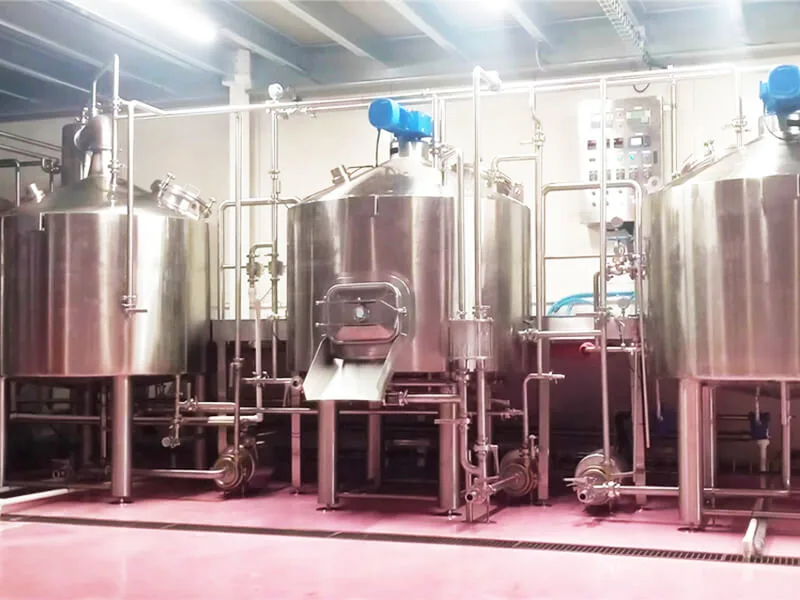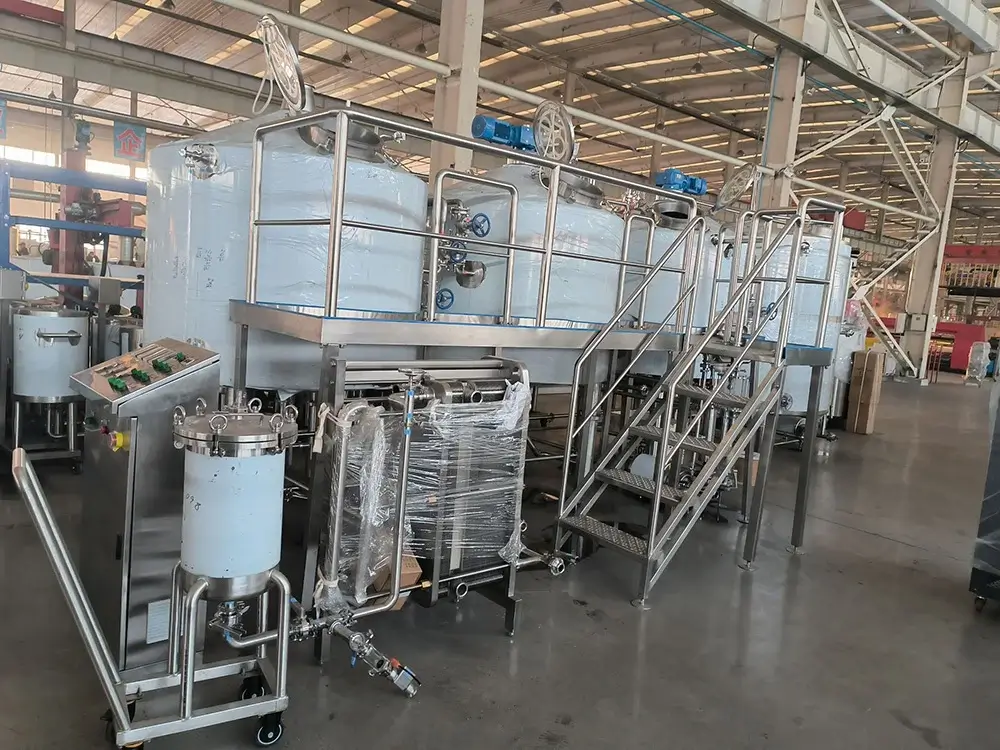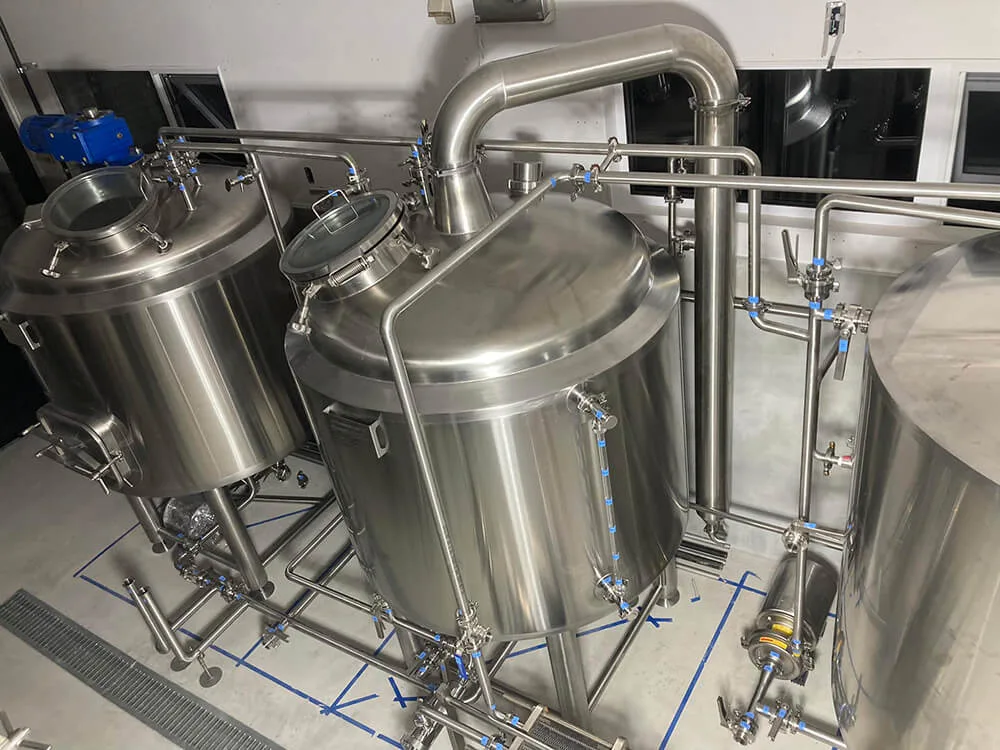
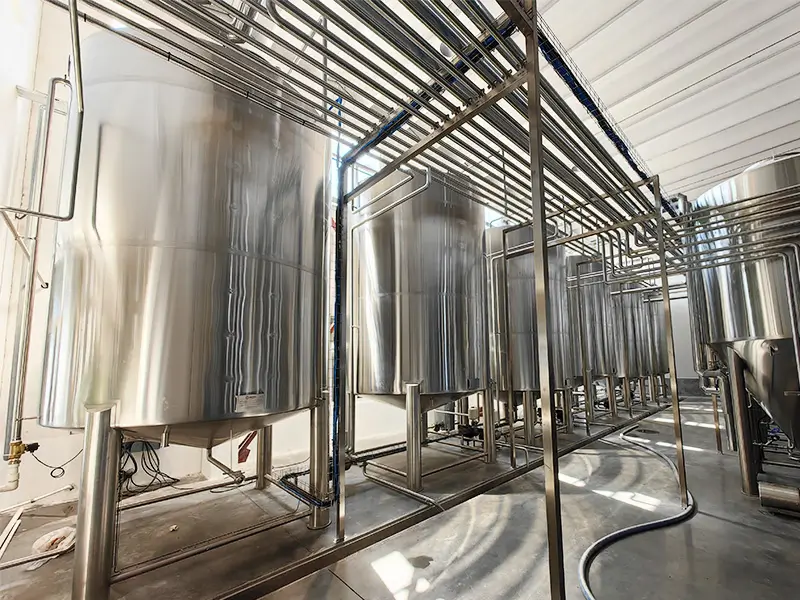
Choosing the right Stainless Steel Storage Tank for your brewing process is a critical step in ensuring beer quality and boosting production efficiency. Brewing exceptional beer is both an art and a science, and the stainless steel fermentation tank is the core foundation behind this science. Today, we’ll dive deep into how to scientifically select the best stainless steel brewing equipment for your needs, covering everything from materials and craftsmanship to long-term maintenance. Understanding the role of the Stainless Steel Storage Tank is your first step toward mastering the craft.
The Key Role of Stainless Steel Tanks in Brewing
Compared to traditional plastic or wooden containers, a high-quality Stainless Steel Storage Tank provides unmatched control and safety for modern brewing:
- Superior Hygiene and Corrosion Resistance: The smooth, non-porous surface of a Stainless Steel Storage Tank resists bacterial growth and residue buildup. It easily withstands high-temperature cleaning and steam sterilization, significantly reducing the risk of cross-batch contamination.
- Precise Temperature Control: Fermentation temperature directly impacts beer flavor. Premium Stainless Steel Storage Tanks typically feature cooling jackets or coils with excellent thermal conductivity, precisely maintaining the required fermentation environment.
- Exceptional Durability: Stainless steel can withstand high pressure and acidic wort. A well-maintained Stainless Steel Storage Tank can last for decades, dramatically lowering long-term equipment replacement costs.
Key Considerations When Choosing a Stainless Steel Storage Tank
Before making a purchase, you need to focus on several core parameters, especially the material selection:
1. Material Selection: 304 vs. 316/316L Stainless Steel
This is often the most confusing part of the buying process. Simply put:
- 304 Stainless Steel: Offers great cost-effectiveness and good corrosion resistance, fully meeting the needs of most beer brewing, blending, and basic liquid storage. If you are focusing on beer brewing, a 304 Stainless Steel Storage Tank is usually the preferred choice.
- 316/316L Stainless Steel: With the addition of molybdenum , it has stronger resistance to chloride ions and acidic corrosion. If you frequently brew more acidic beverages like wine or mead, or if your brewing water has a high mineral content, a 316/316L Stainless Steel Storage Tank is a safer long-term investment.
2. Capacity and Space Planning
When choosing a fermentation tank, it’s advisable to select a capacity 25%-50% larger than your actual batch size. For example, for 200 liters of wort, a 250-300 liter Stainless Steel Storage Tank is better, reserving adequate headspace for the foam (Krausen) produced during peak fermentation to prevent overflow. You should also consider your workshop’s layout to decide between vertical or horizontal configurations.
3. Intelligent and Automated Configurations
Modern brewing is shifting towards intelligence. A Stainless Steel Storage Tank with automatic temperature control, liquid level monitoring, remote data collection, or even an integrated PLC control system can significantly boost productivity and safety. If your budget allows, these automation features will greatly reduce the burden of daily management.
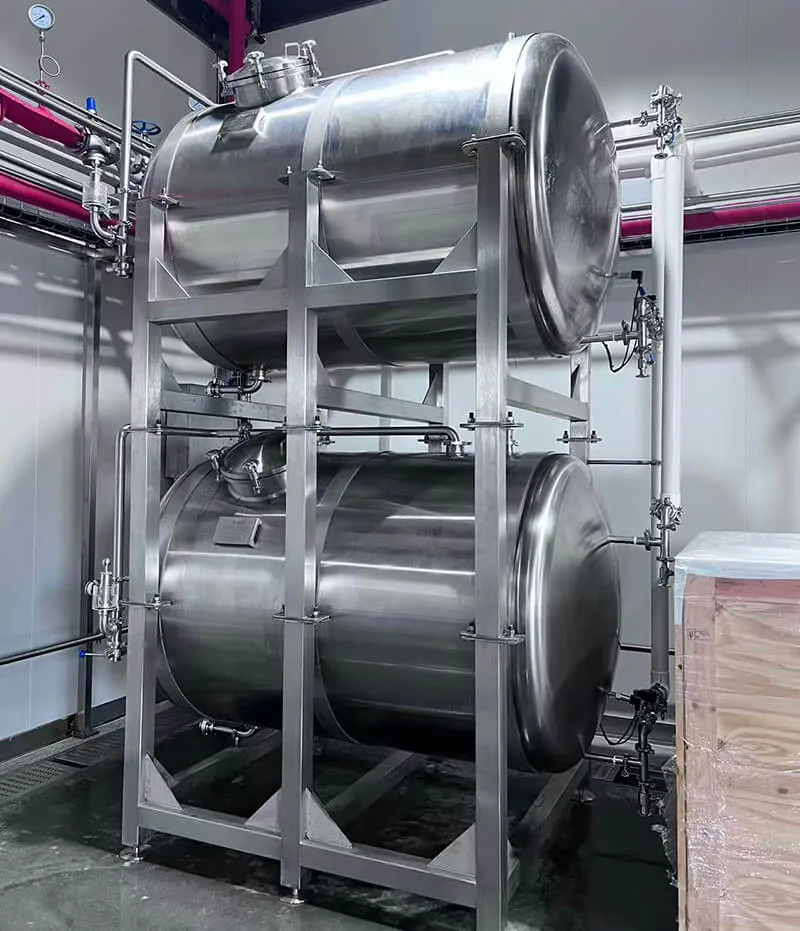
Choosing Stainless Steel Tank Types Based on Brewing Process
Different brewing stages have distinct requirements for the structure and function of your Stainless Steel Storage Tank:
- Mash Tun: As a core brewing vessel, it demands precise temperature control and pressure resistance. It is recommended to choose a 316L stainless steel mash tun with jacket cooling, a conical bottom (for yeast sedimentation), and equipped with an automatic degassing valve and pressure gauge.
- Fermentation and Aging Tanks: These tanks require a consistently low-temperature environment to maintain flavor stability. A Stainless Steel Storage Tank for this purpose must have a refrigeration jacket and high-quality insulation. A conical bottom fermenter also allows you to easily harvest yeast and dump sediment.
- Raw Material and Cleaning Solution Tanks: Used for storing brewing water, wort, or cleaning solutions. These tanks have more lenient temperature and pressure requirements, but the material must be sanitary and non-toxic. A simple, easy-to-drain 304 Stainless Steel Storage Tank is typically sufficient. However, for storing acid or alkaline cleaning solutions, upgrading to the more corrosion-resistant 316L material is advised.
Stainless Steel Storage Tank Purchasing and Maintenance Advice
Purchasing Advice:
- Verify Credentials: Prioritize well-known manufacturers with food machinery qualifications and international certifications like ISO or CE. If necessary, request to see welding process inspection reports or conduct a site visit.
- Customization Communication: Before ordering, thoroughly discuss your production scale, temperature control needs, and future expansion plans with the supplier. Determine in advance if you need special features like a yeast harvesting port or CIP (Clean-in-Place) interface to avoid costly later modifications.
- Clarify After-Sales Service: A Stainless Steel Storage Tank is a long-term asset. Be sure to sign a clear after-sales agreement, understanding the warranty period, spare parts supply cycle, and fault response time.
Maintenance Advice:
- Standardized Cleaning: After each batch, thorough cleaning and disinfection are mandatory. Use mild detergents or brewery-approved acidic cleaners. Never use metal brushes like steel wool, which can scratch the chromium oxide protective layer on the stainless steel surface and lead to corrosion of your Stainless Steel Storage Tank.
- Regular Inspections: Establish an equipment maintenance log and regularly inspect seals, pressure valves, temperature sensors, and other accessories. Replace them promptly if you find aging or damage, ensuring part compatibility to maintain production continuity.
Additional Pre-Purchase Precautions
To maximize your budget and avoid pitfalls, confirm these practical details before finalizing your purchase contract for a Stainless Steel Storage Tank:
- Strictly Check Material and Thickness: Food-grade 304 stainless steel is a baseline requirement. Always demand a material certificate from the supplier and check the model identification on the equipment surface. Tank wall thickness directly determines pressure resistance and service life—never choose based on price alone. It is generally required to be at least 2mm thick (for large wine storage tanks, the bottom may even need to be reinforced to 4mm) to prevent suppliers from using substandard, thinner plates.
- Inspect Welding and Inner Wall Finish: The smoothness of the weld seams and inner wall directly impacts cleaning difficulty and beverage safety. A high-quality Stainless Steel Storage Tank will have smooth, burr-free welds, with inner wall polishing precision typically requiring Ra ≤ 0.8μm. Rough welds or uneven inner surfaces easily trap dirt; over the long term, this can even lead to heavy metal leaching, causing bitterness or off-color in the beverage.
- Verify Part Compatibility and Supply: Pressure gauges, thermostats, seals, and valves are wear-prone parts during daily use of a Stainless Steel Storage Tank. Ensure the equipment structure is standardized with strong part compatibility, and confirm that the supplier can provide genuine parts throughout the tank’s entire lifecycle. This avoids production line shutdowns because a small, unavailable part.
- Lock Down Installation and After-Sales Terms: A Stainless Steel Storage Tank is heavy equipment, and the installation foundation (like concrete load-bearing and flatness) and grounding for lightning and static electricity must meet safety standards. When signing the contract, be explicit about whether the manufacturer provides on-site installation and commissioning, operational training, and specific fault response times to ensure the equipment can be put into production safely and smoothly.
Summary
Selecting the right Stainless Steel Storage Tank for your brewing process is the cornerstone of ensuring beer quality and improving production efficiency. From basic raw material storage to the core processes of mashing and fermentation, every step has unique and rigorous requirements for the tank’s material (304 vs. 316), structural design, and temperature control performance.
As the modern brewing industry continues to evolve, intelligent, modular, and eco-friendly Stainless Steel Storage Tanks are becoming the mainstream trend. During procurement, scientifically planning your equipment configuration and fully considering process needs and long-term maintenance costs are crucial. Only through careful selection, standardized purchasing, and diligent daily maintenance can your Stainless Steel Storage Tank truly become a solid backbone for your brewing business, supporting the continuous production and constant innovation of high-quality beer.
Contact us today to discover how our brewery equipment and commercial craft brewing equipment can power your next brewery.