The whisky industry is experiencing a new wave of growth, creating significant opportunities. However, for entrepreneurs, building a distillery is far more complex than simply buying equipment and renting a facility. Brand positioning, raw material control, and translating flavor concepts into reality are what truly determine long-term success.
Below is a clear and practical roadmap for building a competitive whisky distillery.
1. Location: Understand the Environment Before Construction
Choosing a site affects not only costs, but also flavor development and cash flow.
Climate: Determines Maturation Speed
Climate directly influences barrel aging efficiency.
- Regions with large temperature fluctuations
Frequent interaction between spirit and oak accelerates maturation and shortens the capital return cycle. However, evaporation loss is higher, and warehouse management becomes more demanding. - Stable and mild climates
Slower maturation leads to more refined and elegant flavors, but requires longer capital investment.
In simple terms, location choice is also a business model decision:
faster turnover or long-term aging.
Water Source: More Than Just an Ingredient
Water plays a critical role in mashing, fermentation, and dilution.
Mineral composition affects enzyme efficiency, fermentation behavior, and mouthfeel. A stable and distinctive water source can also become part of your brand story.
Proximity to Grain Production
Being close to barley, corn, or rye growing regions provides:
- Lower logistics costs
- Better freshness control
- Opportunities for customized farming partnerships
Participating in raw material management from the seed stage gives far more control than simply purchasing commercial malt later.
2. Equipment: Serve the Flavor Vision, Not Just Capacity
Equipment should match your product style, not simply pursue larger scale.
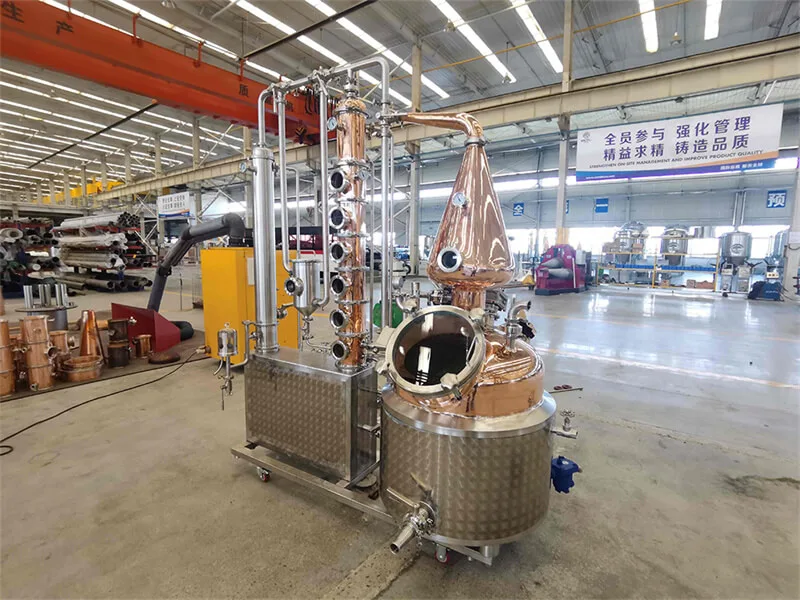
Distillation System: Defines Spirit Character
- Pot Still
Suitable for richer, heavier styles. Greater copper contact enhances complexity and texture. - Column Still or Upward Lyne Arm Design
Higher reflux produces a cleaner spirit with more delicate fruity and floral notes.
Recommendation:
Even small distilleries should invest in a pilot still. Testing fermentation times and cut points before scaling up is one of the most cost-effective ways to reduce risk.
Fermentation System: Build Flexibility
Modern whisky production increasingly values diversity.
- Multiple fermenters with independent temperature control
- Running long fermentations (70+ hours) alongside shorter ones (40–50 hours)
This approach creates a broader base of new make spirits, offering greater blending flexibility in the future.
3. Product Strategy: Raw Materials Are the Core Advantage
Many new distilleries underestimate the strategic importance of raw materials.
Grains: Look Beyond Standard Products
Commercial malt provides stability, but limited differentiation.
Customized grain varieties or processing methods help build a real flavor identity.
Water Chemistry Management
Basic water treatment capability allows:
- Adjustment of calcium and magnesium ratios to improve enzyme performance
- Guidance of fermentation direction through mineral balance
Soft water often highlights delicate aromas, while harder water can create a stronger structural backbone.
Yeast and Fermentation Management
- Commercial yeast ensures consistency
- Specialty or in-house strains add complexity
More importantly, record every fermentation curve. Data becomes a long-term asset for your distillery.
Oak Barrels: The Largest Investment
A significant portion of whisky flavor comes from oak barrels, which are also the biggest capital expense for startups.
Barrel type, toast level, and reuse strategy must be planned carefully from the beginning.
4. A Critical Question: Why Choose Meto as Your Equipment Partner?
Once location, flavor vision, and raw material strategy are defined, the real challenge is integration.
Whisky production is a continuous biochemical process. If mashing, fermentation, distillation, and cooling systems come from different suppliers, mismatched parameters can create operational risks.
System compatibility is often more important than individual equipment performance.
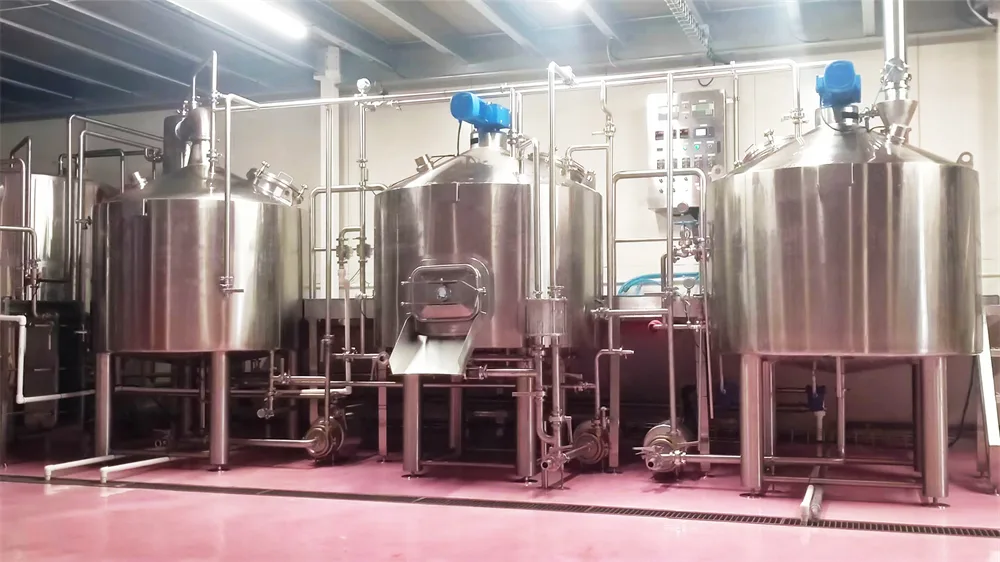
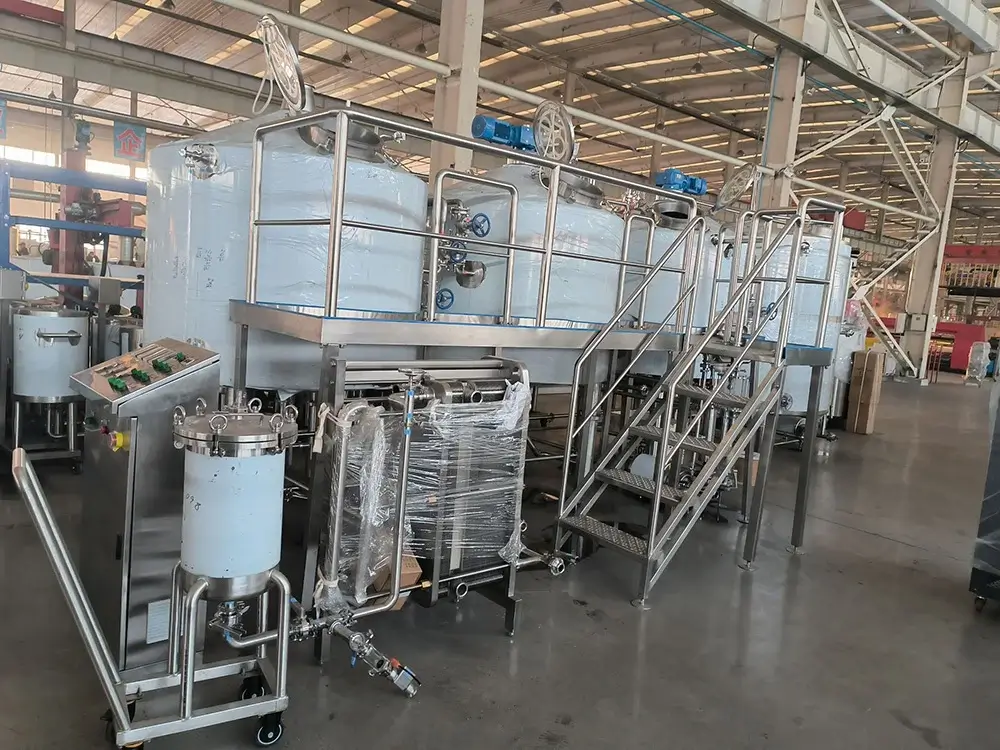
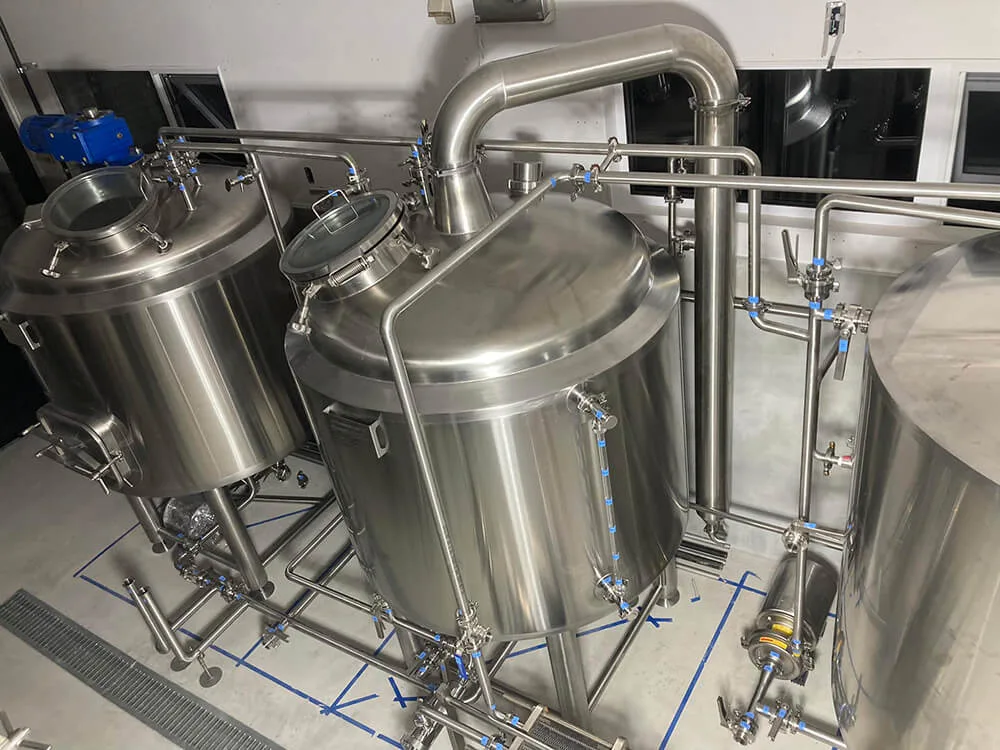
As a professional equipment manufacturer, Meto provides complete turnkey distillery solutions rather than isolated machines.
Integrated System Design
From mashing and fermentation to distillation and condensation, equipment is designed by one engineering team:
- Reduced interface risks
- Improved system compatibility
- More stable long-term operation
Reduced Complexity for Startups
Managing multiple suppliers requires significant time and coordination.
A one-stop partner allows founders to focus more on branding and market development.
Scalability for Future Growth
As production expands, system upgrade paths are already considered in the design, helping avoid costly restructuring later.
Conclusion
Building a distillery is a long-term commitment.
True competitiveness does not depend on expensive equipment alone, but on:
- Deep understanding of raw materials
- Clear flavor positioning
- A well-integrated production system
From climate and grain selection to barrel planning and system design, every decision matters.
When technical planning aligns with business strategy, a distillery gains the foundation to grow steadily and produce whisky that stands the test of time.
If you have further questions about specific configurations or maintenance details, feel free to reach out anytime.