Water, malt, hops and yeast are known as the four core raw materials in craft beer brewing. Most brewers focus heavily on malt ratios, hop addition processes and yeast strain selection, yet overlook brewing water, which accounts for over 90% of beer volume. Unlike mass-produced industrial beer with standardized production, the core competitiveness of craft beer lies in its unique flavor, rich complexity and authentic style. As an invisible key factor, water fundamentally shapes beer’s flavor profile, mouthfeel and fermentation stability. The irreplicable characteristics of classic regional craft beer styles essentially stem from their adaptation to local natural water qualities.
As the craft brewing industry moves toward greater professionalism and refinement, artificial water treatment and water parameter adjustment technologies have become essential for standardized production, replicating classic styles, creating differentiated products and achieving green and low-carbon operations. This article comprehensively elaborates on the full-spectrum application system of brewing water for craft beer, covering the core value of brewing water, principles and applications of complete water treatment equipment, in-depth impacts of water parameters on flavor, water quality standards for different beer styles, on-site implementation in breweries, full-process quality control and sustainable water resource utilization. Combined with practical industry experience, it also highlights the core advantages of professional water treatment solutions.
I. Core Functions of Water in Craft Beer Brewing
Water runs through the entire craft brewing process, including mashing, boiling, fermentation, conditioning and equipment cleaning. Far more than a simple solvent, it is a core ingredient with both process functionality and flavor-shaping properties, directly determining production efficiency, product stability and drinking experience.
From a production perspective, brewing water acts as the primary medium for mashing reactions. Starches, proteins, polysaccharides and other substances in malt can only be fully extracted, decomposed and converted under proper water conditions, temperature, pH value and mineral ions. Trace elements such as calcium and magnesium ions activate key saccharifying enzymes including alpha-amylase and beta-amylase, accelerating the breakdown of starch into fermentable and non-fermentable sugars. This ensures stable wort gravity and balanced composition, providing sufficient substrates for subsequent fermentation.
Quality brewing water also optimizes the living environment for yeast. Throughout yeast propagation, fermentation and flocculation, a stable ionic environment is indispensable. Qualified water boosts yeast activity, speeds up fermentation and mitigates common issues such as stuck fermentation, incomplete fermentation and excessive diacetyl. It also promotes orderly yeast flocculation and sedimentation in the later fermentation stage, improving beer clarity and reducing cloudiness and spoilage risks. In addition, pure water keeps sediment, bacteria, organic contaminants and other impurities at bay, preventing microbial contamination and off-flavors, and greatly enhancing batch-to-batch consistency.
In terms of flavor development, water forms the foundation of beer’s taste. The malty sweetness, hop bitterness and aroma, as well as yeast-derived esters and fruity notes, all unfold against the water base. Ionic composition, water hardness and pH directly regulate beer’s body, refreshness, smoothness and flavor balance. Water with moderate minerals accentuates malt aroma and softens hop bitterness. In contrast, imbalanced water leads to harsh bitterness, cloying sweetness, watery taste or sharp sourness. Even with identical malt, hop and yeast recipes, beer brewed with different water will deliver distinctly different flavors. This makes water adjustment a core technique for customized craft beer flavor development.
II. Mainstream Water Treatment Equipment for Brewing
Raw water such as tap water, groundwater and surface water varies greatly in quality, commonly featuring excessive hardness, residual chlorine, elevated organic matter, unbalanced ion ratios, heavy metals and microorganisms. Direct use of untreated raw water in brewing causes flavor deviation, fermentation abnormalities and equipment scaling and damage. For this reason, modern craft breweries adopt tiered water treatment workflows with specialized equipment to purify raw water, adjust hardness, remove odors and fine-tune ion levels, so as to produce standard brewing-grade water.
2.1 Reverse Osmosis System
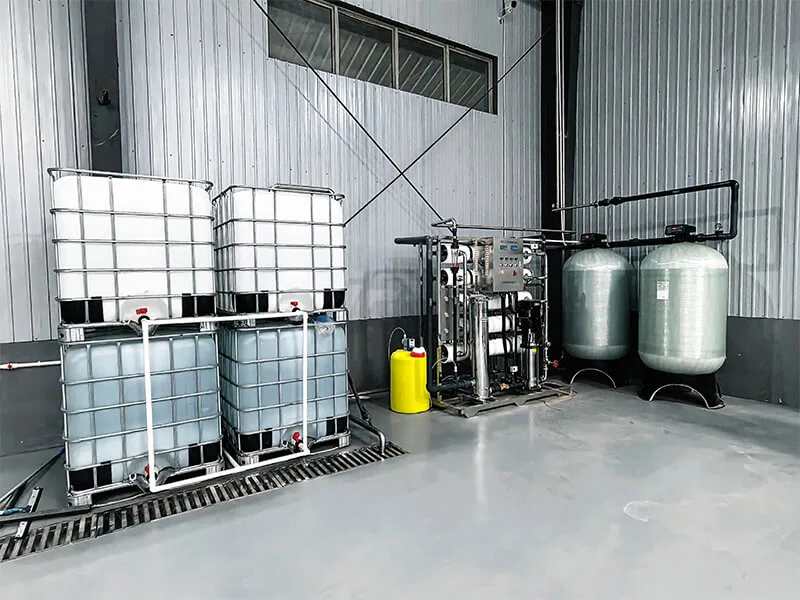
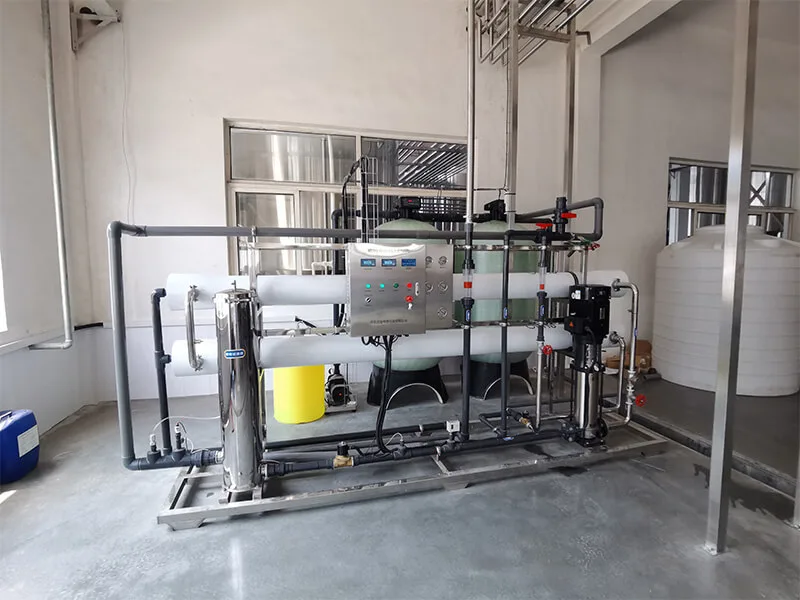
As the core deep purification equipment in craft water treatment, reverse osmosis (RO) systems are standard installations for high-end craft brewing, style replication and customized production. Operating under high pressure, RO membranes accurately trap most contaminants in raw water, including calcium and magnesium ions, heavy metals, suspended solids, colloids, bacteria, viruses and macromolecular organics, producing low-mineral, high-purity permeate water.
The greatest strength of RO treatment is creating a blank water base, which completely eliminates regional raw water disparities. Whether it is high-hardness groundwater from northern regions or impurity-laden surface water, RO delivers chemically pure water free from native flavor interference and process risks. This blank base is highly flexible for targeted mineral blending to match the requirements of American Pale Ale, IPA, Stout, Lager and other styles. It is therefore an indispensable device for replicating world-famous classic styles and producing standardized premium beers, widely deployed in medium-to-large breweries and boutique craft houses.
2.2 Activated Carbon Filter
Activated carbon filters serve as a key pre-treatment unit, installed after preliminary raw water filtration and prior to deep purification. They primarily remove off-odors, discoloration and harmful residues. Food-grade activated carbon inside the filter effectively adsorbs residual chlorine, chloramine, organic pollutants, humus, pigments and odor-causing substances.
Chlorine and chloramine are the most prevalent hidden hazards in craft brewing. Municipal tap water disinfected with chlorine retains trace chlorine and chloramine, which cannot be eliminated by boiling. Once entering the wort, these substances react with phenolic compounds in malt to form chlorophenols and bromophenols, bringing harsh medicinal, chemical or musty off-flavors that ruin beer’s natural aroma. Residual chlorine also inhibits yeast activity, lowers fermentation efficiency and impairs flavor formation. Activated carbon filters thoroughly remove such harmful substances at the source, preserving water purity and laying a solid foundation for subsequent treatment and brewing. They are a must-have pre-treatment unit for all craft breweries.
2.3 Water Softener
Excess calcium and magnesium ions in hard water, a common issue across most areas of the country, negatively impact both production and beer flavor. During mashing and boiling at high temperatures, hard water easily forms carbonate and sulfate scale on mash tuns, kettles, pipelines and heat exchangers. Scaling reduces heat transfer efficiency, increases energy consumption, breeds bacteria, clogs pipelines, shortens equipment service life and raises maintenance costs. Flavor-wise, overly hard water results in coarse mouthfeel, sharp bitterness and dry finish.
Water softeners apply mature ion exchange technology. Resin media adsorbs calcium and magnesium ions and replaces them with sodium ions, effectively lowering total and temporary water hardness. Softened water is ideal for brewing light, crisp and easy-drinking styles such as Pilsner, clean Lager and American Pale Ale. Meanwhile, water softeners drastically mitigate scaling problems, stabilize production and cut down cleaning and maintenance frequency, delivering dual benefits of improved product quality and reduced operational costs.
2.4 Mineral Dosing System
Though pure and contaminant-free, RO permeate contains almost no minerals and cannot be used directly for brewing. Minerals are essential for activating enzymes, regulating wort pH and shaping beer flavor. Thus, mineral dosing is a critical process for creating customized craft beer flavors.
A mineral dosing system precisely adds food-grade calcium salts, magnesium salts, sulfates and chlorides according to target style parameters, to fine-tune ionic composition, total hardness and alkalinity. Each ion plays a unique role: calcium stabilizes mashing conditions and enhances beer clarity; magnesium supports yeast metabolism; sulfates accentuate hop aroma and bitterness; chlorides amplify malty sweetness and fullness. Intelligent and accurate mineral blending tailors water to the standards of various classic beer styles, enabling precise flavor customization and style replication.
III. Impacts of Water Treatment on Beer Flavor
Water physicochemical parameters interact synergistically and restrict one another. From three core dimensions — pH/acidity, mineral content/hardness and harmful residues — they comprehensively influence beer’s acidity, aroma, bitterness, body and overall balance. Slight fluctuations in any parameter will be directly reflected in the final drinking experience.
3.1 pH Value and Acidity
Wort and beer pH is a decisive factor for mashing efficiency and flavor. The optimal pH range for craft brewing is 5.2–5.6, where saccharifying enzymes reach maximum activity. Malt flavors and sugars are fully and steadily extracted, while microbial growth is suppressed to ensure pure fermentation.
Excessively alkaline raw water raises wort pH, dulling hop aroma and bitterness and leading to overpowering malty sweetness, heavy cloying taste and flat flavor with a dull finish. This severely undermines the character of hop-forward styles like IPA and Pale Ale. Conversely, overly acidic water accelerates the leaching of tannins and polyphenols from malt, resulting in prominent sourness, a sharp biting mouthfeel and unbalanced flavor. Accurate pH and acidity adjustment via water treatment is the foundation for harmonious flavor and smooth taste.
3.2 Mineral Content and Hardness
Total water hardness, determined by combined calcium and magnesium levels, is a key parameter for defining beer styles and mouthfeel. Each mineral ion performs distinct functions in brewing.
Calcium, the most vital brewing mineral, stabilizes wort pH, optimizes mashing conditions, promotes yeast flocculation for brighter beer and softens overall taste. Magnesium is an essential trace element for yeast metabolism; a small amount boosts yeast activity and flavor synthesis, while excessive magnesium causes harsh bitterness and ruins flavor balance.
Sulfates and chlorides steer flavor direction: high sulfate levels amplify hop aroma and deliver clean, crisp bitterness with a dry finish, perfect for hop-driven beers. High chloride levels enhance malty sweetness and round, full body, suiting rich dark beer styles. In general, low-hardness water matches light and refreshing styles, while medium to high hardness works well for full-bodied, robust beers. Minor adjustments to mineral ratios can create completely unique flavor profiles.
3.3 Removal of Chlorine and Chloramine
Chlorine and chloramine are strictly prohibited in brewing and are often overlooked pitfalls for new breweries. Stable and heat-resistant, they cannot be removed by boiling or fermentation.
Even trace amounts inhibit yeast growth and metabolism, causing slow fermentation, incomplete sugar attenuation and low alcohol content. Worse still, they react with malt phenols to form chlorophenol off-flavors, producing medicinal, chemical or musty notes that overpower genuine malt and hop aromas. Complete removal of chlorine and chloramine via carbon filtration is the bottom-line requirement for brewing water and a prerequisite for pure beer flavor.
IV. Water Quality Parameters for Different Beer Styles
Classic craft beer styles worldwide evolved alongside local natural water: the hard water of Burton-on-Trent in England for traditional Ales, soft water in Germany for crisp Lagers and Pilsner, and well-balanced water in Belgium for complex Abbey styles. Water lays the groundwork for each style’s unique character. Modern water treatment technology breaks geographical limitations, enabling precise replication of classic water profiles and standardized flavor restoration.
4.1 American Pale Ale & IPA
As typical hop-forward beers, American Pale Ale and IPA feature intense hop aroma, bright and clean bitterness, dry body and crisp finish, highlighting citrus, tropical fruit and piney hop notes while minimizing heavy sweetness. These styles demand stringent water requirements: low alkalinity, medium hardness and high sulfate content.
Brewers must control bicarbonate levels to reduce alkalinity, which would otherwise neutralize hop aroma and bitterness and result in muted flavor. Moderately elevated sulfates enhance hop expression and deliver clean, dry bitterness. Calcium is maintained at a medium level to guarantee clarity and fermentation stability, producing hop-forward beers with bold aroma, pure bitterness and layered complexity.
4.2 Stout & Porter
Stout and Porter are full-bodied dark beers built on roasted and dark malts, showcasing chocolate, coffee, caramel and toasty flavors with rich, dense body, mild bitterness and prominent malty sweetness. They require water with medium to high hardness and moderate alkalinity.
Moderate to high calcium and magnesium help release roasted malt flavors, boost body and prevent a thin, watery taste. Appropriate alkalinity neutralizes harsh tannins and sour compounds extracted from dark malts during mashing, softening astringency and blending coffee, roasted and sweet malt notes into a smooth, well-rounded flavor, perfectly matching the robust character of Stout and Porter.
4.3 Belgian-Style Beers
Belgian styles, including Abbey Ales, Witbier and Strong Ales, feature sophisticated, well-balanced flavors with malty sweetness, yeast-derived esters, fruity notes and subtle tartness. Neither extremely light nor overly heavy, these beers rely on harmonized flavor layers, calling for water with moderate alkalinity, balanced mineral composition and medium hardness.
Overly soft water results in thin body and hollow flavor, unable to carry complex yeast and malt characteristics. Excessively hard or imbalanced water leads to abrupt bitterness and messy flavors. Mild, well-balanced water accommodates the metabolic traits of specialty Belgian yeast, facilitates the formation and release of fruity and ester notes, and allows multiple flavors to blend harmoniously, retaining the elegant and delicate profile of Belgian beers.
4.4 Pilsner & Lager
Pilsner and traditional Lager are world-famous refreshing beers, defined by crystal-clear appearance, crisp clean taste, subtle malt sweetness and delicate hop aroma with zero off-notes and heavy body, offering exceptional drinkability. They are among the most demanding beer styles in terms of water quality.
These styles require soft water with low hardness, low alkalinity and minimal minerals, to minimize mineral interference and purely present natural malt sweetness and delicate hop character. Hard water with excessive minerals creates heavy body, unpleasant minerality and metallic off-notes, destroying the core traits of Pilsner and Lager. Therefore, brewing these styles requires a combination of deep reverse osmosis purification and precise softening to achieve ultra-pure brewing water.
V. On-Site Implementation of Water Treatment in Craft Breweries
Breweries vary greatly in scale, location, raw water conditions, production capacity and product positioning, so water treatment solutions must be customized accordingly. Small craft breweries prioritize lightweight setups and low operational costs, while large-scale commercial breweries focus on full-process automation, standardization and multi-style adaptability. Two mature application models have been formed in the industry.
5.1 Small Local Breweries
Small community craft breweries operate on limited capacity, mainly producing easy-drinking styles such as Pale Ale, Wheat Beer, Fruit Beer and light Lager. Their raw water is local groundwater with decent baseline quality: medium hardness, no heavy metal contamination, low residual chlorine and few impurities.
To control costs, these breweries adopt a lightweight water treatment combination: primary filtration + activated carbon filtration + simple softening + minor mineral dosing. This setup removes slight odors and impurities, moderately reduces water hardness and fine-tunes mineral ratios to match mainstream consumer preferences for crisp, approachable beer. After implementation, finished beers feature stable quality, pure malt aroma and no off-flavors. The system is easy to operate with low energy consumption and maintenance, perfectly fitting the daily low-cost operation of small craft breweries.
5.2 Regional Large-Scale Breweries
Large regional breweries produce a full portfolio of craft beers, covering Lager, IPA, Stout, Belgian styles and more. Positioned as premium craft producers, their core advantages lie in authentic style, consistent flavor and high reproducibility. However, their local raw water fluctuates seasonally in hardness and impurity levels, failing to support standardized multi-style production.
These breweries install fully automated integrated water treatment systems: activated carbon filtration + reverse osmosis deep purification + intelligent softening + precise mineral dosing. The intelligent control system allows one-click switching of water hardness, pH and ionic ratios for different beer styles. This customized solution eliminates raw water fluctuations and realizes fully standardized water parameters for each product.
Since deployment, all beer styles maintain authentic characteristics: aromatic IPA, rich and velvety Stout, and crisp pure Lager, with zero batch-to-batch flavor deviation. Consistent high quality builds strong market reputation, while the system supports high-volume standardized mass production across a diverse product line.
VI. Quality Control
Water treatment is not a one-time adjustment but a continuous daily management task. Raw water quality changes with seasons, and equipment consumables degrade over time, causing water parameter fluctuations. A complete quality control system with regular monitoring and standardized workflows is essential to sustain stable product quality and reproducible flavor.
6.1 Water Parameter Monitoring
Breweries shall establish a standardized routine testing mechanism covering three tiers: raw water, treated water and final brewing water. Sampling and testing are conducted daily before production, focusing on pH, total hardness, temporary hardness, sulfates, chlorides, residual chlorine, microorganisms and turbidity. All data is recorded in water quality logs for full traceability.
In addition, regular inspection and scheduled replacement of consumables are mandatory. Activated carbon, softening resin and RO membranes gradually lose efficacy with service time, degrading purification and water adjustment performance. Breweries shall set replacement cycles based on production load, inspect equipment operation and effluent parameters regularly, and replace worn components timely to secure water quality from both equipment and monitoring perspectives.
6.2 Consistency and Reproducibility
Brand reputation of craft beer hinges on flavor consistency. Batch-to-batch flavor deviation is a major production risk. Manual water adjustment involves large errors and randomness, leading to inconsistent water and uneven beer flavor.
Modern breweries rely on automated water treatment systems to lock in dedicated water parameters, operating pressure, flow rate and mineral dosing ratios for each beer style as standardized templates. Intelligent automatic control minimizes human error, ensuring highly uniform brewing water across seasons, batches and production shifts. This keeps the taste, aroma and body of every batch identical, enabling standardized and reproducible production and supporting brand expansion.
VII. Sustainable Development & Water Conservation
Brewing is a water-intensive industry. Traditional production features low water utilization efficiency and large wastewater discharge, driving up operational costs and conflicting with the green and low-carbon development trend of the modern food industry. As environmental regulations tighten, efficient water usage and water recycling have become standard configurations for modern craft breweries, helping enterprises cut costs and fulfill social responsibilities.
7.1 Efficient Water Utilization
Optimize the overall water usage structure by classifying water into four categories: core brewing water, equipment cleaning water, cooling water and site washing water. Match water quality standards to different usage scenarios to avoid overusing high-grade water for low-demand applications. In core processes such as mashing and boiling, automated systems precisely control water volume and duration to eliminate unnecessary waste.
Open cooling systems are replaced with closed circulating cooling systems to drastically reduce cooling water loss. Automated CIP (Clean-in-Place) systems optimize cleaning workflows and improve the utilization rate of washing water. These measures reduce fresh water intake and cut water costs at the source.
7.2 Water Recycling and Reuse
Build a staged water recycling system to collect and treat recyclable wastewater by category. Low-pollution wastewater such as cooling condensate and final-stage equipment washing water undergoes multi-stage filtration, sterilization and purification to become qualified reclaimed water. This water can be reused for preliminary equipment cleaning, floor washing, auxiliary cooling and landscape irrigation — all non-brewing applications.
The water circulation system greatly reduces fresh water consumption and wastewater discharge, lowering water and sewage charges. It also lessens the production impact on the surrounding water environment, delivering economic, environmental and social benefits while complying with green manufacturing standards.
VIII. Why Choose Us
We are a seasoned provider dedicated to craft beer water treatment, delivering one-stop customized total water treatment solutions for small craft houses, medium breweries and large-scale craft producers. Our full lifecycle services include solution design, equipment selection, installation & commissioning, parameter optimization, technical training and after-sales maintenance, fully adapting to the production characteristics and flavor demands of China’s craft brewing industry.
Customized Technology Solutions
We reject generic standard solutions and adhere to the philosophy of one brewery, one solution; one beer style, one set of parameters. Based on on-site raw water test reports, production capacity, product portfolio and brand positioning, we design lightweight, standard or fully automated water treatment systems accordingly. We help small breweries control capital investment and operational costs, while equipping large producers with high-precision flavor tuning capabilities for full-style production. Supported by a comprehensive database of global classic craft beer water profiles, we accurately replicate water standards for imported iconic beers, helping clients develop signature products and resolve core pain points including unstable flavor and inauthentic style.
Reliable Equipment & Low-Cost Operation
Our full set of craft-brewing-specific water treatment equipment is engineered for brewing operating conditions, featuring high automation, stable performance and long service life for consumables. The systems run steadily with minimal on-site supervision. We integrate green brewing concepts into every solution, with built-in water-saving and recycling modules. While guaranteeing premium beer quality and stability, our solutions cut water consumption and overall operational costs, facilitating low-carbon and sustainable brewery operation.
Comprehensive After-Sales Support
We provide end-to-end on-site services: initial water quality testing and solution planning, equipment installation and commissioning, process parameter optimization and operator training, as well as long-term equipment maintenance, consumable replacement and technical upgrades. Our dedicated team offers one-on-one support to resolve water quality and flavor issues in a timely manner, fully safeguarding consistent product quality, product innovation and long-term development for craft breweries.
Have questions about your brewery equipment project? You can tell us your requirements for the brewery, and we will provide you with a turnkey solution within 24 hours.