Buyers researching brewing equipment online frequently encounter the ambiguous term “brewery solutions”, applied loosely to individual tanks, standalone brewhouses, and full production facilities. This vague definition often leads to poor investment decisions, costly scope gaps, and project delays. The difference between purchasing isolated brewing vessels and deploying a fully functionalturnkey brewery project can cost tens of thousands of dollars and months of downtime. This guide clearly defines professional brewery solutions, breaks down scale-based equipment requirements, and explains how to select qualified suppliers to deliver stable, profitable brewery operations.
Core Definition of Professional Brewery Solutions
Commercial brewery solutions fall into three distinct tiers, differing in integration completeness and service coverage:
- Standalone Brewing Equipment: Individual units including fermenters, brewhouse modules or packaging machines, used only for partial upgrades and supplementary production.
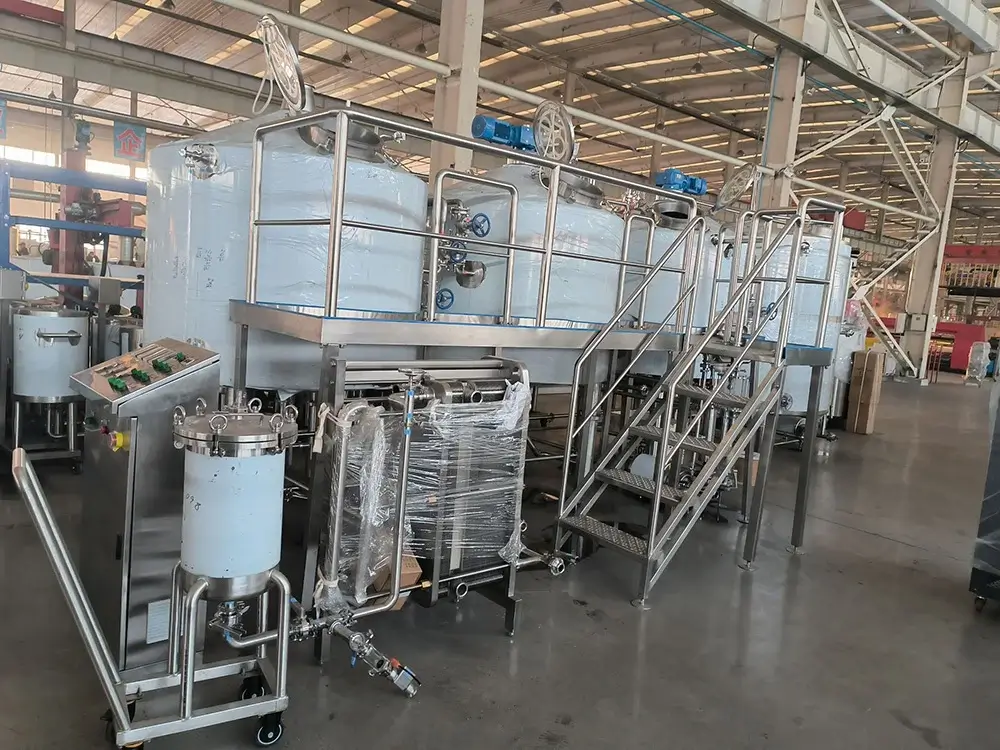
- Integrated Process Package: Matched modular craft brewing equipment sets covering brewhouse, cellar fermentation, CIP hygiene and core utilities. All units are pre-sized and synchronized for standardized, stable brewing operation.
- Full Turnkey Brewery Project: One-stop customized solutions including site layout, process design, equipment fabrication, installation, commissioning and staff training, delivering a fully operational brewery ready for commercial production.
Reputable manufacturers define formal brewery solutions as integrated or turnkey systems rather than single equipment sales. A qualified solution is a complete, site-adapted production system tailored to the client’s production scale, venue conditions and budget, enabling consistent, profitable beer production. Many buyers mistakenly invest only in brewhouse vessels while neglecting supporting utilities, resulting in facilities that produce wort but cannot sustain commercial beer output.
Scale-Specific Brewery Solution Requirements
Professional brewery solutions are categorized into nano, micro and commercial grades with standardized configurations to balance cost, efficiency and scalability.
Nano Brewery (1–3 bbl / 1–3.5 hL)
Ideal for taprooms and hospitality-focused venues, nano brewery setups adopt compact 2–3 vessel electric brewhouses, minimal cellar infrastructure and keg-centric packaging. Optimized nano brewery solutions feature cost-effective utility sizing and reserved expansion space, prioritizing simple operation and flexible small-batch brewing for catering and retail scenarios.
Micro Brewery (5–30 bbl / 7–35 hL)
Designed for brewpubs and growing craft brands with distribution plans, micro brewery solutions adopt 4-vessel steam-heated brewhouses with semi-automatic control systems. Complete supporting systems include glycol refrigeration, dedicated fermenters, bright tanks and professional CIP skids. Modular expandable design protects initial investment, allowing capacity upgrading without scrapping existing equipment.
Commercial Brewery (50 bbl / 60 hL+)
Built for regional mass-production breweries, commercial brewery solutions focus on large-scale utility systems, including industrial boilers, high-capacity refrigeration, high-speed packaging lines, water treatment and wastewater processing. Full automation and full turnkey brewery solutions are standard, as in-house coordination of complex subsystems causes low efficiency and high operational risks.
A key industry benchmark: cellar tank volume should reach 2.5–3 times the brewhouse batch capacity, enabling cyclic fermentation, cleaning and packaging for continuous high-efficiency production.
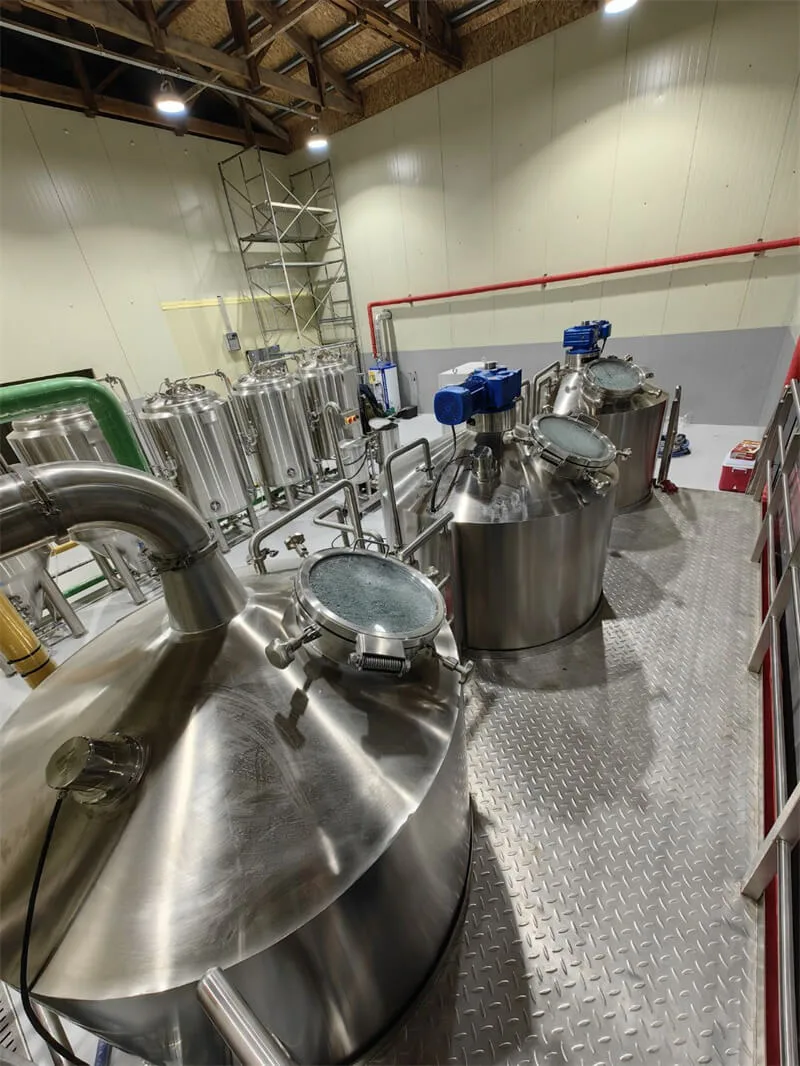
Seven Core Components of a Complete Brewery Solution
A fully functional brewing system relies on seven interconnected subsystems, collectively determining operational stability and product consistency. Professional craft brewery solutions cover all modules rather than partial equipment supply.
- Grain Handling System: Includes malt storage, auger conveyors, grain mills and grist cases, with manual operation for nano systems and automated dust-free processing for commercial projects.
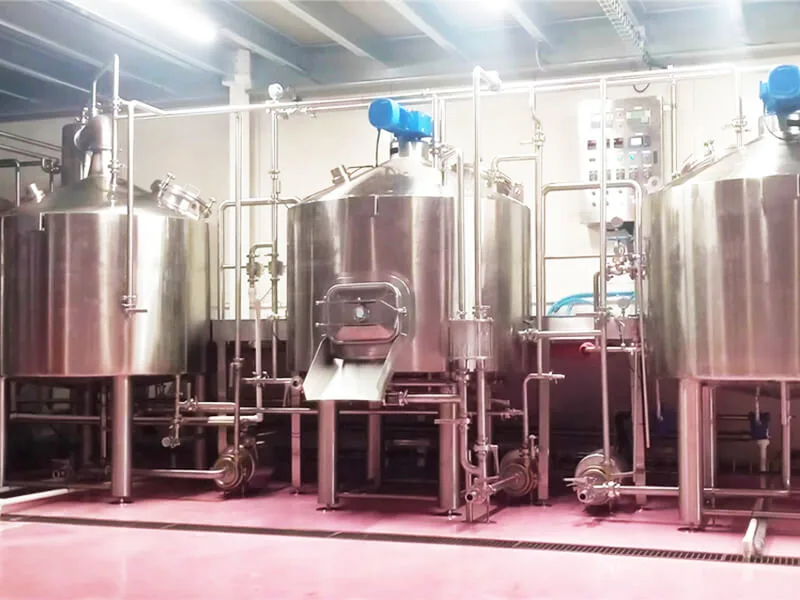
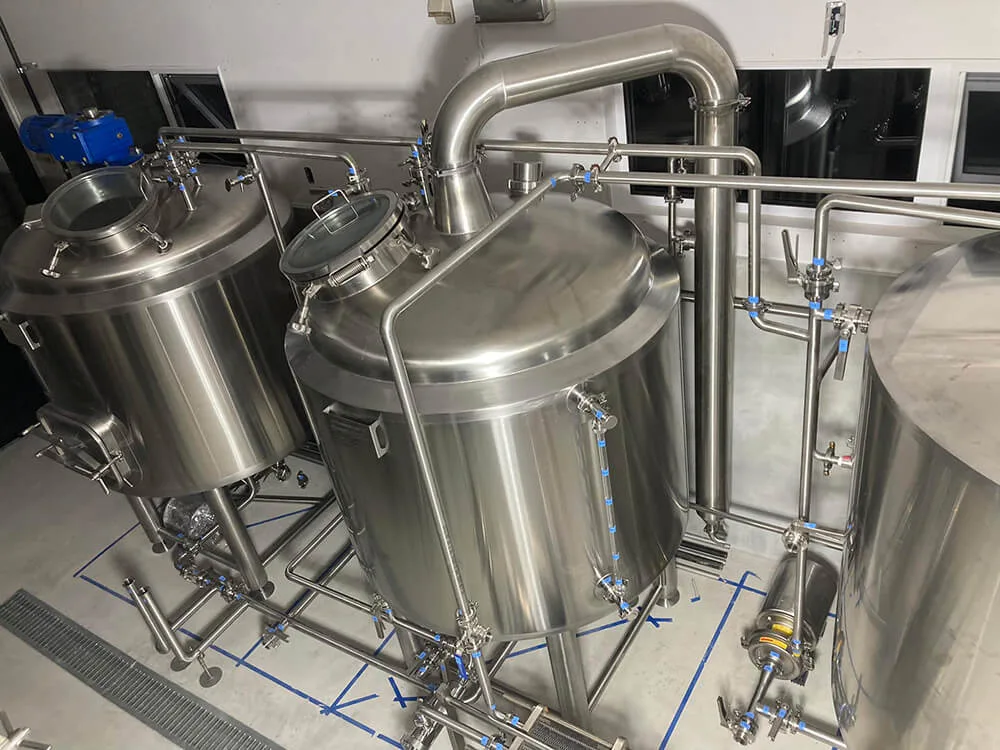
- Brewhouse System: Consists of mash tun, lauter tun, kettle and whirlpool. 2-vessel designs save space and cost; 4-vessel setups deliver higher flexibility and throughput for mass production.
- Fermentation & Cellar System: Glycol-jacketed fermenters, bright tanks and yeast management equipment ensure stable fermentation and flavor refinement, the core link for final beer quality.
- Utility Support System: Boilers, glycol chillers, compressed air and water treatment systems, the most commonly under-budgeted yet essential foundation for stable production.
- CIP & Hygiene System: Automated CIP skids with acid and caustic cleaning cycles, full-coverage spray balls and polished tank interiors to meet food-grade hygiene standards.
- Packaging System: Customizable keg, can and bottle lines with adjustable speed matching market sales volume.
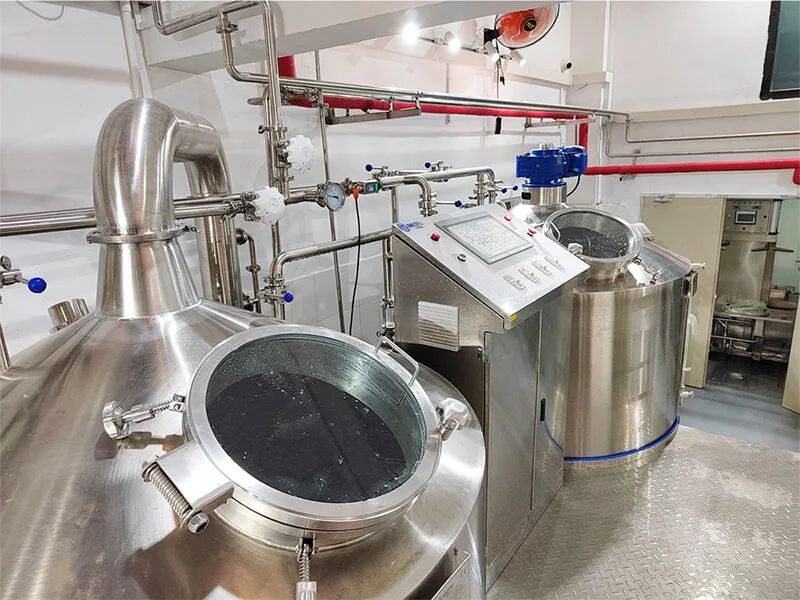
- Control & QA System: PLC control platforms, precision sensors and laboratory testing modules to guarantee batch consistency and quality stability.
Industry cost standard: The brewhouse accounts for only one-third of total brewery equipment investment. Quotations dominated by brewhouse costs represent incomplete solutions with long-term operational risks.
Brewery Automation: Value and Rational Application
Modern automated brewery solutions adopt PLC-based intelligent control with real-time temperature, pressure and flow monitoring. Recipe-driven brewing ensures identical batch parameters, while automated valve matrices and overnight CIP cycles greatly reduce manual intervention.
Automation delivers three core benefits: consistent product quality for stable brand reputation, significant labor cost reduction, and flexible unattended off-peak production. Notably, automation maximizes returns only for standardized repetitive production. Breweries focusing on experimental small-batch craft beer benefit more from flexible manual control. Reliable suppliers customize automation schemes based on clients’ actual production modes.
Sustainability & Energy Efficiency Optimization
Energy and water efficiency define long-term brewery profitability. Standard craft breweries consume 6–8 barrels of water per barrel of beer, while optimized systems reduce the ratio to 3–4:1 via precise process metering and recycled cooling water. Well-operated breweries maintain energy consumption at 25–40 kWh/hL, 50–70% lower than unoptimized facilities without heat recovery.
Wort heat exchangers recover up to 85% of waste heat for repeated use, delivering fast cost payback. Electric brewhouses with heat pumps suit low-electricity-price regions, while steam systems are more economical for large-scale production. Professional suppliers tailor energy-saving configurations according to local utility conditions.
Turnkey vs Custom Brewery Engineering
Turnkey brewery solutions provide a single-point service covering design, fabrication, installation, commissioning and training, minimizing client coordination risks and project delays. Clear contract scope definitions eliminate hidden costs and disputes.
Custom engineering applies to projects with spatial constraints, non-standard hybrid systems or phased investment plans, offering personalized design but requiring client-side coordination and carrying higher delay risks.
For most buyers, modular customized turnkey solutions are optimal, combining mature standardized equipment with site-specific layout adjustment to balance quality, cost and practicability.
How to Select a Reliable Brewery Solution Supplier
Professional brewing equipment manufacturers are distinguished by core capabilities that guarantee project quality and after-sales support:
- Verified references from similar-scale local brewery projects;
- Independent in-house engineering and fabrication capacity for instant technical support;
- Authorized CE, PED, ASME and ISO 9001 certifications for international compliance;
- Transparent factory production quality control on welding and surface finishing;
- Stable lead time and global spare parts supply system;
- Formal contracts with clear project milestones and payment terms.
Avoid risky suppliers offering ultra-low prices, generic quotations without demand confirmation and ambiguous utility matching schemes, which lead to rework, delays and high long-term operating costs.
Standard Project Implementation Roadmap
A complete brewery setup project takes 6–9 months, while large commercial turnkey projects require around 12 months. The standardized process includes demand confirmation and scheme design, equipment fabrication and FAT testing, international logistics, on-site installation and commissioning, and professional operator training. Parallel progress of factory construction and equipment production effectively shortens the project cycle. Phased system handover enables early partial production capacity release.
Final Summary
A high-value brewery solution is a scalable, cost-effective and fully customized system matched with actual production demands. With precise capacity configuration, professional supplier technical support and reserved growth space, integrated brewery solutions deliver stable, low-cost and sustainable beer production, laying a solid foundation for long-term brand development and market expansion.
If you are planning a new brewery setup, equipment upgrade or capacity expansion, feel free to contact our professional team. We provide tailored brewery solutions, detailed equipment parameters, customized layout designs and exclusive project quotations to meet your unique brewing production needs.