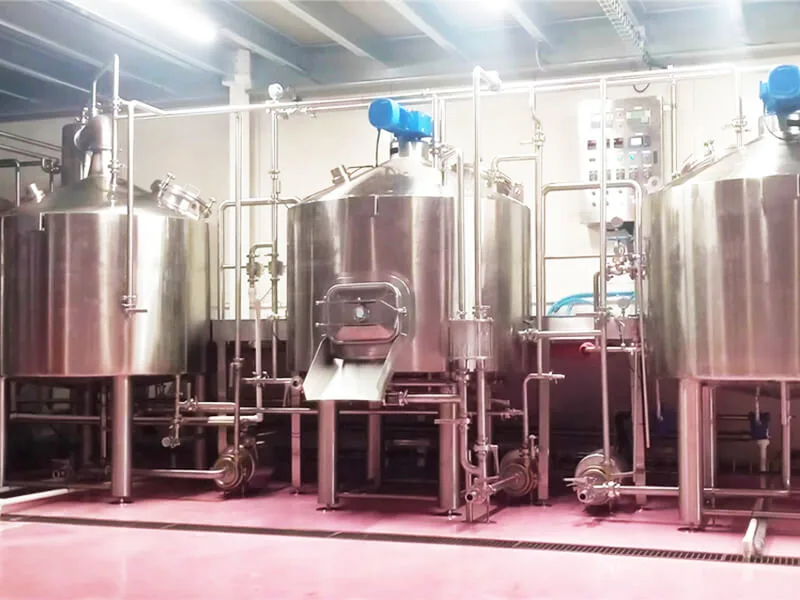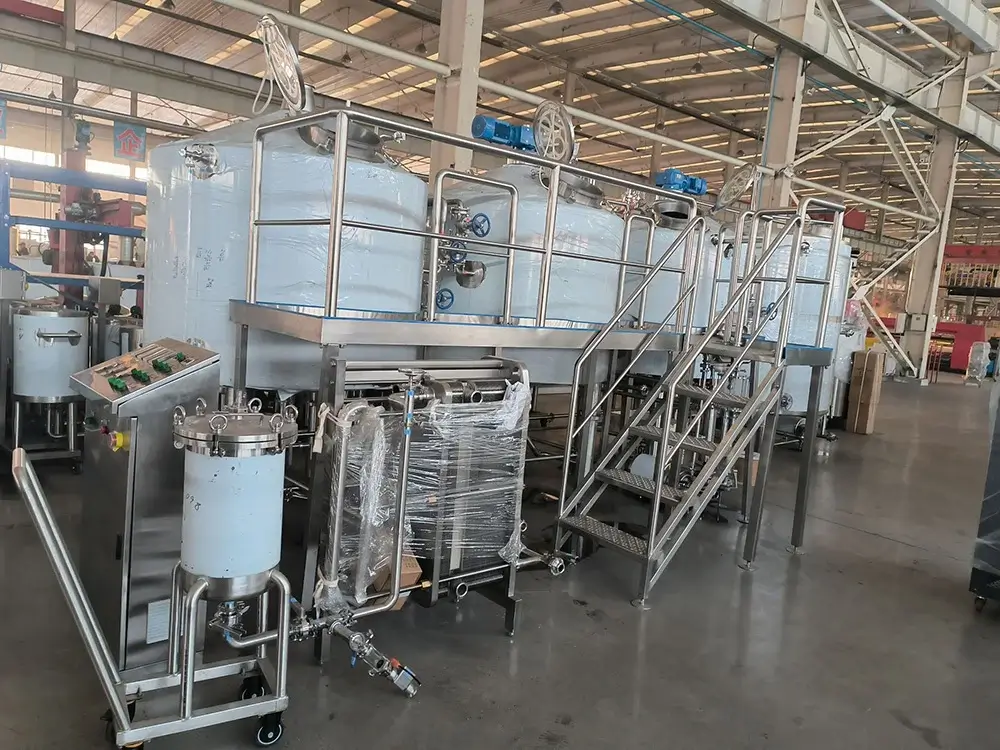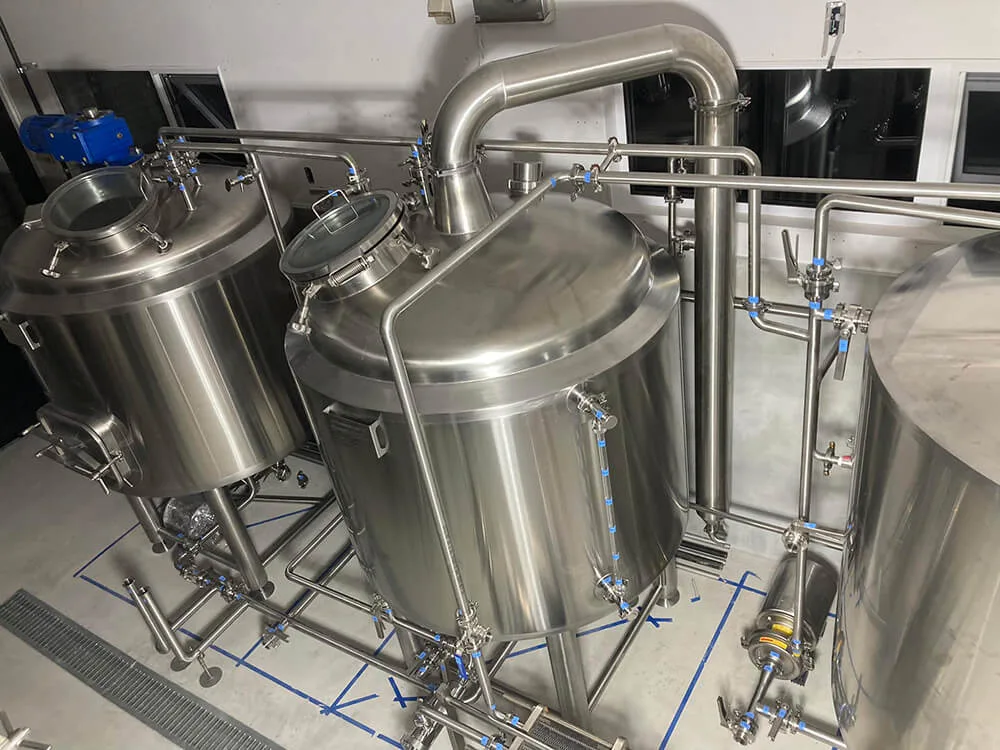
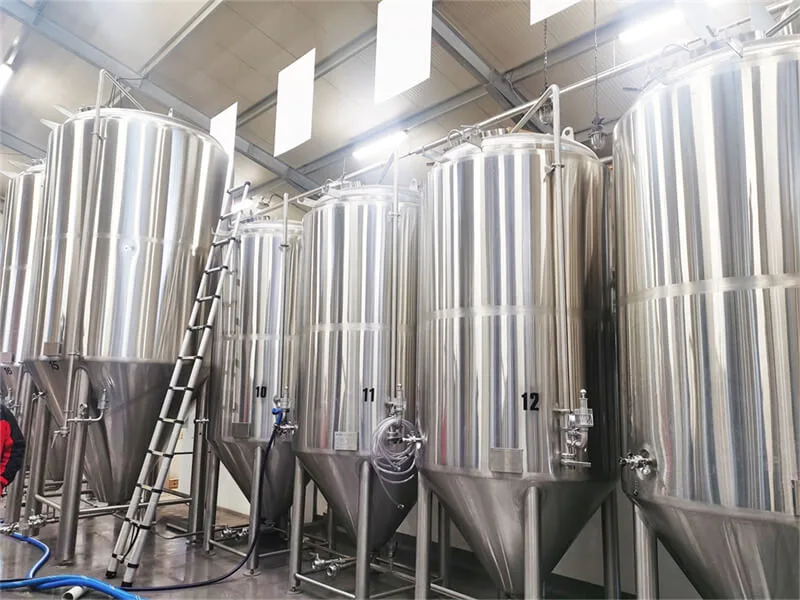
Fermenters are the “heart” of a brewery. Their performance directly determines liquor quality, production efficiency and operating costs. From craft breweries to large-scale distilleries, a scientific management system for fermenters — covering selection, layout and operation — is key to stable production and exceptional product quality.
I. Precise Selection: Core Equipment Matching Brewing Processes
Choosing fermenters is not about pursuing “larger and more comprehensive” units, but achieving an accurate match between equipment and brewing processes. The following four dimensions are critical for decision-making.
Production Capacity: Balancing Current and Future Demand
Defining annual output is the first step in selection. Craft breweries or small distilleries (hundreds of tons per year) should choose modular fermenters of 1,000L–2,000L to support flexible production of diverse varieties and small batches. Large-scale breweries (over 1,000 tons per year) should consider large tanks of 2,500L or above, paired with automated control systems to improve efficiency.
Key Recommendation: Reserve 10%–20% capacity redundancy during planning, and ensure a reasonable ratio between total fermentation volume and saccharification system capacity (e.g., 1:3) to avoid production bottlenecks.
Brewing Process: Tailored to Different Liquor Types
Different alcoholic beverages have distinct functional requirements for fermenters.
- Craft Beer: Requires precise temperature and pressure control. Tanks should be equipped with high-efficiency temperature control systems, pressure regulating valves, sampling ports and sight glasses. The height-to-diameter ratio is typically 1.5:1 to 2:1, facilitating wort circulation and yeast sedimentation.
- Wine: Some processes involve peel maceration; tanks with mixing devices or inclined bottom designs can be used for easy pomace discharge. The height-to-diameter ratio may be reduced appropriately to lower pomace pressure and prevent excessive tannin extraction.
Material Selection
Food-grade 304 stainless steel is the industry standard for most applications. For high-acidity brews or products requiring frequent intensive cleaning, 316L stainless steel with stronger corrosion resistance is a better choice.
Manufacturing Quality: Details Determine Service Life
Beyond materials, manufacturing processes are equally critical. Tanks should be fabricated with laser cutting and automatic arc welding to ensure smooth, crevice-free welds and prevent bacterial contamination. Seals must be made of food-grade silicone or fluororubber to ensure tightness and high-temperature disinfection resistance. Pressure-bearing capacity must meet process requirements to eliminate safety hazards.
Cost-Effectiveness: Focus on Long-Term Value
Avoid the pitfalls of “low-price traps” or “excessive configuration”. Low-cost equipment may compromise materials and workmanship, leading to soaring maintenance costs and production downtime risks. Selection should follow the principle of “meeting current processes while reserving upgrade space”, prioritizing energy consumption, ease of maintenance and after-sales support from suppliers.
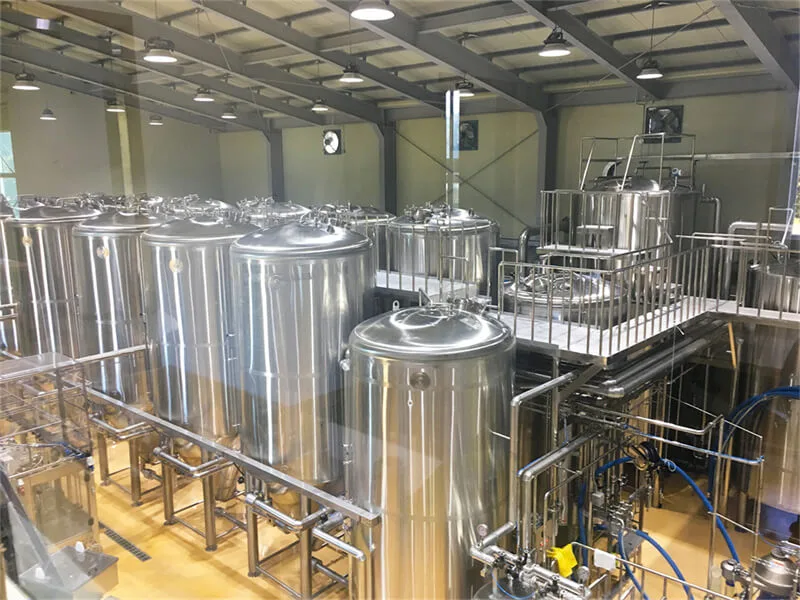
II. Scientific Layout: Building an Efficient and Smooth Production Flow
A rational workshop layout maximizes production efficiency and ensures operational safety. The core principles are “smooth workflow, safe and convenient operation, and reserved space for development”.
Process Priority, Shortened Paths
Fermenter layout should closely follow the production flow: saccharification → cooling → fermentation → filtration → bottling. Placing them near the saccharification workshop shortens wort transfer distance, reducing temperature fluctuations and oxidation risks. Adopt “zoned arrangement” by concentrating tanks of the same specification and clearly separating them from CIP cleaning stations, raw material areas and waste treatment areas to effectively improve operational efficiency and environmental hygiene.
Space Optimization and Safety Assurance
Fermentation generates heat and carbon dioxide, so adequate ventilation and heat dissipation are essential. The spacing between tanks should be no less than 0.8–1.2 meters for easy operation and maintenance. Ventilation equipment (e.g., exhaust fans) should be installed near the ground to effectively discharge dense carbon dioxide and prevent safety hazards. Large tanks require firm concrete foundations.
Flexible Reserve for Future Expansion
Reserving space for future capacity expansion and technological upgrades is crucial. Pipeline design should be modular for easy connection addition; electrical and ventilation systems should also reserve expansion capacity. This forward-looking planning significantly reduces the cost and complexity of later renovations.
III. Meticulous Operation and Maintenance: Stabilizer for Quality and Equipment Lifespan
Standardized operation and maintenance form the foundation for extending equipment life (typically 10–15 years) and ensuring fermentation stability.
Daily Operation: Standardization and Precise Monitoring
Operators must strictly follow Standard Operating Procedures (SOPs), accurately control key parameters such as fermentation temperature, pressure and pH value, and maintain complete data records. Daily inspections should check equipment operation, listen for abnormal noise in mixing systems, and inspect valves and connections for leaks to ensure all parameters remain within set ranges.
Regular Maintenance: Preventive Upkeep
Establish a hierarchical maintenance system to nip problems in the bud.
- Daily: Clean tank surfaces, verify instrument readings, and lubricate mixing motors.
- Monthly: Perform comprehensive CIP cleaning and disinfection, inspect seals and pipelines for aging, and calibrate temperature and pressure control systems.
- Annual: Conduct full overhauls, including inspecting tank welds, disassembling and maintaining mixing and temperature control systems, and checking electrical circuits for safety hazards.
Troubleshooting and Long-Term Storage
When equipment is out of service long-term, it must be thoroughly cleaned and disinfected, fully drained, fasteners loosened, and protected from dust. In case of malfunctions (e.g., leaks, abnormal temperature control), shut down the unit immediately for inspection. After repairs, re-disinfect the entire system to ensure no contamination before resuming production. Maintaining detailed fault logs helps summarize experience and continuously optimize operation and maintenance processes.
Conclusion
Selection, layout and operation of fermenters form the iron triangle of a brewery’s core competitiveness. Precise selection is the starting point for quality assurance, scientific layout leverages efficiency improvement, and meticulous maintenance serves as a moat for long-term stable operation. For both emerging brands and established distilleries, prioritizing and optimizing these three aspects will make the creation of every fine drop more seamless and outstanding.
Ready to start your brewing journey? Contact us today for a custom quote and layout design!