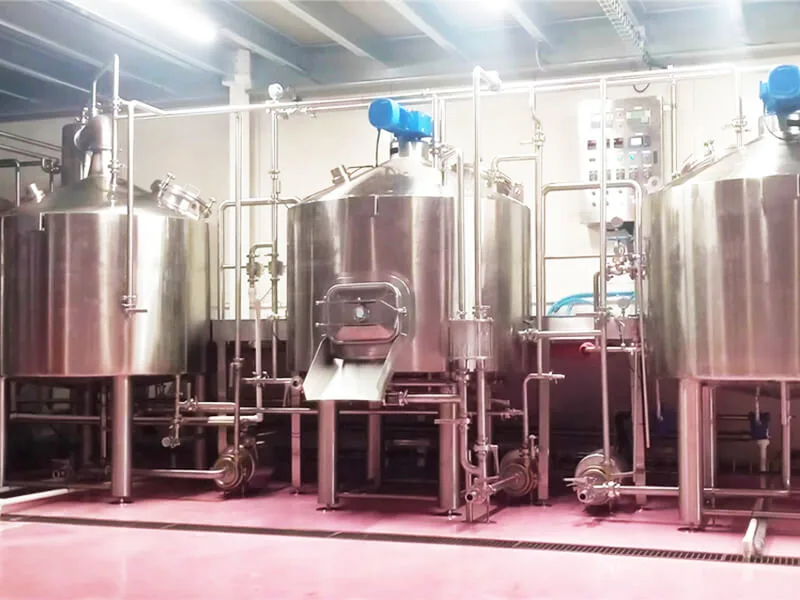
As production requirements grow beyond laboratory scale, many manufacturers face a common challenge: how to increase throughput without sacrificing process flexibility, product quality, or operational efficiency.
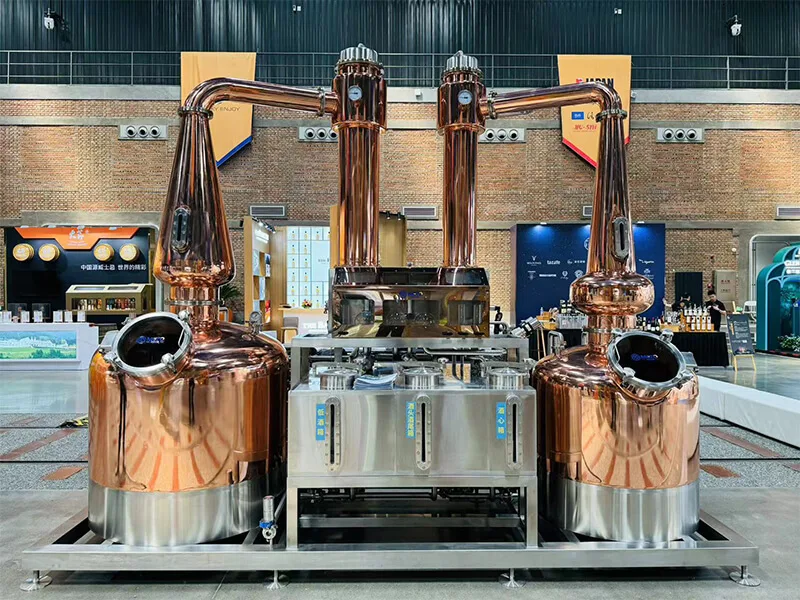
The 500L + 300L Dual Still System is specifically engineered to bridge the gap between small-scale pilot equipment and large industrial distillation plants. By integrating a 500-liter primary distillation vessel with a 300-liter auxiliary vessel, the system delivers greater production continuity, enhanced process versatility, and improved energy utilization.
Whether used for solvent recovery, botanical extraction, fine chemical purification, or premium spirits production, this dual-kettle configuration provides manufacturers with a practical and scalable solution for pilot-scale and small commercial operations.
Designed for Continuous Processing and Flexible Production
Unlike traditional single-still systems, the 500L + 300L configuration allows multiple process steps to occur simultaneously, significantly reducing downtime and improving equipment utilization.
The larger 500L vessel serves as the primary production still, while the 300L vessel functions as a secondary processing unit for feed preparation, solvent recovery, preheating, or auxiliary distillation operations.
This dual-vessel design enables operators to optimize workflows according to specific production requirements while maintaining consistent product quality.
Dual-Still Operating Modes
Continuous Feed and Preheating Mode
In many distillation processes, substantial energy is consumed during feed heating.
The 300L auxiliary vessel can be used as a feed preparation tank where raw materials are preheated, degassed, or conditioned before entering the 500L production still. Since feedstock enters the primary vessel at an elevated temperature, overall heating demand is reduced and production cycles become shorter.
Key benefits include:
- Reduced startup and heating times
- Improved energy efficiency
- Higher daily production capacity
- More stable operating conditions
This configuration is particularly valuable for facilities running multiple batches per day.
Dual-Process Separation Mode
For facilities handling various products or complex mixtures, the two vessels can operate independently.
Examples include:
- One vessel dedicated to product purification while the second performs solvent recovery
- Processing materials with significantly different boiling point ranges
- Simultaneous treatment of feedstock and recovered process streams
This approach maximizes production flexibility and reduces bottlenecks within the manufacturing process.
Product Changeover and Batch Preparation Mode
Manufacturers producing multiple products often lose valuable production time during cleaning and changeovers.
With the dual-still design, one vessel can remain in operation while the second vessel is cleaned, prepared, or loaded with the next batch.
This significantly improves overall equipment availability and allows faster transitions between production campaigns.
Advanced Engineering and Construction
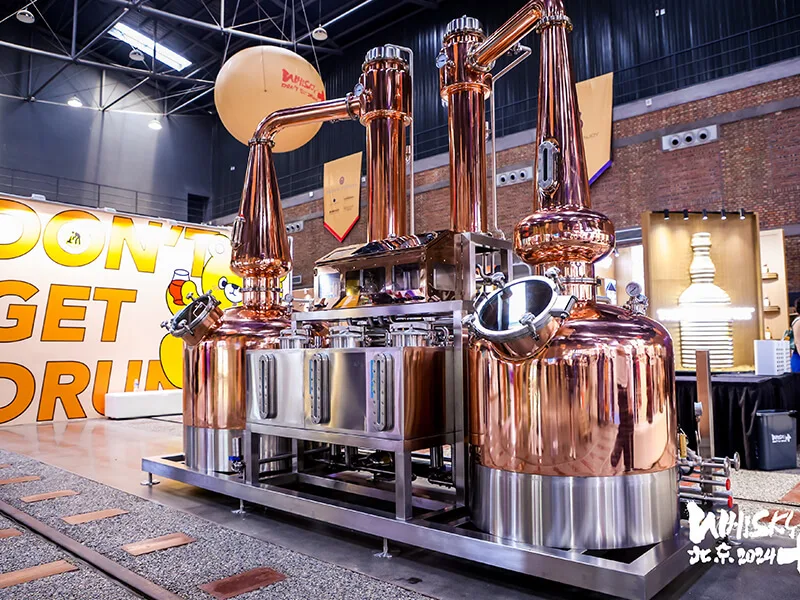
High-Quality Stainless Steel Fabrication
All product-contact surfaces are manufactured from premium stainless steel materials, including SUS304 or SUS316L depending on application requirements.
The system features:
- Corrosion-resistant construction
- Sanitary internal surfaces
- Precision polishing
- Easy cleaning and maintenance
- GMP-compliant design options
These features help maintain product purity while minimizing contamination risks.
Independent Heating and Temperature Control
Precise thermal management is critical for achieving high separation efficiency.
The 500L and 300L vessels are equipped with independent heating systems, allowing operators to optimize temperature profiles for each process stage.
Available heating options include:
- Thermal oil heating
- Electric heating
- Steam heating (optional)
Independent temperature control enables:
- Accurate process optimization
- Improved product consistency
- Reduced thermal degradation
- Enhanced energy utilization
High-Efficiency Distillation and Rectification
The system can be equipped with advanced separation components designed to achieve high-purity distillation performance.
Available configurations include:
Packed Column Systems
Suitable for:
- High-purity solvent recovery
- Essential oil purification
- Fine chemical applications
Advantages:
- Low pressure drop
- High separation efficiency
- Excellent mass transfer performance
Plate Column Systems
Ideal for:
- Alcohol production
- Fractional distillation
- Large-volume processing
Advantages:
- Stable operation
- Easy monitoring
- Strong separation capability
A precision reflux control system allows operators to adjust reflux ratios according to process requirements, supporting both total reflux and partial reflux operations.
Depending on material characteristics and column design, product purity levels exceeding 99.9% can be achieved.
Intelligent PLC Automation
Modern production environments require repeatable and data-driven operation.
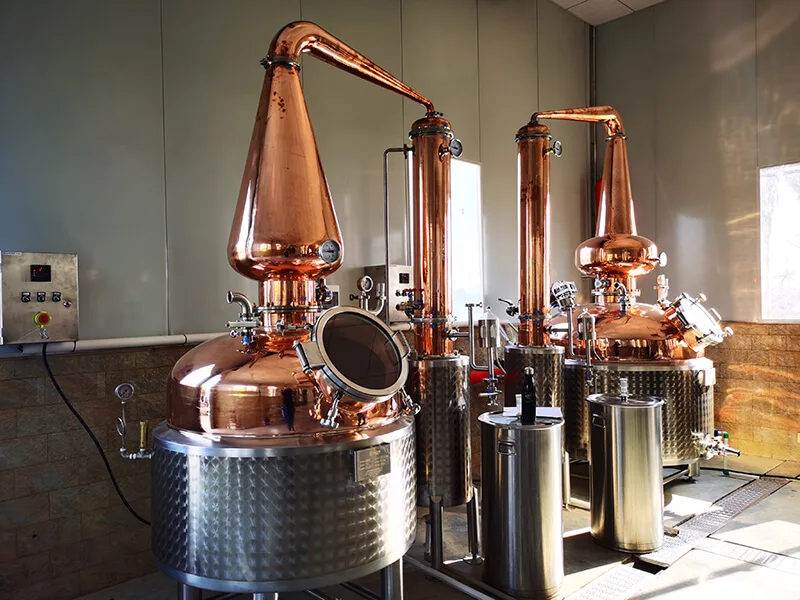
The system incorporates a PLC-based control platform with a user-friendly touchscreen interface.
Key functions include:
- Real-time temperature monitoring
- Pressure monitoring
- Liquid level detection
- Automated process control
- Recipe management
- Data logging and reporting
Operators can monitor critical process parameters continuously while reducing manual intervention.
Integrated safety features include:
- Over-temperature protection
- Over-pressure protection
- Emergency shutdown systems
- Alarm notifications
- Multiple safety interlocks
These safeguards help ensure safe operation under vacuum, atmospheric, or low-pressure conditions.
Key Performance Advantages
Improved Energy Efficiency
The dual-still architecture creates opportunities for heat integration and energy recovery.
Optional heat exchange systems can utilize waste heat from process streams to preheat incoming feed materials, significantly reducing energy consumption compared to conventional single-vessel systems.
Increased Productivity
By allowing simultaneous processing, preparation, and cleaning operations, overall equipment utilization is substantially improved.
Manufacturers can achieve:
- More production cycles per day
- Reduced downtime
- Faster batch turnover
- Higher operational efficiency
Consistent Product Quality
Accurate temperature control, stable reflux management, and automated process monitoring contribute to highly repeatable results.
This is particularly important for applications where product purity and consistency directly impact commercial value.
Complete Process Traceability
Automatic data collection and storage provide valuable production records for:
- Process validation
- Quality assurance
- Regulatory compliance
- Process optimization
Historical production data helps manufacturers refine operating parameters and improve long-term performance.
Typical Applications
Fine Chemical Processing
The system is widely used for:
- Solvent recovery
- Intermediate purification
- Reaction product separation
- Specialty chemical production
Pharmaceutical and Biotechnology Industries
Applications include:
- Botanical extraction
- Active compound concentration
- Pharmaceutical solvent recovery
- Low-temperature processing of heat-sensitive materials
Food and Beverage Production
Ideal for:
- Craft spirit distillation
- Premium alcohol production
- Flavor extraction
- Fragrance and aroma purification
- Fermentation broth processing
Advanced Materials Manufacturing
Suitable for:
- Monomer purification
- High-boiling solvent regeneration
- Specialty material processing
- Electronic chemical production
From Pilot Scale to Commercial Production
The 500L + 300L Dual Still System offers a practical pathway for companies moving from laboratory development to commercial manufacturing.
By combining production efficiency, process flexibility, high-purity separation capability, and intelligent automation, this system helps manufacturers reduce operating costs while maintaining strict quality standards.
Our engineering team provides comprehensive support throughout the entire project lifecycle, including:
- Process evaluation and validation
- Custom system design
- Equipment manufacturing
- Installation and commissioning
- Operator training
- Technical consultation
- Long-term maintenance and after-sales support
If you’re currently planning a new line or upgrading an existing one, we’d be glad to help. Reach out to us with your product type, batch size, viscosity, and any special requirements. Our engineering team will walk you through the options and recommend a solution that actually fits your process – no pressure, just practical advice.