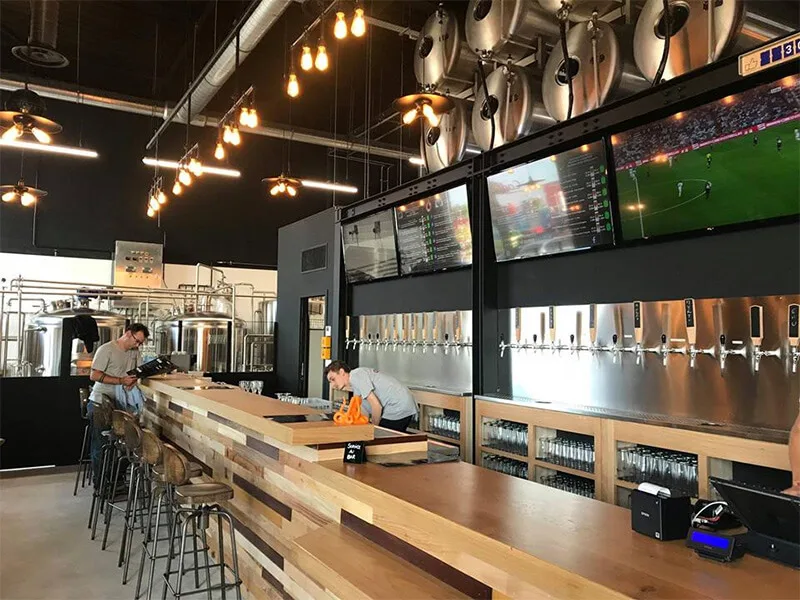
A 1000L brewery system can be a practical choice for craft breweries, brewpubs, and growing beer businesses that need a balance between production capacity and equipment investment. It provides a larger brewing volume than many pilot systems while allowing breweries to develop their product range and production schedule.
However, choosing 1000L brewery equipment involves more than selecting a brewhouse with a 1000L batch capacity. Fermentation capacity, cooling performance, cleaning procedures, automation, facility layout, and packaging requirements all affect the efficiency of the complete brewing system.
As a brewery equipment manufacturer, METO provides brewing equipment solutions for different production scales and process requirements. This guide explains the main considerations when planning a 1000L commercial brewing system.
1. What Is a 1000L Brewery System?
A 1000L brewery system generally refers to a brewhouse designed for a nominal batch capacity of approximately 1000 liters. The actual working volume and final beer output depend on the equipment design, brewing process, and product requirements.
It is important to distinguish between brewhouse batch capacity and finished beer production. A 1000L batch does not necessarily produce 1000 liters of packaged beer. Wort transfer losses, fermentation losses, beer retained in tanks and pipelines, and conditioning requirements can reduce the volume available for sale.
Before choosing the equipment, define the intended production target. Consider how many batches will be brewed per day or week, how many days the brewery will operate, and how long each beer style will occupy a fermentation tank.
These factors help determine whether a 1000L system can support the business’s expected demand.
2. What Equipment Is Included in a 1000L Brewery System?
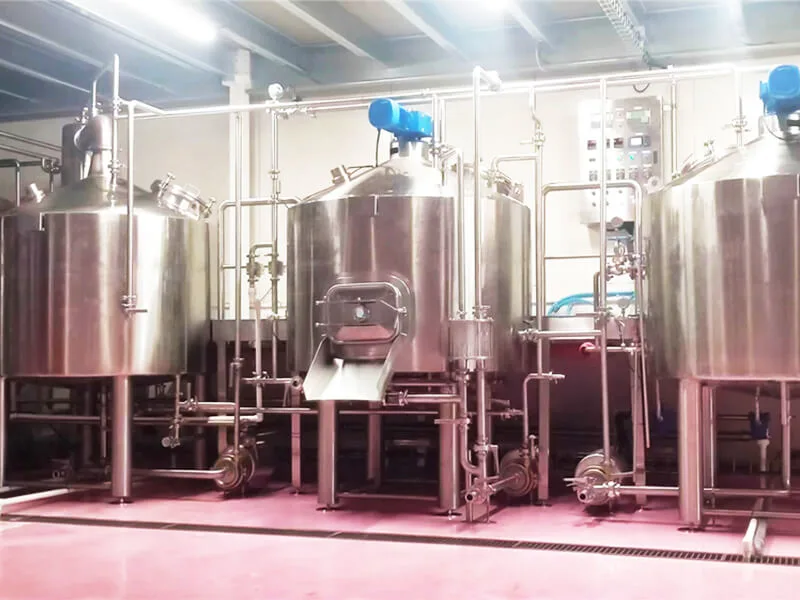
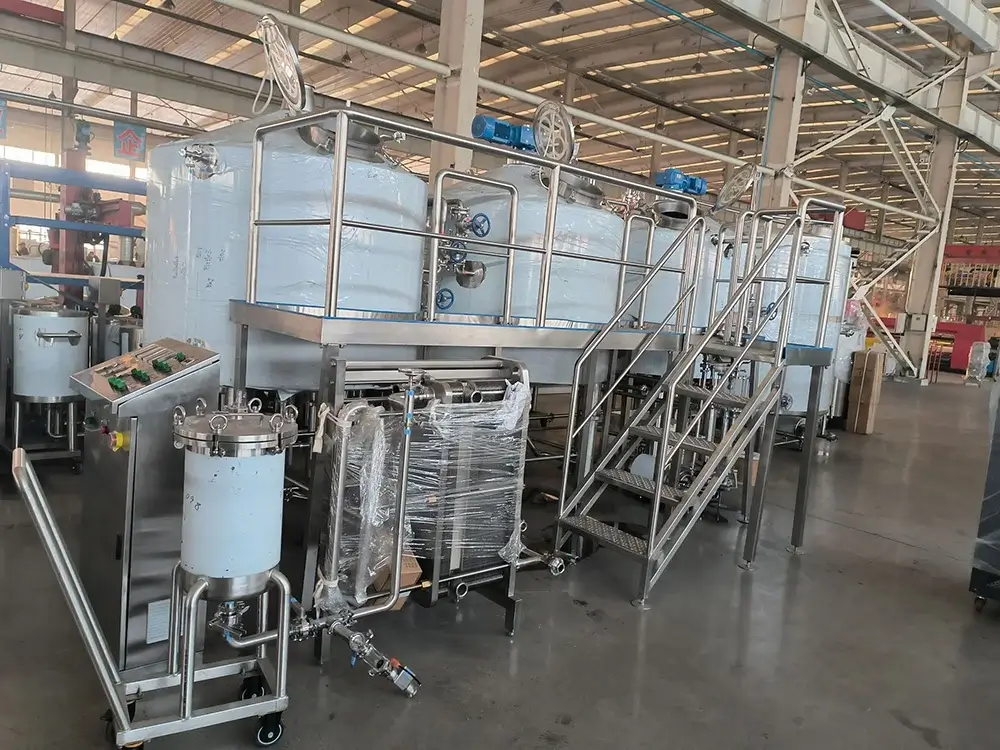
A complete 1000L brewery system typically includes the brewhouse, fermentation tanks, cooling equipment, cleaning equipment, pumps, piping, and control components. The exact configuration depends on the production process and the scope of supply.
Brewhouse System
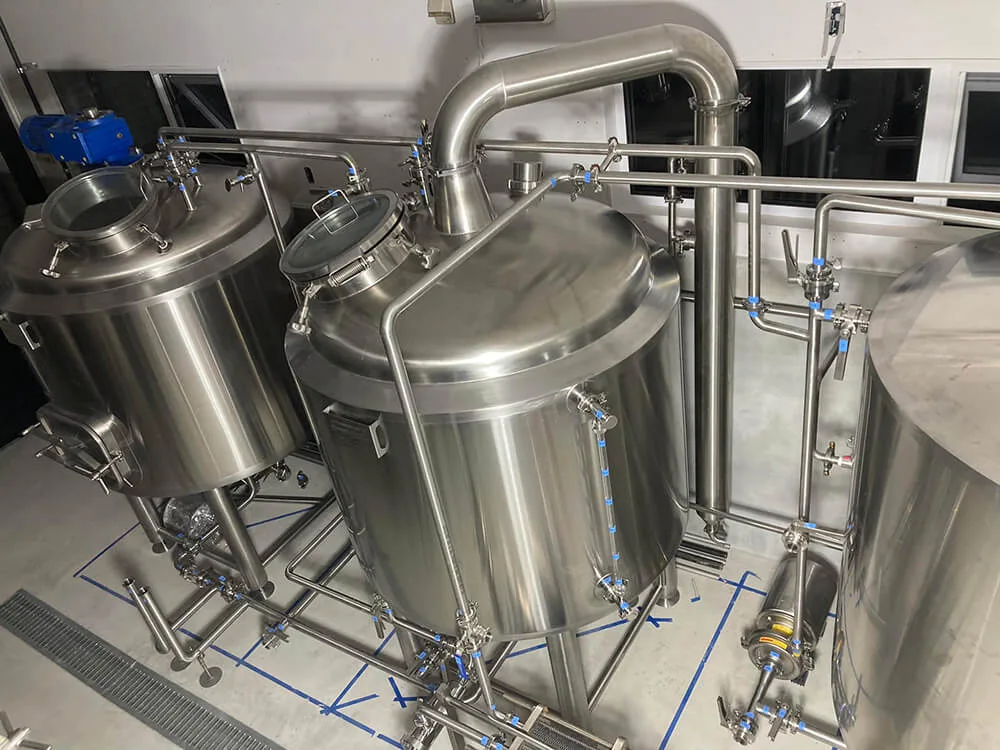
The brewhouse performs the main stages of wort production, including mashing, lautering, boiling, and whirlpool separation.
A 1000L brewhouse may use a two-vessel, three-vessel, or four-vessel configuration. The appropriate design depends on the required brewing frequency, available space, labor arrangements, and investment budget.
A typical system may include:
- Mash tun and lauter tun, either separate or combined
- Brew kettle
- Whirlpool vessel, separate or integrated
- Wort heat exchanger
- Malt milling equipment
- Brewing pumps, valves, and process piping
- Hot water tank and other auxiliary vessels, as required
A compact configuration may reduce the installation footprint, while a multi-vessel system can provide greater process flexibility. The final choice should reflect the planned production schedule rather than vessel count alone.
Fermentation Tanks
Fermentation tanks are essential for converting wort into beer. Their quantity and working volume should match the brewhouse capacity, brewing frequency, fermentation time, and variety of beer styles.
For a 1000L brewhouse, the fermentation system may include tanks with working volumes that correspond to one or more brewhouse batches. Some breweries use tanks sized around individual batches, while others choose larger tanks to support combined production or a different brewing schedule.
When selecting fermentation tanks, consider stainless steel grade, cooling jacket design, insulation, working pressure, internal surface finish, CIP provisions, and temperature monitoring.
The number of tanks should be calculated from the production schedule. A larger brewhouse alone cannot increase output if fermentation capacity is insufficient.
Glycol Cooling System
A glycol cooling system supplies chilled glycol to tank jackets to control fermentation and conditioning temperatures.
The cooling system may include a glycol chiller, circulation pumps, insulated piping, temperature sensors, and a reservoir or buffer tank where required.
Cooling capacity should be calculated according to the number and size of tanks, the expected simultaneous cooling load, fermentation activity, ambient conditions, and target temperatures.
It is important to plan cooling equipment together with fermentation tanks. Adding tanks later without checking the available cooling capacity may affect temperature control during peak production.
CIP Cleaning System
A clean-in-place (CIP) system helps clean compatible tanks, pipelines, and process equipment by circulating cleaning solutions through the system.
Depending on the brewery’s requirements, a CIP unit may include cleaning tanks, pumps, valves, and connections for cleaning and rinsing.
The configuration should account for the number of vessels, cleaning sequences, required flow rates, and whether several tanks need to be cleaned independently.
Operators must also follow appropriate cleaning and sanitation procedures, including chemical concentration, temperature, contact time, rinsing, and verification.
Control and Automation System
A 1000L brewery can use manual controls, semi-automatic controls, or a PLC-based automation system.
The required level of automation depends on process complexity, staffing, production frequency, and the operator’s control preferences. A PLC system may support temperature monitoring, pump operation, valve control, and selected process sequences, depending on the confirmed configuration.
When evaluating automation, clarify which functions are included and which steps still require manual operation. This helps ensure that the control system matches the brewery’s actual working procedures.
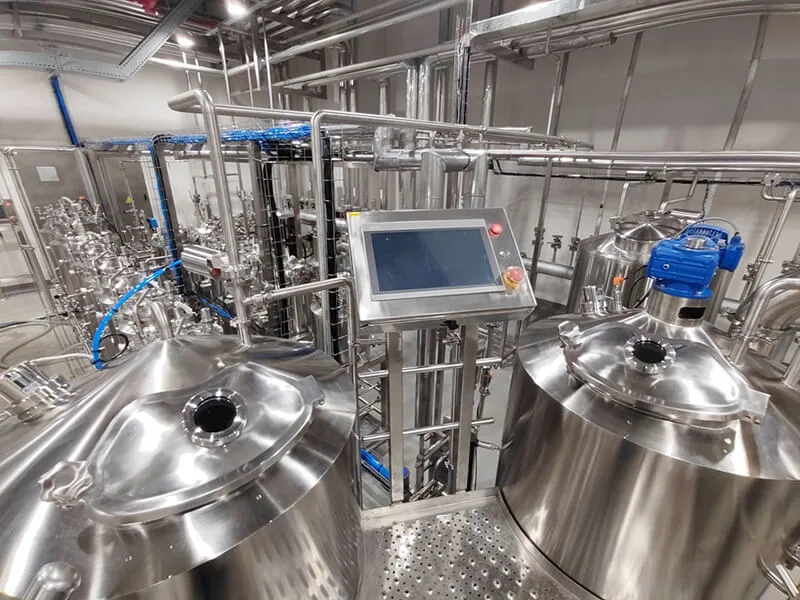
3. How Much Beer Can a 1000L Brewery Produce?
The production capacity of a 1000L brewery depends on several factors. Brewhouse batch size is only one part of the calculation.
The main factors include:
- Number of brewing batches per day
- Number of operating days per week
- Fermentation and conditioning time
- Number and working volume of fermentation tanks
- Tank cleaning and turnaround time
- Beer styles and their process requirements
- Losses during transfer, fermentation, and packaging
- Packaging and storage capacity
For example, brewing several batches per day may increase wort production, but only if the brewhouse schedule, hot water supply, cooling equipment, and fermentation capacity can support that workload.
Likewise, a brewery with sufficient fermentation capacity may still face a production bottleneck if packaging equipment cannot handle the finished beer volume.
Before purchasing equipment, prepare a production plan that connects brewing frequency with tank occupancy and expected finished beer output. This is more useful than estimating annual production from brewhouse capacity alone.
4. How to Plan Fermentation Capacity for a 1000L Brewhouse
Fermentation capacity is often one of the most important factors in commercial brewery planning.
The number of fermentation tanks depends on how frequently the brewery brews and how long each batch remains in the tank. Different beer styles may require different fermentation and conditioning periods, so a single fixed tank-to-brewhouse ratio will not suit every project.
When calculating fermentation capacity, consider:
Brewing frequency: Estimate the number of batches planned per day or week.
Tank occupancy: Include fermentation, conditioning where applicable, emptying, and cleaning time.
Beer variety: Multiple recipes may require separate tanks to avoid mixing production schedules.
Peak demand: Allow for seasonal sales changes or periods when more beer needs to be available.
Future expansion: Consider whether additional fermentation tanks may be installed as demand grows.
A brewery equipment manufacturer can use these inputs to help coordinate tank capacity with the brewhouse and cooling system.
5. Two-Vessel, Three-Vessel, or Four-Vessel Brewhouse?
The brewhouse configuration affects the production workflow, installation footprint, and possible brewing frequency.
Two-Vessel System
A two-vessel brewhouse combines several process functions into fewer vessels. It may suit projects with limited space or a simpler production schedule.
The design should be reviewed carefully to understand which processes can operate simultaneously and how vessel use affects the brewing cycle.
Three-Vessel System
A three-vessel system separates selected brewing stages to provide more operational flexibility. Depending on the design, it may allow certain operations to overlap and help support a more demanding brewing schedule.
Four-Vessel System
A four-vessel system separates the main process stages across more vessels. It may be suitable for breweries that need greater flexibility or higher brewing frequency.
However, more vessels also require additional space, piping, controls, and cleaning arrangements. The best configuration depends on the expected workload and the available budget.
For a 1000L commercial brewery, compare the practical brewing schedule, labor requirements, and total equipment scope before deciding which configuration to use.
6. Heating Options for a 1000L Brewery
The heating method affects utility requirements, installation planning, and daily operation.
Common options include steam heating, electric heating, and direct-fire heating, where appropriate for the equipment design and local requirements.
Steam Heating
Steam heating uses a boiler or suitable steam source to supply heat to the brewing vessels. It may be considered for breweries that need a flexible heat supply or operate multiple vessels requiring steam.
The project must account for boiler capacity, steam distribution, condensate handling, ventilation, and applicable local requirements.
Electric Heating
Electric heating may be suitable for projects with adequate electrical capacity and a preference for a straightforward heating arrangement.
Before selecting this option, verify the available power supply, electrical installation requirements, heating demand, and local electricity costs.
Direct-Fire Heating
Direct-fire heating may be an option for certain brewhouse designs. Its suitability depends on the vessel construction, burner configuration, ventilation, safety requirements, and site conditions.
The heating method should be selected during the engineering stage rather than treated as an accessory after the brewhouse design has been finalized.
7. Space and Utility Requirements
A 1000L brewery needs sufficient space not only for the brewhouse but also for fermentation tanks, cooling equipment, cleaning facilities, ingredients, and finished beer.
Before finalizing the equipment layout, review the following:
- Available floor area and ceiling height
- Equipment delivery and installation access
- Floor drainage and ventilation
- Water supply and wastewater arrangements
- Electrical supply or heating utilities
- Cooling equipment location
- Clearance for tank inspection and maintenance
- Malt storage and handling
- Keg storage and packaging space
The layout should allow operators to move between brewing, fermentation, cleaning, and packaging areas safely and efficiently.
For projects installed in existing commercial buildings, check the site’s actual utility capacity and building restrictions before confirming the equipment specifications.
8. What Affects the Cost of 1000L Brewery Equipment?
The price of a 1000L brewery system depends on its configuration and the scope of supply. Two systems with the same nominal batch capacity can have different prices because their vessel arrangements, materials, automation, and auxiliary equipment differ.
Important cost factors include:
- Number and configuration of brewhouse vessels
- Fermentation tank quantity and specifications
- Stainless steel grade and surface finish
- Glycol cooling capacity
- CIP system configuration
- Heating method and associated utilities
- PLC controls and automation
- Malt handling and water treatment
- Pumps, valves, and piping
- Installation, commissioning, and technical support
When comparing quotations, confirm exactly what is included. Some quotations may cover only the main brewing vessels, while others may include fermentation tanks, cooling, CIP, controls, and additional equipment.
A clear equipment list and technical specification make it easier to compare suppliers on a like-for-like basis.
9. How to Choose a 1000L Brewery Equipment Manufacturer
Selecting a manufacturer is an important part of the project. Equipment quality matters, but so do engineering coordination, customization, documentation, and support.
Manufacturing and Quality Control
Review the manufacturer’s production capabilities and quality-control procedures. Important details may include material traceability, welding inspection, surface finishing, pressure testing where applicable, and final equipment inspection.
Any claims about certifications or compliance should be checked against the specific equipment, destination market, pressure rating, electrical configuration, and installation conditions.
Engineering and Customization
The manufacturer should be able to evaluate brewhouse capacity, fermentation requirements, cooling demand, heating utilities, and site conditions as a connected system.
A suitable design should reflect the intended beer styles, production schedule, and available facility space.
Installation and After-Sales Support
Clarify whether the project includes installation, commissioning, operator training, technical documentation, spare parts, and after-sales support.
Responsibilities should be defined before the order is placed, particularly when the equipment will be installed overseas.
10. Why Choose METO for 1000L Brewery Equipment?
METO is a brewery and distillery equipment manufacturer providing equipment design, research and development, manufacturing, installation, commissioning, and after-sales support.
The company supplies brewing systems for different production scales, including equipment for craft breweries, brewpubs, and commercial brewing projects.
Depending on project requirements, a 1000L brewery package can be configured with a brewhouse, fermentation tanks, glycol cooling, CIP cleaning equipment, pumps, piping, and a control system.
METO works with customers to evaluate the relationship between batch capacity, fermentation volume, cooling requirements, heating methods, facility layout, and the intended production schedule.
The final equipment configuration should be confirmed according to the actual project scope and technical requirements. This helps ensure that the main equipment and auxiliary systems are planned together rather than selected independently.
Frequently Asked Questions
Is a 1000L brewery suitable for commercial brewing?
A 1000L system can be suitable for craft breweries, brewpubs, and growing commercial operations. Its suitability depends on expected sales, brewing frequency, fermentation capacity, operating days, and the business model.
How many fermentation tanks are needed for a 1000L brewhouse?
There is no universal number. Tank quantity depends on brewing frequency, fermentation and conditioning time, beer styles, and cleaning turnaround. The required tank capacity should be calculated from the production schedule.
Can a 1000L brewery produce several beer styles?
Yes. A brewery can produce multiple beer styles if its equipment configuration, production schedule, and fermentation capacity support the required recipes and tank occupancy. Separate tanks may be needed for different batches or production cycles.
Which heating method is best for a 1000L brewery?
Steam, electric, and direct-fire heating may each be suitable for different projects. The choice depends on available utilities, equipment design, operating requirements, installation conditions, and local regulations.
Does a 1000L brewery system include cooling and CIP equipment?
Not always. Equipment packages vary by supplier and project. Buyers should confirm whether the quotation includes glycol cooling, CIP cleaning, fermentation tanks, pumps, piping, controls, installation, and commissioning.
Conclusion
A 1000L brewery system can provide a practical foundation for commercial beer production, but its performance depends on the design of the complete brewing operation.
Brewhouse configuration, fermentation capacity, cooling, heating, cleaning, automation, and packaging should be planned together. A realistic production schedule and a clear understanding of the facility’s limitations will help determine the right equipment configuration.
METO provides brewery equipment solutions tailored to different production requirements and facility conditions. If you are planning a 1000L commercial brewery, contact METO to discuss your target output, beer styles, preferred configuration, and project requirements.