Investing in the right craft brewery equipment is the single most critical step to launch a profitable, scalable craft brewing business. Unlike industrial brewing machinery designed for mass, low-variety beer production, modern craft brewery equipment prioritizes operational flexibility, precise flavor control, and modular scalability — core features that support creative recipe testing, small-batch production, and brand differentiation. For new brewery founders and startup operators, understanding essential brewing systems, equipment selection criteria, accurate budgeting, and standard operational practices is key to stable production and long-term market growth. This in-depth guide covers every vital detail of craft brewing equipment, helping new breweries build efficient, high-quality production setups from the ground up.
1. What Is Craft Brewery Equipment?
Craft brewery equipment refers to a complete set of professional, small-to-medium-scale brewing machinery tailored for independent craft breweries, brewpubs, and microbreweries. Engineered for the unique needs of craft beer production — including diverse flavor profiles, frequent recipe adjustments, and limited-batch brewing — this equipment differs drastically from rigid industrial brewing systems. It balances high-precision brewing control with operational flexibility, allowing brewers to experiment with unique hops, malts, and fermentation techniques while maintaining consistent batch quality and flavor stability.
A fully functional craft brewing system covers every stage of the beer production lifecycle: raw grain processing, wort production, fermentation, beer conditioning, product packaging, and routine sanitary maintenance. All equipment components work in tandem, and overall system compatibility directly determines a brewery’s production efficiency, batch consistency, product quality, and long-term operational costs.
2. Essential Systems for Startup Breweries
Startup craft breweries do not require overcomplicated, industrial-grade equipment in their early operational stages. A streamlined, well-matched foundational brewing system is sufficient to meet daily small-batch production demands. All new craft brewery setups rely on three interconnected, essential equipment modules that cover the entire end-to-end brewing workflow.
2.1 Brewhouse Systems
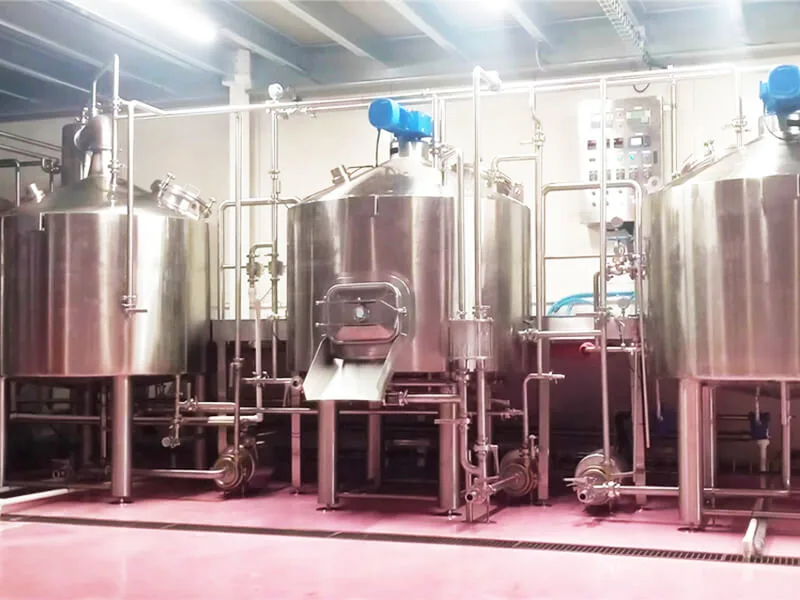
The brewhouse is the core production hub of every craft brewery, housing the machinery responsible for wort production — the foundational process that defines a beer’s core taste, clarity, and yield. A cost-effective, startup-focused brewhouse typically includes a malt mill, mash tun, lauter tun, brew kettle, and whirlpool tank, with each piece serving a unique, irreplaceable role in producing clean, flavorful wort.
Each brewhouse component performs a specific critical function: malt mills crush whole grains to release fermentable sugars; mash tuns facilitate grain-water mixing and saccharification; lauter tuns filter and separate clear wort from spent grain; brew kettles boil wort with hops to build beer’s flavor, aroma, and bitterness; whirlpool tanks remove hot break and particulate impurities for crystal-clear wort. For new small-scale brewers, compact two-vessel and three-vessel brewhouse configurations offer the best combination of affordability, space efficiency, and functional performance.
2.2 Fermentation & Conditioning
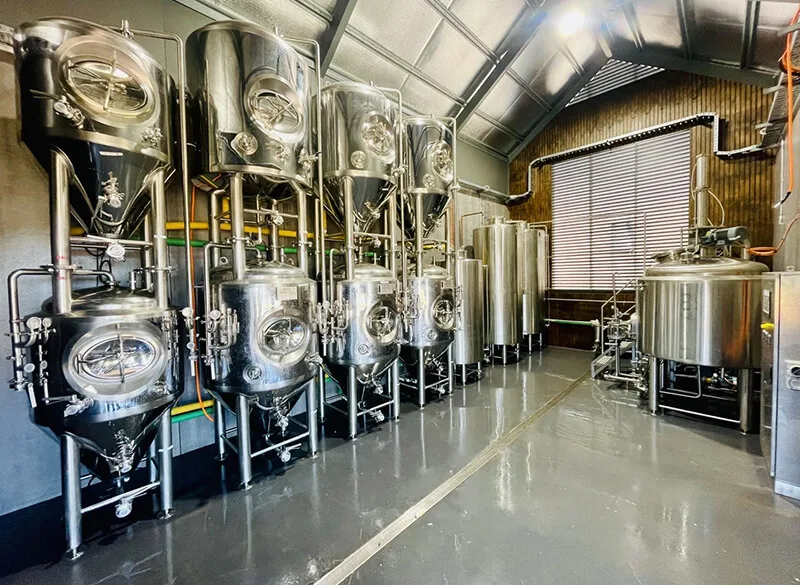
Following wort production, fermentation and conditioning stages shape a craft beer’s final aroma, mouthfeel, and unique brand character. These processes are what distinguish craft beer from mass-produced beer, enabling the creative, flavor-forward brewing that defines the craft industry. The core equipment for this stage includes fermentation tanks, bright beer tanks, and dedicated glycol cooling systems to stabilize fermentation conditions.
Fermentation tanks support yeast fermentation, the chemical process that converts grain sugars into alcohol and carbon dioxide to form a beer’s base flavor profile. Once primary fermentation completes, beer transfers to bright beer tanks for conditioning, clarification, carbonation adjustment, and flavor refinement. This aging process eliminates harsh off-notes, smooths out taste inconsistencies, and standardizes flavor across all production batches. Strict, stable temperature control throughout fermentation and conditioning is critical to prevent stalled fermentation, spoiled batches, and uneven flavor development.
2.3 Packaging Lines
Packaging is the final production stage that transforms finished beer into marketable products, preserving flavor quality, enabling safe logistics and distribution, and standardizing commercial sales. New craft breweries achieve the highest ROI with flexible, scalable packaging setups, avoiding the excessive upfront costs of full industrial automated lines during early low-volume operations.
Common craft brewery packaging equipment includes manual and semi-automatic bottle fillers, canning lines, keg wash-and-fill stations, and labeling machines. For startup breweries focused on local bar partnerships and draft beer sales, keg-centric packaging systems deliver the highest cost performance. As retail demand grows, breweries can incrementally add bottled and canned packaging lines to support offline retail and e-commerce order fulfillment.
3. Key Factors When Choosing Brewery Equipment
Selecting the right craft brewery equipment requires strategic, holistic planning rather than chasing premium specs or low upfront pricing alone. Brewers must evaluate production targets, facility limitations, budget constraints, and long-term growth goals to make informed purchasing decisions. These five key factors are the industry-standard criteria for startup breweries investing in new equipment.
3.1 Capacity Planning
Capacity alignment is the foundation of efficient brewery operation. Brewery owners should calculate single-batch output and annual production capacity based on real market demand, sales channel layout, and business development plans. Nano breweries focus on experimental brewing and small custom batches, while microbreweries prioritize stable commercial-scale production. Two common mistakes to avoid are undercapacity (which leads to unfulfilled customer orders and revenue loss) and overcapacity (which results in idle equipment and wasted capital). The optimal strategy is to invest in equipment that meets current production needs while reserving scalable space for future business expansion.
3.2 Material Quality
Brewery equipment continuously contacts acidic wort, finished beer, and chemical sanitizers, so material quality directly impacts equipment lifespan, beer safety, and compliance certification. Professional craft brewing equipment adopts food-grade 304 stainless steel as the core material, featuring excellent corrosion resistance, high-temperature tolerance, and non-reactive, contaminant-free properties. Low-quality steel and inferior materials are prone to rust, chemical leaching, and bacterial accumulation, which shorten equipment service life, ruin beer flavor, and create serious food safety compliance risks.
3.3 Automation Level
Equipment automation levels should match your team’s technical capabilities and production scale. Fully automated brewing systems offer precise, repeatable control over temperature, timing, and liquid flow, eliminating manual errors and ensuring perfect batch-to-batch consistency — though they require higher upfront investment and more complex professional maintenance. Semi-automatic and manual brewing setups are budget-friendly, easy to operate and troubleshoot, and ideal for early-stage startups with limited funding and technical staff. Most new breweries start with low-to-medium automation and upgrade intelligent control systems as production volume and operational experience grow.
3.4 Utility Needs
All brewing equipment relies on stable facility utilities, including electrical power load, water supply and drainage, steam supply, and refrigeration capacity. Before finalizing equipment purchases, brewers must audit their site’s utility conditions to avoid equipment malfunctions caused by insufficient power, unstable water pressure, or mismatched cooling systems. Matching equipment specs to existing utility resources also reduces long-term energy consumption and daily operational overhead.
3.5 Compliance
Commercial breweries are subject to strict local food safety regulations and industry licensing requirements, so all equipment must meet official sanitary and safety compliance standards. All tanks, pipes, and fittings must feature smooth, dead-space-free designs for complete cleaning and sanitization to prevent bacterial growth. Additionally, valid manufacturing certifications, material inspection reports, and safety qualification documents are mandatory to pass official inspections and maintain legal brewing operations.
4. Leading Craft Brewery Equipment Brands
The global craft brewery equipment market includes a diverse range of reputable manufacturers, with distinct advantages in build quality, pricing structure, and application scenarios. Premium international brands specialize in high-precision, fully automated brewing systems with superior long-term stability, designed for mid-sized and large craft breweries with rigorous production and quality standards. While these high-end systems deliver industry-leading performance and durability, they come with premium pricing and slower after-sales support response times.
Regional professional equipment manufacturers dominate the global nano and microbrewery market due to exceptional cost performance and customized service. These brands provide tailor-made brewing systems exclusively for small-scale craft operations, featuring flexible configurations, fast local after-sales support, and low maintenance costs. The majority of startup craft breweries choose these cost-effective, reliable setups, which meet professional brewing standards without overextending initial capital investment. Specialized auxiliary equipment brands also offer targeted cooling, cleaning, and control system solutions to complement core brewing machinery.
5. Budgeting Guide
Brewery equipment investment accounts for the largest share of startup costs for new craft brewing businesses. Data-driven budgeting helps new operators allocate capital rationally, avoid unnecessary overspending, and maximize return on investment. Craft brewery startup equipment costs fall into two primary categories based on batch capacity: nano brewery systems and microbrewery systems.
5.1 Nano Brewery Costs (1-3 BBL)
Nano brewery systems feature single-batch capacities of 1 to 3 BBL, ideal for brewpubs, experimental brewing labs, and small boutique brewing operations. This entry-level setup requires minimal upfront equipment investment, making it perfect for first-time brewers and independent entrepreneurs testing the craft beer market. A complete nano brewing package includes a compact brewhouse, basic fermentation tanks, and essential cooling and CIP cleaning systems. Its small footprint significantly reduces site renovation and utility upgrade costs, making it the lowest-risk option for new craft brewery startups.
5.2 Micro Brewery Costs (7-15 BBL)
Microbrewery equipment covers single-batch capacities of 7 to 15 BBL, designed for stable commercial production, consistent batch sales, and formal brand expansion. Compared to nano systems, microbrewery setups include larger-capacity tanks, comprehensive auxiliary support systems, and optional automated upgrades. Total investment costs vary based on automation levels, tank quantity, and packaging line integration. Though upfront spending is higher than nano setups, microbreweries deliver sufficient output to support retail and wholesale orders, offer stronger profit margins, and allow scalable business growth — ideal for operators with clear commercial brewing business plans.
6. Implementation Essentials
Premium brewing equipment cannot guarantee stable beer quality and long service life without standardized installation and daily operational management. Most common early-stage brewery challenges, including inconsistent beer flavor, frequent equipment faults, and short machinery lifespan, stem from poorly planned site layout and irregular maintenance routines.
6.1 Site Preparation
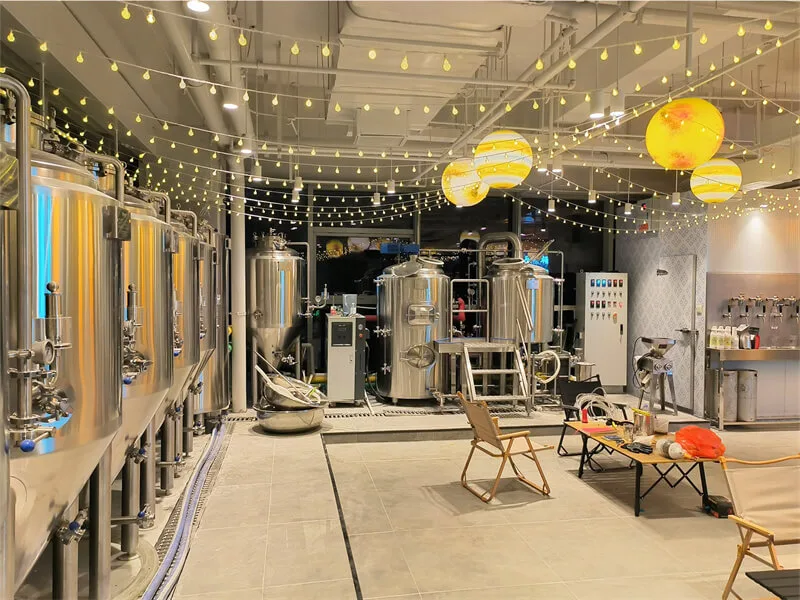
A scientific, zone-based brewery layout is essential for efficient, compliant daily operations. Professional breweries separate independent functional zones for raw material storage, brewhouse production, fermentation, packaging, and finished product inventory. Production floors must be waterproof, slip-resistant, and easy to fully sanitize, with standardized water drainage pipelines and safe, organized electrical wiring. The fermentation zone requires dedicated thermal insulation and independent cooling systems to maintain constant low temperatures, eliminating temperature fluctuations that compromise fermentation quality.
6.2 Daily/Weekly CIP Processes
Clean-in-Place (CIP) sanitation is the industry-standard process to preserve beer consistency and brewery hygiene, serving as a mandatory daily workflow for all commercial brewing operations. Residual wort, beer film, and bacterial buildup in tanks and pipelines directly cause off-flavors, beer cloudiness, and premature product spoilage in subsequent batches.
Professional craft breweries follow a strict, recurring sanitation schedule to maintain production hygiene:
- Daily cleaning: Fully sanitize all fermentation tanks, transfer pipelines, and filling equipment immediately after daily production. This practice eliminates residual beer liquid and surface contaminants to prevent overnight bacterial growth and cross-contamination.
- Weekly deep cleaning: Execute full-system CIP disinfection for the entire brewhouse, all transfer lines, and storage tanks. Use food-grade commercial sanitizers to remove stubborn scale, eliminate hidden bacterial colonies, and resolve potential sanitary hazards thoroughly.
6.3 Preventative Maintenance Checklists
Proactive preventative maintenance is the best way to avoid unexpected equipment failures and costly production downtime. New brewery operators need to establish and strictly follow a standardized equipment maintenance checklist. Core routine tasks include inspecting glycol cooling lines and solution concentration, checking seal and valve tightness, calibrating temperature and pressure control systems, lubricating mechanical operating components, and cleaning filter systems. Consistent preventative maintenance extends equipment lifespan, reduces failure rates, and ensures continuous, stable production.
7. Craft Brewery Equipment Costs
Total craft brewery equipment costs cover more than core machinery purchase fees. The complete financial breakdown includes auxiliary system procurement, professional installation and commissioning charges, and reserved budgets for routine maintenance and emergency repairs. Final overall costs are determined by production capacity, material grade, automation configuration, and the completeness of supporting auxiliary systems.
Essential auxiliary systems, including glycol cooling units, heat exchangers, intelligent control panels, and CIP cleaning setups, are indispensable for full-capacity, high-quality brewing production. Customized equipment configurations and site-specific layout adjustments will also increase installation and renovation costs. It is critical to note that high-priced equipment does not equal optimal performance. For startup breweries, matching equipment specs to actual production demands is the core of effective cost control, avoiding wasteful investment in unnecessary premium features.
8. Technical Considerations For Quality Brewing
Consistently producing premium craft beer relies on professionally calibrated auxiliary technical systems. Most subtle batch-to-batch flavor discrepancies stem from improperly configured or poorly maintained supporting equipment. Three core technical systems directly determine a brewery’s overall beer quality ceiling and production stability.
8.1 Glycol Cooling Systems
Accurate temperature control is critical for stable fermentation, making glycol cooling systems a non-negotiable core component of craft brewing setups. Unlike basic water cooling systems, glycol-based cooling equipment delivers consistent sub-zero temperature stability and anti-freezing performance, maintaining constant conditions in fermentation and bright beer tanks 24/7. Precise cooling regulates yeast activity effectively, prevents bacterial contamination and abnormal fermentation, and preserves beer purity and uniform flavor across all batches.
8.2 Heat Exchangers
Heat exchangers rapidly cool freshly boiled wort, shortening production cycles and protecting inherent wort quality. Fast, controlled cooling inhibits excessive high-temperature oxidation, which causes stale and off-flavor notes, and retains the fresh, aromatic characteristics of premium hops and malts. Modern high-efficiency heat exchangers also support waste heat recovery, repurposing residual heat to preheat process water and drastically reduce the brewery’s long-term energy consumption and operational costs.
8.3 Control Systems
The control system serves as the operational brain of the entire craft brewery, managing precise regulation of temperature, pressure, timing, and fluid flow throughout every brewing stage. A high-precision control system standardizes all production workflows, minimizes human operational errors, and guarantees consistent color, flavor, and mouthfeel for every beer batch. For craft breweries building a reputable brand with reliable, high-quality products, a robust intelligent control system is an irreplaceable foundation for sustainable operation and growth.
9. Conclusion & Next Steps
Launching and scaling a successful craft brewery starts with strategic equipment selection and standardized operational management systems. Every production component — from core brewhouse, fermentation, and packaging machinery to supporting cooling, control, and sanitation systems — plays a vital role in determining production efficiency and final product quality. New brewery operators should prioritize clarifying production positioning and capacity demands, selecting equipment matched to their budget and site conditions, and establishing standardized cleaning and maintenance workflows.
As market demand and business scale expand, breweries can gradually upgrade equipment automation levels and optimize auxiliary technical systems to achieve scalable development. By adhering to standardized equipment configuration and refined daily operational management, craft breweries can consistently produce high-quality, distinctive beer products, build competitive brand advantages, and realize stable, sustainable long-term profitability.
对您的酿酒设备项目有疑问? 您可以 告诉我们 您对啤酒厂的要求,我们将在 24 小时内为您提供交钥匙解决方案。