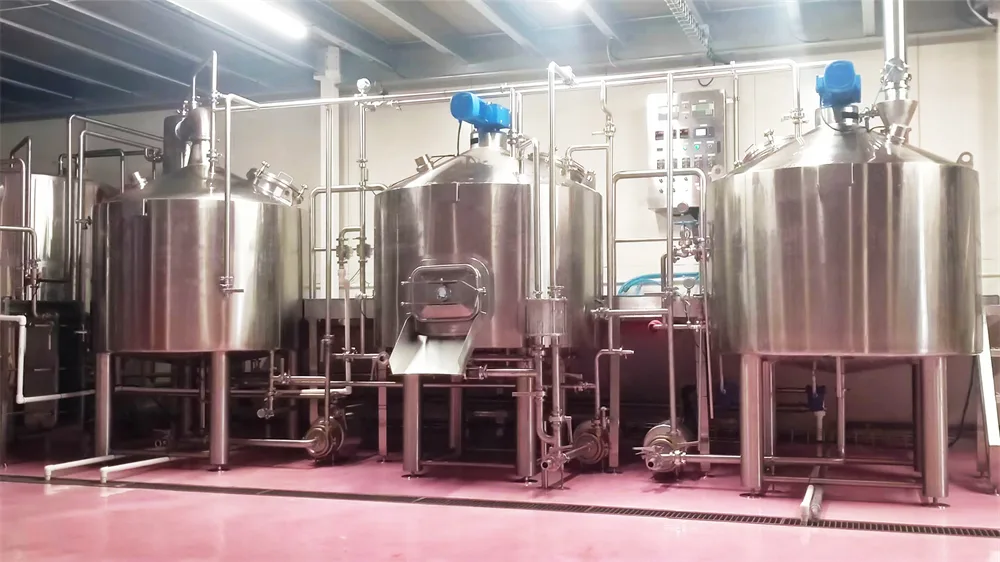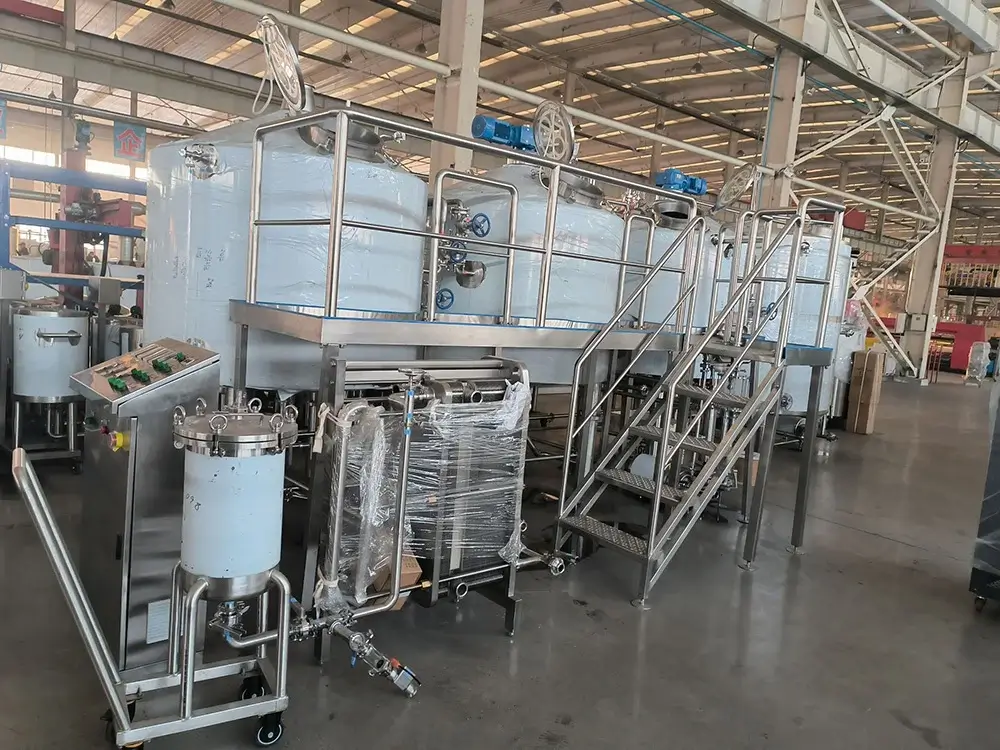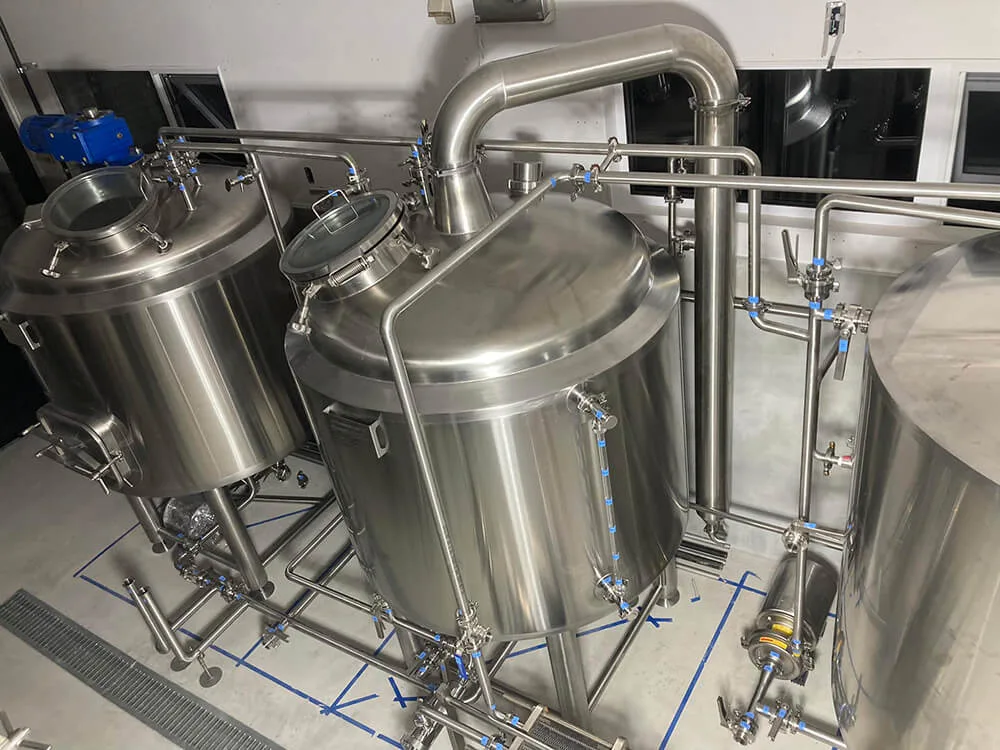
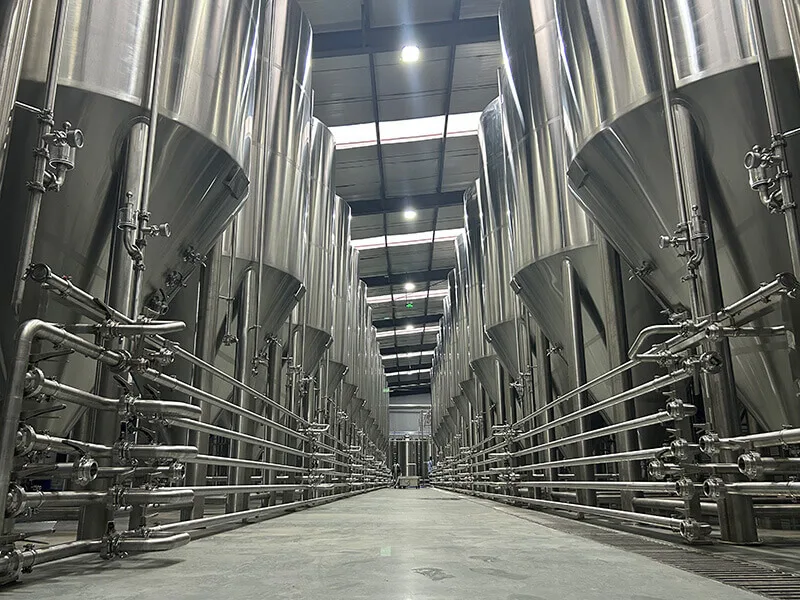
Low-temperature fermentation is the core process for producing classic beer styles such as lager and pilsner. Precise temperature control gives the beer a clean flavor, smooth body, and excellent stability.
To achieve stable and reliable low-temperature fermentation with 1000L brewery equipment, brewers must focus on four key areas: equipment configuration, process control, yeast management, and environmental regulation. Below is a practical and systematic solution.
1. Equipment Configuration Optimization
1.1 Fermentation Tank Design
Jacketed Structure
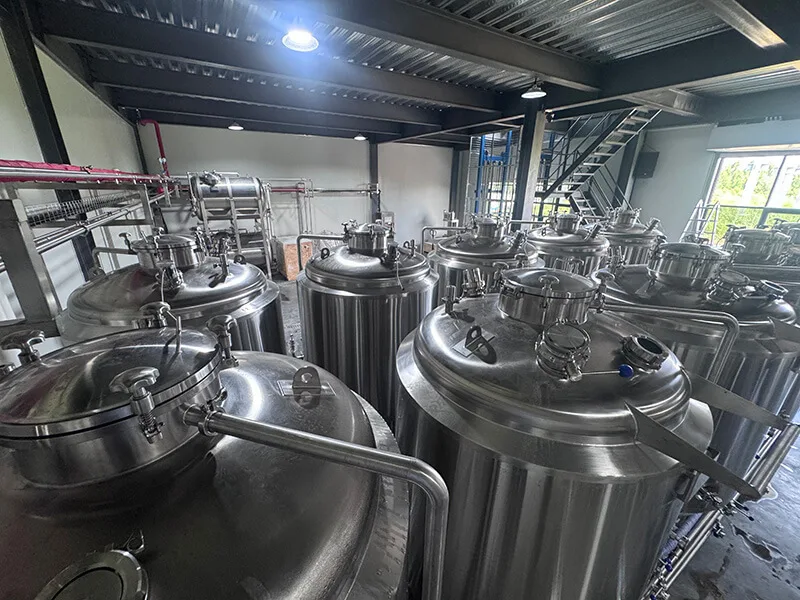
A food-grade stainless steel fermentation tank with a double cooling jacket is strongly recommended. Glycol solution circulates inside the jacket, allowing precise adjustment of temperature and flow rate. This ensures stable and uniform fermentation temperature control.
Conical Bottom Design
The cone angle should be no less than 60°. This design allows yeast to settle quickly and be discharged efficiently, reducing the risk of yeast autolysis.
Pressure Control
The tank should be equipped with a pressure gauge, safety valve, and pressure regulation device. During fermentation and conditioning, maintaining slight positive pressure (typically 0.8–1.2 bar) helps prevent oxidation and improves CO₂ absorption.
1.2 Cooling System
Chiller Selection
The cooling capacity should match the highest expected heat load (especially in summer). For a 1000L brewery equipment system, a chiller with at least 5 kW capacity is typically recommended. This ensures rapid wort cooling and stable fermentation temperature control.
Independent Cooling Circuits
Each fermentation tank should have its own glycol circulation loop and electric control valve. This allows independent temperature control for each tank.
Insulation
The tank should be insulated with at least 50 mm thick polyurethane foam. All pipes and valves must also be insulated to reduce energy loss.
1.3 Automation Control System
Multi-Point Temperature Monitoring
Install temperature sensors at different heights (top, middle, bottom) of the fermentation tank to monitor temperature distribution and avoid local overheating.
PLC 控制系统
A PLC with touch screen interface allows brewers to preset and automatically execute the full temperature curve—from primary fermentation to diacetyl rest and cold conditioning. This improves repeatability and consistency.
Emergency Backup
UPS systems or backup generators are recommended to prevent temperature loss during power failure.
2. Process Control Key Points
2.1 Wort Treatment
Rapid Cooling
After boiling, the wort should be cooled quickly using a plate or tubular heat exchanger.
- Lager: 8–12°C
- Ale: 18–20°C
Cooling should ideally be completed within 30 minutes to reduce contamination risk and improve cold break formation.
Accurate Oxygenation
Before entering the fermentation tank, sterile oxygen should be added:
- Lager: 8–10 ppm dissolved oxygen
- Ale: 10–12 ppm dissolved oxygen
Proper oxygen levels support healthy yeast growth.
2.2 Temperature Management by Stage
Primary Fermentation
Lager Beer
Maintain 8–12°C for 5–10 days. The exact time depends on wort gravity and yeast activity. Low temperature promotes clean flavor and minimal ester production.
Ale Beer
Maintain 18–20°C for 3–7 days, allowing controlled ester formation.
Diacetyl Rest and Cooling
When gravity approaches final value:
- Raise temperature by 2–4°C
- Hold for 24–48 hours
This allows yeast to reduce diacetyl.
After that, slowly decrease temperature at a rate of 0.1–0.3°C per hour.
Cold Conditioning
Lager Beer
Store at 0–4°C for several weeks or months. This improves clarity, smoothness, and CO₂ dissolution.
Ale Beer
Condition at 4–10°C for several days to weeks, depending on style.
3. Yeast Management
3.1 Yeast Selection
Choose yeast according to beer style:
- Bottom-fermenting yeast for lager
- Top-fermenting yeast for ale
Use high-quality dry yeast or liquid yeast from reliable suppliers.
3.2 Pitching Rate and Viability
Recommended pitching rate:
1.0–1.5 × 10⁷ cells/mL/°P
Yeast viability should be above 95%. For reused yeast, strict sterile handling and vitality testing are necessary. It is generally recommended not to reuse yeast for more than five generations.
3.3 Yeast Recovery
After fermentation, healthy yeast can be collected from the cone bottom of the fermentation tank, washed under sterile conditions, and stored at 2–4°C for short-term reuse.
4. Environmental and Auxiliary Management
4.1 Fermentation Room Control
If possible, separate fermentation areas:
- Low-temperature room for lager
- Standard-temperature room for ale
Stable room temperature reduces system load.
Strict sanitation is essential. All equipment must follow CIP and SIP procedures before and after use.
Avoid direct sunlight exposure to fermentation tanks.
4.2 Glycol Maintenance
Maintain correct glycol concentration based on required freezing point. Regularly check pH value and cleanliness to prevent corrosion and maintain heat exchange efficiency.
5. Production Planning and Energy Optimization
5.1 Production Cycle
Lager beer has a longer production cycle (weeks to months), while ale production is shorter (weeks). Proper planning ensures efficient tank turnover.
5.2 Energy Saving
Energy costs can be reduced by:
- Improving insulation
- Using off-peak electricity
- Recovering waste heat from the refrigeration system
结论
With proper system design, precise process control, and professional yeast management, 1000L brewery equipment can fully support stable and high-quality low-temperature fermentation.
A well-designed fermentation tank, reliable cooling system, and intelligent control system are the foundation for producing clean, stable, and premium craft beer.
If you are planning to upgrade your brewing system or build a new 1000L brewery, selecting professional and well-engineered equipment will directly determine your beer quality and production efficiency.
联系我们 today to discuss your project — our team will provide customized 1000L brewery equipment solutions tailored to your production goals and budget.