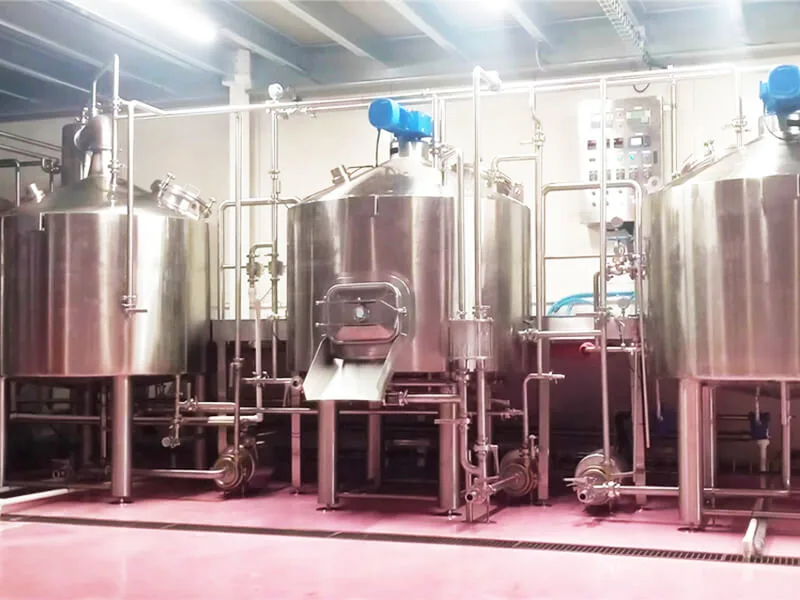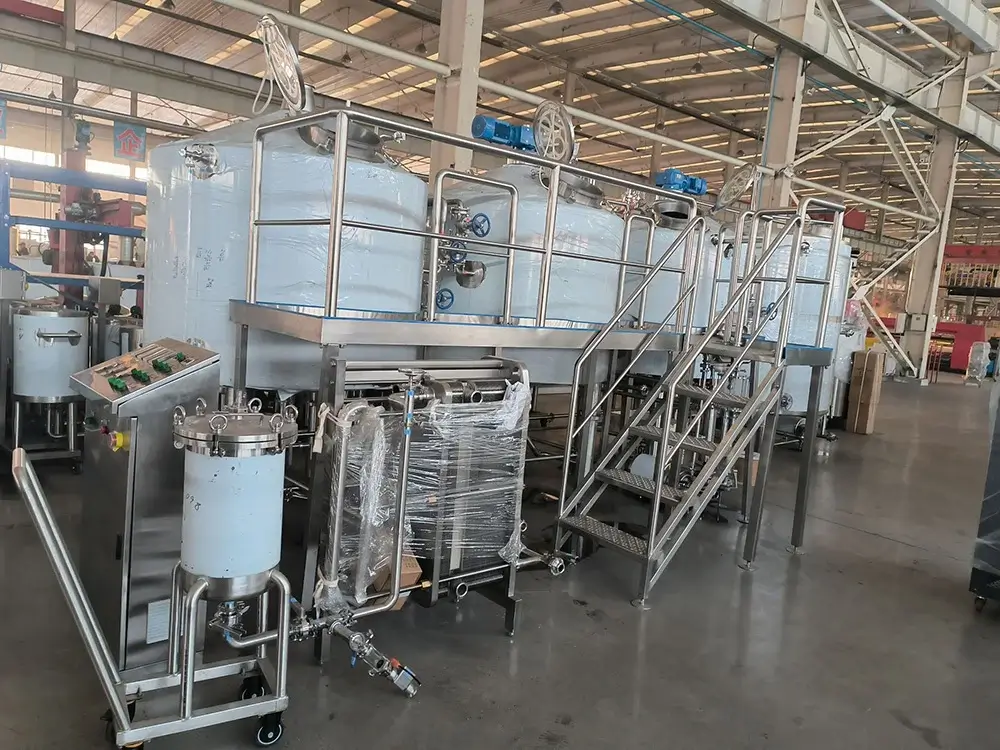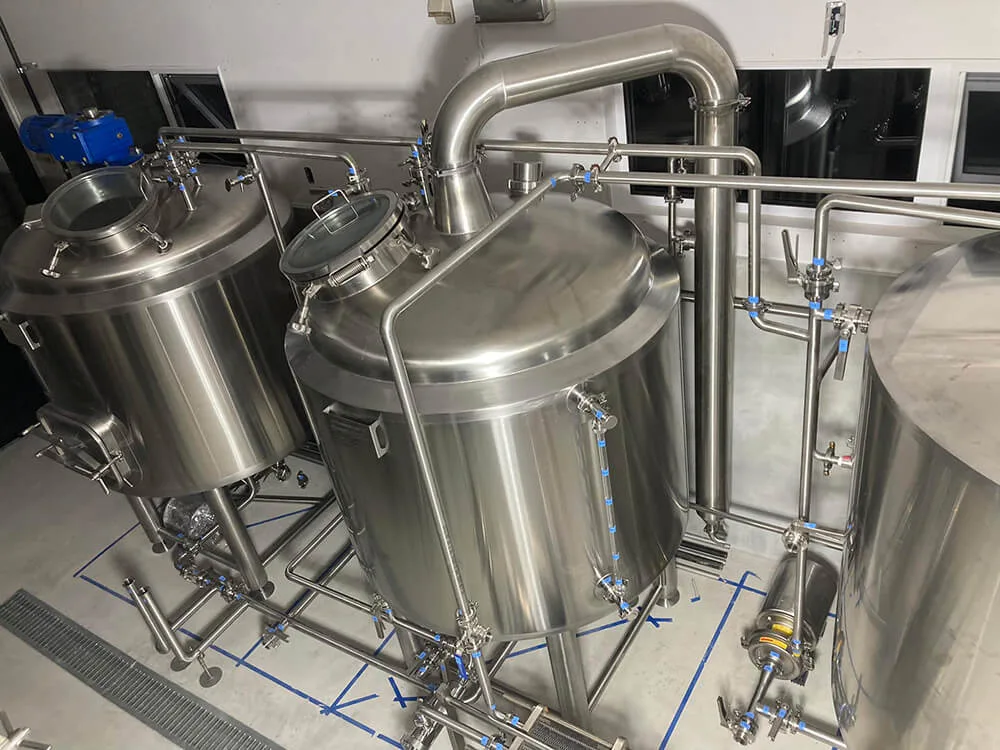
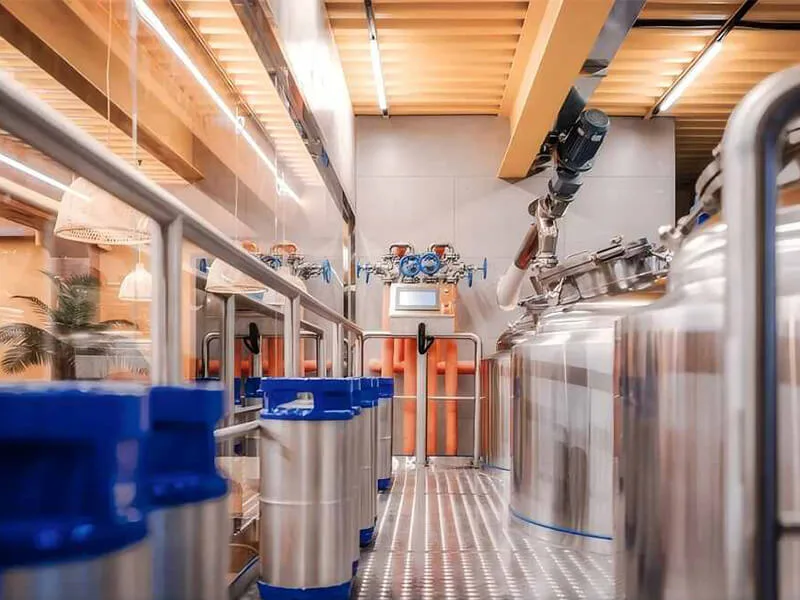
Korea has developed a strong craft beer culture, with breweries ranging from small taproom operations to larger commercial production facilities. For a Korean craft brewery, choosing the right brewery equipment is not simply a matter of selecting a brewhouse size. Equipment capacity, fermentation space, cooling efficiency, automation, energy consumption, cleaning systems, and future expansion all affect the long-term performance of the brewery.
For investors and brewery operators, a well-designed system should match the brewery’s production target while making efficient use of available space and utilities.
This guide explains the key considerations when selecting brewery equipment for Korean craft breweries, from brewhouse configuration and fermentation tanks to cooling, CIP, automation, and future expansion.
What Brewery Equipment Does a Korean Craft Brewery Need?
A complete craft brewery normally includes several interconnected systems:
- 啤酒屋
- 发酵罐
- 淡色啤酒罐
- 乙二醇冷却系统
- Wort cooling system
- 热液罐和冷液罐
- CIP 清洁系统
- Brewery pumps and sanitary piping
- Control and automation system
- Air or gas systems
- Filtration and packaging equipment
The exact configuration depends on production capacity, beer styles, fermentation time, packaging method, available utilities, and the brewery’s expansion plans.
For example, a small taproom brewery may start with a 300L–500L brewing system, while a growing commercial brewery may require 1000L, 2000L or larger brewery equipment.
选择合适的酿造系统容量
Brewhouse capacity should be determined from the brewery’s expected annual production rather than the brewhouse volume alone.
A 1000L brewhouse does not necessarily produce only 1000L of beer per day. The actual production capacity depends on:
- 每天的批次数
- Brewing days per week
- 每年工作日数
- 发酵时间
- Number of fermenters
- 啤酒风格
- 包装计划
- Available cooling capacity
For Korean craft breweries, common equipment sizes can include:
| Brewery Scale | Typical Brewhouse Range | Typical Application |
|---|---|---|
| Pilot / Brewpub | 100-300L | Recipe development, taproom |
| Small Craft Brewery | 300–500L | Local production |
| Growing Brewery | 500–1000L | Taproom + distribution |
| Commercial Craft Brewery | 1000–2000L | Regional distribution |
| Larger Brewery | 2000L+ | 商业生产 |
The important point is that brewhouse capacity and annual production capacity are different measurements.
A brewery producing several beer styles may also benefit from a smaller brewhouse combined with more fermentation capacity instead of immediately investing in a very large brewing system.
3-Vessel, 4-Vessel or 5-Vessel Brewhouse?
The brewhouse configuration affects both production efficiency and flexibility.
A basic 3-vessel system may include:
- 糖化槽
- 更彻底地做
- Kettle/whirlpool
A 4-vessel brewhouse can separate the kettle and whirlpool functions, improving process flexibility.
A 5-vessel system can further separate functions such as mashing, lautering, boiling, whirlpooling, and hot liquor preparation.
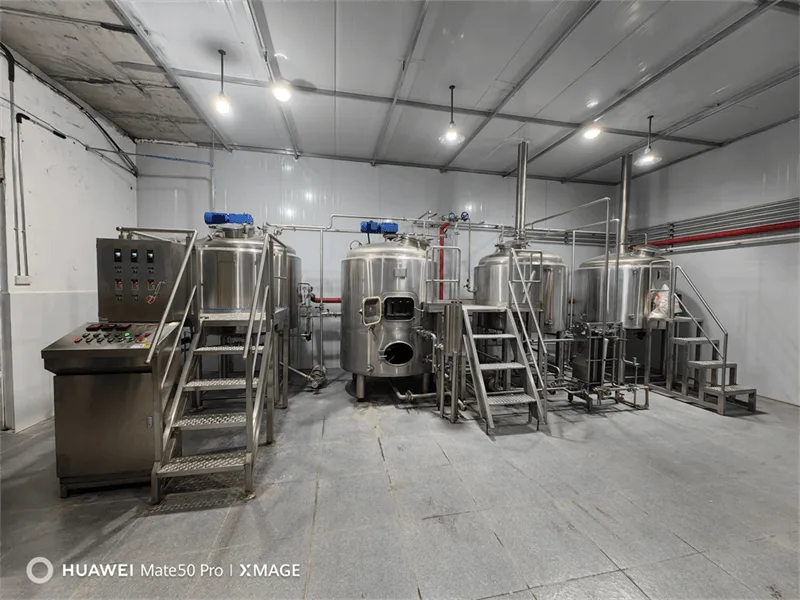
For Korean breweries with limited production space, the choice should not be based only on the number of vessels. The layout, vessel diameter, working height, piping arrangement, platform design, and maintenance access are equally important.
A compact brewhouse layout can help maximize production within a limited footprint.
Stainless Steel Fermentation Tanks Are Critical
Fermentation capacity is one of the most important parts of a brewery project.
Stainless steel conical fermenters are commonly used because they support controlled fermentation, yeast management, pressure fermentation, carbonation, and CIP cleaning.
The number of fermenters should be calculated according to:
Annual production ÷ brewhouse capacity ÷ number of brewing cycles × fermentation cycle
However, the calculation should also consider different beer styles.
A lager brewery, for example, may require considerably more tank capacity because cold fermentation and maturation can occupy tanks for longer periods than some ale production.
For a Korean craft brewery producing multiple styles, a combination of different fermentation tank sizes may provide greater flexibility.
例如
- 500L brewhouse → 500L–1000L FVs
- 1000L brewhouse → 1000L–2000L FVs
- 2000L brewhouse → 2000L–4000L FVs
The exact ratio should be determined from the brewing schedule rather than using a fixed formula.
Cooling System Design for Korean Breweries
Cooling is essential for fermentation temperature control and wort cooling.
A typical brewery cooling system includes:
- 乙二醇冷水机组
- Glycol storage tank
- Fermenter cooling jackets
- 麦汁换热器
- 冷液罐
- Glycol circulation pumps
The cooling system should be sized according to the brewhouse capacity, number of tanks, fermentation temperature, cooling load, ambient conditions, and production schedule.
This becomes particularly important during warm seasons.
If the brewery plans to ferment multiple tanks simultaneously, the glycol system must have enough cooling capacity to handle peak demand rather than only the average load.
An undersized cooling system can lead to unstable fermentation temperatures and slower production.
Energy Efficiency Matters
Energy consumption is an important operating cost for commercial breweries.
Brewing requires energy for:
- Mash heating
- 麦汁煮沸
- Hot water production
- Fermentation cooling
- CIP cleaning
- Refrigeration
- Pumps and auxiliary systems
Korean breweries can consider electric, steam, or direct-fire heating depending on production scale and available utilities.
Steam heating can be suitable for larger commercial systems where stable heat transfer and centralized energy management are important.
Electric heating can be attractive for smaller breweries where installation simplicity and precise temperature control are priorities.
The best solution depends on the brewery’s local power supply, fuel availability, production volume, installation conditions, and operating cost.
Automation for Craft Breweries
Automation does not necessarily mean that a brewery must be fully automatic.
For many craft breweries, a semi-automatic system provides a practical balance between operator control and process consistency.
Automation can be applied to:
- 醪液温度控制
- 麦汁输送
- 阀门操作
- Boiling control
- Whirlpool operation
- 麦汁冷却
- 发酵温度
- Glycol distribution
- CIP序列
- Pump control
- 储罐压力监测
A PLC-based control system can centralize key process parameters and reduce repetitive manual operations.
For larger commercial breweries, automation can also improve production repeatability and make it easier to monitor multiple tanks.
CIP 清洁系统
Cleaning is not an optional auxiliary process. It is a core part of brewery production.
A CIP system can be used for cleaning:
- Brewhouse vessels
- 发酵罐
- 淡色啤酒罐
- 麦汁管道
- Transfer lines
- 热交换器
A typical CIP process may include caustic cleaning, intermediate rinsing, acid cleaning, final rinsing, and sanitization depending on the process requirements.
The CIP system should be designed together with the brewery rather than added as an afterthought.
Proper valve grouping, piping layout, pump selection, cleaning coverage, and return lines can significantly affect cleaning efficiency.
Brewery Equipment for Different Korean Brewery Business Models
Not every Korean craft brewery needs the same equipment configuration.
Brewpub and Taproom Brewery
A brewpub may prioritize:
- Compact equipment
- Small batch production
- Flexible recipes
- Attractive equipment appearance
- Easy operation
- Limited floor space
A 100L–500L system may be suitable depending on the business model.
Small Commercial Brewery
A brewery focused on local distribution may consider:
- 500L–1000L brewhouse
- 多个发酵罐
- 淡色啤酒罐
- 自动温度控制
- CIP 系统
- Keg or can packaging
The main objective is to balance production capacity with investment and operating costs.
Growing Commercial Brewery
For breweries planning regional distribution, 1000L–2000L or larger systems can provide greater production capacity.
At this stage, the project should consider not only the current production target but also:
- 额外的发酵罐
- Larger glycol systems
- Packaging expansion
- 原材料储存
- Utility capacity
- Future brewhouse expansion
Designing expansion space during the initial project can reduce modification costs later.
Custom Brewery Layout for Korean Projects
A brewery system should be designed around the available building rather than simply installing standard equipment.
Important layout considerations include:
- Building height
- 楼面荷载
- 设备访问
- 排水
- 供水
- 电力供应
- Steam or heating source
- 通风
- 乙二醇管道
- CO₂ management
- Raw material movement
- 成品啤酒的输送
- 维修通道
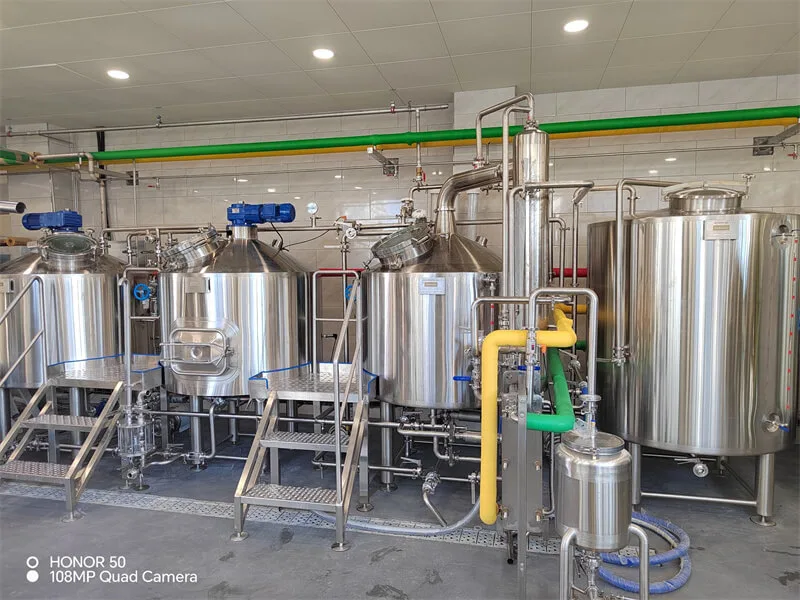
For compact Korean brewery sites, vertical equipment arrangements and optimized piping layouts can help improve space utilization.
The brewery should also reserve sufficient maintenance clearance around tanks, pumps, heat exchangers, control cabinets, and other critical components.
Brewery Equipment Materials and Fabrication
Stainless steel is widely used in professional brewing equipment because of its corrosion resistance, hygienic surface, and suitability for repeated cleaning.
Common materials include SUS304 stainless steel, while SUS316 or other specialized materials may be selected for particular applications.
Important fabrication details include:
- 内表面光洁度
- Weld quality
- Tank geometry
- 额定压力
- Jacket design
- 隔热
- 卫生洁具
- CIP spray coverage
- Pressure relief protection
For fermentation vessels, pressure design and operating conditions should be clearly defined before manufacturing.
Depending on equipment type, pressure rating, electrical configuration, local regulations, and installation conditions, additional certification or compliance requirements may apply.
Planning Brewery Equipment for Future Expansion
A common mistake is designing a brewery only for its first production target.
A better approach is to create a phased expansion plan.
例如
Phase 1:
1000L brewhouse + initial fermentation tanks
Phase 2:
Additional fermentation tanks + larger glycol system
Phase 3:
Packaging expansion + additional bright beer tanks
Phase 4:
Brewhouse capacity expansion or additional production line
This approach allows the brewery to control initial investment while preparing infrastructure for future growth.
The initial design should therefore consider future electrical capacity, drainage, cooling capacity, piping routes, floor space, and utility connections.
Why Work With a Brewery Equipment Manufacturer?
Buying brewery equipment is different from purchasing individual stainless steel tanks.
A professional brewery equipment manufacturer should be able to support the project from equipment design through installation and commissioning.
The scope may include:
- Brewery process design
- Equipment selection
- Tank fabrication
- 酿造车间配置
- Piping design
- Control system integration
- FAT
- Shipping preparation
- Installation support
- 调试
- Operator training
- After-sales service
For an overseas brewery project, communication between the equipment manufacturer, local contractor, electrical team, and brewery operator is particularly important.
How METO Supports Craft Brewery Projects
METO provides brewery equipment and integrated brewing solutions for craft breweries and commercial brewing projects.
The equipment range can cover brewhouses, fermentation tanks, bright beer tanks, glycol cooling systems, CIP systems, hot and cold water tanks, piping, and brewery automation.
Depending on project requirements, systems can be designed from small pilot and brewpub scale to commercial production systems of 2000L and above.
The focus is not simply on supplying individual tanks. A complete brewery project should consider process flow, production capacity, equipment layout, utilities, automation, installation, and future expansion together.
常见问题
What size brewery equipment is suitable for a Korean craft brewery?
There is no single standard size. Small brewpubs may use 100L–500L systems, while commercial craft breweries may use 500L, 1000L, 2000L or larger brewhouses. The correct size depends on annual production, batches per day, beer styles, fermentation time, and expansion plans.
How many fermenters does a Korean craft brewery need?
The number depends on brewhouse capacity, brewing frequency, fermentation time, and annual production. Breweries producing lager or multiple beer styles may require more fermentation capacity.
Is stainless steel suitable for brewery equipment?
Yes. Stainless steel is widely used for professional brewery vessels because of its corrosion resistance, hygienic properties, cleanability, and durability.
Should a craft brewery use automatic controls?
Not necessarily. Semi-automatic systems can provide a good balance between operator control and process consistency. Larger breweries may benefit from PLC automation for temperature, pumps, valves, CIP, and tank management.
Can brewery equipment be customized for a Korean brewery?
Yes. Brewery equipment can be customized according to production capacity, building layout, heating method, electrical requirements, tank dimensions, automation level, beer styles, and future expansion plans.
What should I prepare before ordering brewery equipment?
Before requesting a quotation, it is useful to prepare the target annual production, brewhouse size, beer styles, expected batches per day, fermentation period, available building dimensions, utilities, heating method, packaging method, and expected future expansion.
结论
Selecting brewery equipment for Korean craft breweries requires more than choosing a brewhouse by volume. The complete system should be designed around production targets, fermentation capacity, cooling requirements, energy consumption, available space, cleaning procedures, automation, and future growth.
For a new Korean craft brewery, starting with a correctly sized system and a clear expansion plan can help control investment while creating a reliable foundation for long-term production.
If you are planning a new brewery or expanding an existing brewery in Korea, 联系 METO to discuss your production capacity, brewery layout, and customized equipment requirements.