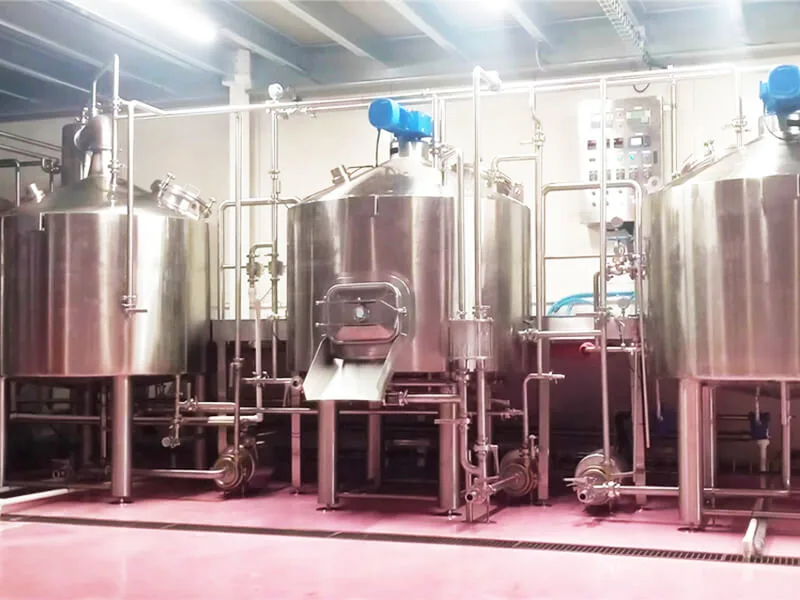
Are your homebrew recipes getting serious attention from friends and even local bar owners? When someone asks, “Can you supply this regularly?” it’s time to start thinking about commercial electric brewery equipment.
Moving from a 100-liter homebrew rig to a professional craft beer equipment setup isn’t just about brewing more beer. It’s about dialing in process control, maximizing production efficiency, and delivering consistent quality batch after batch. This guide breaks down the core components of a commercial craft brewery equipment setup, helping you choose the right configuration and avoid expensive mistakes.
I. The Craft Brewing Process: An Overview
Before we dive into specific equipment, let’s map out the workflow. The process determines exactly what electric brewery equipment you’ll need:
Malt Milling → Mashing → Lautering → Boiling → Whirlpool → Wort Cooling → Fermentation → Conditioning → Carbonation → Packaging
Commercial craft brewery equipment typically covers everything from mashing through conditioning. Packaging systems are a separate category and deserve their own dedicated guide.
II. Brewhouse Equipment: The Heart of Your Craft Brewery
Your brewhouse is the core investment—it defines what beer styles you can produce, your batch efficiency, and your ability to scale operations down the road.
2.1 Brewhouse Configurations
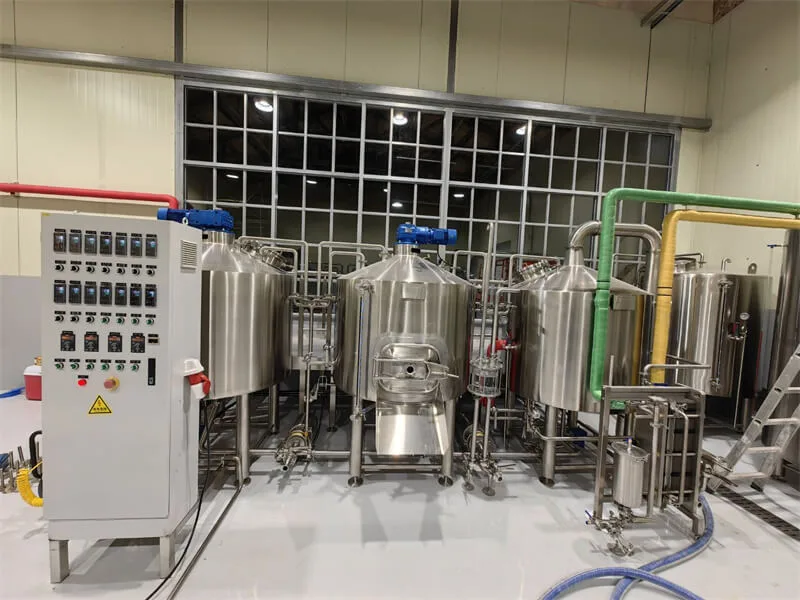
There are three main configurations for commercial electric brewery equipment:
2-Vessel Brewhouse (Mash/Kettle + Lauter/Whirlpool)
- Best for: Nano breweries and small taprooms with tight budgets and limited space
- Advantages: Lower upfront cost, smaller footprint, straightforward operation
- Limitations: Longer batch turnover times, limited production capacity on brew days
- Typical setup: One vessel handles both mashing and boiling; the other manages lautering and whirlpool, requiring waiting periods between steps
3-Vessel Brewhouse (Mash Tun + Lauter Tun + Kettle/Whirlpool)
- Best for: Most craft breweries in the 5–30 BBL range searching for commercial electric brewery equipment
- Advantages: Overlapping batch capability boosts throughput by roughly 50% compared to a 2-vessel system
- Limitations: Higher investment, but offers the best price-performance ratio for growing breweries
4-Vessel Brewhouse (Mash Tun + Lauter Tun + Kettle + Separate Whirlpool)
- Best for: Regional craft breweries requiring high-volume, tightly coordinated batch scheduling
- Advantages: Complete independence of each brewing step, enabling maximum efficiency on multi-batch brew days
- Limitations: Significant capital outlay, larger footprint, requires experienced operators
Starting with a 3-vessel electric brewery system offers the best balance—enough capacity to grow, with a manageable initial investment and straightforward expansion path.
2.2 Heating Methods: Electric vs. Alternative Options
This is one of the most critical decisions when purchasing electric brewery equipment. Here’s how the options compare:
Electric Brewery Equipment (Direct Heating)
- Efficiency: 95%+ thermal efficiency, precise temperature control within ±0.5°C, zero on-site emissions
- Tradeoffs: Operating costs depend entirely on local commercial electricity rates; high-amperage requirements demand careful electrical infrastructure planning
- Ideal for: Locations with reliable, affordable power and strict environmental regulations; systems up to 7 BBL
Gas-Fired Systems
- Efficiency: 70–80% thermal efficiency; faster ramp times possible
- Tradeoffs: Requires proper ventilation and gas safety systems; produces combustion emissions
- Ideal for: Facilities with existing natural gas infrastructure but limited electrical capacity
Steam-Heated Systems
- Efficiency: Exceptionally even heating; the gold standard for larger craft beer equipment setups
- Tradeoffs: Requires a dedicated boiler, regular inspections, certified operators
- Ideal for: Systems 15 BBL and above; breweries prioritizing absolute temperature precision
Commercial electric brewery equipment is completely viable, but do the math carefully: confirm your facility’s available power capacity (a 3-vessel electric setup can pull 30–60 kW during heating), and project long-term electrical costs against your production schedule. In regions with high commercial electricity rates, gas or steam may offer significant operational savings.
III. Fermentation Equipment: Where Beer Quality Is Won
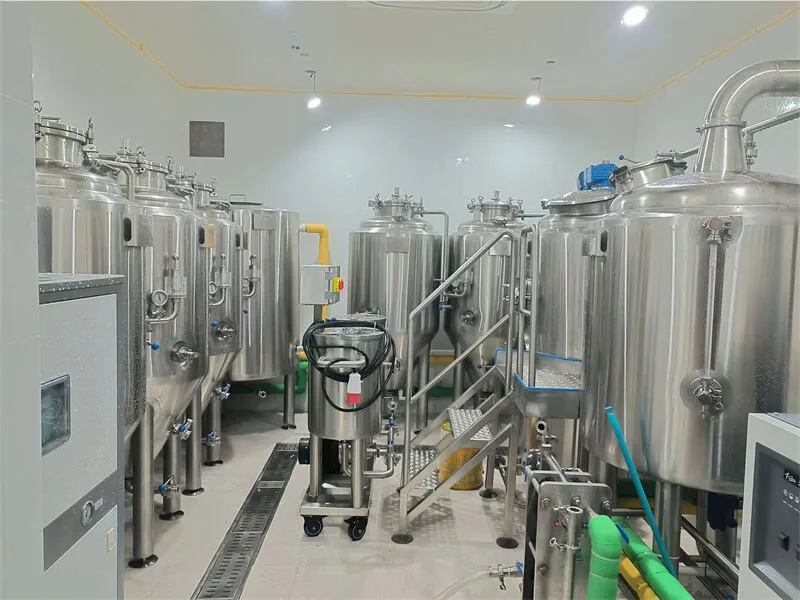
If your brewhouse defines efficiency, your fermentation equipment defines your beer’s character. Three decisions matter most when selecting commercial fermentation vessels.
3.1 Fermenter Material Grade
304 Stainless Steel
The industry standard for electric craft brewery setups. Meets all food-grade requirements, provides excellent corrosion resistance for standard beer production, and keeps costs manageable.
316L Stainless Steel
Superior corrosion resistance, especially in acidic environments and high-chloride settings. Worth the 30–50% premium if you’re brewing sour styles or dealing with problematic water chemistry.
Over 90% of operating craft breweries use 304 stainless fermenters without issues. It’s the sensible default for most commercial craft brewery equipment builds.
3.2 Conical Fermenter Specifications
Commercial conical fermenters differ significantly from homebrew gear. Key specifications to evaluate:
- Cone Angle: 60°–70° for efficient yeast collection and removal
- 冷却套: Minimum two-zone (body and cone); three-zone allows precise independent temperature profiling
- 隔热: Polyurethane foam, 80–100mm thickness—thicker for outdoor installations
- Pressure Rating: 2.5 bar minimum; 3.0 bar if you plan pressure fermentation or natural carbonation
- 表面处理: Internal Ra ≤0.6 μm, external Ra ≤0.8 μm for CIP efficiency and microbial safety
- Manway Size: At least 40 cm diameter—this small detail dramatically impacts cleaning ergonomics over years of operation
3.3 Sizing and Quantity Planning
This is where many new craft brewery equipment buyers miscalculate.
The golden rule: Fermenter total capacity should equal 1.1–1.2 times your brewhouse batch size. A 500-liter brewhouse pairs with 550–600-liter fermenters. Fill factor is typically 0.8–0.85, leaving necessary headspace for krausen.
How many fermenters? This depends on your product mix and fermentation timelines:
- Ale-focused breweries (7–10 day cycles): ~3–5 fermenters per daily brewhouse batch
- Lager-focused breweries (4–6 week cycles): Substantially more capacity needed for extended conditioning; lagering tanks should handle near-freezing temperatures
- Diversified tap lists demand more tanks than single-flagship production
When budget is tight, invest in extra fermentation capacity rather than oversizing the brewhouse. Fermenter availability is almost always the real production bottleneck.
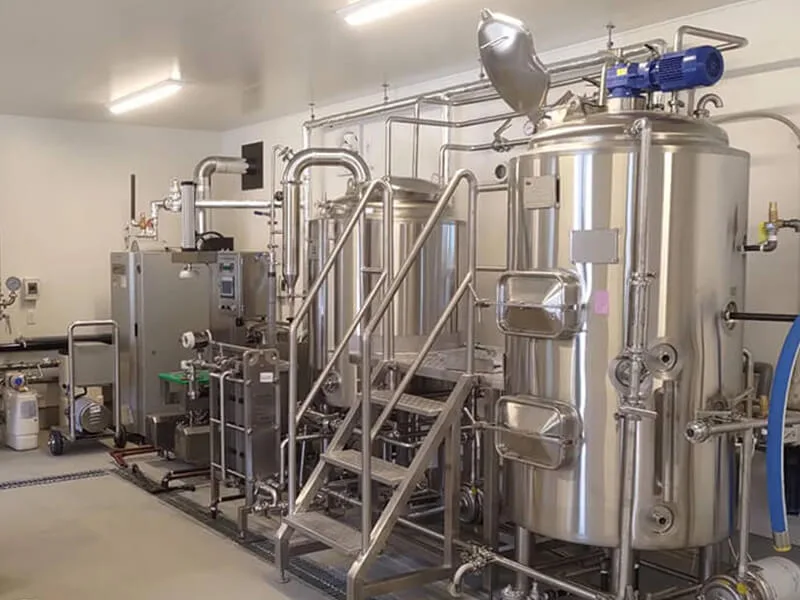
IV. Supporting Equipment: The Hidden Investment
New brewery planners consistently underestimate support equipment costs. For a well-designed commercial craft brewery equipment package, auxiliary systems typically represent 30–40% of total equipment investment.
4.1 Grain Milling Equipment
A properly sized roller mill is essential. The goal: intact husks and evenly crushed endosperm for optimal lautering and mash efficiency. Your mill must process an entire batch’s grain bill in 30–40 minutes to avoid brewing day delays.
4.2 Glycol Chilling Systems
A glycol chiller system is mandatory for wort cooling and fermentation temperature control. Size your system for both instantaneous cooling load (knocking out hot wort) and sustained load (multiple fermenters simultaneously holding temperature, crashing, and carbonating). Important: configure independent chilling circuits for your fermenters and your cold storage—tying them together creates headaches.
4.3 CIP Equipment
CIP capability is non-negotiable for any commercial electric brewery equipment operation. A basic setup includes dedicated acid, caustic, and hot water tanks with a CIP pump. At minimum, install manual CIP connections and piping—retrofitting later is far more expensive.
4.4 Pumps, Piping, and Valves
Food-grade centrifugal pumps with VFD control enable precise flow management. Pipe runs must eliminate dead legs and maintain proper slope for complete drainage. Sanitary butterfly or ball valves simplify cleaning and reduce infection risks.
4.5 Brewery Control Systems
Options range from basic temperature controllers to fully automated brewing platforms. A semi-automated PLC system with touchscreen interface and recipe storage offers the best value for most craft breweries—automated temperature control without the complexity and cost of full automation suites.
V. Ten Tips for Buying Commercial Craft Brewery Equipment
- Define your market first: Know your beer styles, target customers, and projected volumes before specifying electric brewery equipment. Avoid buying capacity you can’t sell into.
- Design for future expansion: Leave physical space and utility capacity for additional vessels. Adding 50 square meters now costs far less than structural renovation later.
- Overbuild fermentation relative to brewhouse: Time and again, fermenter capacity proves the true constraint on production—not brewhouse throughput.
- Take electrical and cooling infrastructure seriously: Undersized electrical service or insufficient chilling causes more emergency upgrades than any other oversight.
- Invest in water treatment: Match your water profile to your flagship styles. This often separates good commercial craft brewery equipment operators from truly great brewers.
- CIP is mandatory, not optional: Commercial brewing demands rigorous microbial control and batch-to-batch consistency. Build cleaning capability into your budget from day one.
- Document specifications in your contract: Material grades, thicknesses, surface finish standards, insulation density, pressure ratings—get everything in writing and verify during commissioning.
- Budget for the full system: Quotes for electric brewery equipment often list brewhouse and fermenters prominently. Add up chillers, CIP, piping, controls, and installation—these frequently exceed the cost of the primary vessels.
- Research regulations before purchasing: Food production permits, environmental requirements, fire codes, and workplace safety regulations all take time. Start the permitting process early.
- Prioritize supplier support: The best commercial craft brewery equipment suppliers offer commissioning assistance, recipe development guidance, and ongoing technical support. The hardware is only half the equation—consistent great beer is the goal.
Conclusion: From Homebrewer to Craft Brewery Owner
Upgrading from homebrewing to commercial electric brewery equipment transforms a passionate hobby into a real business. Quality equipment provides the foundation, but what you brew—and how consistently you brew it—depends on your knowledge, your process discipline, and your attention to detail.
Choose electric brewery equipment that respects your current business reality while leaving room to grow. Once you fire up that first commercial batch, you’re engaged in a long-term collaboration with yeast, raw materials, and the market you serve.
We hope this guide helps you make informed decisions about your commercial craft brewery equipment investment. The journey from homebrewer to professional brewer is challenging and deeply rewarding—here’s to making great beer.
Searching for the right craft beer equipment for your project? [Contact our team for a customized consultation and equipment proposal tailored to your production goals.]