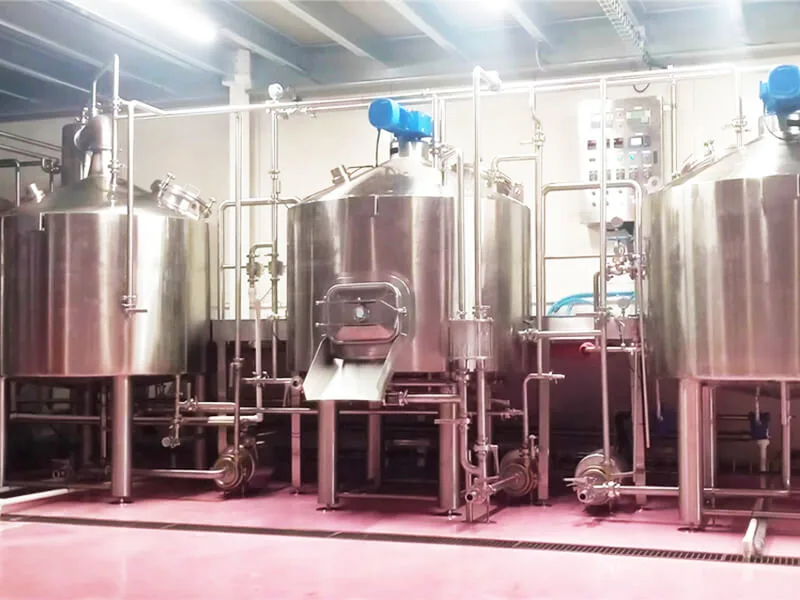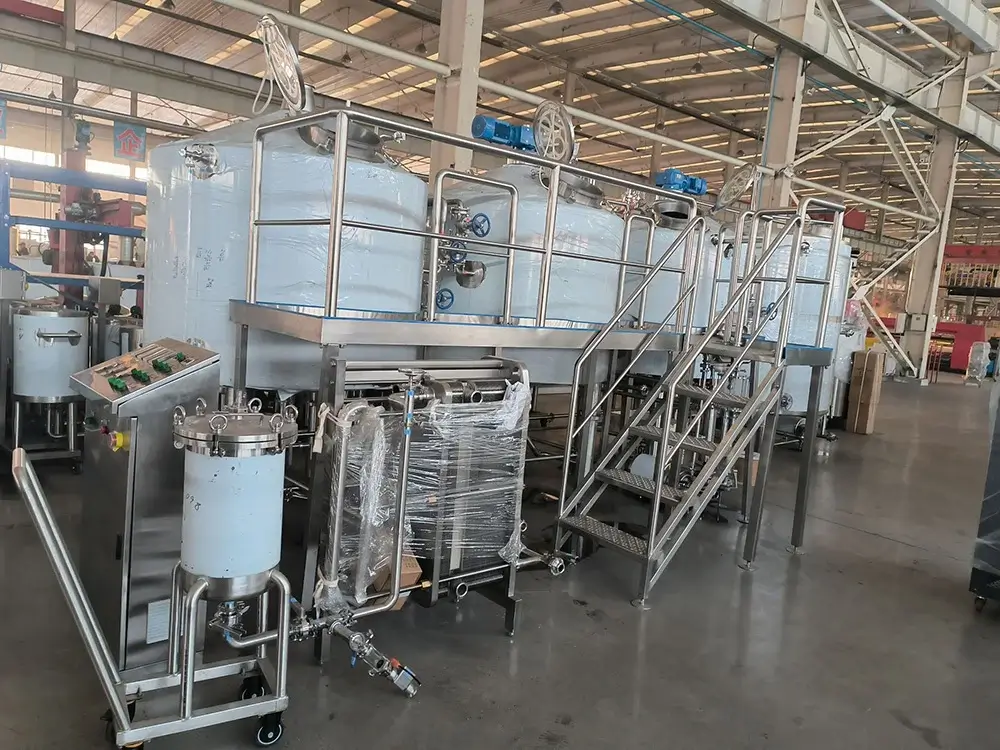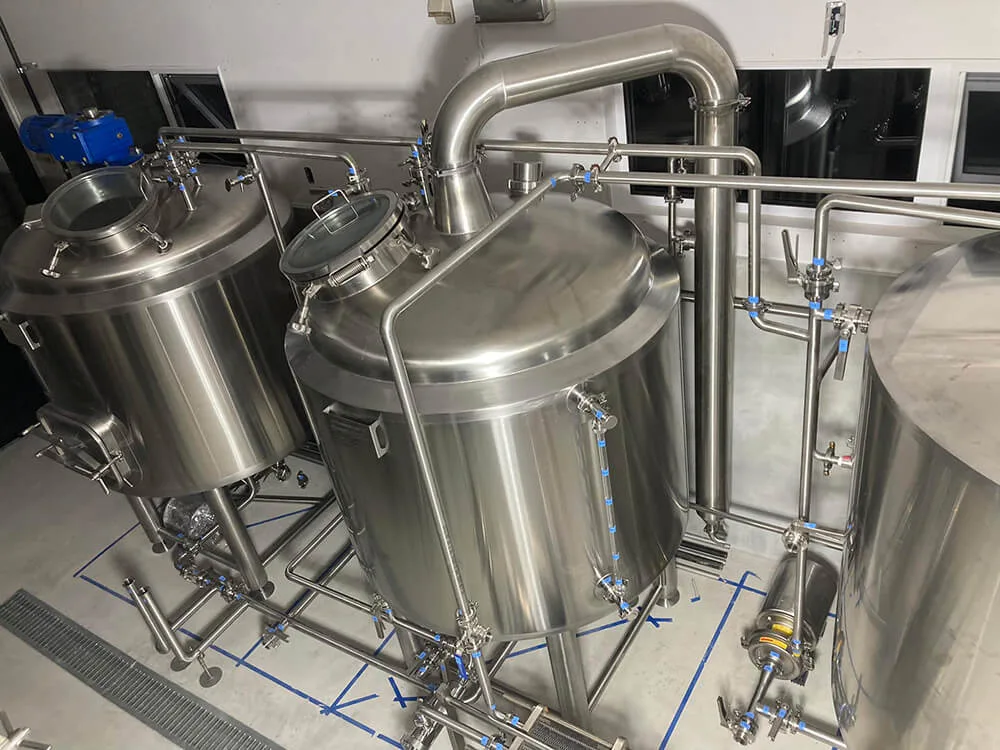
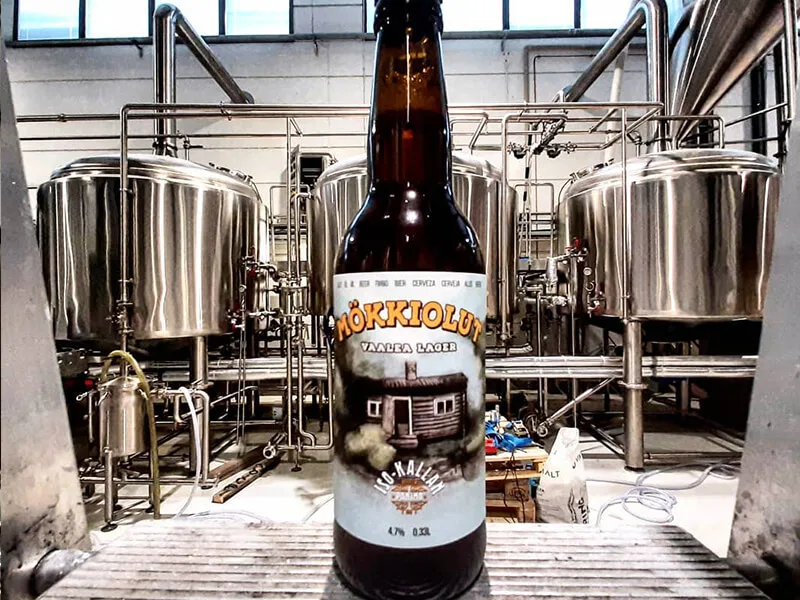
For brewery operators moving beyond the pilot or nano scale, the transition to a Commercial brewhouse represents a critical inflection point. This capacity range—roughly 8.5 to 25 US barrels—positions a brewery for genuine commercial distribution while maintaining the flexibility required for artisanal production methods. Selecting the right commercial craft beer equipment at this scale demands rigorous technical evaluation, not just of individual vessels, but of the entire production ecosystem.
Market Realities for the Commercial Craft Beer Equipment
The craft beer landscape across the US, EU, and Australia shows a clear pattern: regional distribution and contract brewing drive the majority of capacity expansions. Breweries that survived the initial growth phase now face the challenge of meeting wholesale commitments without overbuilding into the 5000L–10000L territory, where batch agility diminishes and capital expenditure triples.
In this context, 1000L–3000L systems offer a practical sweet spot. A single 3000L batch yields roughly 90–100 US barrels per month at a one-turn-per-day schedule, enough to service a multi-state distributor or a dense metropolitan taproom network. European brewers, particularly in Germany and the UK, favour this scale for seasonal and specialty releases, where recipe variation demands frequent tank turnover rather than monolithic output.
Utility readiness also differs by region. US facilities typically operate on 460V three-phase power and natural gas-fired steam boilers. EU breweries run on 400V with a preference for electric or combined heat-and-power systems. Australian operations, facing higher energy costs, increasingly prioritise heat recovery and insulation efficiency. A brewery equipment manufacturer must account for these regional variances at the quoting stage, not as an afterthought.
Equipment Specifications: What Defines Commercial-Grade Hardware
Not every stainless steel vessel qualifies as commercial craft beer equipment. The 1000L–3000L class demands engineering standards that nano systems can overlook.
Material and Fabrication
Grade 304 stainless steel (AISI 304) forms the baseline for vessel interiors. For contact surfaces exposed to high-chloride cleaning agents or coastal environments, 316L provides added pitting resistance. Wall thickness specifications vary by vessel function: brewhouse kettles typically use 4mm–5mm inner shells to withstand boiling temperatures and thermal stress, while fermentation tanks employ 3mm–4mm shells with 50mm–80mm of polyurethane foam insulation.
Welding integrity remains the single most reliable indicator of vessel longevity. Full-penetration TIG welds, back-purged with argon, produce smooth, crevice-free seams that resist bacterial harbourage. Internal surface finishes at 0.4–0.6μm Ra are the industry benchmark—rough enough to retain passivation, smooth enough to clean effectively.
酿造车间配置
Buyers choose between 3-vessel and 4-vessel configurations. A 3-vessel system combines mash/lauter in one unit with separate kettle and whirlpool, or uses a mash tun, lauter tun, and combined kettle/whirlpool. It saves floor space and capital while supporting two to three turns per day. A 4-vessel system dedicates separate vessels to mashing, lautering, boiling, and whirlpooling—enabling three or more daily turns, better wort clarity, and independent stage control. Efficiency gains typically offset the higher cost within 18–24 months for high-output or multi-style breweries.
For breweries producing both ales and lagers, a dedicated hot liquor tank with variable temperature control is non-negotiable. Mash mixing systems—either raking or paddle-driven—must offer variable speed to handle different grist-to-water ratios without compacting the grain bed.
Fermentation Tanks and Cellar Design
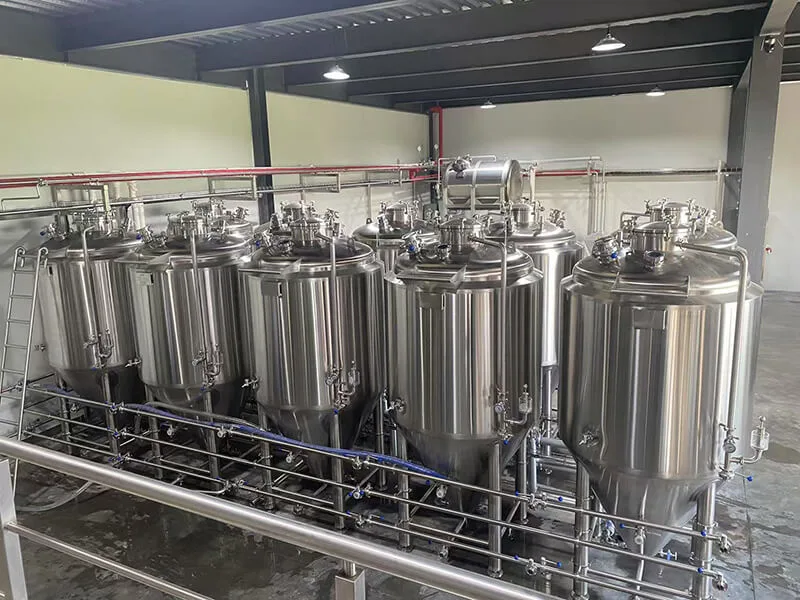
The cellar, not the brewhouse, ultimately determines beer quality and production throughput. Fermentation tanks in the 1000L–3000L range are universally specified as unitanks—dual-purpose vessels that perform both primary fermentation and maturation under pressure.
Jacket Configuration
Effective temperature control requires adequate jacket surface area. Dimple plate jackets provide 30–40% coverage on conical and cylindrical sections, sufficient for standard ales. For lagers requiring precise 8–10°C fermentation profiles, a combination of cone and sidewall jackets ensures even cooling without stratification. Glycol flow rates typically range from 2–3 m³ per hour per 1000L vessel, matched to a chiller plant sized for peak load.
Pressure Ratings and Safety
Commercial fermentation tanks are designed for 1.5 to 2.5 bar working pressure. This allows natural carbonation during closed fermentation and pressure transfers without pumps—a technique widely adopted by EU brewers to reduce oxidative pickup. Safety relief valves, burst discs, and pressure gauge redundancy are standard fitments. Australian regulations impose additional certification requirements (AS 1210), which a qualified brewery equipment manufacturer should supply as part of the documentation package.
Conical Geometry
A 60° to 70° cone angle optimises yeast harvesting and trub settling. Steeper angles reduce the yeast cake surface area, minimising autolysis risk during extended maturation. For breweries planning to repitch yeast for multiple generations, cone manways and sight glasses at the harvest port are practical additions.
Buying Guide: Matching Capacity to Production Goals
Purchasing decisions at this scale often fail because buyers overestimate production capacity or underestimate cycle times. The following framework helps translate sales projections into equipment specifications.
Calculate True Brewery Capacity
A 1000L brewhouse does not deliver 1000L of finished beer per batch. Wort losses occur at multiple points: evaporation during boiling (4–8%), trub retention in the whirlpool (3–5%), yeast and hop absorption in fermentation (2–4%), and filtration losses (1–3%). A realistic brewhouse yield is 85–90% of nominal volume. A 3000L system therefore produces approximately 2550–2700L of clear, packaged beer per batch.
Match Fermentation Tank Count to Output
A single brewhouse batch fills one fermentation tank of equivalent size. If a brewery runs one batch per day and the fermentation cycle averages 14 days, the minimum tank fleet is 14 vessels plus one spare—15 tanks total. This does not include bright beer tanks for conditioning and carbonation. Many breweries maintain a 1.5:1 ratio of fermentation to bright tank capacity to absorb schedule variability.
Utility Infrastructure
The supporting utilities often cost as much as the vessels themselves. Key considerations:
- Steam generator or electric boiler sized for simultaneous heating of mash, lauter, and kettle
- Glycol chiller with 110–130% of calculated peak load
- Compressed air system (oil-free, food-grade) for valve actuation and aeration
- Water treatment plant for brewing liquor and CIP rinse water
Floor Space and Ceiling Height
A 3000L fermentation tank with insulation stands approximately 4.5–5.0 metres tall. Adding a manway access platform and overhead pipework requires a clear ceiling height of 6.0 metres minimum. These constraints often drive facility selection before equipment ordering.
Procurement and Supplier Evaluation
For international buyers—whether in Texas, Bavaria, or Victoria—the supplier selection process should follow a structured technical audit rather than price-led comparison.
Certification and Compliance
EU-bound equipment must carry CE marking covering the Pressure Equipment Directive (PED 2014/68/EU). US installations require ASME U-stamp certification for pressure vessels over certain thresholds. Australian projects need compliance with AS 1210 and state-based boiler inspection regimes. A brewery equipment manufacturer that proactively provides these certifications, rather than charging extra for them, demonstrates engineering maturity.
Shipping and Logistics
1000L–3000L vessels are oversize cargo. Shipping costs—and more critically, delivery timelines—vary wildly based on port proximity and containerisation. Flat-rack or open-top containers suit vessels up to 2.5 metres diameter. Larger tanks require break-bulk shipping, which extends lead times by 4–6 weeks. Ask for a logistics plan with assigned freight forwarder and marine insurance.
Commissioning and Training
On-site installation supervision is not a luxury; it is a risk-mitigation measure. A properly commissioned brewhouse operates at the quoted efficiency from day one. Poorly commissioned equipment suffers from false readings, thermal inefficiencies, and control logic errors that cost months of troubleshooting. Training should cover not only operations but also maintenance schedules for pumps, valves, and the CIP cleaning system.
Spare Parts and Support
The useful life of commercial craft beer equipment spans 15–20 years. Suppliers that maintain a stocked spare parts warehouse and offer remote diagnostic support reduce downtime significantly. Enquire about response times for critical failures—a control board or solenoid valve should ship within 24 hours for premium suppliers.
常见问题解答
1. What is the typical lead time for a Commercial brewhouse?
Lead times range from 12 to 20 weeks for standard configurations, depending on factory workload and vessel complexity. Custom fabrication—non-standard manway positions, special jacket patterns, or bespoke control interfaces—adds 4–8 weeks. Include shipping and customs clearance when calculating total project duration.
2. Can a 1000L system be upgraded to 3000L later?
Not practically. Brewhouse vessels are dimensioned for specific thermal and hydraulic loads. Increasing capacity requires larger kettles, different heat exchanger sizing, and upgraded utilities. Plan for the final capacity at the outset; modular add-on fermentation tanks, however, can scale cellar capacity without replacing the brewhouse.
3. How many Fermentation Tanks do I need for a 3000L brewhouse?
Assuming a 14-day fermentation cycle and one brew per day, you require 14 fermentation tanks for continuous operation. Add one spare tank for maintenance coverage. Add bright beer tanks equal to 50–70% of fermentation capacity, depending on packaging turnover.
4. Is a CIP Cleaning System mandatory at this scale?
Yes. Manual cleaning of 3000L tanks is impractical, unsafe, and inconsistent. A CIP cart with caustic, acid, and sanitiser dosing pumps automates the cleaning cycle. Fixed CIP systems with spray balls on each tank offer higher reliability and lower chemical usage over time.
5. What is the expected efficiency of a Commercial brewhouse?
Well-designed brewhouses achieve 92–95% mash efficiency and 85–90% overall brewhouse yield. Factors affecting this include grist milling quality, lauter rake design, sparge water distribution, and boil-off rate. A new system should be commissioned with a benchmark brew to validate performance.
6. How important is insulation on fermentation tanks?
Critical. Poor insulation causes temperature drift during active fermentation, leading to off-flavours from stressed yeast. 50–80mm polyurethane foam with an external stainless cladding maintains ±0.5°C control. In hot climates (Australian summers, Texas heat), thicker insulation or additional jacketing pays back through reduced chiller runtimes.
7. What documentation should I request before ordering?
Request PID drawings, general arrangement drawings, electrical schematics, pressure vessel calculation reports, material test certificates, and a detailed utility consumption table. A professional supplier provides these before payment, not after.
8. Can I use the same equipment for both ales and lagers?
Yes. Fermentation tanks with glycol cooling handle both temperature ranges (18–22°C for ales, 8–12°C for lagers). The difference lies in the chiller sizing—lagers require greater cooling capacity. Discuss your intended beer portfolio with the supplier to ensure the glycol plant is sized appropriately.
Why Choose METO
METO operates as a brewery equipment manufacturer with a singular focus: the commercial segment. This is not a side business or a product line extension; it is our core engineering discipline.
Engineering Depth
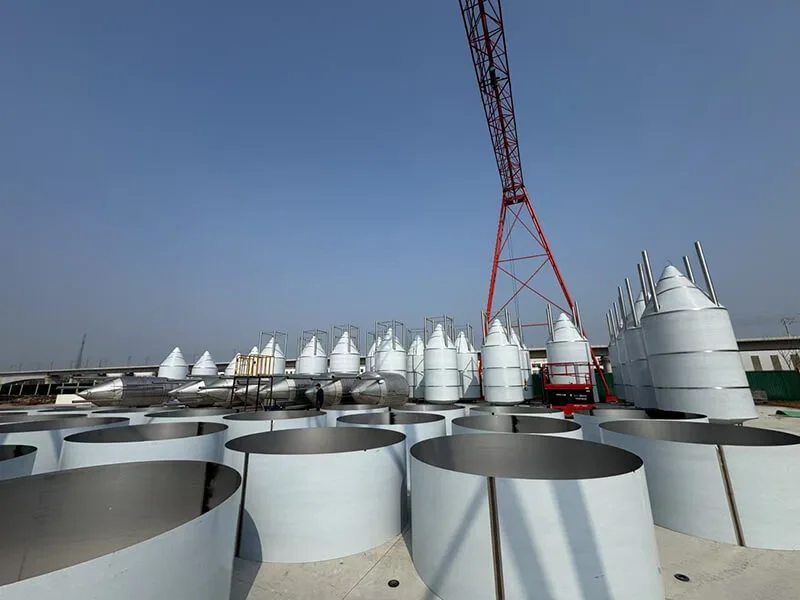
Our fabrication facility maintains ISO 3834 welding certification and employs ASME-qualified welders. Every fermentation tank undergoes hydrostatic testing at 1.5x working pressure and internal borescope inspection before cladding. We do not outsource vessel fabrication; every seam, jacket, and manway is executed in-house under direct quality control.
Regional Compliance Expertise
METO delivers CE-marked vessels with PED 4.3 third-party inspection for EU clients. For US projects, we provide ASME U-stamp documentation and NBIC registration. Australian installations receive AS 1210 compliance packages and state-specific boiler authority clearance. These certifications are included in the base quotation—not presented as upgrade options.
Integrated Turnkey Brewery Solutions
We supply not only vessels but also the interconnected systems that make them productive: PLC automation control panels, CIP cleaning systems, glycol chillers, steam boilers, and pipework manifolds. A single point of contact manages the entire project—from foundation drawings through to commissioning and brewer training.
After-Sales Commitment
Spare parts for all METO systems are stocked in regional warehouses serving the EU, US, and Australia. Remote diagnostics via VPN-enabled PLC access allow our engineers to troubleshoot logic faults without requiring site visits. Our warranty terms cover three years on fermentation tank shells and two years on automation components, backed by a 72-hour critical parts dispatch guarantee.
Reference Installations
METO has commissioned over forty Commercial brewhouses across fifteen countries. References are available upon request, including site visit arrangements for prospective buyers in major markets.
结论
The decision to scale into the commercial craft beer equipment tier is a substantial capital commitment—one that shapes production capabilities, brand positioning, and operational costs for a decade or more. The difference between a profitable regional brewery and one burdened by inefficiency often traces back to equipment specification, supplier integrity, and the integration of systems like CIP, automation, and cellar design.
A turnkey brewery solution simplifies this complexity by aligning every component to a coherent production plan. Fermentation tanks sized for actual output, a CIP cleaning system engineered for effective sanitation, and PLC automation control that delivers repeatable results collectively determine whether a brewhouse operates at 70% or 95% of theoretical capacity.
For procurement managers and head brewers evaluating their next investment, the path forward lies in technical due diligence—not brochure comparisons. Visit fabrication facilities. Request pressure test reports. Call reference clients. The best brewery equipment manufacturer is the one that answers those questions with data, not sales copy. METO provides that data upfront.