1. Introduction: Why Energy Recovery Matters in Commercial Breweries
Energy consumption is an important consideration when designing and operating a commercial brewery. Brewing involves several thermal processes, including mashing, wort boiling, wort cooling, hot water preparation, and fermentation temperature control. Each stage requires energy, while some processes also release heat that may be recovered and reused.
For breweries operating multiple batches per day, energy requirements can become substantial. Heating water and wort, generating steam, maintaining fermentation temperatures, and cleaning equipment all contribute to operating costs.
However, energy efficiency is not simply a matter of installing more powerful heating or refrigeration equipment. A well-designed brewery should also consider how thermal energy moves through the production process and whether heat from one stage can be used by another.
This is where brewery energy recovery systems become valuable.
By integrating steam condensation, wort cooling heat exchangers, hot water storage tanks, and process heat management, breweries can reduce avoidable heat losses and make better use of available energy.
This article explains the main energy recovery technologies used in commercial breweries and the engineering considerations involved in designing an efficient system.
2. Where Does Energy Go in a Commercial Brewery?
Before selecting energy recovery equipment, it is important to understand the main energy-consuming processes.
A typical commercial brewery uses energy in several forms, including thermal energy, electricity, and refrigeration energy.
Main Energy Consumption Areas
麦芽粉碎
The milling process uses electricity to operate malt elevators, crushers, and conveying equipment. Energy demand depends on milling capacity, equipment configuration, and operating time.
Mashing and Lautering
Water and malt are heated to specific process temperatures during mashing. The system may use steam, electric heating, or another suitable heat source.
Wort Boiling
Wort boiling is one of the major thermal energy-consuming stages in brewing. Heat is supplied to maintain the required boiling conditions and evaporation rate.
麦汁冷却
After boiling and whirlpool separation, hot wort must be cooled before fermentation. Heat exchangers transfer thermal energy from wort to a cooling medium, commonly brewing water or another process fluid.
Fermentation and Cold Storage
Fermentation generates heat that must be removed to maintain the required temperature profile. Refrigeration equipment also supports cold storage and other cooling applications.
CIP Cleaning
Cleaning systems require hot water and, depending on the cleaning procedure, heated chemical solutions. Pumps and control components also consume electricity.
The actual energy distribution varies according to brewery size, beer recipes, production schedule, equipment insulation, heating method, and local utility conditions.
For this reason, an energy recovery strategy should be developed from the brewery’s process flow rather than based on a single equipment specification.
3. What Is a Brewery Energy Recovery System?
A brewery energy recovery system captures usable thermal energy from one process and transfers it to another process that requires heating.
Instead of allowing all process heat to leave the system unused, the brewery identifies suitable heat sources and potential heat users.
例如
- Heat released during wort cooling can be transferred to brewing water.
- Secondary steam from wort boiling can be condensed to recover thermal energy.
- Recovered heat can be stored in hot water tanks for later process use.
- Insulated tanks and pipelines help reduce heat loss during storage and transfer.
A practical energy recovery system may therefore involve several connected components rather than one independent machine.
The main objective is to match the timing, temperature, and quantity of available heat with the brewery’s actual heating demand.
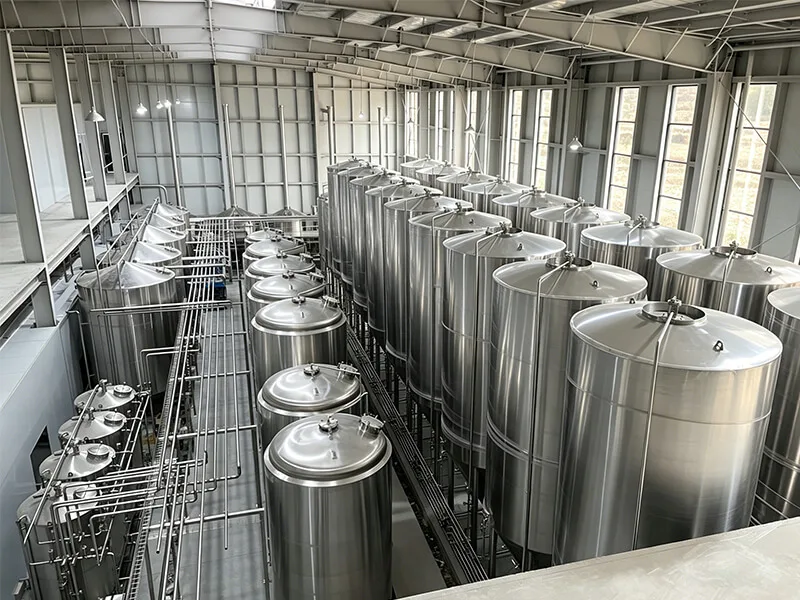
4. Secondary Steam Condensation and Heat Recovery
Wort boiling produces secondary steam, which carries thermal energy away from the brewhouse.
In a conventional system without suitable recovery equipment, much of this heat may be discharged through the vapor exhaust system.
A secondary steam condensation system provides an opportunity to recover part of this thermal energy.
How Does Secondary Steam Recovery Work?
During wort boiling, water vapor is released from the kettle.
The vapor is directed into a suitable condensation unit, where it exchanges heat with a separate water circuit. As the vapor condenses, its latent heat is transferred to the receiving water.
The heated water can then be collected in a hot water storage tank and reused in suitable brewery processes.
A simplified process is:
- Wort is heated and boiled in the kettle.
- Secondary steam is collected through the vapor outlet.
- Steam enters the condensation heat exchanger.
- Thermal energy transfers to the receiving water.
- Condensate is discharged through the designed drainage arrangement.
- Heated water is stored for subsequent process use.
The actual arrangement depends on kettle design, vapor handling requirements, heat exchanger configuration, and the intended reuse of recovered heat.
What Can Recovered Heat Be Used For?
Recovered thermal energy may support:
- Brewing water preparation.
- Mash water heating.
- Hot water supply for suitable process applications.
- CIP hot water preparation, where temperature and water quality requirements are satisfied.
The brewery should assess the temperature and volume of recovered water before assigning it to a specific process.
Recovered heat is useful only when there is a suitable heat demand at the right time.
Engineering Considerations
When designing a secondary steam condensation system, engineers should evaluate:
- Wort boiling volume and operating frequency.
- Vapor generation characteristics.
- Condensation heat exchanger capacity.
- Receiving water flow and inlet temperature.
- Hot water storage volume.
- Condensate drainage.
- Vapor pipeline arrangement.
- Cleaning and maintenance access.
The heat exchanger must be designed for the actual process conditions. Simply adding a condenser without considering the hot water storage and consumption schedule may limit the practical value of the system.
5. Wort Cooling Heat Recovery
Wort cooling is another important opportunity for thermal energy recovery.
After boiling and whirlpool separation, hot wort must be cooled to a suitable fermentation temperature before it enters the fermentation tank.
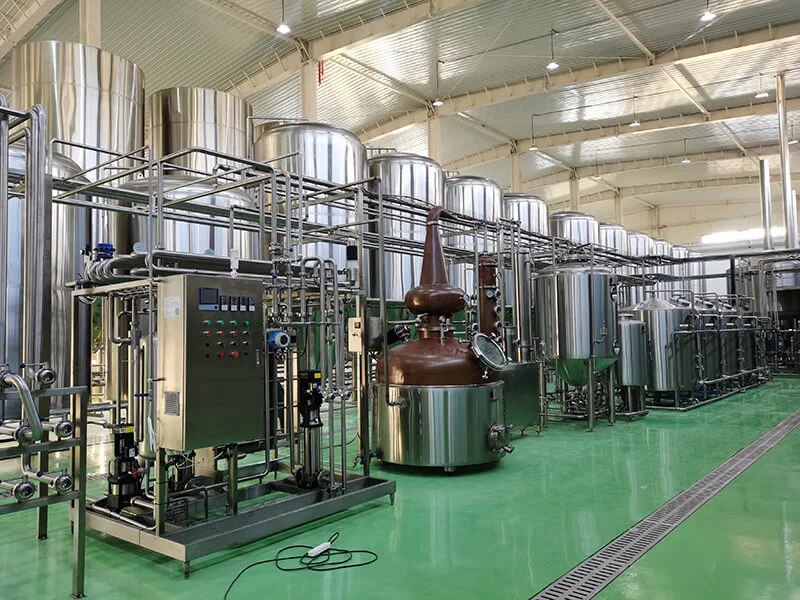
A plate heat exchanger is commonly used for this process.
How Does Wort Cooling Recover Heat?
In a typical wort cooling arrangement, hot wort passes through one side of the heat exchanger while cold brewing water flows through the other side.
Heat transfers from the wort to the water without the two fluids mixing.
As a result:
- Hot wort is cooled before fermentation.
- Incoming brewing water is heated.
- The heated water can be stored and reused in the brewhouse.
A simplified process flow is:
Hot Wort → Plate Heat Exchanger → Cooled Wort → Fermentation Tank
At the same time:
Cold Brewing Water → Plate Heat Exchanger → Heated Water → Hot Water Storage Tank
This approach allows the brewery to recover part of the thermal energy that would otherwise be removed during wort cooling.
Why Is This Important?
The heated water may be used for subsequent brewing operations, depending on the temperature achieved and the brewery’s process requirements.
For a brewery producing several batches per day, the repeated wort cooling process can provide a recurring source of recoverable heat.
However, the actual recovery potential depends on wort temperature, water inlet temperature, flow rate, heat exchanger design, and the timing of water demand.
Select the Right Heat Exchanger
The heat exchanger should be selected according to:
- Wort flow rate.
- Required wort outlet temperature.
- Brewing water inlet temperature.
- Required heated water outlet temperature.
- Available temperature difference.
- Pressure drop.
- Cleaning requirements.
- Product-contact material specifications.
Heat exchanger sizing should be based on thermal calculations rather than nominal brewhouse capacity alone.
6. Hot Water Storage: Connecting Heat Recovery with Brewing Operations
Heat recovery becomes more practical when the brewery has sufficient hot water storage capacity.
Thermal energy is not always available at the same time it is needed. For example, heat recovered during wort cooling may be generated during one brewing stage but consumed during a later batch.
Hot water tanks help bridge this timing difference.
Common Hot Water Storage Tanks
A commercial brewery may use separate tanks for different water temperature requirements.
A typical utility configuration can include:
- Hot water tank.
- Cold water tank.
- Ice water tank.
- Associated circulation and transfer pumps.
Each tank serves a different role in the brewery’s process water management.
The hot water tank can receive water heated through wort cooling or steam condensation, provided that the recovered water meets the required process conditions.
How Should Hot Water Storage Capacity Be Determined?
Hot water tank capacity should be calculated according to the brewery’s water consumption and heat recovery schedule.
重要因素包括:
- Water demand per brewing batch.
- Number of batches per day.
- Mashing and sparging water requirements.
- CIP water consumption.
- Available recovered water volume.
- Required water temperature.
- Time intervals between heating and consumption.
- Storage heat losses.
A tank that is too small may not store enough recovered hot water for later use. An oversized tank may increase initial investment and heat loss if insulation and operating conditions are not properly considered.
The objective is to balance storage capacity with actual production demand.
7. Insulation and Heat Loss Prevention
Recovering thermal energy is only part of an efficient brewery design. Preventing unnecessary heat loss is equally important.
Even when a brewery has effective heat recovery equipment, poorly insulated tanks and pipelines can reduce the amount of usable energy available to the production process.
Insulate Hot Water Tanks
Hot water storage tanks should use suitable insulation according to the operating temperature and environmental conditions.
Insulation helps maintain stored water temperature and reduces the need for repeated reheating.
Insulate Steam and Hot Water Pipelines
Steam and hot water pipelines can lose thermal energy as heat transfers to the surrounding environment.
Appropriate insulation can reduce these losses, particularly in long pipeline routes and areas with frequent process operation.
Consider Equipment Layout
The physical arrangement of equipment also affects thermal efficiency.
Where practical, hot water storage tanks and heat recovery equipment should be positioned to support efficient pipeline routing and reduce unnecessary transfer distances.
A coordinated layout can simplify maintenance and help minimize avoidable heat losses.
8. Integrate Energy Recovery with the Brewhouse System
An effective energy recovery strategy should be designed as part of the complete brewhouse system.
The brewhouse includes several interconnected processes, and each process may have different heating, cooling, and water requirements.
Match Heat Sources with Heat Demand
A practical brewery energy assessment should identify:
| Heat source | Potential heat recovery or reuse |
|---|---|
| Secondary steam from wort boiling | Hot water preparation |
| Hot wort during cooling | Brewing water heating |
| Heated process water | Subsequent mashing or cleaning operations, subject to requirements |
| Hot process pipelines and vessels | Heat loss reduction through insulation |
The table represents potential applications. Actual integration must be verified according to temperature, flow rate, water quality, and production scheduling.
Coordinate with the Brewing Schedule
The value of energy recovery depends partly on how well the brewery coordinates heat generation and heat consumption.
For example, if hot water is recovered during wort cooling but the storage tank is already full, some potential recovery may be lost.
Likewise, if the brewery requires large quantities of hot water before recovered heat becomes available, additional heating may still be necessary.
The process schedule, storage capacity, and heating equipment should therefore be considered together during the design stage.
9. How to Evaluate the Energy Recovery Potential of a Brewery
Before investing in an energy recovery system, brewery owners should understand the amount of heat available and the actual demand for that heat.
A simple thermal calculation can provide an initial estimate.
Basic Heat Recovery Calculation
The sensible heat transferred to water can be estimated using:
Q = m × Cp × ΔT
Where:
- Q = heat transferred.
- m = mass of water.
- Cp = specific heat capacity of water.
- ΔT = water temperature increase.
For water, the specific heat capacity is approximately 4.18 kJ/(kg·°C).
For example, assume a heat recovery system heats 1,000 kg of water from 15°C to 65°C.
The theoretical heat transferred is:
Q = 1,000 × 4.18 × (65 − 15)
Q = 209,000 kJ
This is equivalent to approximately 58.1 kWh of thermal energy.
This example illustrates the energy transferred to the water under the stated conditions. It does not represent guaranteed energy savings or the actual performance of a brewery heat recovery system.
Real performance depends on heat exchanger efficiency, temperature differences, heat losses, operating schedules, and the amount of recovered heat that can actually replace energy that would otherwise be supplied by the heating system.
Evaluate the Payback Period
A complete investment assessment should compare:
- Initial equipment investment.
- Installation and pipeline costs.
- Energy savings under actual operating conditions.
- Additional maintenance requirements.
- Electricity or pumping costs.
- Annual operating hours.
- Local energy prices.
A reliable payback calculation should be based on measured or engineering-estimated energy consumption rather than general industry percentages.
10. Common Mistakes in Brewery Energy Recovery Design
Energy recovery systems can underperform when they are designed without considering the complete production process.
Some common mistakes include:
1. Installing recovery equipment without identifying heat demand.
Recovered energy has limited practical value if the brewery cannot use it at the appropriate temperature and time.
2. Ignoring hot water storage capacity.
Without suitable storage, the brewery may not be able to make effective use of heat recovered during intermittent production stages.
3. Selecting heat exchangers only by equipment capacity.
Thermal performance depends on inlet and outlet temperatures, flow rates, heat transfer area, and pressure drop.
4. Overlooking pipeline insulation.
Uninsulated hot water and steam pipelines can reduce the usable energy available after recovery.
5. Treating steam condensation and wort cooling as independent systems.
These processes should be evaluated together with the brewery’s hot water demand and storage arrangement.
6. Assuming fixed energy savings.
Actual savings vary with production frequency, operating conditions, utility prices, and system integration. Energy recovery performance should be evaluated through project-specific calculations and, where possible, operating data.
11. How METO Integrates Energy Recovery into Brewery Equipment Design
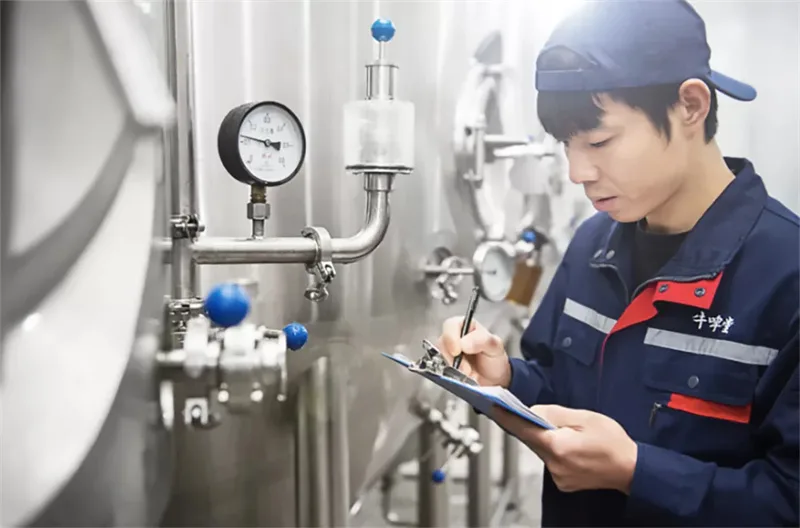
METO is a brewery and distillery equipment manufacturer integrating engineering design, research and development, manufacturing, sales, installation, commissioning, and after-sales support.
For commercial brewery projects, METO can coordinate the brewhouse, heat exchangers, hot water storage tanks, refrigeration systems, CIP equipment, process pipelines, and automated control systems.
Energy recovery can be considered during the initial system design rather than treated as an isolated accessory added after the main equipment has been selected.
Secondary Steam Condensation for a 5000L Brewhouse
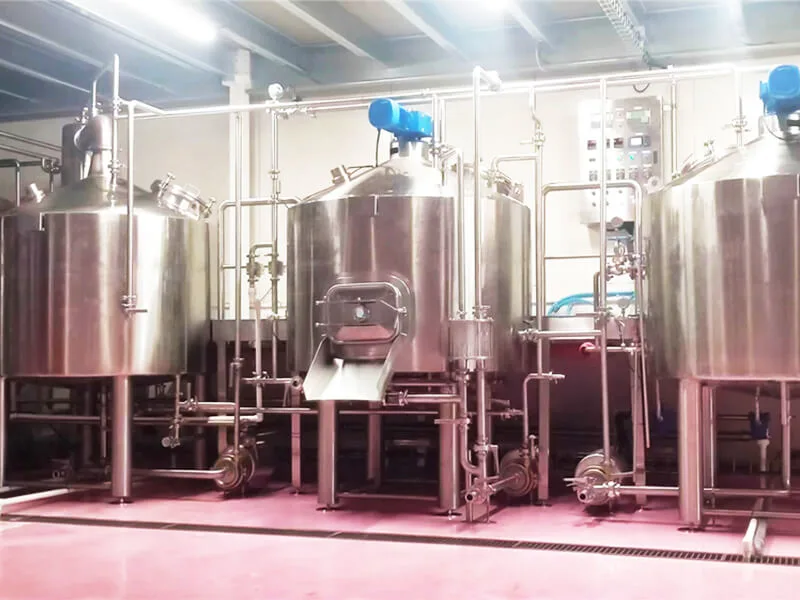
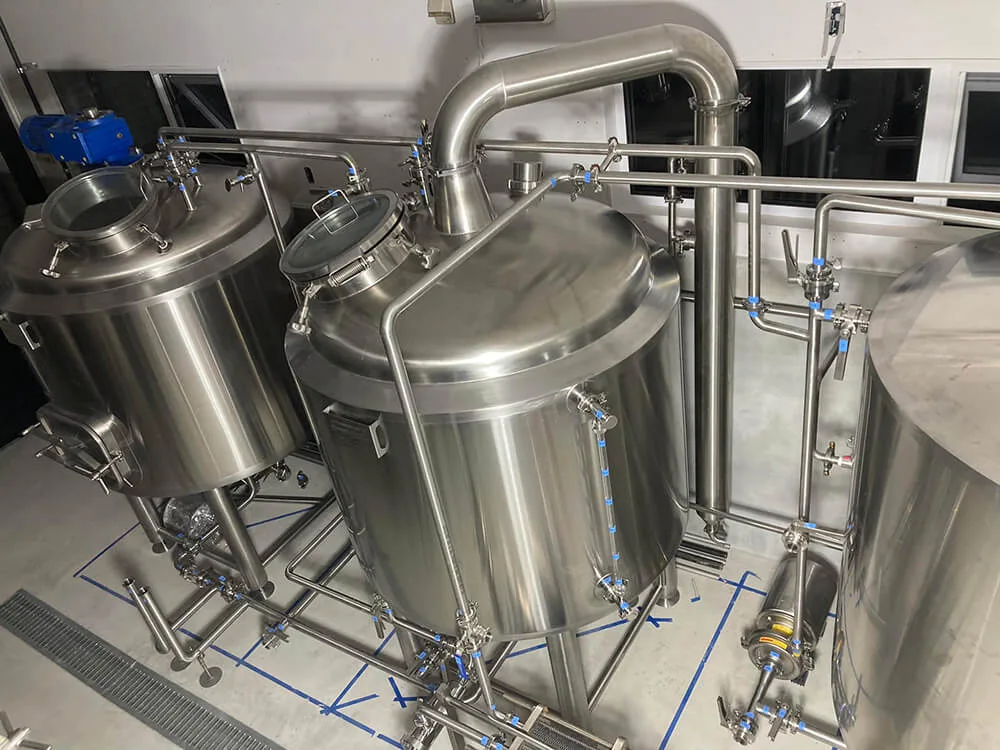
In a 5000L four-vessel brewhouse project, the system includes a mash tun, lauter tun, boil kettle, and whirlpool tank.
The brewhouse is designed for a single batch volume of 5,000L, with a planned operating capacity of four to six batches per day.
The project incorporates secondary steam condensation and heat recovery technology to capture thermal energy from the wort boiling process.
This recovered heat can support hot water preparation for suitable brewing operations, depending on the system configuration and process demand.
The project also includes a service water system with:
- 20-ton ice water tank.
- 20-ton cold water tank.
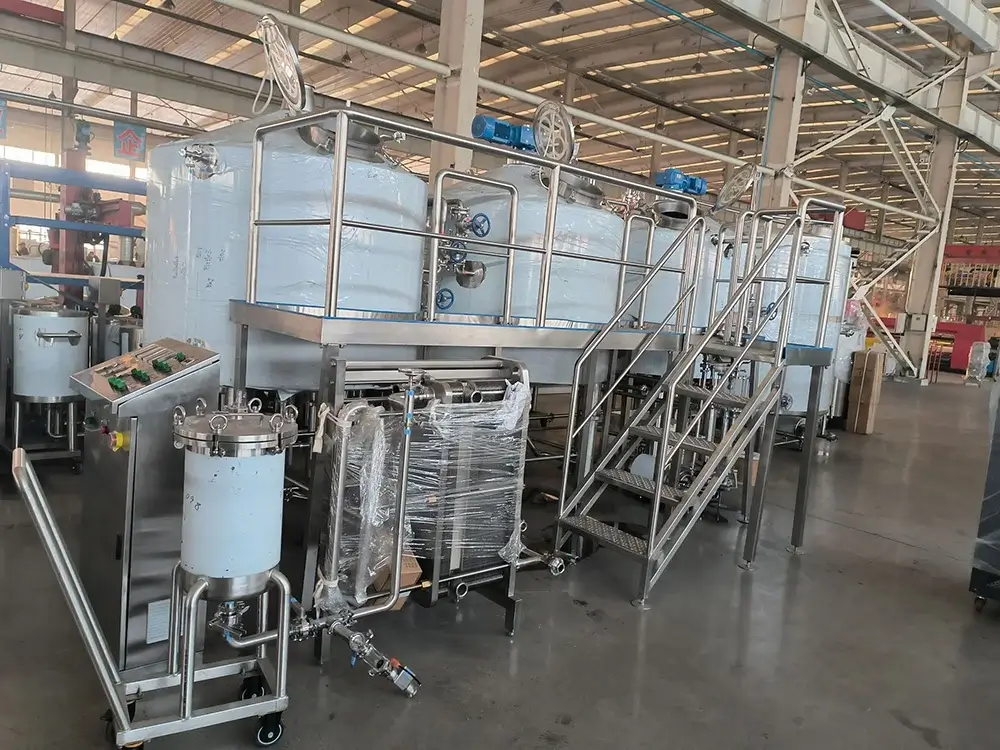
- 20-ton hot water tank.
- Supporting pumps and pipelines.
These tanks provide process water storage and support the brewery’s different water supply requirements.
The integration of secondary steam condensation, hot water storage, and brewhouse utilities demonstrates why energy recovery should be planned together with the overall brewery process.
Integrated Engineering and Manufacturing
METO’s manufacturing capabilities include stainless steel plate and tube laser cutting, laser welding, automatic plasma welding, and manual argon arc welding.
The company also has equipment inspection capabilities, including spectrometer and X-ray detection equipment.
By coordinating equipment fabrication and system integration, METO can develop brewery solutions according to the customer’s production capacity, heating method, available utilities, factory layout, and operating requirements.
12. Frequently Asked Questions
What is an energy recovery system in a brewery?
A brewery energy recovery system captures usable heat from one process and transfers it to another process that requires heating. Common applications include secondary steam condensation and wort cooling heat recovery.
How does a brewery recover heat from wort cooling?
A plate heat exchanger transfers thermal energy from hot wort to incoming brewing water. The wort is cooled to a suitable fermentation temperature while the water is heated for subsequent brewing operations.
What is secondary steam condensation in brewing?
Secondary steam condensation is a process in which vapor generated during wort boiling is condensed through a heat exchanger. The released thermal energy can be transferred to water and stored for suitable process applications.
Can recovered heat be used for CIP cleaning?
Yes, recovered heat may contribute to CIP hot water preparation when the recovered water reaches the required temperature and meets the cleaning system’s process requirements. Additional heating may still be needed.
Does every brewery need an energy recovery system?
Not necessarily. The economic value depends on production scale, brewing frequency, heat demand, energy prices, and the availability of suitable heat sources. A project-specific energy assessment can determine whether the investment is justified.
How can I calculate the potential energy savings?
Start by identifying recoverable heat sources, water flow rates, inlet and outlet temperatures, and actual heat demand. Then estimate the amount of external heating energy that can be replaced, accounting for system losses, operating hours, and additional electricity consumption.
13. Conclusion: Design Energy Efficiency into the Brewery from the Beginning
Energy efficiency in a commercial brewery is not achieved by a single machine. It comes from coordinating heating, cooling, hot water storage, process scheduling, insulation, and equipment operation.
Secondary steam condensation and wort cooling heat recovery are two practical technologies that can help breweries make better use of thermal energy.
However, their performance depends on proper engineering calculations and integration with the complete production system.
For a new brewery project or an existing facility expansion, energy recovery should be considered during the early design stage. This allows the brewhouse, heat exchangers, hot water tanks, pipelines, and utilities to be planned as a coordinated system.
联系 METO to discuss your brewery energy recovery requirements. Share your brewhouse capacity, planned batches per day, heating method, water consumption, and factory layout. Our engineering team can help evaluate suitable heat recovery configurations for your commercial brewery project.