Why 1000L Brewery Equipment Is a Practical Choice for Thailand
For a brewery in Thailand, selecting the right production capacity is not simply a question of how much beer can be produced in one batch. The equipment must also match the available space, local utilities, cooling requirements, production schedule and future expansion plans.
A 1000L brewery system offers a practical production scale for craft breweries, brewpubs, restaurants, hotels and hospitality businesses that want commercial brewing capability without moving immediately to a large industrial brewery.
A 1,000L brewhouse can support regular commercial production while keeping the overall system relatively compact. More importantly, the system can be expanded through additional fermentation tanks, bright beer tanks and cooling capacity as demand increases.
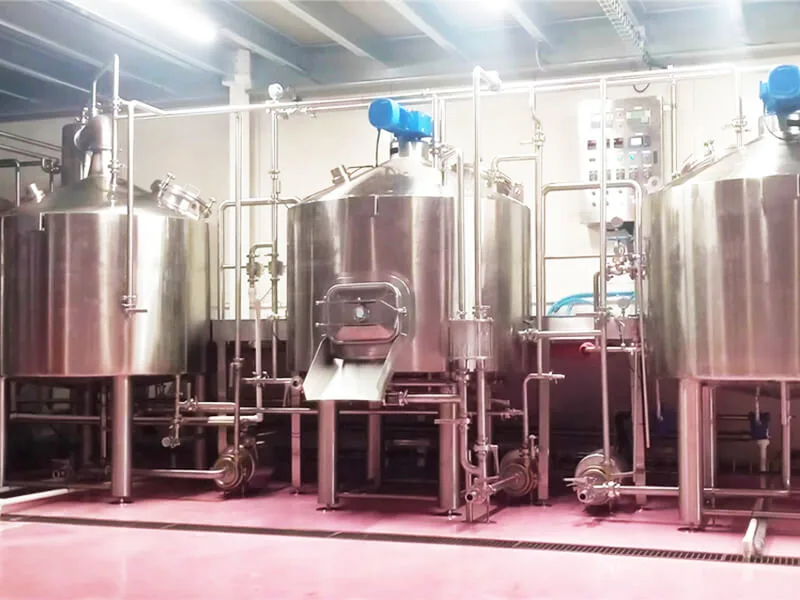
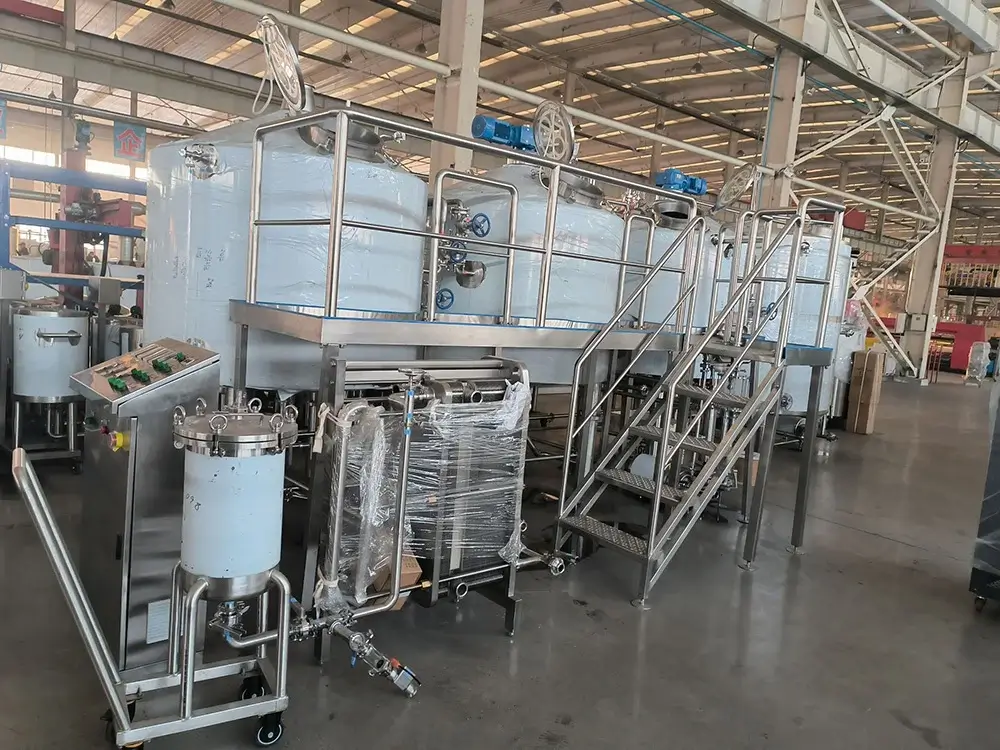
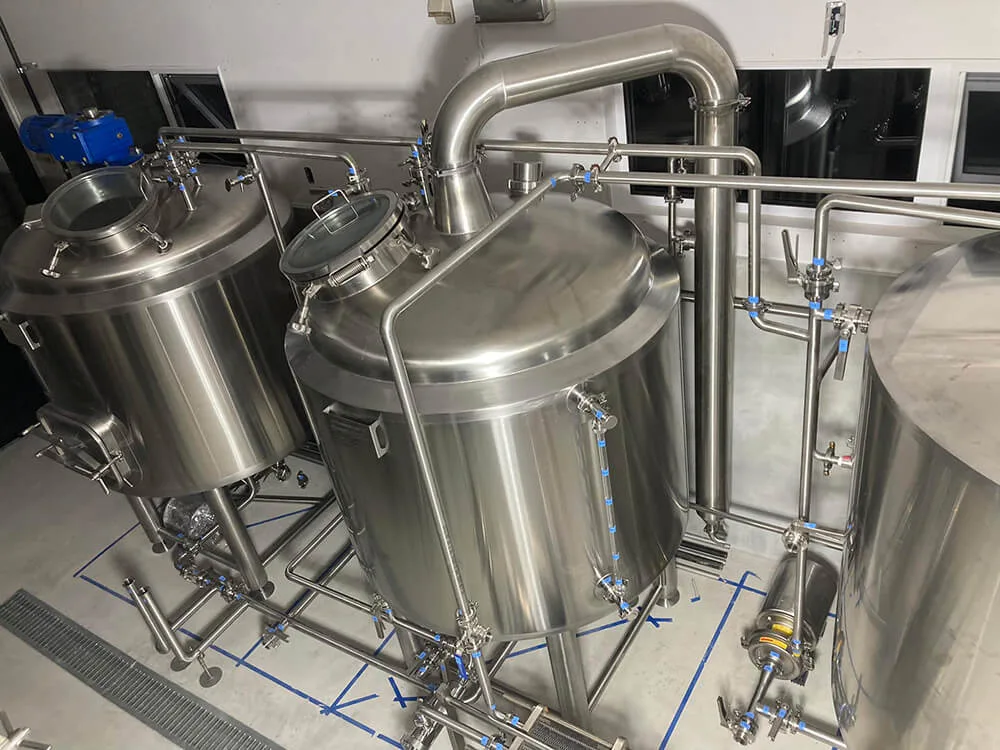
For Thai projects, METO approaches brewery design as a complete process rather than supplying an isolated brewhouse. A typical 1000L brewery equipment package can include the brewhouse, fermentation tanks, bright beer tanks, glycol cooling system, hot liquor tank, wort heat exchanger, CIP system, pumps, sanitary piping and control system.
The final configuration is engineered around the customer’s production targets and site conditions.
What Can a 1000L Brewery Produce?
A 1,000L brewhouse processes approximately 1,000L of wort per batch, but this figure should not be confused with final packaged beer output.
Actual production depends on:
- 每天冲泡次数
- Brewing days per year
- 发酵时间
- Beer style
- Process losses
- Packaging efficiency
- Seasonal demand
For example, a brewery running two 1,000L brews per day has a theoretical wort throughput of 2,000L per brewing day. However, wort losses during boiling and whirlpooling, fermentation losses, transfers and packaging will reduce the final saleable volume.
This is why brewhouse capacity should always be evaluated together with fermentation and cellar capacity.
Typical Applications for a 1000L Brewery in Thailand
A 1,000L brewery can be suitable for:
- Craft brewpubs
- Boutique hotels and resorts
- Restaurants producing house beer
- Startup craft breweries
- Taproom breweries
- Small commercial breweries
- New beer brands
- Breweries expanding from pilot-scale production
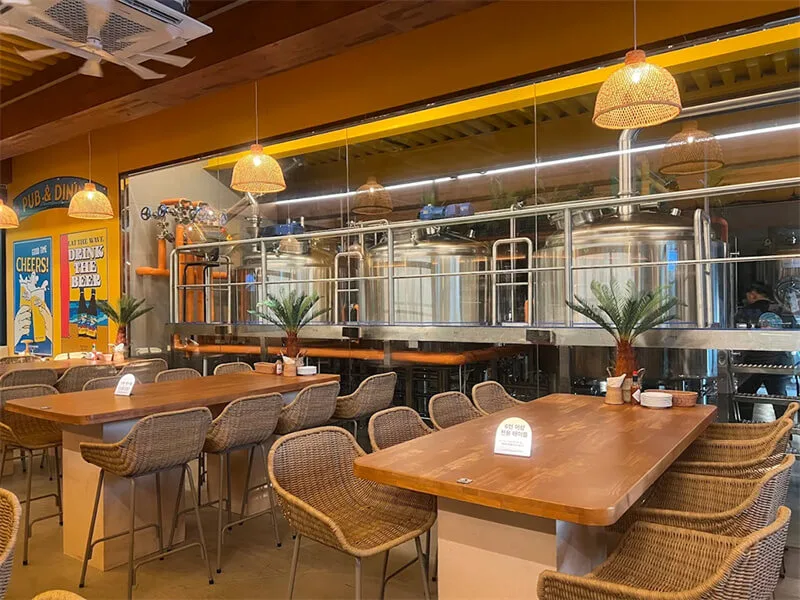
For hospitality businesses, a compact brewing system can also become part of the customer experience. Selected equipment can be integrated into a brewpub or resort environment while the production area remains organized for efficient operation and maintenance.
How to Configure a Complete 1000L Brewery System
The brewhouse is only the beginning of a commercial brewing system.
A typical 1000L brewery system may include the following:
| 系统 | 典型配置 | 主要功能 |
|---|---|---|
| 啤酒屋 | 2-, 3- or 4-vessel | 糖化、滤糟、煮沸和旋涡分离 |
| 发酵罐 | 1,000L–2,000L | Fermentation and maturation |
| 明亮的啤酒罐 | 1,000L–2,000L | Conditioning and carbonation |
| 乙二醇系统 | 项目计算结果 | 发酵与啤酒冷却 |
| 热液罐 | 取决于项目 | 酿造用水和清洗用水 |
| 冷酒罐 | 取决于项目 | 冷却水和工艺用水 |
| 板式换热器 | 项目计算结果 | 麦汁快速冷却 |
| CIP 系统 | 移动或固定 | 清洁与卫生 |
| 控制系统 | 手动、半自动或PLC | 过程监测与控制 |
The exact configuration should be determined from the brewery’s production schedule.
For example, a brewery producing one batch per day may not need the same brewhouse configuration or cellar capacity as a brewery targeting three or four batches per day.
This approach prevents unnecessary investment while leaving a practical path for future expansion.
Choosing a 2-Vessel, 3-Vessel or 4-Vessel 1000L Brewhouse
The number of vessels affects the workflow, footprint and production flexibility of the brewing system.
2-Vessel 1000L Brewhouse
A 2-vessel system combines several brewing functions into fewer vessels.
Its main advantages include:
- Compact installation footprint
- Lower equipment complexity
- Lower initial investment
- Straightforward operation
This configuration can work well for brewpubs, restaurants and smaller breweries with moderate production requirements.
The trade-off is that more operations must be performed sequentially. When production demand increases, the shared functions can become a limitation on brewing frequency.
3-Vessel 1000L Brewhouse
A 3-vessel configuration provides greater process separation and a more flexible brewing workflow.
Depending on the design, the main vessels can be configured for mashing, lautering and boiling/whirlpooling.
It offers a useful balance between:
- 生产效率
- Equipment footprint
- Process flexibility
- Investment
For a Thai craft brewery planning regular commercial production, a 3-vessel 1000L brewhouse can provide additional flexibility without creating the footprint and complexity of a larger system.
4-Vessel 1000L Brewhouse
A 4-vessel system normally separates mash, lauter, boiling and whirlpool functions.
This provides greater control over the brewing sequence and can improve process coordination when multiple brews are planned during the same day.
A 4-vessel system can be considered when the brewery:
- Requires higher brewhouse utilization
- 计划每天酿造多次
- Produces several beer styles
- Expects production growth
- Has sufficient installation space
However, additional vessels also mean more piping, valves, instrumentation, cleaning points and investment.
The most suitable configuration should therefore be determined by the actual production schedule rather than selecting the largest system automatically.
Cooling System Design for Thailand
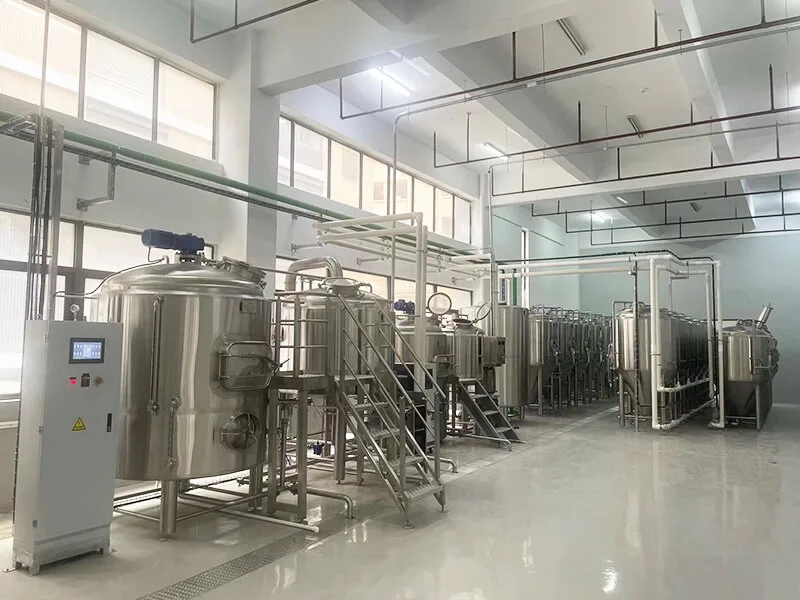
Cooling is one of the most important engineering considerations when planning brewery equipment for Thailand.
Fermentation temperature needs to remain stable regardless of changes in ambient conditions. A glycol cooling system therefore needs to be sized according to the actual thermal load of the brewery.
The cooling calculation should consider:
- Number of fermenters
- Fermenter volume
- 发酵温度
- 进入发酵罐的麦汁温度
- Number of simultaneous fermentations
- Ambient temperature
- Insulation performance
- Wort cooling requirements
Why Glycol Capacity Matters
A brewery may have sufficient fermentation volume but still experience production problems if the glycol system cannot remove heat quickly enough.
During active fermentation, several tanks may require cooling simultaneously. At the same time, the brewery may need chilled glycol or cold water for wort cooling.
For this reason, METO calculates the cooling system based on the complete cellar configuration rather than simply matching a chiller to the brewhouse volume.
Fermenter insulation also contributes to cooling efficiency by reducing heat gain from the surrounding environment.
Electric or Steam Heating for a Thai Brewery?
The heating method should be selected according to the brewery’s available utilities, production frequency and operating requirements.
电加热
Electric heating can be a practical option for smaller brewery installations where sufficient electrical capacity is available.
Before selecting electric heating, the project should evaluate:
- 可用电源
- Total connected load
- 供热功率
- Pump and refrigeration loads
- Control system requirements
- Expected operating cost
Electric heating can simplify installation because it does not require a separate steam generator, boiler and steam distribution system.
However, the building’s electrical infrastructure must be capable of supporting the total brewery load.
蒸汽加热
Steam heating can be considered for breweries requiring higher heating flexibility or more frequent brewing.
A steam-heated brewhouse requires additional equipment, including a suitable steam generator or boiler, steam piping, valves and associated safety components.
Steam capacity should be calculated from the thermal demand of the brewhouse and any other steam-consuming equipment.
METO can configure either electric or steam heating according to the brewery’s production schedule and available utilities.
Fermentation Tank Configuration for a 1000L Brewery
The number of fermenters often has a greater impact on long-term production capacity than the brewhouse size itself.
If fermentation takes 10–14 days but the brewhouse is capable of producing several batches per week, insufficient fermenter capacity will quickly become a production bottleneck.
A smaller brewery might start with:
1000L brewhouse + 4 × 1000L fermenters
A growing brewery could consider:
1000L brewhouse + 6 × 1000L fermenters + 2 × 1000L bright beer tanks
These are examples rather than fixed configurations. The actual number of tanks should be calculated from brewing frequency, fermentation time, beer portfolio and packaging requirements.
Conical Fermenter Design
METO stainless steel conical fermenters can be configured with:
- 冷却套
- PU insulation
- Pressure-rated fittings
- CIP spray devices
- 温度传感器
- Sample valves
- Carbonation ports
- Dry-hopping ports
- Bottom yeast outlets
A conical bottom allows yeast and sediment to collect at the bottom of the tank, making yeast removal and beer transfer easier.
For Thailand, cooling jacket design and insulation should be evaluated together with the glycol system rather than considered as separate components.
Sanitary Design and CIP for Thai Breweries
Cleaning and sanitation are fundamental to consistent beer production.
A properly designed CIP system for brewery equipment allows tanks, piping and process equipment to be cleaned through repeatable procedures rather than relying entirely on manual cleaning.
A typical CIP process may include:
- 预冲洗
- 碱性清洗
- 中间冲洗
- Acid cleaning where required
- 最后冲洗或消毒
The exact procedure depends on water quality, cleaning chemicals, soil load and the brewery’s production process.
SUS304 or SUS316L?
SUS304 stainless steel is widely used for brewery equipment because of its corrosion resistance, durability and suitability for food-processing applications.
SUS316L can be specified for applications where greater corrosion resistance or particular material requirements justify its use.
For both materials, fabrication quality remains important.
Proper TIG welding, internal surface finishing and passivation help create sanitary product-contact surfaces and reduce areas where residues can accumulate.
A polished tank alone does not guarantee hygienic operation. Manways, valves, pipe connections, welds, spray devices and drainage must all be considered during equipment design.
Brewery Automation and Process Control
The right level of automation depends on the brewery’s production volume and operating team.
A basic 1,000L system can use manual controls for many operations, while a commercial brewery with higher production frequency may benefit from semi-automatic or PLC-based control.
Depending on the configuration, the control system can monitor or control:
- 糖化温度
- 麦汁输送
- 泵的运行
- 供暖
- 阀门序列
- 发酵温度
- 乙二醇冷却
- CIP程序
For a small brewpub, full automation may add unnecessary complexity and cost.
For a brewery operating several batches per day, automated temperature control and repeatable process sequences can reduce repetitive manual operations and improve consistency between batches.
METO can configure manual, semi-automatic or PLC control according to the brewery’s actual workflow.
Designing a Space-Efficient 1000L Brewery in Thailand
A 1,000L brewery generally requires less space than a large industrial system, but compact equipment does not mean that every available square meter should be filled with tanks.
The layout should provide sufficient access for:
- 阀门操作
- Manway opening
- 泵的维护
- CIP 连接
- Electrical panels
- Piping inspection
- 储罐清洗
- Raw material movement
Drainage and ventilation also need to be considered during the planning stage.
For brewpubs and hospitality projects, another consideration is whether guests will be able to see the brewing equipment. In this case, the layout may need to balance visual presentation with operator safety, cleaning access and production efficiency.
METO can develop brewery equipment layouts according to the available floor dimensions and site conditions.
Turnkey 1000L Brewery Equipment for Thailand
For international brewery projects, the supply of stainless steel tanks is only one part of the process.
A complete turnkey project may involve:
Process Design → Equipment Manufacturing → Factory Testing → Packing → Shipping → Installation → Commissioning → Training
The scope of installation support should be defined before production starts.
For a Thai brewery, installation planning can include:
- Equipment positioning
- Sanitary piping
- Electrical connections
- Glycol installation
- CIP 连接
- Utility connections
- Control system commissioning
- Operator training
Early planning is important because changing utility connections or equipment positions after installation can increase project cost and delay commissioning.
Brewery Equipment Documentation and International Delivery
Importing brewery equipment requires coordination between manufacturing, logistics and installation.
根据项目的不同,文档可能包括:
- 设备图纸
- P&ID图
- Packing lists
- Commercial invoices
- 电气文件
- 重要信息
- Pressure test records where applicable
- 操作手册
- Installation instructions
Certification requirements depend on the equipment type, project location and applicable regulations.
METO works with international customers during the pre-production stage to clarify technical requirements and prepare the documentation needed for manufacturing, shipment and installation.
Why Choose METO for 1000L Brewery Equipment?
METO is a brewery equipment manufacturer specializing in stainless steel brewing systems and fermentation equipment for international markets.
Its manufacturing capabilities include:
- Laser cutting
- TIG welding
- Stainless steel fabrication
- Surface polishing
- 钝化
- 压力测试
- Equipment assembly
- Brewery system integration
Working directly with a manufacturer provides greater flexibility when a brewery requires modifications to the standard configuration.
The system can be adapted in areas such as:
- 酿造车间配置
- 储罐尺寸
- 加热方法
- 制冷量
- Piping arrangement
- 控制系统
- Electrical components
- 啤酒厂布局
Rather than treating 1,000L as a fixed package, METO can engineer the complete system around the brewery’s production requirements.
Planning a 1000L Brewery in Thailand?
A 1,000L brewery can provide a flexible foundation for a Thai craft brewery, brewpub, restaurant or hospitality project. But the brewhouse should never be selected independently from the fermentation cellar, cooling system, heating method, CIP system and available utilities.
A well-designed system should also leave a practical path for future expansion.
If you are planning a 1000L brewery in Thailand, provide METO with your target production volume, expected brews per day, available floor space, preferred heating method and planned number of fermentation tanks.
METO can develop a customized 1000L brewery equipment solution covering the brewhouse, fermentation tanks, bright beer tanks, glycol cooling, CIP, piping, controls and brewery layout.
The objective is not simply to supply a 1,000L brewhouse. It is to build a brewing system that works efficiently under the actual production conditions of your brewery.