Starting a craft brewery is a dream for many brewing enthusiasts. However, when faced with complex brewery equipment choices and process planning, many entrepreneurs feel overwhelmed. Choosing the right equipment not only determines how smoothly you start, but also directly impacts your brewery’s growth potential over the next three to five years.
As an experienced partner in the brewery equipment industry, we understand how critical proper equipment planning is. This article provides a systematic overview of the core equipment required for a craft brewery, along with practical configuration advice to help you avoid common pitfalls and make informed decisions.
1. Brewhouse System: The “Heart” of Beer Production
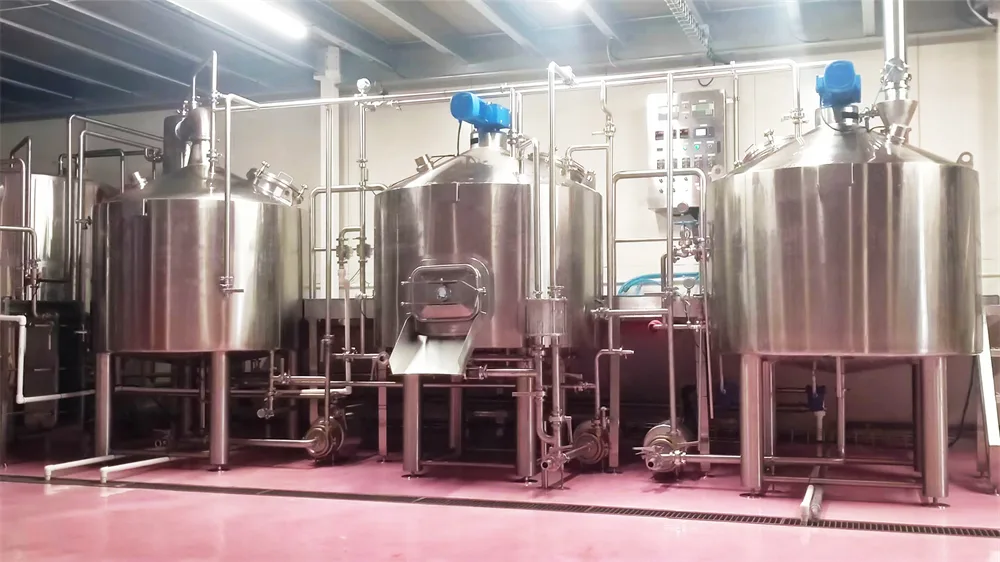
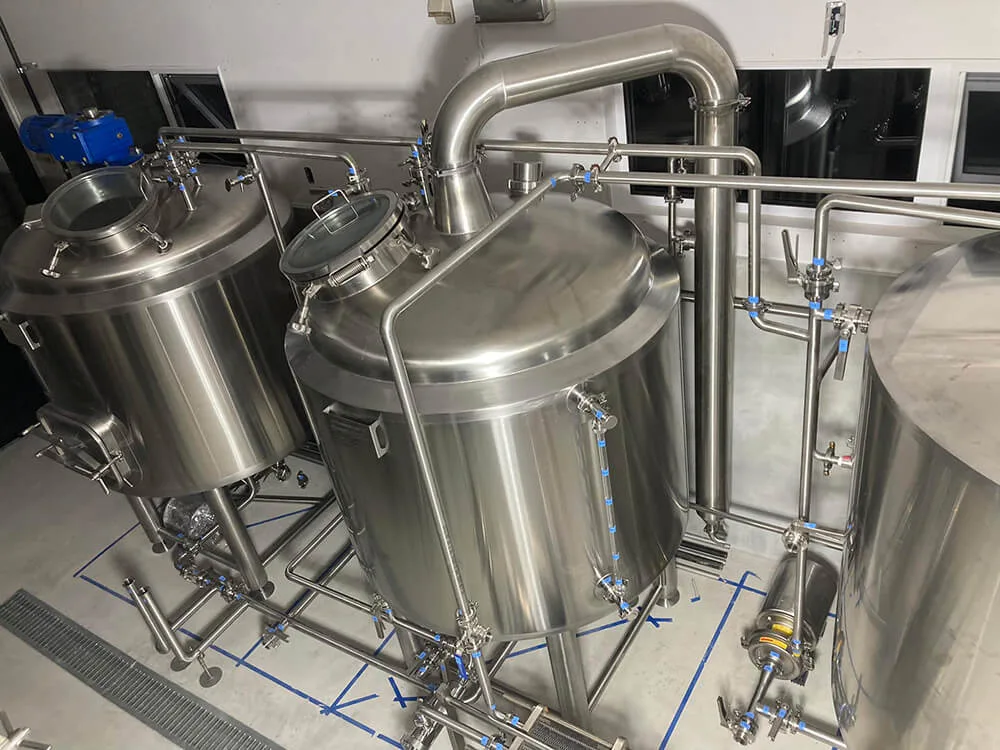
The brewhouse system is responsible for converting malt into wort and defines your brewery’s production capacity and process flexibility.
Comparison of Common Brewhouse Configurations
| Configuration | Components | Advantages | Considerations |
|---|---|---|---|
| Two-Vessel System | Mash/Lauter Tun + Kettle/Whirlpool | Lower investment, compact footprint | Requires careful production scheduling |
| Three-Vessel System | Mash Tun, Lauter Tun, Kettle/Whirlpool | Higher efficiency, strong flexibility | Moderate initial investment |
| Four-Vessel System | Mash Tun, Lauter Tun,Brew Kettle,Whirlpool Tun | Maximum capacity, continuous brewing | Higher cost, professional operation required |
Professional Recommendation:
For most startup craft breweries, a three-vessel brewhouse system offers the best cost-performance ratio. It balances efficiency and flexibility while leaving room for future process upgrades.
[Learn more about Meto brand’s modular brewhouse system solutions]
2. Fermentation System: Where Beer Quality Is Born
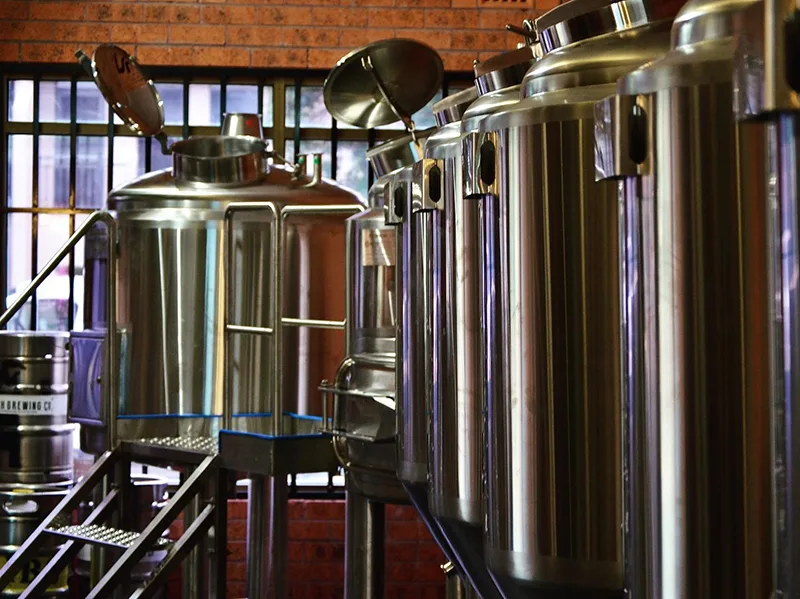
Fermentation tanks are not just storage vessels—they are core brewery equipment that determines beer flavor, stability, and consistency.
Key Selection Criteria
Materials & Finish
- Food-grade SUS304 or 316L stainless steel
- Electro-polished inner surface (Ra ≤ 0.6 μm)
- Mirror-polished for efficient CIP cleaning
Temperature Control Options
- Single-wall tanks: Require a temperature-controlled fermentation room; suitable for limited budgets
- Jacketed tanks: Independent temperature control; ideal for most commercial breweries
- Multi-zone jackets: Recommended for temperature-sensitive beers such as lagers
Conical Design
- Cone angle of 60°–70° for effective yeast collection
- Dished or elliptical bottoms to eliminate dead zones
Capacity Planning Tip:
Total fermentation capacity should be 3–5 times the brewhouse batch size.
For example, a 1,000 L brewhouse system should be paired with at least 3,000 L of total fermentation capacity to support continuous production.
[View our conical fermentation tanks and technical specifications]
3. Temperature Control System: The Guardian of Consistency
Precise temperature control is essential for batch-to-batch consistency and product stability.
Glycol Cooling System Configuration
- Chiller capacity: Total fermentation volume × 50–70 W/L
- Insulated piping: Polyurethane insulation, thickness ≥ 30 mm
- Distribution manifold: Independent control for each tank
- Smart control: PLC-based system supporting multi-stage temperature profiles
Common Mistake:
Choosing an undersized chiller to save costs often leads to fermentation temperature loss in summer, risking entire batches.
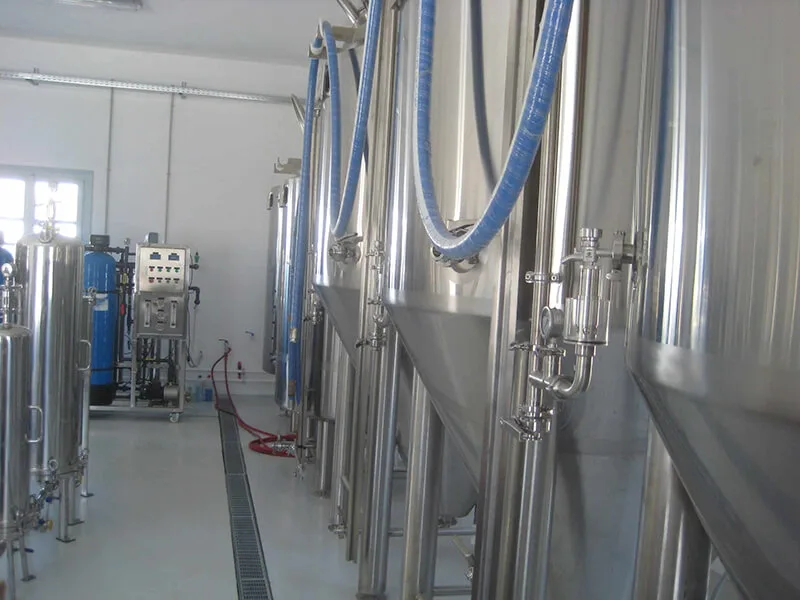
4. Auxiliary Systems: The Backbone of Efficient Brewing
1. Bright Beer Tank (BBT) System
- Function: Clarification, carbonation adjustment, and pre-packaging storage
- Recommended size: 1.2–1.5 × single batch volume
- Configuration: At least two BBTs to allow parallel fermentation and packaging
2. CIP Cleaning System
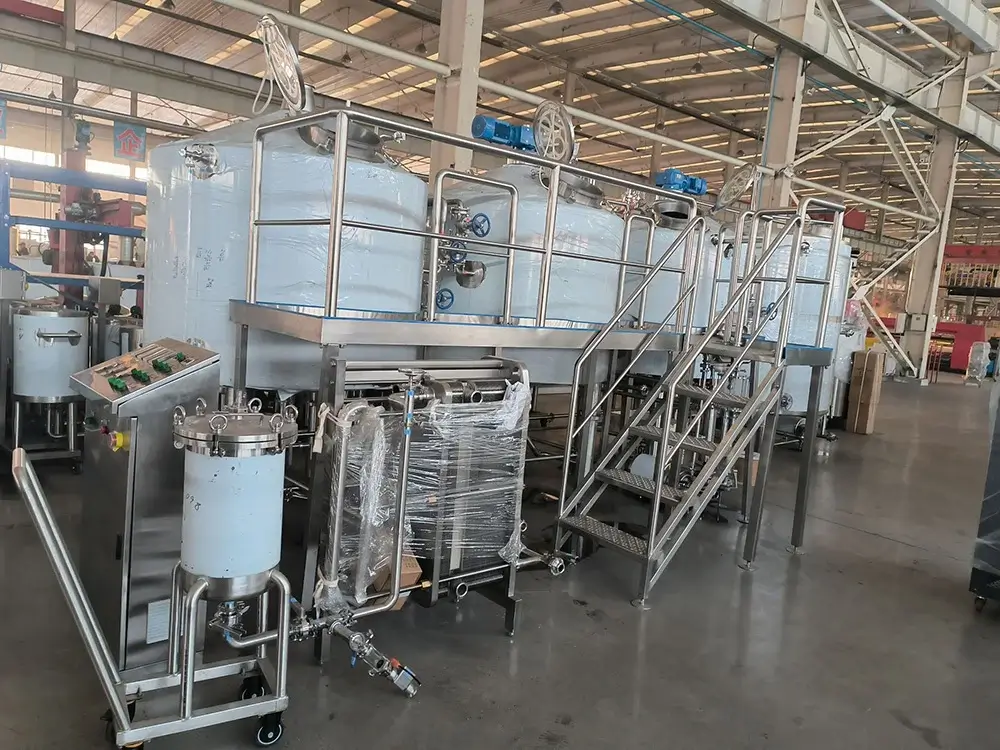
- Core components: CIP pump, acid tank, caustic tank, hot water tank, mobile skid
- Design focus: Self-draining pipelines to prevent cross-contamination
- Automation level: Semi-automatic CIP systems meet most craft brewery needs
3. Utilities
- Hot water tank: ~1.5 × brewhouse water demand per batch
- Cold liquor tank: Ensures rapid wort cooling
- Compressed air: Food-grade oil-free compressor with precision filtration
5. Control System: From Manual Operation to Automation
Automation Levels by Growth Stage
| Stage | Control Mode | Features | Suitable For |
|---|---|---|---|
| Startup | Manual + instruments | Lowest investment, operator-dependent | Pilot & very small breweries |
| Growth | Semi-automatic + PLC | Key processes automated, high value | Most startup breweries |
| Mature | Fully automated system | Full data tracking, low labor cost | Scaled commercial breweries |
Our Advice:
Choose a control system with upgrade flexibility. Start with semi-automatic control and reserve PLC interfaces for future automation.
6. Space Planning and Future Expansion
Golden Rules of Brewery Layout
- Linear workflow: Raw materials → brewhouse → fermentation → packaging
- Expansion allowance: ≥1 m spacing between equipment, reserve 30% empty space
- Ergonomics: Proper heights for platforms, sight glasses, and sampling valves
Phased Investment Strategy
- Phase 1 (0–1 year): Complete system for basic production
- Phase 2 (1–3 years): Add fermentation tanks to increase output
- Phase 3 (3–5 years): Automation upgrades and process optimization
7. Common Investment Pitfalls to Avoid
Mistake 1: “Buy the brewhouse first, add fermentation tanks later.”
→ Reality: Insufficient fermentation capacity is the most common early bottleneck.
Mistake 2: “Buy equipment separately wherever it’s cheapest.”
→ Reality: Incompatible interfaces and controls significantly increase long-term operating costs.
Mistake 3: “Go fully automated from day one.”
→ Reality: Without operational experience, full automation often complicates troubleshooting.
Final Thoughts: Planning Matters More Than Purchasing
Selecting brewery equipment is not just about buying machines—it’s about planning your brewery’s growth path for the next 3–5 years. A well-designed system should deliver:
- Process compatibility: Matches your beer styles and production goals
- Operational reliability: Ensures consistent quality and output
- Expansion flexibility: Supports step-by-step investment and scaling
- Ease of operation: Reduces reliance on individual “master brewers”
Next Steps
If you are in the brewery planning stage, we recommend:
- Define your product positioning: Core beer styles and annual output targets
- Obtain a professional solution: Tailored brewery equipment planning
- Visit operating breweries: See different brewhouse systems in real-world use