In the world of brewing, hops are regarded as the “soul of beer.” They not only impart unique bitterness and aroma to beer but also play multiple roles throughout the brewing process. This article provides a comprehensive introduction to hop addition methods, purposes, and hop classification and application, taking you into the fascinating world of this magical brewing ingredient.
I. Main Purposes and Effects of Adding Hops
Hops play an irreplaceable role in the brewing process, mainly reflected in the following three aspects:
Imparting aroma and refreshing bitterness to beer — The α-acids in hops undergo isomerization during the boiling process, forming beer’s characteristic bitterness. Meanwhile, hop essential oils contribute a rich variety of aromas, from floral and fruity to piney notes, forming an important component of beer’s flavor profile.
Enhancing foam persistence and stability — Polyphenols in hops combine with proteins to strengthen foam retention, making the foam more delicate and long-lasting, thus enhancing the drinking experience.
Promoting protein coagulation, facilitating wort clarification — During wort boiling, polyphenols in hops combine with proteins in the wort to form precipitates, helping to remove turbidity and resulting in clearer, brighter finished beer.
II. Three Methods of Hop Addition
Different addition methods not only affect beer’s bitterness and aroma but also relate to brewing safety and efficiency. Now, let’s explore three common hop addition methods: manual, semi-automatic, and fully automatic, understanding the equipment used, addition steps, and applicable scenarios.
Manual Hop Addition: The Choice for Small-Scale Brewing
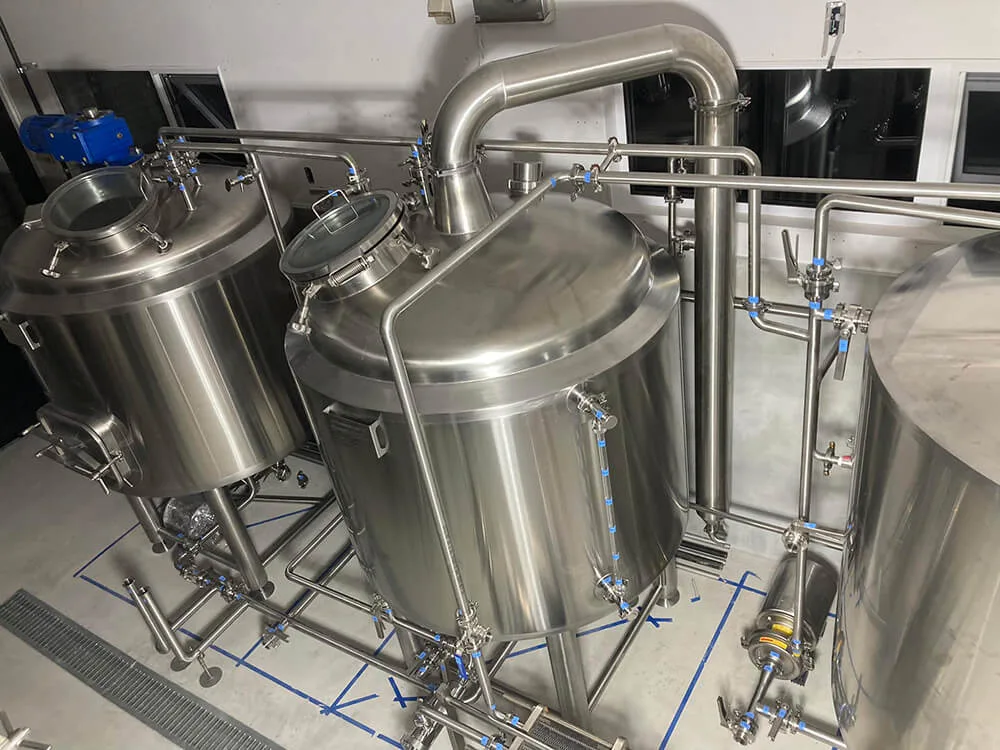
Imagine an experienced brewer standing beside a steaming boiling kettle, carefully tossing aromatic hop pellets one by one through the manhole. This is manual addition—simple and direct, suitable for home brewing or small-scale breweries.
The advantage of this method lies in its low cost and simple operation. Simply open the manhole, lift a bucket containing hops, and scatter them in gradually. No additional equipment installation is required, and many investors consider this a way to save money.
However, traditional hop addition methods also have some drawbacks. During the addition process, this method is time-consuming and laborious, especially for large batches where lifting the hops to be added requires significant physical effort. Additionally, opening the lid may allow oxygen to enter the boiling kettle momentarily, affecting beer freshness. But the biggest drawback lies in safety concerns—opening the manhole first exposes one to billowing steam at extremely high temperatures, posing a significant burn risk. If there’s abnormal pressure inside the tank, opening the manhole could even cause boil-over, resulting in personal injury.
Therefore, manual hop addition falls somewhat short in terms of safety and efficiency and is not suitable for large-scale breweries. Relatively speaking, manual hop addition is more common in settings such as home brewing, brew pubs, and craft breweries equipped with small-scale brewing equipment.
Semi-Automatic Hop Addition: A Smart Move for Safety and Convenience
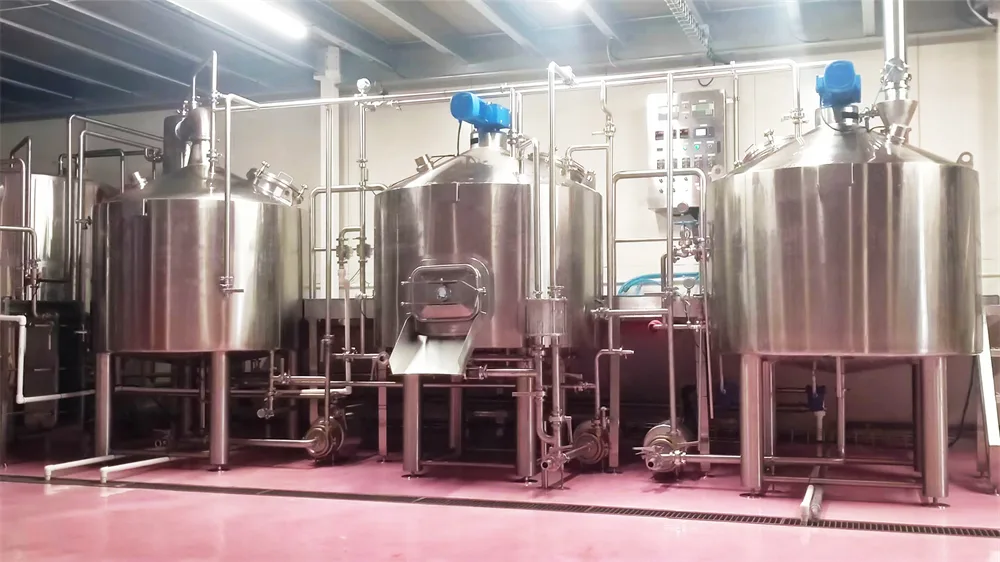
Want both safety and convenience? Let the semi-automatic hop addition device help. Simply install a vessel on top of the boiling kettle—this vessel resembles the opaque hydrator on a mash tun, with a valve controlling the connection.
The brewer places hops into the hop addition vessel and, with a simple turn of the valve, the hops fall into the boiling kettle, completing the addition. Throughout this process, there’s no direct contact with steam, ensuring brewer safety while avoiding outside air interference and boil-over risks.
This addition method is an ideal choice for medium-sized brew pubs or quality-focused craft breweries. Brewers can focus more on recipe adjustments without worrying about physical exertion or brewing safety issues.
Fully Automatic Hop Addition System: Technology Leading the Future of Brewing
When it comes to large-scale, especially highly automated modern breweries, the fully automatic hop addition system is undoubtedly the star equipment. With high automation, precise metering, and one-button start, whether for pellet hops, extracts, or other hop products, the system distributes according to requirements, ensuring consistency and high quality in every brew.
This not only greatly enhances production efficiency but also reflects strict quality management. In large-scale breweries, such systems have become standard equipment.
III. Hop Classification
Based on processing methods and forms, hops are mainly divided into the following three categories:
Fresh Hops — Fresh hops are available during harvest season, with the best usage period being within 48 hours of picking. Breweries either grow their own hops or order fresh hops as two ways to obtain this raw material. Fresh hops provide the freshest, most原始 hop flavors but have limited availability.
Dried Hops — Hops processed through drying can be used by breweries year-round and maintain quality well over time when properly stored. This is the most commonly used hop form in many breweries.
Hop Pellets — Hops dried and compressed into pellet form are very convenient for storage and brewing. Pellet hops occupy less space, are easy to measure, and better retain active hop components, making them the most common form in modern commercial brewing.
IV. Application of Different Hops in Actual Brewing
In the actual brewing process, based on addition timing and function, hops can be divided into three categories:
Bittering Hops — Added at the beginning of wort boiling and boiled continuously for 60 to 90 minutes. Extended boiling allows the α-acids in hops to fully isomerize, primarily providing bitterness and preservative effects. These hops typically have higher α-acid content and are the main source of beer bitterness.
Flavor Hops — Added during the later stage of boiling, approximately 30 minutes before the end, to enhance flavor and contribute slight bitterness. Moderate boiling time allows for partial extraction of bittering components while retaining some aromatic elements, serving a transitional role.
Aroma Hops — Added at the final stage of boiling or after boiling completion, primarily contributing aroma. Brief boiling time or dry-hopping methods maximize retention of volatile aromatic oils in hops, imparting rich fruity, floral, or piney aromas to the beer.
Conclusion
From manual to fully automatic, the evolution of hop addition methods bears witness to the development of the brewing industry; from bitterness to aroma, hop additions at different stages demonstrate brewers’ masterful control over flavor. Whether it’s the meticulous craftsmanship of small breweries or the industrialized production of large-scale facilities, hops remain the key element shaping beer’s character.
Understanding hop addition methods, functional principles, and classification applications not only helps brewers better control the brewing process but also allows beer enthusiasts, with every sip, to more deeply appreciate the craftsmanship and wisdom embodied within.