Importing brewery equipment from China can be a practical option for breweries, brewpubs, beverage companies, and investors looking for customized equipment and competitive manufacturing costs.
However, importing a complete brewing system is different from purchasing standard industrial products. A brewery project may include brewhouses, fermentation tanks, bright beer tanks, glycol systems, CIP systems, pumps, heat exchangers, control panels, boilers, piping, and packaging equipment. Each part needs to match the production process, local regulations, utilities, shipping conditions, and installation requirements.
This guide explains the main steps involved in importing brewery equipment from China and the key points buyers should confirm before placing an order.
1. Define Your Brewery Requirements
The first step is not finding a supplier. It is defining what your brewery actually needs.
Начните с:
- Целевая производственная мощность
- Brewhouse batch size
- Number and size of fermenters
- Expected batches per day
- Fermentation time
- Beer styles
- Packaging method
- Доступные коммунальные услуги
- Available installation space
- Automation requirements
For example, a 1,000L brewhouse does not automatically mean the brewery will produce the same amount of beer per day or year. Production depends on brewing frequency, fermentation capacity, tank utilization, and operating days.
For a new brewery, it is useful to provide the manufacturer with a basic project brief before requesting a quotation.
2. Choose the Right Chinese Brewery Equipment Manufacturer
China has a large number of companies supplying brewery equipment, but their capabilities can be very different.
When evaluating a supplier, check whether the company is primarily a trading company or an actual manufacturer.
A professional brewery equipment manufacturer should be able to provide information about:
- Factory and workshop
- Engineering and design capabilities
- Stainless steel processing
- Welding processes
- Pressure testing
- Quality control
- Electrical and automation integration
- Previous brewery projects
- Export experience
- Installation and commissioning support
For a customized brewery project, working directly with the manufacturer can make technical communication easier because equipment design, fabrication, electrical integration, and after-sales support can be coordinated within the same project.
3. Request a Detailed Technical Proposal
Do not compare Chinese brewery suppliers only by the total quotation price.
Ask for a technical proposal showing exactly what is included.
For a typical brewery system, this may include:
- Пивоварня
- Резервуар для горячего раствора
- Резервуар для холодного раствора
- Емкости для брожения
- Емкости для светлого пива
- Гликолевая система охлаждения
- Wort heat exchanger
- Система CIP
- Насосы
- Piping
- Control cabinet
- PLC/HMI system
- Система отопления, работающая на паре или электричестве
- Accessories and valves
The proposal should also specify tank volume, working volume, material, insulation, pressure rating, cooling jacket design, surface finish, valve standards, electrical specifications, and control functions.
This makes it easier to compare suppliers on an equivalent technical basis.
4. Confirm Material and Fabrication Standards
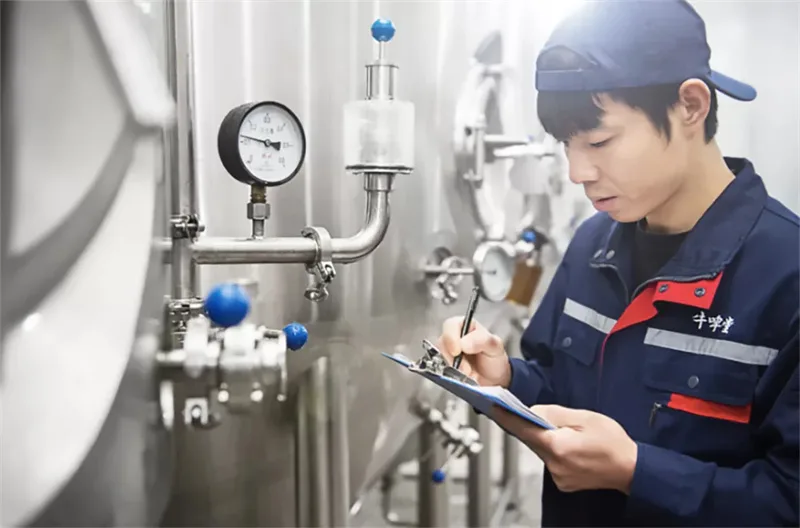
Stainless steel is one of the most important materials in a brewery.
SUS304 stainless steel is widely used for brewery tanks and process equipment, while SUS316 or SUS316L may be selected for specific applications where higher corrosion resistance or particular process requirements apply.
Ask the manufacturer about:
- Stainless steel grade
- Plate thickness
- Internal surface finish
- Welding method
- Weld inspection
- Pressure testing
- Passivation
- Insulation thickness
- Jacket pressure
- Рабочее давление
For fermentation tanks and bright beer tanks, pressure specifications deserve particular attention.
In the United States, the Brewers Association notes that brewing process tanks operating above 15 psi are generally treated as ASME-rated tanks for the purposes discussed in its pressure-vessel guidance.
Therefore, buyers should determine applicable pressure-vessel requirements before production rather than after the equipment arrives.
5. Check Certification and Local Compliance
Certification requirements depend on the destination market and the specific equipment.
For example, brewery equipment exported to Europe may involve CE requirements, while pressure equipment may fall within the scope of the EU Pressure Equipment Directive (PED). Electrical equipment may also have separate requirements.
For the United States, requirements can depend on equipment type, pressure rating, electrical configuration, state or local jurisdiction, and installation conditions.
This means buyers should not simply ask:
“Is the brewery equipment CE certified?”
Вместо этого спросите:
“Which components require certification or conformity documentation for my installation, and what documents will be supplied with the equipment?”
Depending on the project, documentation may include:
- Declaration of conformity
- Pressure vessel documentation
- Material certificates
- Welding records
- Pressure test records
- Electrical documentation
- Component certificates
- User manuals
- P&ID drawings
- General arrangement drawings
The requirements should be confirmed with the buyer’s local engineer, authority, or customs broker before manufacturing.
6. Review the Commercial Quotation and Incoterms
Once the technical specification is confirmed, review the commercial quotation carefully.
The quotation should clearly state:
- Equipment price
- Spare parts
- Упаковка
- Inland transportation
- Shipping terms
- Installation service
- Commissioning
- Гарантия
- Payment terms
- Delivery time
Also confirm the Incoterm, such as EXW, FOB, CIF, or another agreed term.
The Incoterm affects transportation responsibilities, costs, insurance, and the point at which certain risks transfer between seller and buyer.
For large brewery systems, buyers should compare the total landed cost, not only the factory price.
A lower equipment quotation may become less attractive if it involves higher shipping, installation, modification, or local compliance costs.
7. Confirm Shipping and Packing Requirements
Brewery equipment is often large, heavy, and irregularly shaped.
A complete system may require:
- Full container loading
- Multiple containers
- Flat-rack or special transport for oversized equipment
- Wooden cases for components
- Protective stainless-steel packaging
- Separate packing for control cabinets and electrical components
Before shipment, request the final packing list with:
- Package number
- Equipment name
- Dimensions
- Net weight
- Gross weight
- Volume
- Container information
The commercial invoice and packing list should accurately describe the shipment. The U.S. Department of Commerce identifies the commercial invoice and packing list as common export documents, with the packing list providing detailed information about packages, quantities, dimensions, and weights.
For large brewery projects, it is also useful to ask the manufacturer for loading photos and container-loading records.
8. Prepare Customs Clearance
The importer is normally responsible for destination-country customs requirements.
Before shipment, confirm:
- Correct HS/HTS classification
- Country of origin
- Customs value
- Import duties and taxes
- Required permits
- Product-specific certificates
- Importer information
- Customs broker requirements
For U.S. imports, most goods do not require a general import license, although specific products or agencies may impose additional requirements. CBP recommends that importers check applicable agency requirements and work with an import specialist or customs professional when necessary.
A typical shipment may involve:
- Commercial invoice
- Packing list
- Bill of lading
- Export customs information
- Certificate of origin when applicable
- Product-specific compliance documents
Exact requirements vary by destination and equipment type.
9. Consider Factory Acceptance Testing Before Shipment
For a complete brewery system, a Factory Acceptance Test (FAT) can reduce problems after delivery.
Before shipment, the buyer and manufacturer can verify:
- Tank dimensions
- Equipment quantity
- Welding quality
- Valve configuration
- Насосы
- Control cabinet
- PLC/HMI functions
- Temperature sensors
- Pressure instruments
- Glycol system
- CIP functions
- Piping connections
- Nameplates
- Spare parts
Photos, videos, test records, and inspection reports can also be included in the project documentation.
For customized systems, FAT is particularly useful because making corrections in the factory is normally easier than modifying equipment after it has been shipped overseas.
10. Arrange Installation and Commissioning
Importing the equipment is only one part of the project.
Before shipment, confirm what the manufacturer will provide for installation.
This may include:
- Installation drawings
- P&IDs
- Utility requirements
- Foundation requirements
- Electrical diagrams
- Piping diagrams
- Equipment manuals
- Installation guidance
- Remote technical support
- On-site commissioning
The brewery owner should prepare the site for utilities such as electricity, water, drainage, compressed air, steam, glycol cooling, ventilation, and wastewater handling according to the final equipment design.
11. Work With a Manufacturer That Can Support the Full Project
For international brewery projects, the relationship with the supplier should not end when the container leaves China.
A manufacturer with engineering and production capabilities can support the project from:
Project Design → Equipment Manufacturing → Factory Testing → Export → Installation → Commissioning → After-Sales Service
This integrated approach can reduce communication gaps between different suppliers.
Why Work With METO?
METO provides brewery and fermentation equipment as a manufacturer integrating engineering, fabrication, sales, installation, and after-sales support.
Our equipment range includes:
- Craft brewery systems
- Оборудование для коммерческих пивоварен
- Stainless steel fermentation tanks
- Емкости для светлого пива
- Glycol cooling systems
- CIP cleaning systems
- Hot and cold liquor tanks
- Brewery automation and PLC controls
- Kombucha equipment
- Winery and fruit wine equipment
- Distillation equipment
We can develop brewery systems according to production capacity, process requirements, local utilities, installation conditions, and automation requirements.
For overseas buyers, the goal is not simply to ship stainless steel tanks from China. The objective is to deliver a brewery system that can be installed, commissioned, and operated according to the project’s technical requirements.
ЧАСТО ЗАДАВАЕМЫЕ ВОПРОСЫ
Is it cheaper to import brewery equipment from China?
China can offer competitive manufacturing costs, but the total project cost should include equipment, shipping, customs duties, local transportation, installation, certification, and commissioning.
Can I customize brewery equipment from China?
Yes. Brewery systems are commonly customized according to batch size, tank configuration, heating method, cooling system, automation level, electrical standards, and available space.
How long does it take to manufacture brewery equipment?
The production time depends on system size, equipment quantity, customization, certification requirements, and the manufacturer’s production schedule. Ask for a project-specific delivery schedule rather than relying on a general estimate.
Do Chinese brewery tanks need CE or ASME certification?
Not every tank requires the same certification. Requirements depend on the destination market, pressure rating, equipment type, and installation conditions. Confirm the applicable requirements before production.
Should I use a freight forwarder?
For a large brewery project, working with an experienced freight forwarder and destination customs broker can simplify international transportation and customs clearance.
What should I ask a Chinese brewery equipment manufacturer?
At minimum, ask about manufacturing capability, technical specifications, materials, pressure ratings, certifications, factory testing, packaging, shipping terms, installation support, warranty, spare parts, and after-sales service.
Final Checklist Before You Import Brewery Equipment
Before placing your order, make sure you have confirmed:
Technical
- Equipment capacity
- Tank quantity
- Материал
- Pressure rating
- Heating and cooling
- Автоматизация
- Electrical specifications
Compliance
- Destination-market requirements
- Pressure-vessel requirements
- Electrical requirements
- Required certificates and technical documents
Commercial
- Complete equipment list
- Total project price
- Incoterm
- Payment terms
- Гарантия
- Delivery schedule
Logistics
- Packing dimensions
- Container plan
- Shipping method
- Commercial invoice
- Packing list
- Bill of lading
- Customs requirements
Installation
- Site preparation
- Утилиты
- Installation drawings
- Commissioning
- Training
- After-sales support
Importing brewery equipment from China becomes much easier when the project is treated as an engineering and logistics process rather than simply a product purchase. The right manufacturer should help you connect equipment design, fabrication, documentation, shipping, installation, and long-term support into one project.
For a customized brewery project, provide your target capacity, number of fermenters, beer styles, expected production, available utilities, and destination country. A manufacturer can then develop a more accurate equipment configuration and quotation.