Beer brewing is a highly temperature-sensitive biochemical process. From mashing and wort boiling to wort cooling, yeast fermentation, and cold conditioning, temperature is the critical factor that influences beer flavor, mouthfeel, clarity, stability, and overall product consistency. Even slight temperature fluctuations can alter yeast metabolism and biochemical reactions, directly impacting aroma complexity, alcohol balance, and flavor purity.
Compared with raw material ratios or fermentation time, precise temperature control has a more direct influence on final beer quality. It is the foundation of premium beer production and one of the key technical barriers in both industrial breweries and craft brewing operations.
This article explores the importance of temperature control throughout the brewing process, why fermentation temperature management matters, how wort cooling works, and how breweries achieve accurate process-wide temperature control.
Why Temperature Control Matters Throughout the Brewing Process
Every stage of beer production requires a specific temperature range. Temperature control is not limited to fermentation; it affects the entire brewing cycle and determines the quality of the finished beer.
Temperature Control During Mashing
During mashing, precise temperatures activate enzymes such as amylase and protease, enabling controlled starch and protein conversion. Different temperature rests produce different enzymatic reactions.
Stable mash temperatures help breweries:
- Achieve consistent fermentable sugar production
- Improve wort extraction efficiency
- Reduce excessive protein residues
- Prevent haze and sediment issues later in production
- Build a clean, balanced beer body
Accurate mash temperature control lays the foundation for flavor stability and brewing consistency.
Temperature Stability During Wort Boiling
In the wort boiling stage, maintaining a stable boiling temperature is essential for:
- Extracting hop bitterness and aroma compounds
- Sterilizing the wort
- Deactivating unwanted enzymes
- Stabilizing wort composition
Consistent boiling temperatures help prevent microbial contamination and fermentation instability in later stages.
Temperature Management During Fermentation and Conditioning
Temperature control becomes most critical during fermentation and cold maturation.
Yeast metabolism is directly affected by temperature. Fermentation temperature determines the production of:
- Alcohol
- Carbon dioxide
- Esters
- Higher alcohols
- Flavor-active compounds
Stable fermentation temperatures allow breweries to maintain clean flavor profiles while preventing unwanted byproducts.
During cold conditioning, low-temperature control helps:
- Improve beer clarity
- Promote sedimentation of proteins and yeast
- Smooth harsh flavors
- Enhance flavor integration
- Improve shelf stability
Why Fermentation Temperature Control Is Essential
Fermentation is the heart of beer brewing. Yeast converts sugars into alcohol and flavor compounds, and temperature acts as the master controller of yeast activity.
Without accurate temperature control, beer quality problems become inevitable.
Temperature Directly Influences Yeast Activity
Different yeast strains require different fermentation temperatures:
- Ale yeast: typically 18–24°C
- Lager yeast: typically 7–13°C
- Premium lager brewing: often controlled at 9 ± 0.5°C
If temperatures rise too high:
- Yeast becomes overly active
- Fermentation accelerates uncontrollably
- Excessive esters and fusel alcohols are produced
If temperatures are too low:
- Yeast activity slows dramatically
- Fermentation may stall
- Residual sugars remain high
- Beer can taste flat or unfinished
Fermentation Temperature Determines Flavor Purity
Temperature fluctuations are one of the primary causes of off-flavors in beer.
Excessively high fermentation temperatures can create:
- Solvent-like aromas
- Harsh alcohol notes
- Overly fruity esters
- Bitterness imbalance
Low or unstable temperatures may leave behind unwanted compounds such as:
- Diacetyl (buttery flavor)
- Acetaldehyde (green apple flavor)
Stable temperatures help yeast metabolize properly, producing balanced aromas and clean-tasting beer.
.webp)
Stable Temperature Improves Beer Stability and Shelf Life
Large temperature swings can destabilize fermentation and increase contamination risks from bacteria such as lactobacillus or acetic acid bacteria.
Precision temperature control also promotes stable precipitation of proteins and polyphenols, improving:
- Clarity
- Biological stability
- Consistência do sabor
- Prazo de validade
How Wort Cooling Works in Modern Breweries
After boiling, wort temperatures reach approximately 100°C, far too hot for yeast survival. The wort must be cooled rapidly before fermentation begins.
Modern breweries primarily use plate heat exchangers for rapid wort cooling.
Principle of Plate Heat Exchange Cooling
The system operates through counterflow heat transfer:
- Hot wort flows on one side of stainless steel plates
- Chilled water or glycol flows on the opposite side
- Heat transfers rapidly through the plates
- Wort cools quickly in a closed sanitary environment
This method delivers highly efficient and hygienic cooling.
Standard Wort Cooling Process
The cooling process generally includes the following steps:
1. Whirlpool Separation
Hot trub and coagulated solids are removed to clarify the wort.
2. Glycol or Ice Water Circulation
The refrigeration system circulates chilled water at approximately 0–4°C to create a stable cooling environment.
3. Counterflow Cooling Through Plate Heat Exchanger
Hot wort and cold water move in opposite directions inside the heat exchanger, rapidly transferring heat.
The chilled water absorbs heat and returns to the refrigeration unit for recooling.
4. Precision Temperature Adjustment
The wort is cooled to the target fermentation temperature:
- Lager beer: approximately 9°C
- Wheat beer: approximately 13°C
- Ale beer: adjusted according to yeast requirements
5. Wort Aeration and Transfer
During cooling, oxygen is added to support yeast growth and healthy fermentation before the wort enters the fermenter.
Rapid cooling not only achieves fermentation-ready temperatures but also:
- Prevents bacterial growth
- Stops unwanted enzymatic reactions
- Protects wort flavor
- Improves dissolved oxygen absorption
How Breweries Achieve Precise Temperature Control
Modern breweries rely on a combination of process engineering, refrigeration systems, automation, and environmental management to maintain precise temperature stability throughout production.
1. Multi-Stage Process Temperature Control
Each brewing stage requires independent temperature settings.
Breweries use staged temperature programs for:
- Protein rests and saccharification during mashing
- Stable boiling temperatures
- Primary fermentation control
- Cold conditioning and lagering
- Cold beer storage
This ensures optimal process performance at every stage.
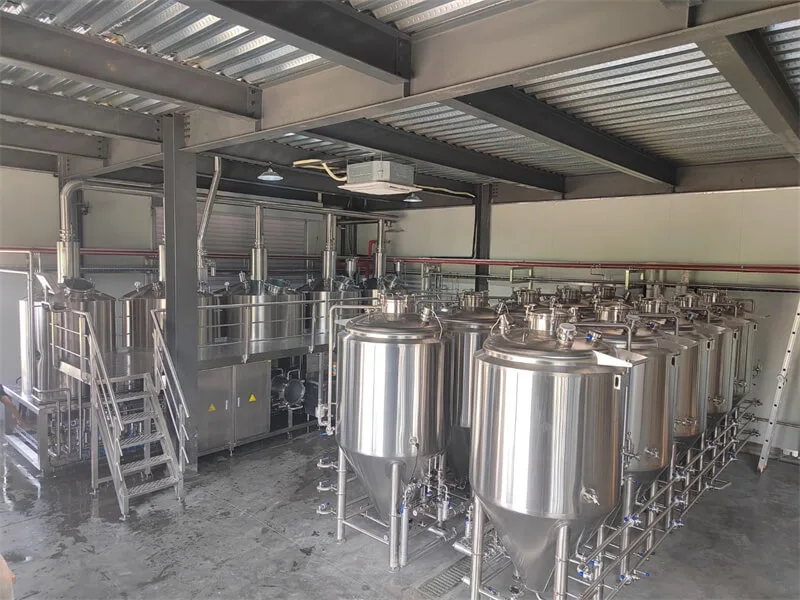
2. Professional Brewing Cooling Systems
Industrial breweries use specialized equipment such as:
- Plate heat exchangers
- Glycol chillers
- Jacketed conical fermenters
- Cooling jackets and coils
Fermentation generates significant heat, and glycol cooling systems remove excess heat continuously to maintain stable fermentation temperatures.
Modern systems can typically maintain temperature precision within ±0.5°C.
3. Automated Brewing Temperature Control Systems
Advanced breweries use:
- High-precision temperature sensors
- PLC automation systems
- Smart monitoring software
- Real-time data collection
These systems automatically adjust cooling intensity and glycol circulation based on live temperature readings.
Automation eliminates human error and ensures consistent batch quality.
4. Environmental Temperature Management
Professional breweries also control ambient conditions inside:
- Brewhouses
- Fermentation cellars
- Cold storage areas
Temperature-controlled production environments reduce external heat fluctuations and improve overall system stability, especially during extreme seasonal conditions.
Conclusion: Temperature Control Is the Foundation of Beer Quality
From wort cooling and fermentation to maturation and storage, temperature control affects every stage of beer production. It directly influences beer flavor, aroma, clarity, stability, and shelf life.
Rapid wort cooling provides the ideal sanitary and thermal conditions for fermentation, while precise fermentation temperature control governs yeast performance and flavor development.
In modern brewing, producing high-quality beer ultimately depends on precise temperature management. Through advanced cooling systems, automated brewing controls, and process-specific temperature programs, breweries can minimize off-flavors, improve consistency, and produce clean, stable, and flavorful beer batch after batch.
For both commercial breweries and craft beer producers, precision temperature control is no longer optional — it is one of the most important technologies behind premium beer production.
Tem dúvidas sobre o seu projeto de equipamento para cervejeiras? Pode diga-nos as suas necessidades para a fábrica de cerveja e fornecer-lhe-emos uma solução chave-na-mão no prazo de 24 horas.