Choosing the right brewery equipment capacity is one of the most important decisions when planning a new brewery. Many brewery owners focus first on recipes, branding, and location, but production capacity determines how efficiently the entire business can operate.
A system that is too small may limit growth, create production bottlenecks, and force expensive upgrades within a short period. On the other hand, oversized equipment can tie up capital, increase operating costs, and create unnecessary pressure during the early stages of the business.
The right approach is not simply choosing the largest brewing system you can afford. It is about matching your brewery equipment capacity with your sales strategy, production goals, available space, and future expansion plans.
A well-designed brewery should support your business today while leaving enough flexibility for tomorrow.
Start With Your Business Model Before Choosing Equipment Size
Before comparing brewhouse volumes or fermentation tank capacities, you need to understand how your brewery will generate revenue. Different business models require completely different production strategies.
Taproom and On-Site Brewing Model
For breweries focused mainly on taproom sales, restaurants, or brewpub operations, production volume is usually lower in the beginning. The priority is often product variety, freshness, and customer experience rather than maximum output.
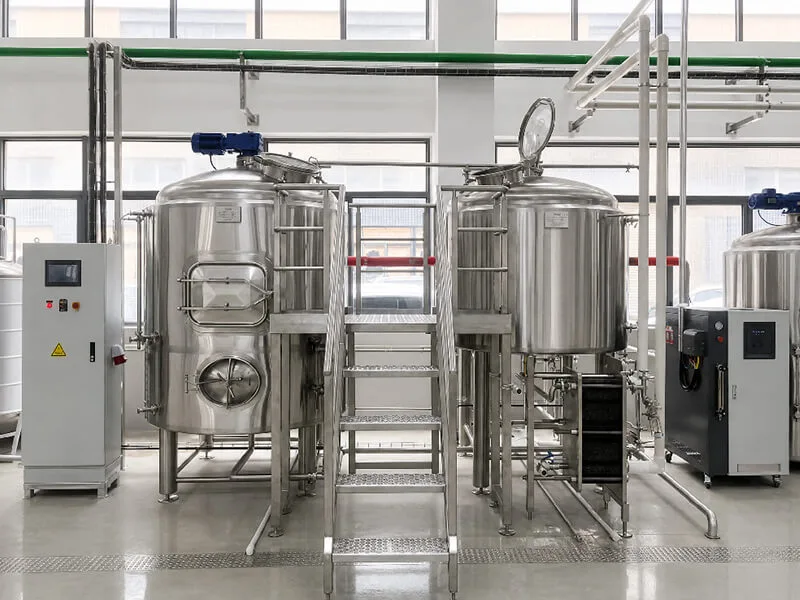
A small or medium-scale system, such as a 3 BBL to 10 BBL microbrewery equipment setup, can often provide enough flexibility for:
- Multiple beer styles;
- Seasonal releases;
- Limited experimental batches;
- Direct customer sales.
In this model, investing in excessive capacity too early may slow down cash flow because the equipment is not fully utilized.
Distribution and Wholesale Model
Breweries planning to supply supermarkets, bars, restaurants, or regional distributors require much higher production consistency.
Wholesale customers expect:
- Reliable supply;
- Consistent quality;
- Stable packaging schedules;
- Large batch production.
For this business model, a larger commercial brewery equipment system is usually more suitable. Production capacity must be calculated based on realistic sales forecasts rather than optimistic expectations.
Contract Brewing or Shared Production
Some startups begin with contract brewing to test the market before investing in their own facility.
This approach can reduce initial investment but limits production control. Once demand becomes stable, building an independent brewery with properly sized equipment often becomes the next step.
Understand Brewery Production Capacity Metrics
Selecting brewery equipment requires understanding several basic production terms.
Batch Size vs Annual Production Volume
The brewhouse size usually refers to the volume produced in one brewing cycle.
Common examples include:
- 5 BBL brewery system;
- 10 BBL brewery system;
- 20 BBL brewery system;
- 30 BBL or larger commercial systems.
However, the annual production capacity depends on much more than batch size.
A 10 BBL brewhouse running once per week produces completely different output compared with the same system operating five days per week.
Production capacity is calculated by considering:
- Brewhouse size;
- Number of brew days;
- Fermentation tank availability;
- Beer styles;
- Packaging schedule.
For international markets, breweries may also measure production in hectoliters (hL). One hundred liters equals one hectoliter, while BBL remains common in North America.
The Importance of Brewery Turns
“Turns” describe how frequently equipment is used.
Por exemplo:
A 10 BBL brewhouse producing one batch per day has a very different output from a system producing three batches per day.
However, maximum theoretical capacity is rarely realistic.
Actual production is affected by:
- Cleaning time;
- Maintenance;
- Staff availability;
- Ingredient preparation;
- Packaging schedules.
A professional brewery design should always include operational buffer rather than calculating capacity based on perfect conditions.
Fermentation Time Changes Everything
Many new brewery owners underestimate the impact of fermentation time.
Ales may require approximately 1–3 weeks depending on the recipe, while lagers often require much longer conditioning periods.
This directly affects the number of fermentation tanks required.
A larger brewhouse without enough fermenters will quickly become a production bottleneck.
Choosing the Right Brewhouse Capacity
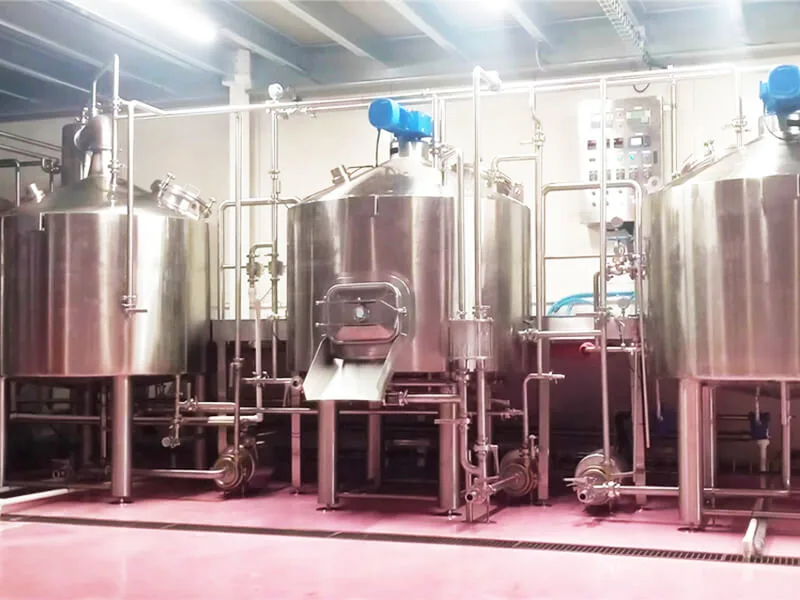
The brewhouse is the heart of the hot side system. It determines how much wort you can produce during each brewing day.
Match Brewhouse Size With Production Goals
When selecting a brewhouse system, consider:
- Expected annual production;
- Number of brewing days per week;
- Available labor;
- Future growth plans.
Por exemplo:
A small brewpub may operate efficiently with a compact 5–10 BBL system.
A regional craft brewery supplying distribution channels may require a 20–50 BBL system or larger.
The correct choice depends on the business plan, not simply the available budget.
Plan for Growth Without Overinvesting
Many experienced brewery engineers recommend purchasing equipment with approximately 20–30% additional capacity beyond immediate requirements.
This allows room for:
- Increased customer demand;
- New distribution channels;
- Additional beer brands;
- Seasonal production peaks.
However, buying equipment that is several times larger than current demand can create financial pressure.
A brewery should grow into its equipment, not struggle to pay for unused capacity.
Consider Brewhouse Configuration
Brewhouse design also influences production efficiency.
Common configurations include:
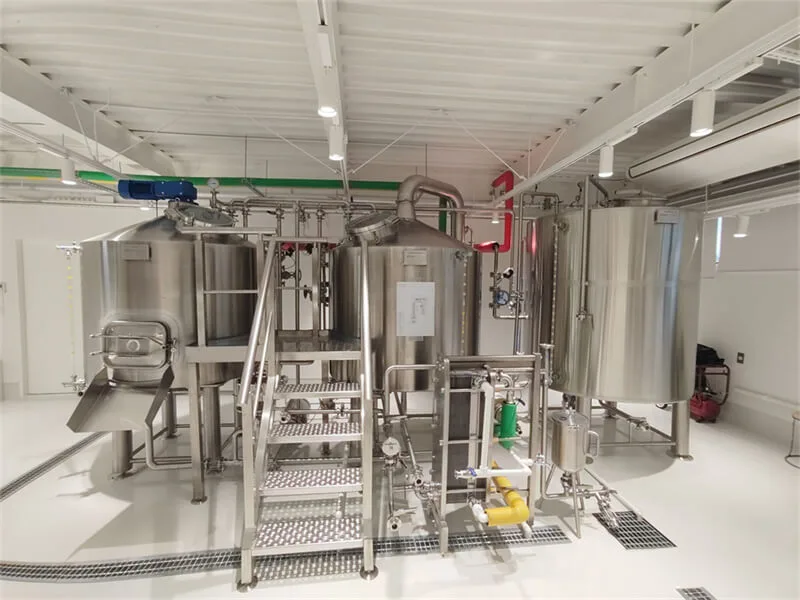
- Two-vessel systems;
- Three-vessel systems;
- Four-vessel systems;
- Fully automated commercial systems.
A small brewery may prioritize flexibility and lower investment, while larger breweries often focus on speed, labor efficiency, and repeatability.
Selecting Fermentation Tanks and Bright Beer Tanks
While the brewhouse receives the most attention, fermentation equipment often represents the largest investment in a brewery.
The cold side determines whether your brewery can maintain continuous production.
How Many Fermentation Tanks Do You Need?
A common guideline is that total fermentation capacity should typically be several times larger than the brewhouse volume.
For example, a brewery with a 10 BBL brewhouse may require multiple fermenters depending on:
- Brewing frequency;
- Fermentation cycle;
- Beer styles;
- Packaging requirements.
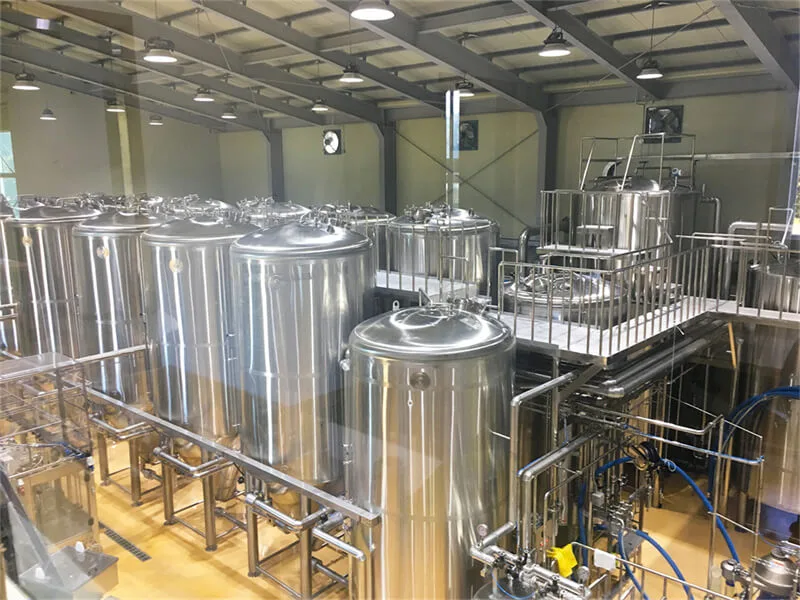
Conical fermenters are widely used because they combine fermentation, maturation, and yeast collection in a single vessel.
Modern stainless steel fermentation tanks typically include:
- Cooling jackets;
- Pressure-rated construction;
- CIP capability;
- Temperature control systems;
- Sanitary stainless steel surfaces.
Bright Beer Tank Planning
Bright beer tanks (BBTs) are used for:
- Carbonation;
- Final conditioning;
- Filtration;
- Packaging preparation.
Insufficient BBT capacity can create delays even when fermentation capacity is adequate.
For breweries selling packaged products, bright tanks provide important production flexibility by separating fermentation from packaging schedules.
Consider Your Facility Before Ordering Equipment
A common mistake is designing the brewery around tanks first and checking the building later.
In reality, the facility often determines what equipment can realistically be installed.
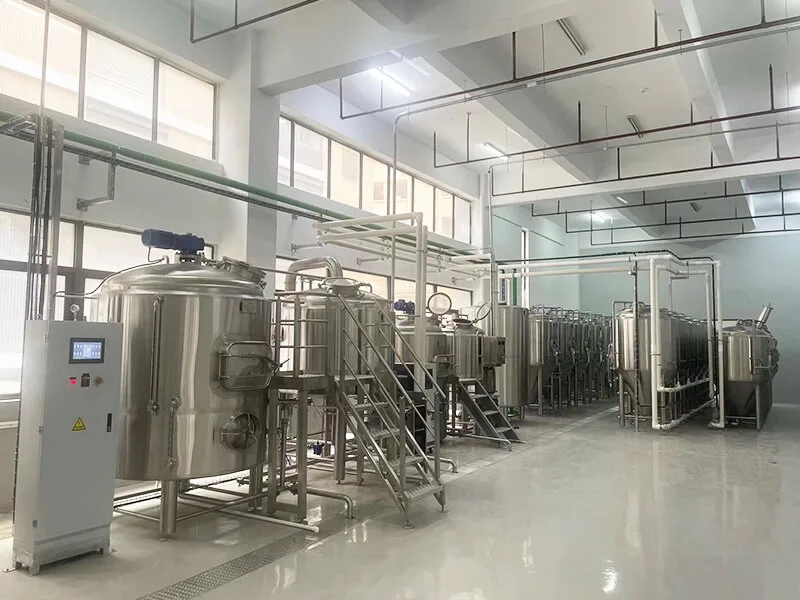
Space and Layout Requirements
As considerações importantes incluem:
- Ceiling height for tall conical fermenters;
- Equipment access routes;
- Maintenance space;
- Operator safety areas;
- Future expansion areas.
A good brewery layout should allow efficient movement of raw materials, finished products, and cleaning equipment.
Requisitos de utilidade pública
Larger brewery equipment requires stronger infrastructure.
Key requirements include:
Heating System
Brewhouses may use:
- Electric heating;
- Steam heating;
- Direct fire heating.
A larger kettle requires greater heating capacity and energy supply.
Sistema de arrefecimento
Fermentation tanks rely on glycol cooling systems.
As tank numbers increase, the brewery must evaluate:
- Chiller capacity;
- Glycol storage volume;
- Cooling load during peak operation.
Water Supply and Drainage
Brewing consumes significant amounts of water for:
- Brewing;
- Cleaning;
- Cooling;
- Sanitization.
Floor drainage and wastewater handling should also be considered during brewery planning.
Financial Factors When Choosing Brewery Equipment Capacity
Capacity decisions directly influence both investment and profitability.
Initial Investment
A larger brewery system requires more capital for:
- Brewhouse equipment;
- Fermentation tanks;
- Cooling systems;
- Utilities;
- Installation.
However, larger systems generally offer better efficiency per liter once production volume increases.
Operating Efficiency
Larger systems can reduce:
- Energy consumption per unit;
- Labor cost per barrel;
- Cleaning time per production volume.
But these benefits only appear when equipment is properly utilized.
An oversized brewery with low production volume can create unnecessary operating costs.
Calculate Equipment Utilization
Before purchasing equipment, estimate:
- Expected monthly production;
- Tank utilization rate;
- Packaging frequency;
- Growth timeline.
A brewery operating at 80–90% capacity may soon need expansion. A brewery operating below 30% capacity may have invested too much too early.
Three Common Brewery Capacity Strategies
Different businesses require different approaches.
Strategy 1: Lean Startup Brewery
Adequado para:
- New entrepreneurs;
- Brewpubs;
- Local taproom businesses.
Typical setup:
- Small brewhouse;
- Limited fermentation tanks;
- Flexible production schedule.
The goal is reducing risk while building customer demand.
Strategy 2: Growth-Oriented Brewery
Adequado para:
- Regional brands;
- Distribution-focused breweries.
This approach invests in larger commercial brewery equipment from the beginning.
Vantagens:
- Faster market expansion;
- Lower upgrade costs;
- Higher production capability.
The challenge is ensuring sufficient sales volume to justify the investment.
Strategy 3: Modular Expansion Approach
Many successful breweries choose scalable systems.
A modular turnkey brewery solution allows future upgrades such as:
- Additional fermenters;
- More bright tanks;
- Larger glycol systems;
- Automated controls;
- Packaging equipment.
Working with an experienced brewery equipment manufacturer helps ensure future expansion does not require replacing the entire system.
Final Thoughts: Choose Capacity Based on Strategy, Not Guesswork
Choosing brewery equipment capacity is a balance between current demand, future growth, investment capability, and operational reality.
The best brewery system is not always the largest one. It is the system that supports efficient production, maintains product quality, and provides room for expansion.
Before purchasing equipment, carefully evaluate:
- Your business model;
- Sales forecast;
- Production targets;
- Facility limitations;
- Utility requirements;
- Expansion plans.
A well-planned brewery equipment investment can support years of sustainable growth and prevent costly modifications later.
For breweries planning a new facility or upgrading existing production, working with an experienced brewery equipment manufacturer can help create a system that matches both technical requirements and long-term business goals.
If you are looking to procure brewery equipment, we invite you to contactar-nos for a customized solution.