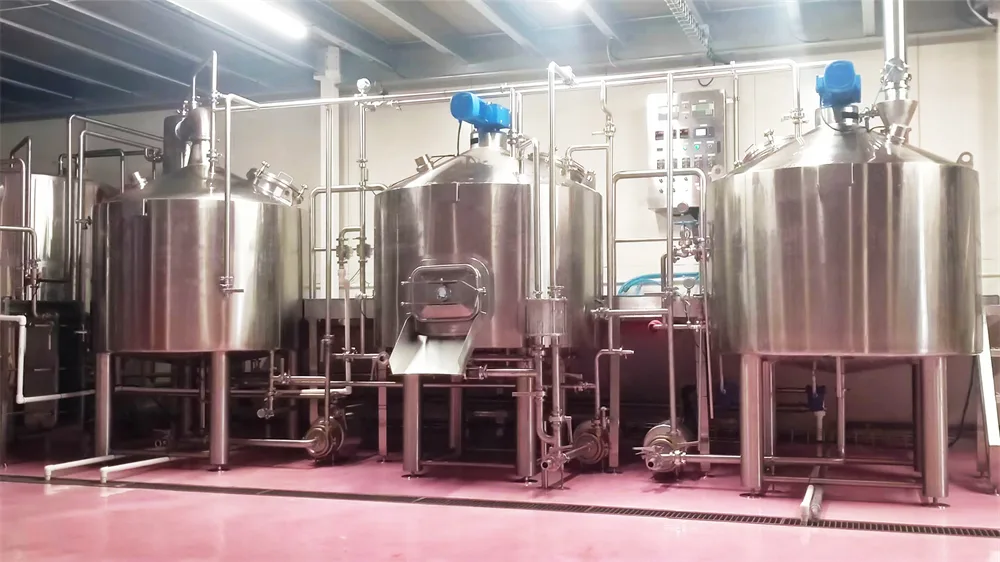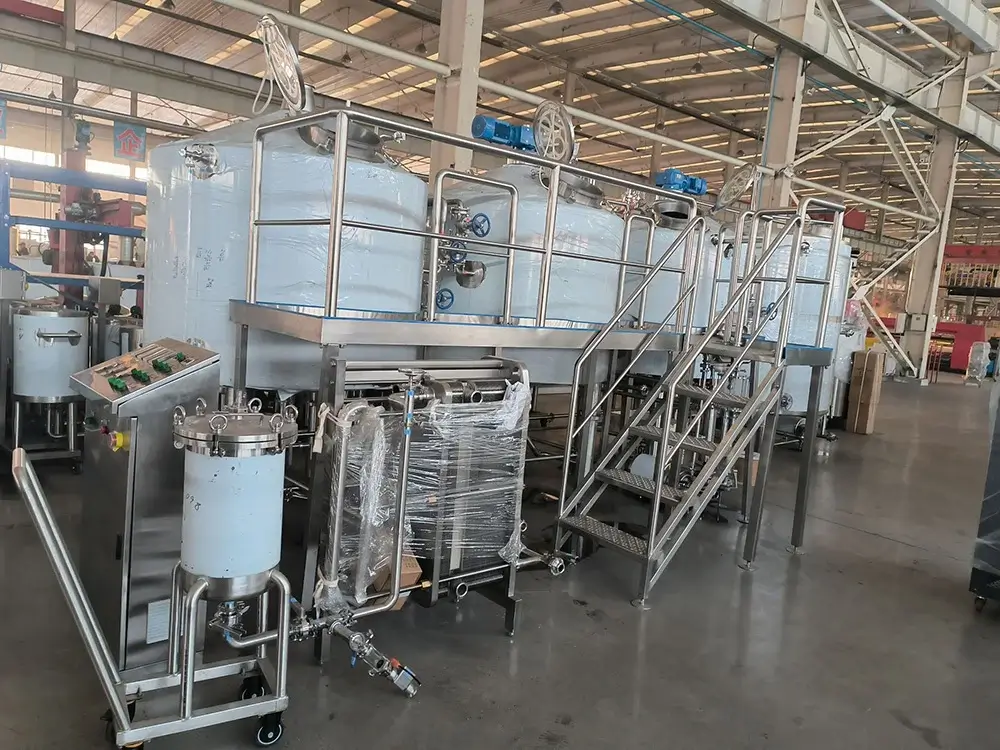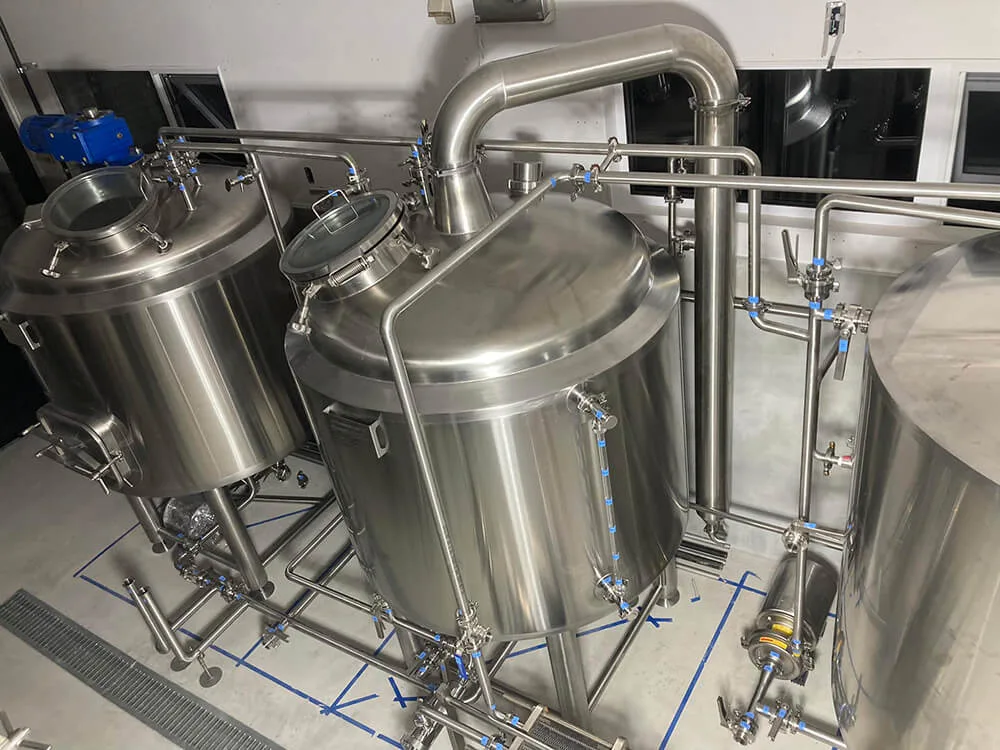
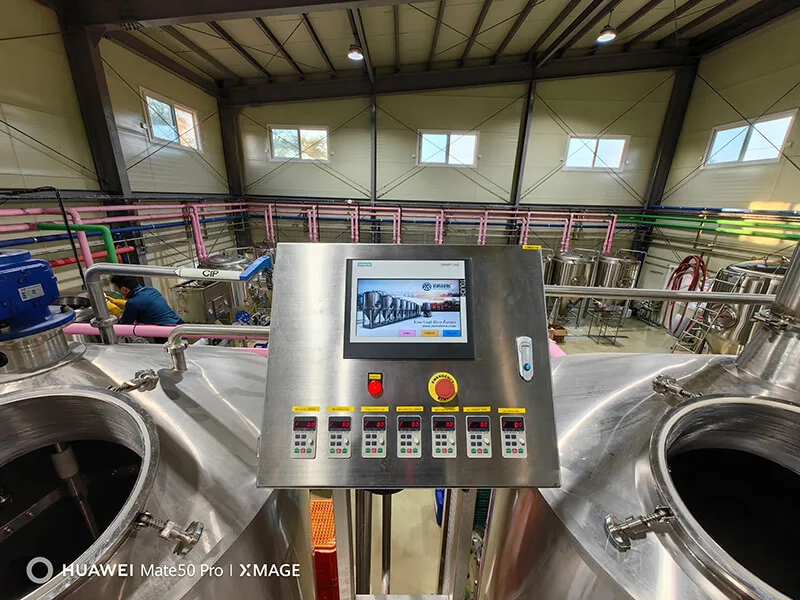
With the rapid growth of the Korean craft beer market, breweries are under increasing pressure to expand production capacity while maintaining strict quality standards.
After a successful partnership in 2019 with a 1000L brewhouse system, this well-known Korean craft brewery once again selected Meto as its trusted engineering partner to support its second-stage expansion.
The project included:
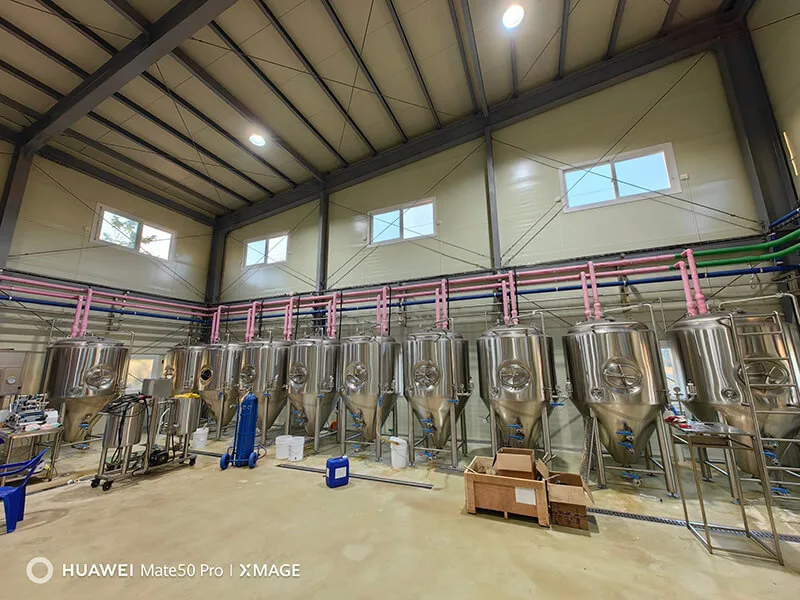
- 8 × 2000L stainless steel fermentation tanks
- Fully integrated PLC fermentation control system
- Industrial-grade glycol chiller unit
- Centralized automatic CIP cleaning system
The entire system has been delivered, installed, and commissioned successfully. Thanks to its precise temperature management, advanced hygienic design, and seamless system integration, the solution has received strong recognition from the client.
Project Background
During supplier evaluation, the brewery conducted multiple international comparisons. Based on their previous experience with Meto’s:
- Precision manufacturing capability
- Automation control expertise
- Advanced temperature management engineering
They confidently chose Meto again as the core equipment supplier for their capacity upgrade.
The client’s key requirements included:
- Higher fermentation temperature accuracy
- Improved batch-to-batch consistency
- Reduced manual intervention
- Compliance with international food-grade hygiene standards
Equipment Highlights & Technical Advantages
1. Temperature Control Principles & Engineering Implementation
(Core Differentiation Advantage)
Fermentation temperature directly affects:
- Yeast metabolism
- Ester and higher alcohol formation
- Fermentation speed
- Flavor stability
- Product consistency
Zoned Full-Jacket Cooling Design
Each 2000L fermenter adopts a dual-zone full jacket cooling structure:
- Independent cooling zone for the cylindrical body
- Independent cooling zone for the conical bottom
- 360° surface heat exchange coverage
The system integrates:
- Glycol circulation loop
- Plate heat exchanger
- Unidade de refrigeração industrial
This design ensures:
- Fast thermal response
- Uniform heat transfer
- Elimination of local overcooling or overheating
Metabolic heat generated during fermentation is removed efficiently, preventing temperature spikes that could impact flavor development.
PLC Closed-Loop Control System
The fermentation system operates on a PLC automation platform combined with:
- High-precision PT100 temperature sensors
- Electric control valves
- PID algorithm-based modulation
This creates a complete closed-loop temperature control system, delivering:
✔ Temperature accuracy within ±0.1°C
✔ Multi-stage fermentation temperature programming
✔ Real-time monitoring of temperature and pressure
✔ Historical data recording and traceability
✔ Remote alarm and supervision capability
Compared to manual valve adjustment systems, this automation platform significantly reduces human error and ensures standardized fermentation management.
Energy Optimization Engineering
Additional system refinements include:
- Insulated glycol piping to minimize energy loss
- Flow rate modulation based on fermentation phase
- Compressor protection logic to prevent frequent cycling
These improvements enhance operational stability while reducing overall energy consumption.
2. Hygienic Design Standards & CIP System Engineering
Hygienic engineering is critical in fermentation systems to prevent contamination, ensure microbial safety, and protect brand reputation.
Meto designed the entire system according to international food-grade sanitary standards.
Fermenter Sanitary Structure
- Material: High-grade SUS304 stainless steel
- Internal surface finish: Mirror polishing, Ra ≤ 0.8 μm
- Full TIG welding with internal polishing treatment
- Sanitary tri-clamp connections
The ultra-smooth internal surface minimizes:
- Biofilm formation
- Protein residue adhesion
- Microbial growth risk
Optimized Conical Bottom Design
- 60° cone angle
- Efficient yeast sedimentation
- Complete discharge without residue
This improves yeast recovery efficiency while eliminating cleaning dead zones.
Integrated Automatic CIP Cleaning System
The centralized CIP system includes:
- Alkali tank
- Acid tank
- Hot water tank
- Recovery system
- Automated control module
Programmable cleaning sequence:
- Pre-rinse
- Caustic wash circulation
- Intermediate rinse
- Acid wash
- Final sanitation
Automation ensures:
✔ Precise cleaning time control
✔ Stable flow and pressure
✔ Standardized chemical concentration
✔ Cleaning data traceability
Compared to manual cleaning methods, this system:
- Reduces chemical consumption
- Lowers labor intensity
- Enhances overall hygiene safety level
Project Results
After commissioning, the brewery achieved:
- 60% increase in fermentation capacity
- Significantly improved temperature stability
- Enhanced batch-to-batch flavor consistency
- Reduced manual operation workload
The client commented:
“Meto’s fermentation control precision and system reliability exceeded expectations. This expansion lays a strong foundation for our future strategic growth.”
Conclusão
Meto specializes in providing complete stainless steel brewing and fermentation solutions for global breweries.
From craft-scale operations to commercial production lines, we deliver:
- Precision temperature-controlled fermentation systems
- Hygienic, food-grade engineered equipment
- Intelligent automation platforms
- Scalable production solutions
If you are planning a brewery expansion or new facility project, our engineering team is ready to provide a customized solution tailored to your production goals.