Setting up a cider production facility isn’t just about buying a few tanks and hoping for good results. Whether you’re starting small or planning for growth, investing in the right equipment — from apple reception to final packaging — can save you time, money, and grief. Below we walk through the full production path and highlight what equipment you really need at each stage.
🍏 From Orchard to Cider – The Full Workflow
A well-designed cider facility follows a clear sequence: receiving and cleaning apples → grinding/milling → pressing → juice treatment → fermentation → conditioning/clarification → packaging → cold storage. Skipping or under-investing in any step can lead to wasted fruit, poor yields, inconsistent flavor, or spoiled product.
Key Equipment & Processes
Apple Receiving, Washing, Sorting
To make quality cider, you need to start with quality apples. A good washing and sorting line removes dirt, debris, and sub-par fruit. This ensures that only healthy, clean apples go into the crusher — the first critical step toward a clean, safe ferment.
Milling & Crushing Systems
Crushing (or milling) apples breaks them into smaller pieces (pomace), ready for pressing. The size of the crushed pieces matters: if too large — juice yield suffers; if too fine — pressing becomes difficult or inefficient. A reliable fruit mill lets you control the particle size, maximizing juice extraction while keeping pressing manageable.
Pressing – Extracting the Juice
The press is the heart of juice extraction. Options range from traditional rack-and-cloth presses to modern belt presses or hydraulic presses. Traditional presses may only yield limited juice and require much labor, making them impractical for scaling. More advanced presses — belt or hydraulic types — dramatically increase yield and reduce labor.Choosing the right press can mean the difference between struggling production and efficient, profitable output.
Fermentation Tanks (and Sizing)
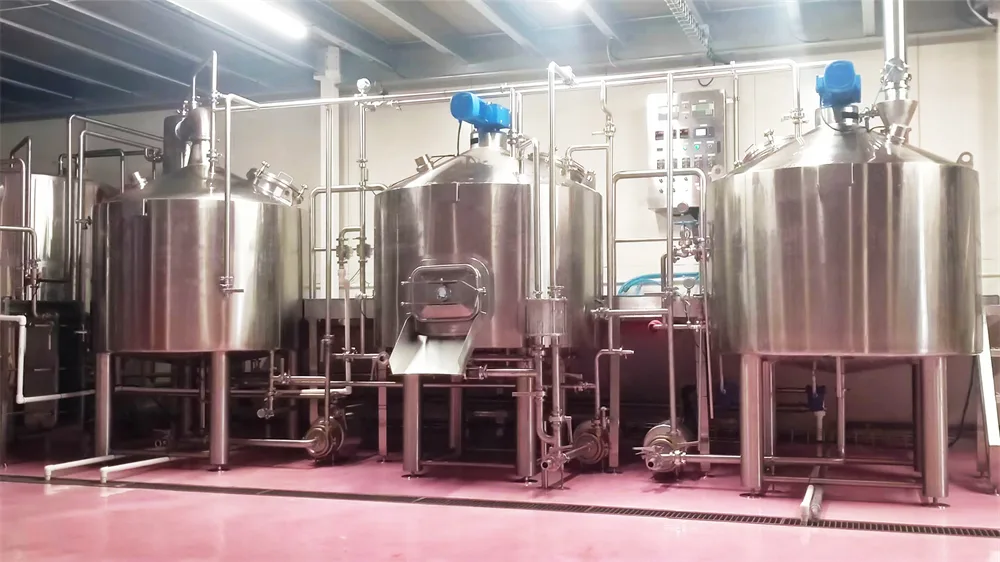
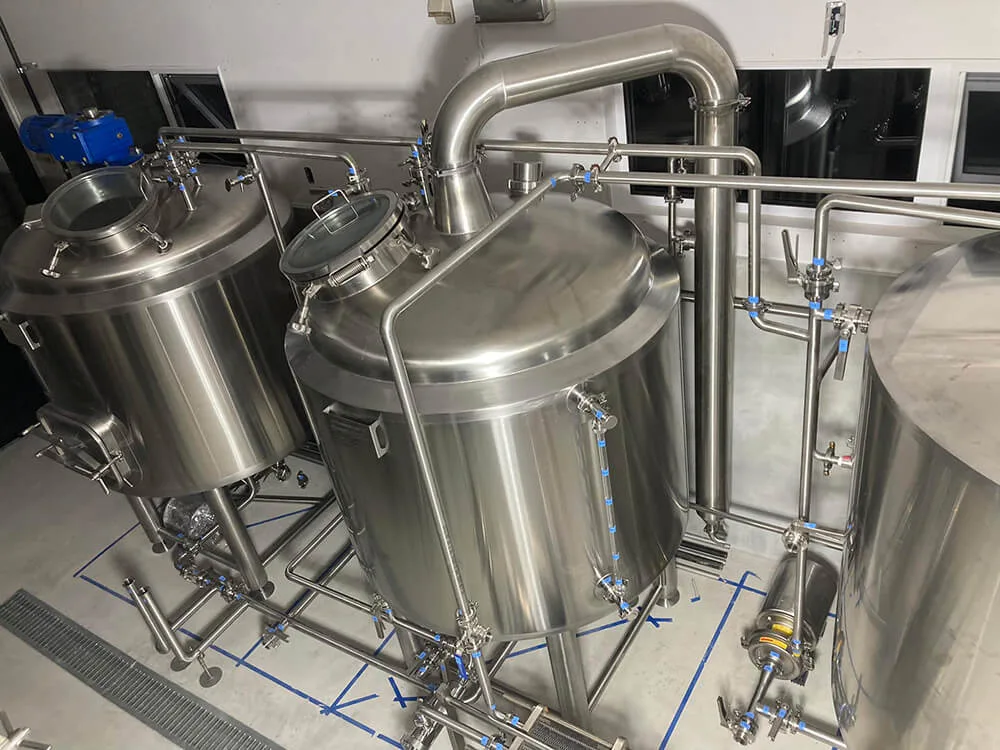
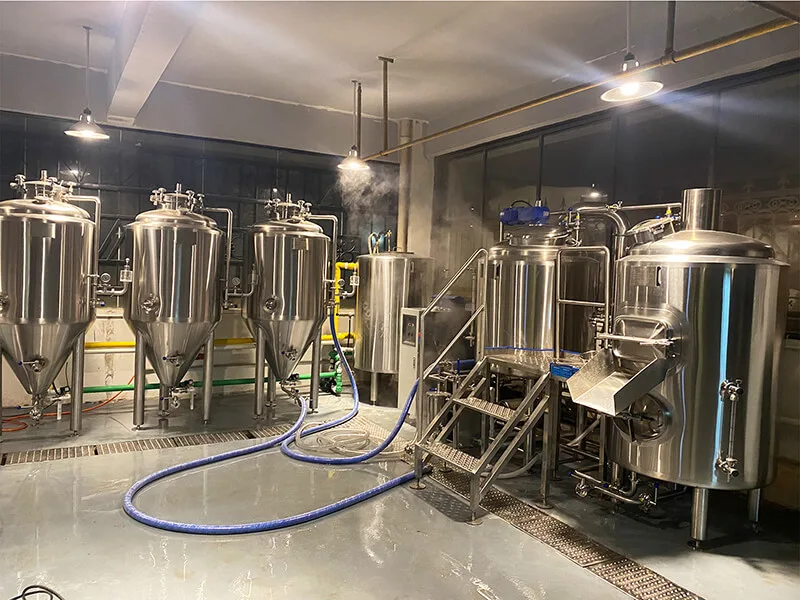
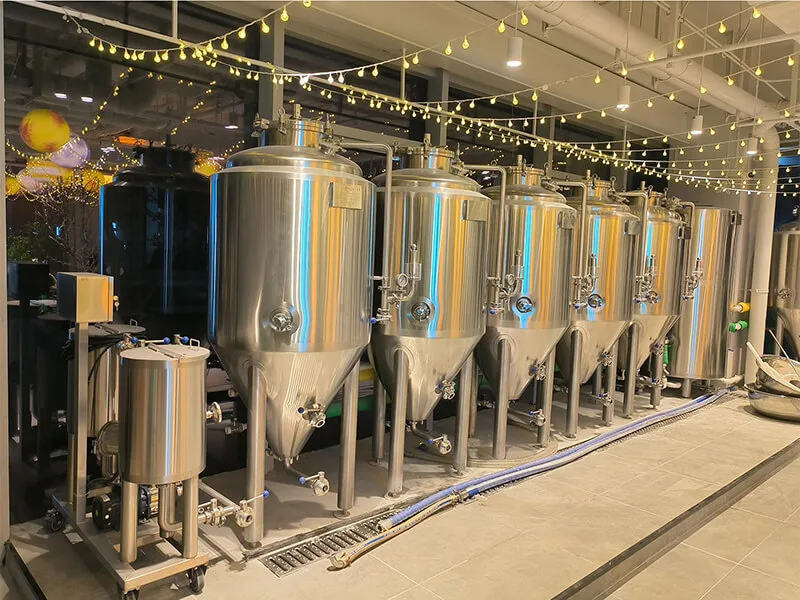
Once juice is pressed, it must ferment under controlled conditions. Stainless-steel tanks remain the standard, thanks to durability, ease of cleaning, and sanitary properties. Conical tanks are popular, as they make it easier to remove settled yeast later. Tank size and number depend on your target output — too small, and you limit production; too large (or few), and cleaning & maintenance become a burden.
Temperature Control & Cold-Side Equipment
Fermentation — and later conditioning — are sensitive to temperature. Yeast metabolism varies greatly with temperature fluctuations: too warm, and off-flavors may develop; too cold, and fermentation can stall. Glycol-jacketed tanks and chillers help maintain stable temperatures. This stability ensures consistent flavor development and reduces the risk of fermentation problems.
Conditioning, Clarification, and Stabilization
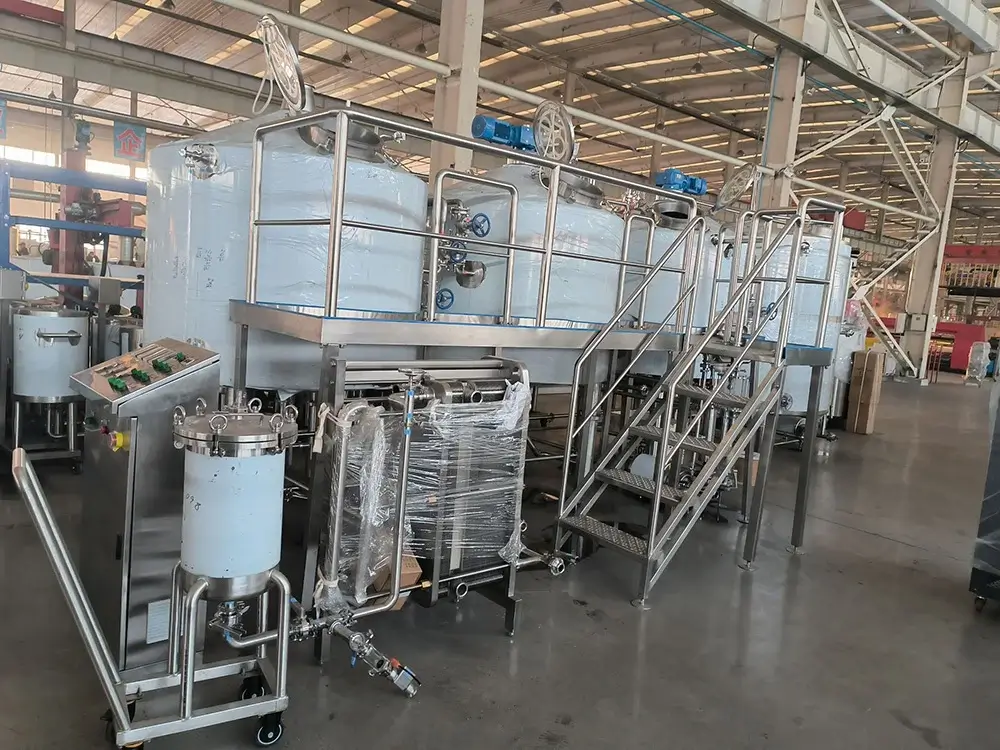
After fermentation, cider often needs a rest period (conditioning) to mature flavors and develop character. Before packaging, clarification (removing yeast, sediment, or haze) helps produce a clean, bright final product. Options range from sheet filters and cartridge filters (good for small batches) to crossflow filters or centrifuges for larger volumes. For longer shelf life or “sweet” ciders containing residual sugar, pasteurization or microbial-stabilization may be required to prevent spoilage or bottle refermentation.
Packaging — Bottles, Cans, or Kegs
When you reach packaging, scale becomes critical. Hand-bottling is fine for home or tiny batches — but it won’t meet demand when your cidery grows. Semi-automatic or automatic bottling lines greatly improve speed and consistency, incorporating rinsers, fillers, cappers, and labelers
If you plan to offer cider in cans, a full canning line (or use of a mobile canning service) becomes necessary. However, canning brings its own technical challenges: seams must be airtight to avoid oxygen exposure that spoils cider. For draft cider (kegs), a proper keg-washing and filling system — one that avoids oxygen contamination — is also essential
Scaling Considerations: From Start-Up to Regional Producer
Not all cideries are equal — and your equipment needs will shift as you grow. For a very small “start-up” scale (say a few thousand liters per year), a small hydraulic press, modest fermenters, and manual or semi-manual packaging might suffice. As you move toward a micro-cidery or small commercial level, you’ll likely upgrade to dedicated presses, multiple jacketed tanks, and semi-automated packaging. For larger regional or contract-scale production, automation, continuous presses, and high-throughput packaging (canning or kegging) become almost mandatory
The secret to long-term success: anticipate growth. Choose a layout, utilities (cooling, cleaning, power), and piping sized not just for “today” — but for “three or five years from now.” Retrofitting a facility later is costly and disruptive.
Why Investing in Quality Matters
Building a cider facility isn’t just about bottling juice — it’s about building a system that ensures consistent quality, safety, and scalability. Poor choices early on — a weak press, undersized tanks, inadequate sanitation — can lead to bad yields, inconsistent product, lost batches, or even unsafe cider.
Conversely, investing in the right equipment from the start — from sorting lines to fermentation tanks, from filtration to packaging — pays off over and over: higher juice yield, consistent flavor, less labor, faster throughput, and flexibility to grow.
Final Thoughts
If you want to build a cidery that lasts — whether small-batch artisan or large-scale commercial — you need to think holistically. Don’t just buy a fermenter or a press. Map out your whole process: fruit handling → pressing → fermentation → conditioning → clarification → packaging → cold-storage. Design for the present and the future.
Treat cider-making as a system, not a hobby. If you set it up properly, every batch can yield quality cider — with efficiency, consistency, and room to grow.
If you have any question about brewing, please feel free to contact us Meto Equipment.