Commercial beer production requires professional brewery equipment to ensure stable output, consistent quality, and efficient distribution. Whether you are building a new brewery or upgrading an existing facility, understanding the complete brewery production line is essential for selecting the right system.
This guide summarizes the core equipment, key technical considerations, and supplier selection criteria for a large-scale brewhouse system designed for international commercial breweries.
1. Main Equipment in a Large Brewery Production Line
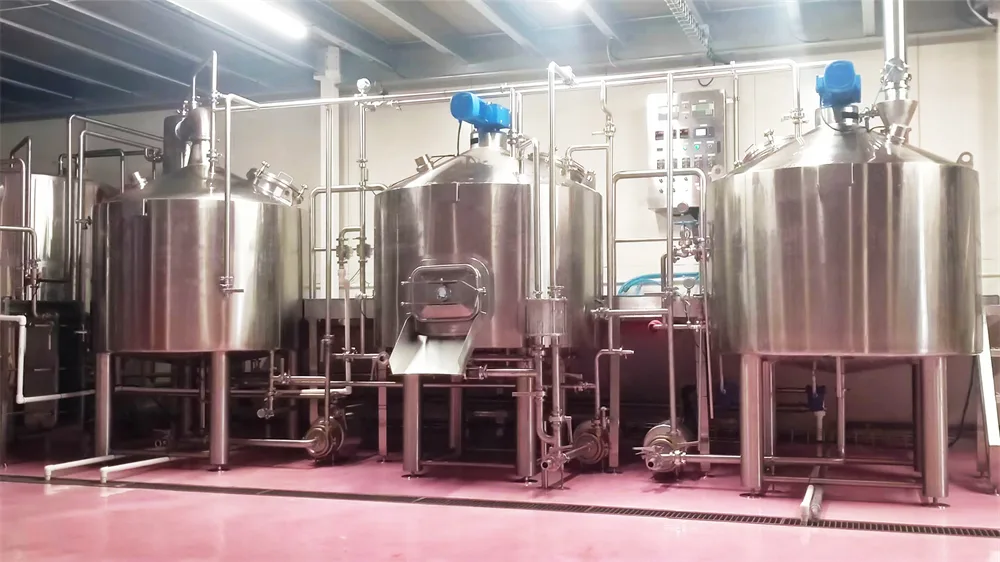
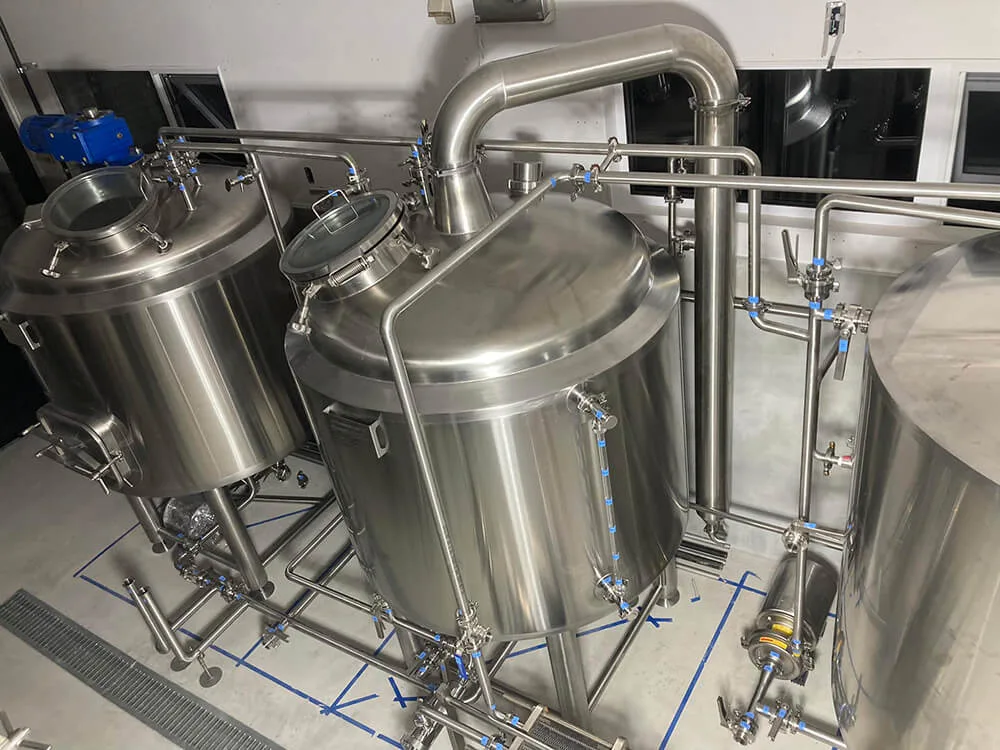
1️⃣ Brewhouse System
The brewhouse system is the heart of beer production, where wort is produced from malt.
Core Equipment:
- Mash Tun
- Lauter Tun
- Brew Kettle
- Whirlpool
- Wort Heat Exchanger
- Wort Aeration System
- Pumps & Valves
- Automatic Control System
Functions:
- Milling and mashing
- Wort separation
- Boiling and sterilization
- Trub separation
- Cooling before fermentation
Modern brewhouse systems can be steam-heated, electric-heated, or direct-fire, with manual, semi-automatic, or fully automatic PLC control options.
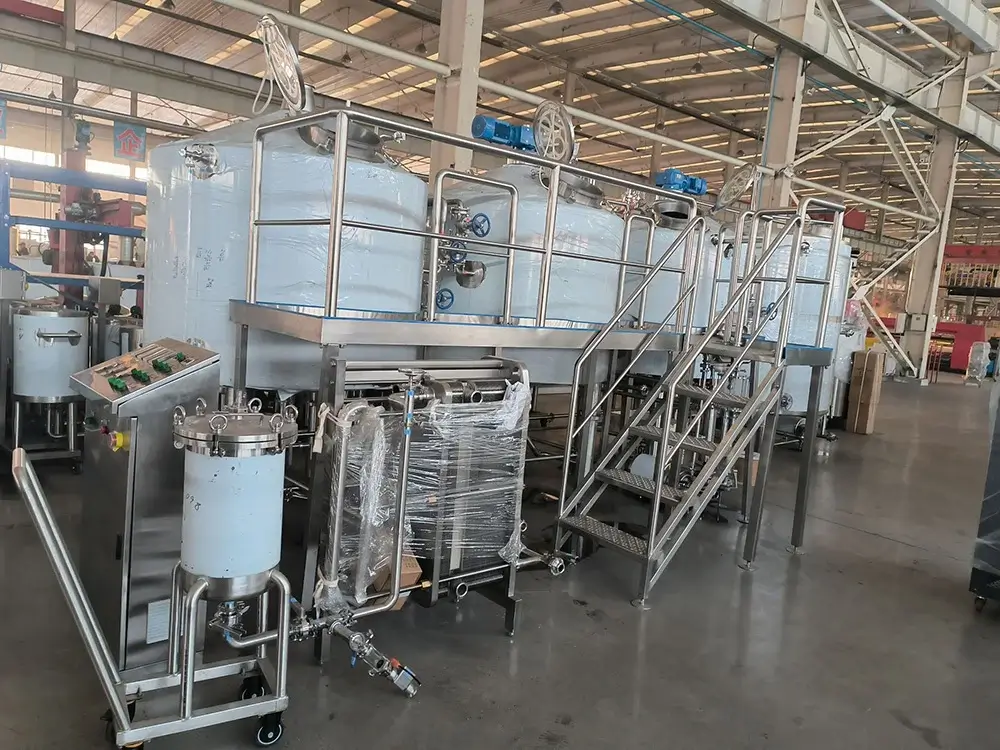
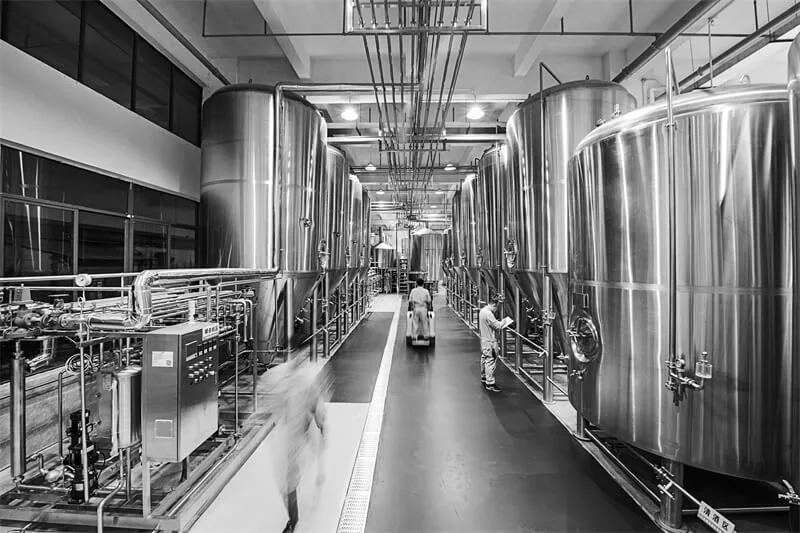
2️⃣ Fermentation & Maturation
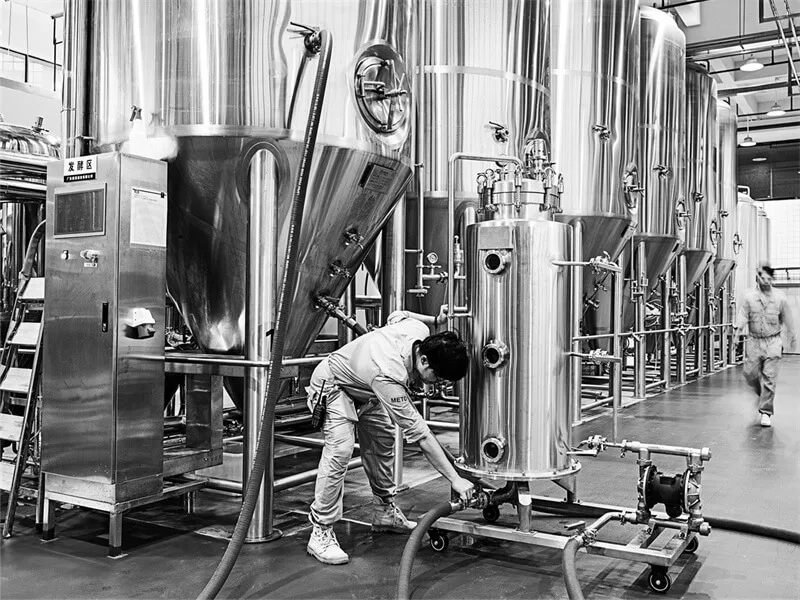
Fermentation converts wort into beer. Temperature control and tank design directly affect beer quality.
Main Equipment:
- Cylindroconical Fermenters (50HL–2500HL)
- Maturation Tanks
- Unitanks (fermentation + maturation combined)
- Yeast Management System
Key Features:
- Stainless steel construction
- Glycol cooling jackets
- Pressure-rated design
- CIP cleaning system
- Automatic temperature control
Tank size and quantity must match your annual production target.
3️⃣ Filtration & Stabilization
To ensure clarity and microbiological stability, breweries may include:
- Kieselguhr Filters
- Plate & Frame Filters
- Crossflow Membrane Filters
- Pasteurization Systems
Not all breweries require filtration; system configuration depends on product positioning.
4️⃣ Bright Beer & Carbonation
After maturation, beer is transferred to Bright Beer Tanks (BBT) for:
- Carbonation
- Clarification
- Cold storage before packaging
- Oxygen protection
BBTs are pressure-rated and equipped with CO₂ injection systems and cooling jackets.
5️⃣ Packaging Lines
Packaging equipment ensures high-speed and hygienic filling.
Options:
- Bottling Line
- Canning Line
- Keg Filling Line
Automatic packaging lines can reach high output capacities and include:
- Rinser
- Filler
- Seamer/Capper
- Labeling Machine
- Carton Packer
- Palletizer
Packaging automation greatly reduces labor cost and increases consistency.
2. Auxiliary Systems
A complete brewery production line also requires:
- Grain Handling System
- Steam Boiler
- Glycol Chiller
- Air Compressor
- CO₂ System
- CIP System
- Wastewater Treatment
- Electrical & PLC Control System
These systems ensure safe, efficient, and compliant brewery operation.
3. Key Considerations When Designing a Large Brewery
✔ Production Capacity
Tank size and quantity must match annual output goals.
✔ Facility Space & Height
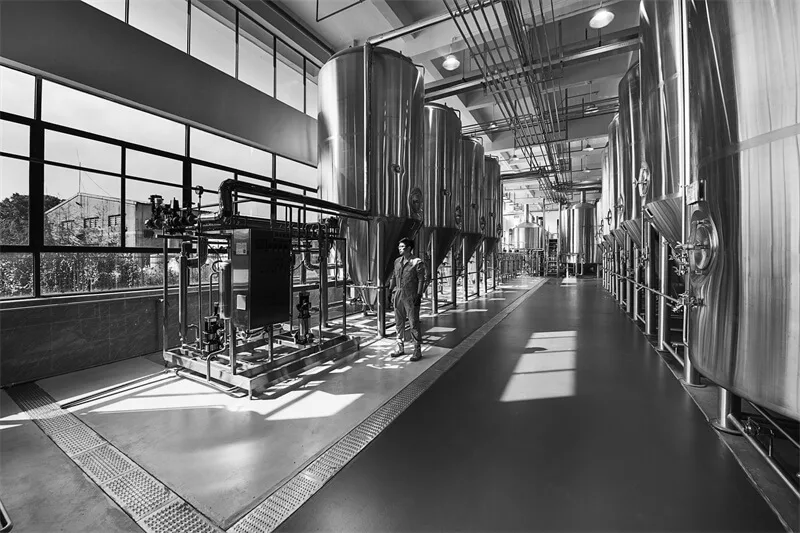
Large breweries typically require:
- 20–30 ft ceiling height
- Sufficient space for brewhouse, fermentation area, packaging hall, and warehouse
✔ Utilities
Stable supply of water, steam, electricity, compressed air, and cooling is essential.
✔ Automation Level
Higher automation improves consistency and reduces labor costs.
✔ Budget Planning
Prioritize investment in core assets:
- Brewhouse system
- Fermentation tanks
- Packaging line
Plan for future expansion.
✔ Local Regulations
Ensure compliance with pressure vessel standards, wastewater discharge, and safety requirements.
4. How to Choose a Brewery Equipment Supplier
When selecting a brewery equipment manufacturer, consider:
- Industry experience and project references
- Engineering capability and customization ability
- Manufacturing quality and testing standards
- Automation expertise
- After-sales service and global support
- On-time delivery
- Competitive lifetime cost
A reliable supplier will provide turnkey solutions from brewhouse design to installation and commissioning.
FAQ
Q: How much space is needed for a 50,000 HL brewery?
Approximately 27,000–40,000 sq ft, depending on layout and warehouse requirements.
Q: Recommended ceiling height?
Minimum 20 ft, ideally 25–30 ft for large fermentation tanks and piping.
Q: How many fermenters are required?
Typically designed for 2–3 turnovers per tank per year, depending on production schedule and beer styles.
Q: What are the highest-cost components?
Brewhouse system, fermentation tanks, filtration system, and packaging line.
Conclusion
A well-designed brewery production line integrates brewhouse, fermentation, filtration, and packaging into one efficient system. Choosing the right brewery equipment supplier ensures stable beer quality, optimized investment, and long-term operational success.
If you are planning a new commercial brewery or expanding capacity, selecting a professional, customized brewhouse system is the foundation of your brewery’s growth. contact the Meto team to visit and start your craft beer journey!