Are you a homebrewer ready to go pro? A brewpub owner looking to expand your capacity? Or an entrepreneur planning to launch a regional craft beer brand?
If any of these sound like you, the 1000L (10HL) brewing system deserves your attention. This is the equipment size that marks a pivotal transition — from experimental, small-batch brewing to legitimate commercial production. It’s the scale where passion meets profitability.
In this guide, we’ll walk you through the components, technical specifications, real-world applications, and key considerations for investing in a 1000L brewhouse.
What Exactly is a 1000L Brewing System?
Let’s clear up the units first. 1000 liters equals 10 hectoliters (HL) , approximately 8.5 US barrels (BBL) , and roughly 264 US gallons . This capacity sits in the “goldilocks zone” for many craft breweries — large enough to produce significant volume for distribution or multiple taproom locations, yet compact enough to fit into a manageable footprint.
A complete 1000L commercial brewing system includes several integrated subsystems that work together to transform malt, water, hops, and yeast into finished beer. Here’s what you can expect in a full setup.
The Complete System: From Grain to Glass
1. Brewhouse
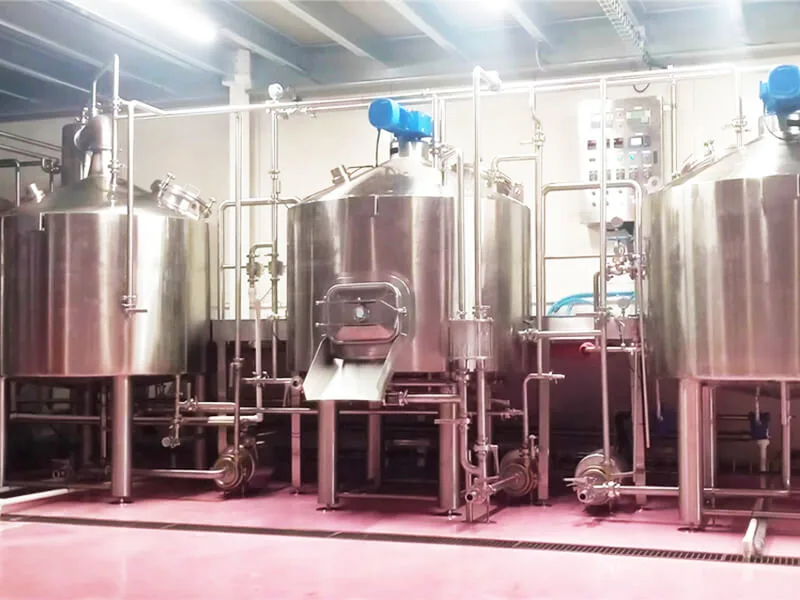
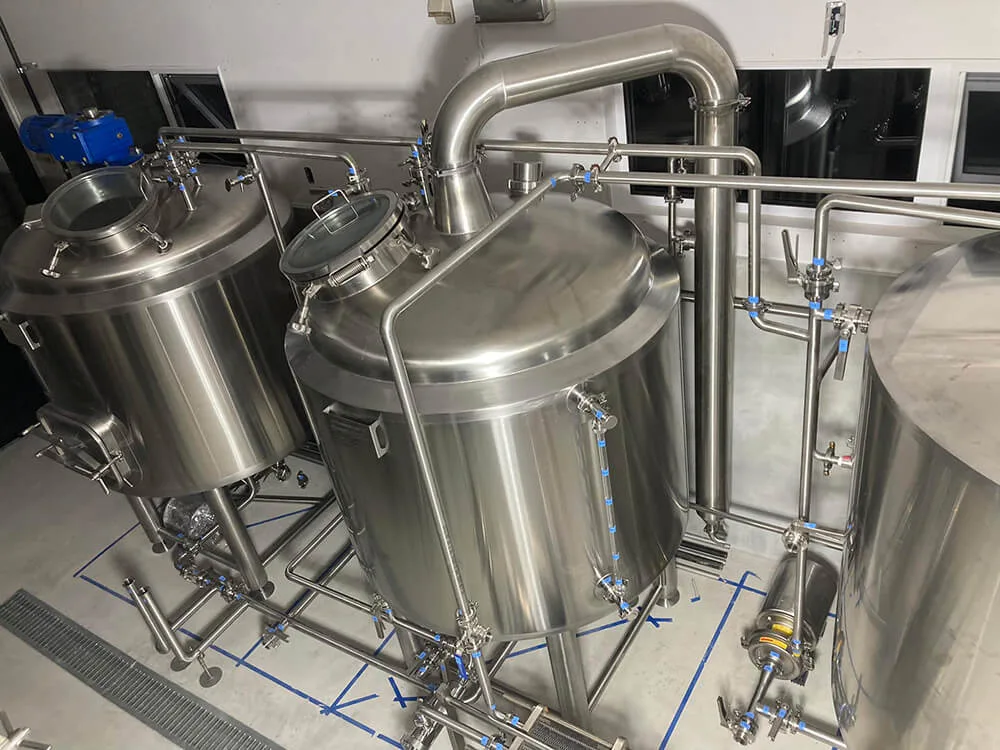
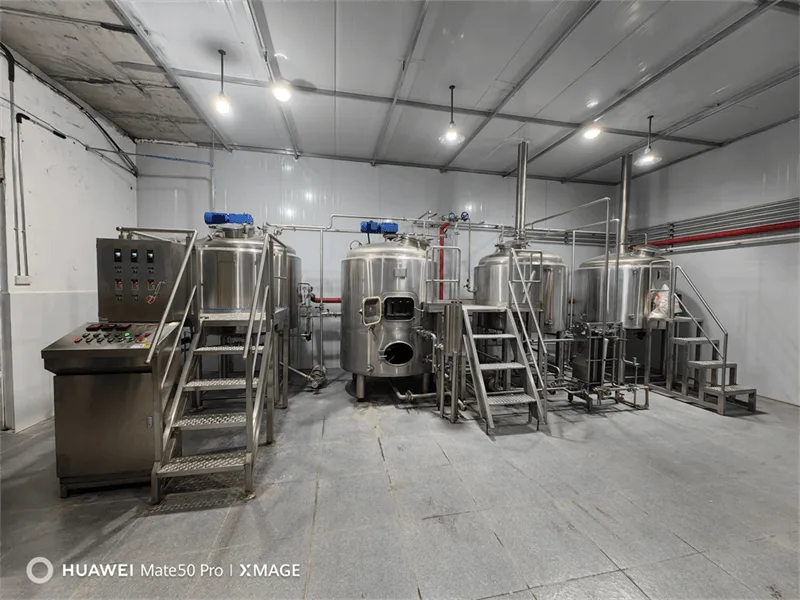
The brewhouse is where the magic begins. For a 1000L system, you’ll typically choose between 2-vessel, 3-vessel, or 4-vessel configurations. The vessel count affects your workflow efficiency and batch scheduling flexibility.
A complete 1000L brewhouse might include:
- 매시/라우터 툰: Where milled malt mixes with hot water and the sugary wort is separated from the grain. Features a milled sieve plate with 0.8mm gaps for efficient lautering, a plow blade agitator for even mixing, and a side grain-out door for easy spent grain removal .
- Kettle/Whirlpool Tun : Where the wort is boiled with hops and then spun to separate trub. For 1000L, this vessel has an effective volume of 1000L and a total volume of at least 1300L to accommodate boiling expansion .
- 온수 탱크 : Provides hot water for mashing and sparging.
- Heating System: Options include steam heating (most common for commercial systems), electric heating, or direct fire . Steam offers the most precise temperature control, with heating rates of 1-1.2°C/min between 45-76°C and 1.2-1.5°C/min from 52-100°C .
2. Fermentation System
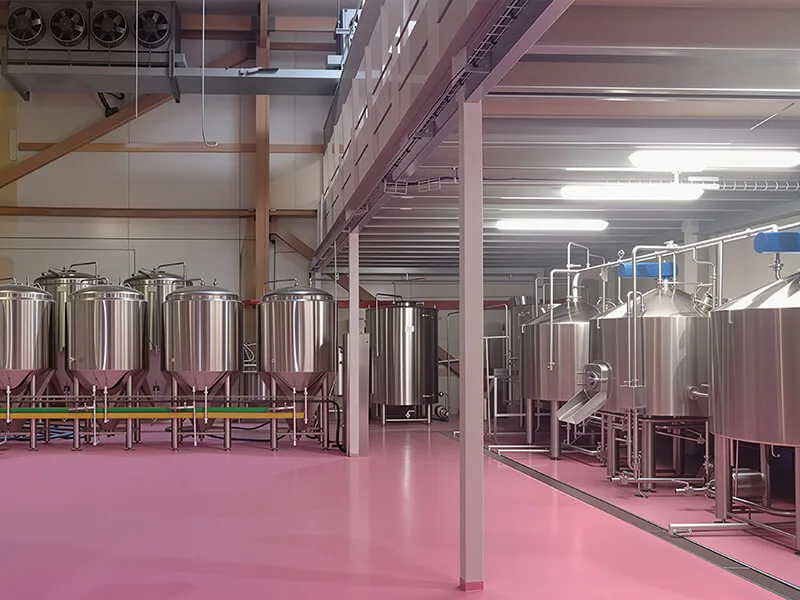
After the wort is chilled, it moves to fermentation tanks. For a 1000L system, you’ll likely have multiple unitanks (conical fermenters) — often 4 to 6 vessels — so you can produce different styles simultaneously or keep production flowing.
Key fermentation tank specifications include:
- Effective volume: 1000L, total volume ≥1250L
- 냉각: Glycol cooling via dimple jackets or miller plate jackets on both the cylinder and cone sections, providing over 40% cooling coverage
- Pressure rating: Design pressure 0.2MPa, working pressure 0.09MPa
- 특징: Dry-hopping port, sampling valve, rotating discharge arm, pressure gauge, and safety relief valve
3. Glycol Cooling System
Temperature control is non-negotiable for quality beer. The glycol system typically includes:
- A glycol chiller (usually 5-8HP for this scale)
- A 2000L insulated glycol water tank
- Glycol piping with pumps and fittings
- Cooling rate capability: 0.8-1°C/hour from 5-18°C, and 0.05-0.2°C/hour from 0-5°C
4. Control System
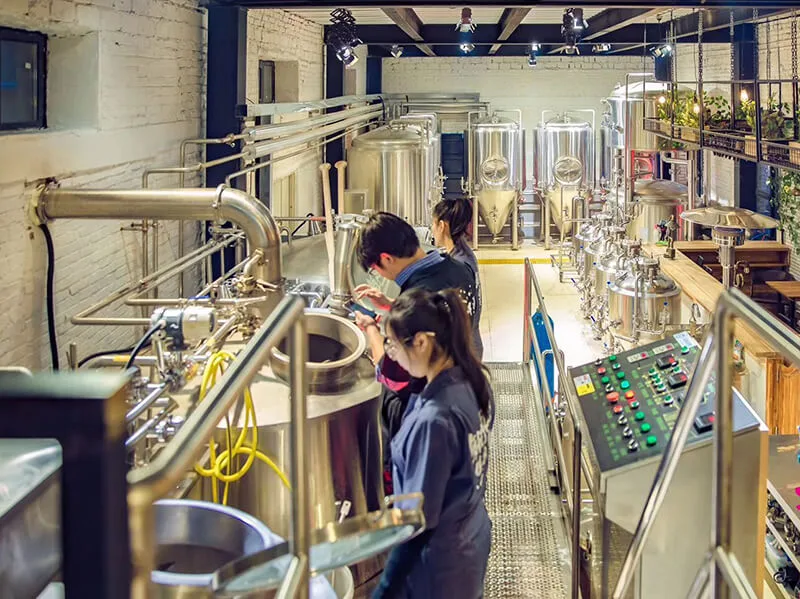
Modern 1000L systems offer PLC (Programmable Logic Controller) with touchscreen control, ranging from semi-automatic to fully automatic . This allows you to:
- Monitor temperatures, pressures, and flow rates in real time
- Automate mash schedules, kettle boil intensity, and hop additions
- Save and replicate recipes consistently
- Reduce labor costs and human error
5. CIP Cleaning System
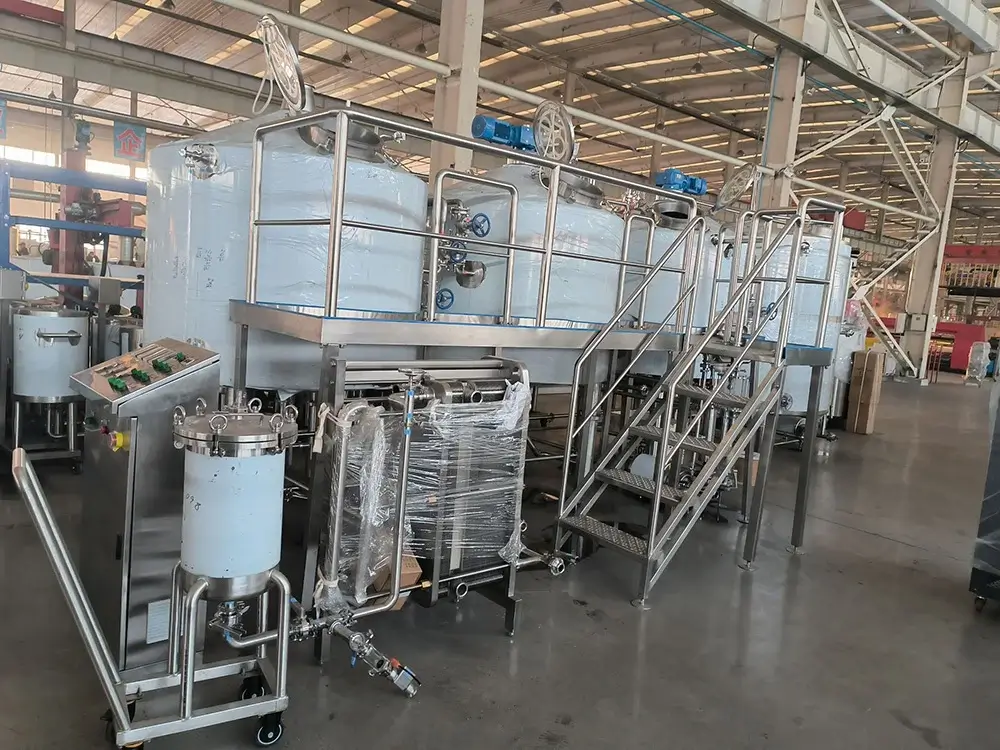
Cleanliness is paramount. A portable CIP cart (typically 100L capacity) with caustic and acid tanks, a sanitary pump, and spray balls ensures thorough cleaning without disassembly .
6. Auxiliary Equipment
- Malt mill (300-500kg/hour capacity)
- Plate heat exchanger (typically 10-20m², 304 stainless steel, with EPDM gaskets)
- Wort pump (5 T/H capacity, 24m head)
- Keg washing and filling machines
- Work platform with non-slip stainless steel tread
Technical Specifications That Matter
When evaluating suppliers, pay close attention to these construction details:
| 매개변수 | Standard Specification |
|---|---|
| Inner material | SUS304 food-grade stainless steel, 3mm thickness |
| Outer material | SUS304 stainless steel, 2mm thickness, oil-wrinkle plate finish |
| Polishing | Internal polished to Ra 0.4μm, acid pickling and passivation |
| Insulation | Polyurethane foam, 80-100mm thickness (prevents heat loss and reduces cooling costs) |
| Welding | 100% TIG argon-shielded welding, double-layer construction, no dead corners |
| Working pressure (vessels) | 0.15-0.3MPa |
| Cladding design pressure | 0.3MPa |
These specifications aren’t just technical jargon — they directly impact durability, hygiene, and energy efficiency. For instance, proper insulation thickness (80-100mm) significantly reduces cooling load, saving money over the equipment’s lifetime .
Who is Buying 1000L Systems? Real-World Applications
Brewpubs and Restaurant Breweries
For establishments that brew onsite, 1000L provides enough capacity to keep taps flowing with a rotating selection while maintaining a strong brand identity. The equipment footprint is manageable, and the investment is moderate compared to larger systems .
Regional Craft Brands
Consider the case of Brasserie Bizarrein France. Founded in early 2022 — the brewery sought to produce non-industrial, high-quality craft beer for the local market .
After evaluating multiple suppliers, Mathieu chose a 1000L steam-heated system with PLC automatic control. The setup included a 3-vessel brewhouse, fermentation tanks (1000L and 2000L), glycol cooling, CIP system, and keg washing/filling equipment. Meto provided not just the equipment but also layout design, installation guidance, and commissioning support .
The result? Brasserie Bizarrein now regularly produces seasonal craft beers, meeting growing demand in the Loiret region while maintaining the quality and craftsmanship Mathieu envisioned.
Expanding Microbreweries
Many brewers start with 500L systems and upgrade to 1000L as demand grows. With a 4 or 5-vessel configuration, a 1000L brewhouse can produce multiple batches per day, scaling output significantly without a proportional increase in labor or floor space .
Why Choose a Chinese Manufacturer for Your 1000L System?
Customization Options
Chinese suppliers offer extensive customization:
- Vessel configuration: 2-vessel (space-saving), 3-vessel (balanced), 4-vessel (efficient), or 5-vessel (maximum throughput)
- Heating method: Steam, electric, or direct fire
- Control level: Manual, semi-automatic, or fully automatic
- Dimensions: Adjusted to fit your specific floor plan
- Finishes: SUS304, SUS316, or copper outer cladding
Turnkey Service
Reputable suppliers offer complete turnkey solutions:
- Layout design: Engineering support to optimize your brewery floor plan
- Manufacturing: All tanks produced in-house with quality control
- Shipping: Professional packaging for safe ocean freight
- Installation: On-site guidance or engineer dispatch
- Training: Brewing process and equipment operation training
- Recipes: Technical support for recipe development
Warranty and After-Sales
Standard warranties include:
- Vessels: 3-5 years
- Electrical components: 1 year
- Spare parts: Long-term availability
- Technical support: Remote troubleshooting via video call, with onsite support available
Next Steps: Planning Your Brewery
If you’re ready to move forward:
- Measure your available space — share floor plan dimensions with suppliers for layout proposals
- Define your production target — how many batches per day? How many beer styles?
- Specify your budget range — this helps suppliers recommend the right configuration
- Consider your timeline — factor in production time (60-90 days) plus shipping and installation
A 1000L brewing system represents a significant investment — and an even more significant opportunity. With the right equipment partner, you can scale your craft beer business efficiently while maintaining the quality and character that sets your brand apart.
Ready to start your 1000L brewery project?
지금 바로 문의하세요 with your space dimensions, production goals, and budget. We’ll provide a customized equipment layout and configuration recommendation within 24 hours.