In an era when craft beer is sweeping the globe, nothing is more appealing than offering customers fresh beer that goes “from fermenter to glass” right inside your restaurant. For restaurant owners, investing in a set of restaurant beer brewing equipment is not only a way to stand out from the competition but also an excellent method to boost profit margins and control product quality.
Yet choosing, laying out, and installing equipment is a complex undertaking. This blog will give you an in-depth look at the ins and outs of restaurant brewing systems.
I. Overview of Restaurant Beer Brewing Equipment
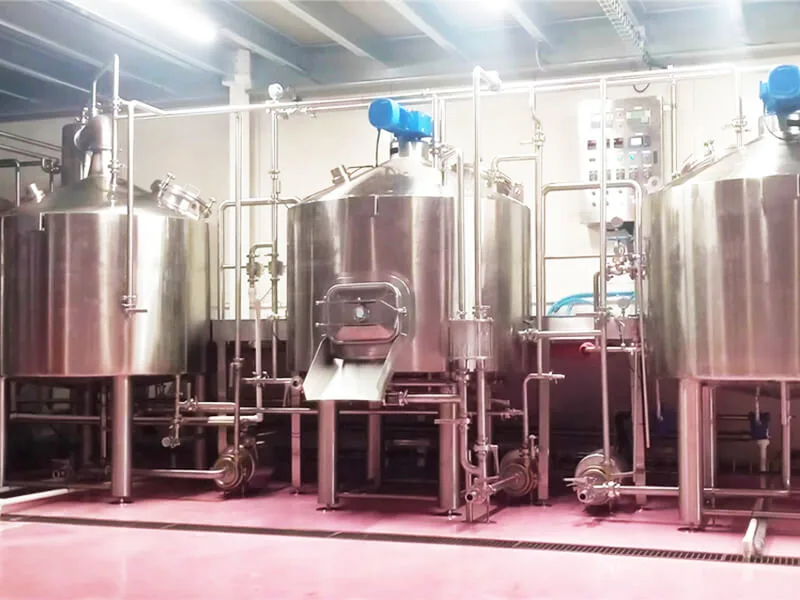
Restaurant beer brewing equipment refers to compact brewing systems that can be installed directly in a food and beverage venue (typically with a batch size of 100 L–1000 L), integrating mashing, fermentation, conditioning, and direct-to-table service.
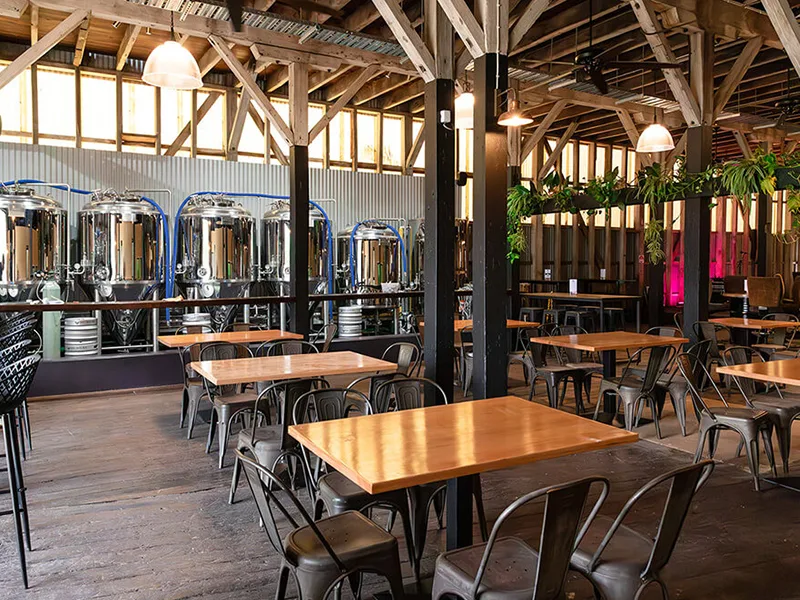
Unlike large-scale industrial breweries, restaurant brewing systems emphasize visual appeal, ease of operation, and space efficiency. The equipment is not just a production machine — very often it is the core “decoration” of the restaurant itself. When customers watch through a glass wall as gleaming copper or stainless steel vessels shine and smell the aroma of boiling wort, the immersive experience is something bottled beer can never replace.
II. Key Types of Restaurant Brewing Systems
Based on the heating method and operating logic, restaurants commonly choose from the following three types:
- Traditional Three-Vessel / Two-Vessel Brewing System
- 구성 요소: Mash/Kettle tun, lauter tun, whirlpool tun.
- 특징: A classic configuration, suited to brewers who pursue traditional techniques. You can perform step mashing with maximum flexibility.
- Suitable for: American- or German-style craft beer pubs that need to showcase a professional image.
- All-in-One Automated Brewing System
- 구성 요소: A single multi-function vessel that integrates all mashing functions.
- 특징: Very small footprint and foolproof operation. Many high-end imported small systems even operate like a coffee machine — “one-touch brewing” — but recipe adjustment flexibility is relatively low.
- Suitable for: Small pizzerias or burger joints where food is the focus and beer is a side offering, or venues with extremely limited back-of-house space.
- Semi-Automatic “Mashing + Independent Fermentation” System
- Currently the golden middle ground in the market. Mashing is completed in one or two vessels, while fermentation takes place in independent, temperature-controlled fermenters.
- 장점: Balances a small footprint with sufficient throughput to handle fermentation cycle timing. This is the top choice for the vast majority of small craft beer restaurants.
III. Sizing Considerations for Restaurant Brewing Systems
Choosing the right size directly affects cash flow. Follow the “output determines scale” principle:
- Micro-Experience Scale (50 L–100 L): One batch per day. Suitable for cafés or light-food shops with fewer than 50 daily customers, where beer is not the main focus but merely a specialty beverage.
- Standard Brewpub Scale (200 L–500 L): Currently the most mainstream configuration. A 500 L setup with one batch per day can supply roughly 1,000 glasses (500 ml each). You need at least 10–20 fermenters to ensure multiple beer styles are available simultaneously.
- Front-of-House Pub + Back-of-House Microbrewery Scale (1000 L and above): This scale usually requires a production license (such as SC certification, i.e., a food production permit). The beer can serve the restaurant as well as wholesale external keg sales.
The Golden Formula: Total Fermenter Volume = Mash Tun Volume × (Fermentation Cycle Days / Mashing Days).
If your beer requires 21 days to mature and you brew a 300 L batch every day, your total fermenter volume must reach 6,300 L. Many new establishments face a supply outage shortly after a booming opening precisely because they lack enough fermenter capacity.
IV. Key Components of Restaurant Beer Brewing Equipment
A complete restaurant system is far more than just a few tanks:
- Raw Material Handling Area: The malt mill is the heart of the operation. Choosing between “wet milling” or “dry milling” directly determines lautering efficiency. The area must be equipped with dust collection systems.
- Mashing and Boiling System: Materials must be food-grade 304 or 316 stainless steel with jacketed heating (steam or electric). Copper-clad vessels are visually stunning but costly and high-maintenance, best suited for display purposes.
- 발효 시스템: Conical fermenters are the standard. The core is the temperature control system (cold water tank + solenoid valve / glycol chiller), with accuracy that must be within ±0.5 °C. Without precise temperature control, you cannot brew a clean lager.
- CIP(클린-인-플레이스) 시스템: This is an area seriously underestimated by newcomers. Without an automated CIP system, the brewer spends 50% of the day scrubbing tanks. Acid and caustic tanks and a cleaning pump must be integrated into the brewing area design.
- Dispensing and Direct-Serve System: Once matured in the fermenter, beer is delivered directly to the bar’s beer tap tower through piping. Lines must be kept cold (using Trunk line bundles with glycol coolant or jacketed cold-water circulation), and the pipeline length should be as short as possible. Every extra meter of line means more wasted beer during pouring.
V. Design Factors for Brewery Layout
Equipment placement determines production efficiency for the next decade. Always follow the gravity-flow or short-distance pumping principle:
- Multi-Level Layout (Most Labor-Efficient): If the space has sufficient ceiling height, place the mash/kettle tun on a second floor or steel platform. The wort flows by gravity into the fermenters on the ground floor, avoiding excessive use of sanitary pumps and reducing shear forces.
- Single-Floor Against-Wall or Island Layout (Most Aesthetic): The mash/kettle tun near the glass curtain wall, with fermenters lined up neatly behind. Leave a forklift or material handling aisle at least 1.2 meters wide, because sooner or later you will be moving bags full of malt.
- Floor Drains and Slope: The brewery floor must have a slope of at least 1–2% towards floor drains, and the drains must be designed large enough. Brewing is a “flood-prone” job — poor drainage is a disaster.
- Viewing and Customer Traffic Flow: During the design phase, plan for customer photo opportunities. Steam from the kettle must not be directed at ceiling smoke detectors, and the lighting should have a colour temperature of 3500K–4000K with a Colour Rendering Index (CRI) Ra > 90 to highlight the texture of the copper vessels.
VI. Installation and Facility Requirements
Many projects finish renovation only to discover they cannot actually brew beer. The root cause lies in substandard infrastructure:
- Electrical Load: Electric heating systems are major power consumers. A 300 L electric system can easily require 30 kW–50 kW of power distribution. Confirm electrical capacity with the property manager in advance; many older shop spaces in traditional buildings need dedicated power lines.
- Water Supply, Drainage, and Water Purification: Water is the blood of beer. A high-flow water purification system (reverse osmosis or activated carbon filtration) must be installed, primarily to remove residual chlorine. At the same time, a settlement tank is needed for wastewater discharge, because yeast-laden wastewater poured directly into the sewer can easily cause blockages and foul odours.
- Steam Extraction and Make-Up Air: Mashing and boiling generate significant evaporation. A stainless steel extraction hood and centrifugal fan must be installed; steam cannot backflow into the restaurant, otherwise the ceiling will grow mould and drip water. A make-up air system must simultaneously be introduced to replenish oxygen consumed by combustion (if gas-fired).
- Flooring and Load Rating: A fermenter filled with 2,000 L of beer can weigh over 2 tonnes. You must have a structural engineer verify the floor load capacity. The floor must be finished with self-levelling epoxy or a food-grade waterproof coating that is resistant to acid and alkali corrosion.
결론
Investing in restaurant brewing equipment is a marriage of rational engineering and sensory art. Don’t just fixate on the unit price of fermenters — pipework and valves often account for 15%–20% of the total equipment cost, and this is exactly what eliminates “leaks and drips” that sap efficiency.
Do your homework thoroughly, and when that golden wort flows through the restaurant, what you reap will be not only delighted customers but also rich rewards in your brick-and-mortar business.
At Meto, we understand that every brewery is unique. Our engineers can custom-design equipment to fit your vision. Just let us know what you need, and we’ll deliver a one-stop solution straight to your inbox within 24 hours.”