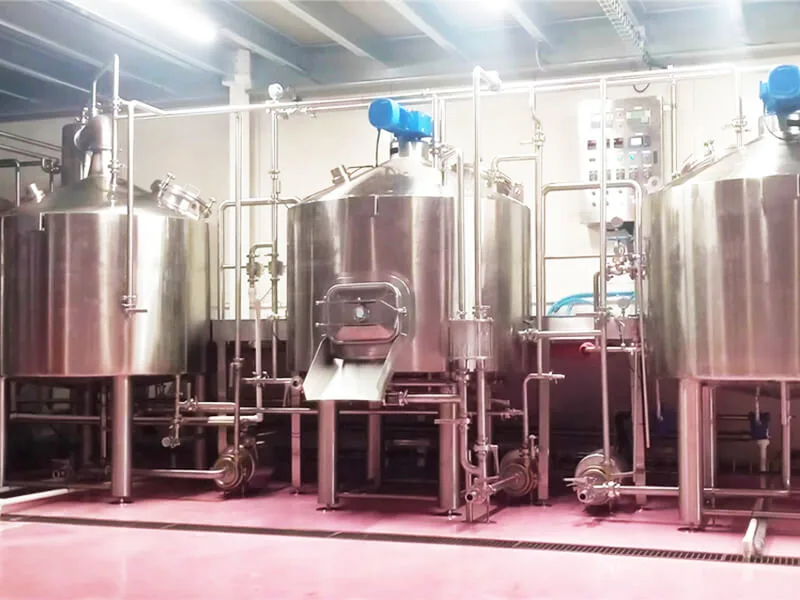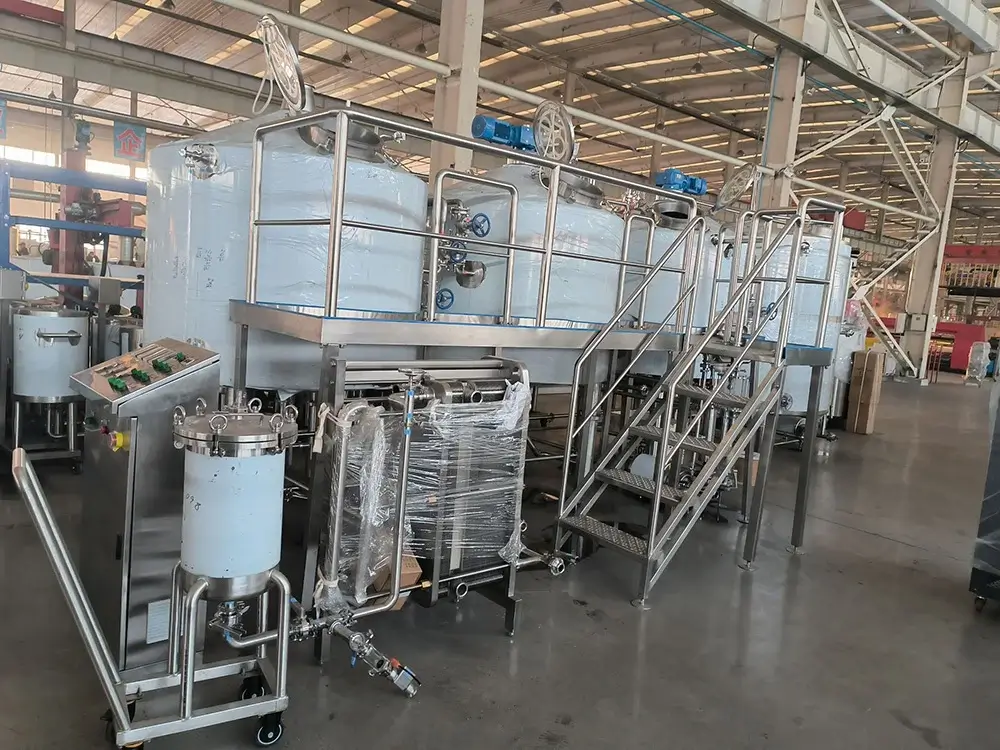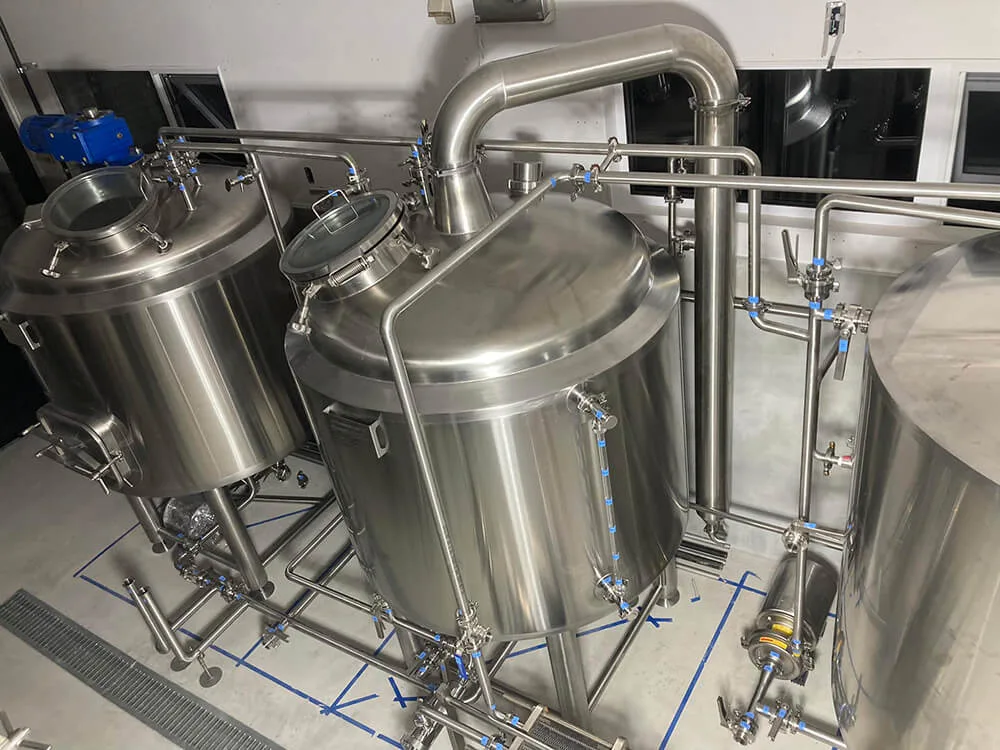

A 500L whisky distillery is not simply a smaller version of an industrial distillery. At this scale, equipment selection directly affects how the distiller manages heating, vapour movement, copper contact, condensation and spirit cuts.
For Peach Blossom Island in Rizhao, China, the production concept was built around three decisions: a 500L custom copper still, double distillation, and flexible fermentation from 48 to 120 hours.
The objective was not maximum throughput. It was process control.
For METO, as a distillery equipment manufacturer, this project required the still to be designed around the intended production method rather than treating capacity as the only specification.
Why Choose a 500L Copper Still?
For a craft whisky producer, still capacity has to balance production volume with operational flexibility.
A larger still can reduce the number of distillation runs required for a given annual output, but it also increases the quantity of spirit committed to each process trial. For a developing whisky brand, that can make recipe development and process adjustment more expensive.
A 500L system provides a practical middle ground.
It is large enough for commercial craft production while remaining suitable for controlled trials involving different fermentation times, distillation cuts and maturation programmes.
Capacity Should Match the Fermentation System
The still cannot be selected independently from fermentation capacity.
A whisky production line typically involves:
Mashing → Fermentation → First Distillation → Low Wines → Second Distillation → New Make Spirit → Maturation
If the still is too large for the available fermentation volume, the distillery may have difficulty maintaining efficient batch scheduling.
If it is too small, excessive distillation time can become a bottleneck.
For Peach Blossom Island, the 500L capacity supports a small-batch production philosophy in which fermentation and distillation can be evaluated as connected process stages rather than independent pieces of equipment.
Why Copper Instead of Stainless Steel?
Copper remains an important material in traditional whisky distillation because of its interaction with sulphur-containing compounds during distillation.
The objective is not simply to maximize copper contact. The still geometry, vapour path, heating method and operating conditions all influence the resulting spirit.
This makes copper still design an engineering decision rather than a decorative choice.
For a custom distillation equipment project, the shape and configuration of the still need to correspond with the intended spirit style and operating method.
Custom Copper Still Manufacturing for Peach Blossom Island
The still supplied for the project was custom manufactured by METO rather than selected as a standard catalogue unit.
The customization process involves more than determining a nominal 500L volume. The equipment must be considered in relation to heating, vapour flow, condenser capacity, operating pressure, drainage, cleaning and the distiller’s working routine.
For a craft distillery, these details determine how consistently the equipment can be operated from batch to batch.
Equipment Geometry Affects Distillation Behaviour
Still geometry influences how vapour travels through the system and how much interaction occurs between vapour and copper surfaces.
The configuration therefore has to be considered together with:
- Still volume and working fill level
- Heating method and heating intensity
- Vapour path and copper contact
- Condenser capacity
- Product collection system
- Drainage and cleaning requirements
- Operator access and maintenance
These are practical equipment-selection criteria for anyone evaluating a 500L whisky distillery.
The right still is not necessarily the one with the most features. It is the one whose configuration matches the intended process.
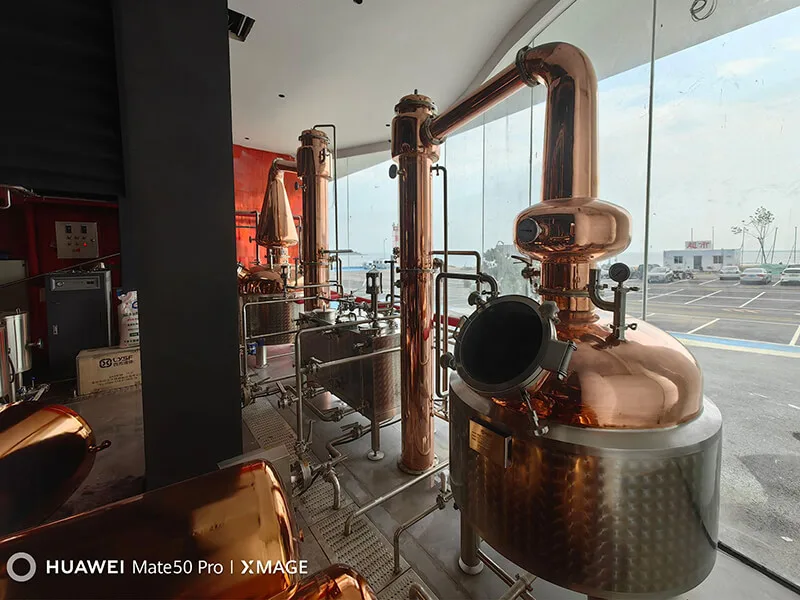
Double Distillation: The Core Process Decision
The Peach Blossom Island distillery uses double distillation.
The first run converts fermented wash into low wines. The second run concentrates and separates the spirit into heads, hearts and tails.
This approach has an important implication for equipment selection: the still must be suitable for repeated operation and provide the operator with sufficient control during both stages.
First Distillation: Producing Low Wines
The fermented wash enters the still for the first distillation.
The purpose of this run is to recover alcohol and carry desirable fermentation-derived compounds into the low wines.
The wash may typically be in the range of approximately 7–9% ABV, while the resulting low wines can reach approximately 22–28% ABV depending on the actual wash composition and operating conditions.
The first run is therefore primarily a concentration stage.
Second Distillation: Spirit Separation
The low wines are then distilled again.
This is where spirit separation becomes more important.
The distillate changes throughout the run, and the distiller separates the output into heads, hearts and tails according to the target spirit profile.
The heart cut becomes the primary new make spirit for maturation.
A 500L still makes this process particularly suitable for small-batch experimentation because different cut strategies can be tested without committing large quantities of spirit.
How Double Distillation Changes Equipment Requirements
Double distillation means the distillery must consider more than still capacity.
The complete system has to support repeated heating and condensation cycles with stable operation.
The main engineering considerations include:
Heating Control
Heating must be controllable enough to manage the rate of vapour generation.
Excessive heating can make separation more difficult and may reduce the operator’s ability to make precise cuts.
For a small copper still, responsive heating control is particularly important because changes in operating conditions can become apparent relatively quickly.
Condenser Sizing
The condenser must be capable of handling the vapour load generated by the still.
An undersized condenser can compromise operating stability, while an excessively large system may add unnecessary cost and complexity.
Condenser selection should therefore be based on the still’s heating capacity, vapour generation rate and intended operating conditions rather than volume alone.
Operator Access and Cleaning
A whisky still is a production vessel, not a display piece.
After every distillation cycle, the system needs to be drained, inspected and cleaned appropriately.
Access points, connections, valves and drainage should therefore be considered during equipment design.
These details become particularly important in a system designed for frequent small-batch production.
Fermentation: 48 Hours vs. 120 Hours
Distillation can refine the spirit, but it cannot completely replace the character created during fermentation.
The Peach Blossom Island project allows fermentation to vary from approximately 48 to 120 hours.
This creates an additional process variable for whisky development.
Short Fermentation
A 48-hour fermentation can be used as a reference point for a cleaner and more direct spirit profile, with potential characteristics such as fresh grain, citrus and mineral notes.
Extended Fermentation
At around 120 hours, fermentation has more time to develop a broader range of fermentation-derived compounds.
The intended direction is a richer and more expressive profile, potentially including tropical fruit, waxy and creamy characteristics.
These sensory descriptions should be treated as development targets rather than guaranteed results. Actual flavour depends on yeast, raw materials, fermentation temperature, water chemistry, distillation and maturation.
Matching Fermentation and Distillation
The main engineering value of this project lies in how the variables are combined.
| 발효 | Distillation | Development Direction |
|---|---|---|
| 48h | Double distillation | Cleaner, brighter new make |
| 72–96h | Double distillation | Greater balance and aromatic complexity |
| 120h | Double distillation | Richer and more expressive character |
This approach allows the distillery to compare new make spirits produced under different fermentation conditions while maintaining the same fundamental distillation architecture.
The still therefore becomes a development tool, not simply a production vessel.
What Makes This a Custom Distillery Equipment Project?
The key feature of the Peach Blossom Island project is not the 500L capacity by itself.
It is the relationship between capacity, copper construction, double distillation and fermentation flexibility.
A standard still could provide a nominal 500L volume.
A properly engineered system should answer more important questions:
- How will the still be heated?
- How will vapour move through the system?
- How much copper contact is required?
- How will the condenser handle the vapour load?
- How will the operator manage spirit cuts?
- How will the equipment be cleaned between batches?
- Does the still capacity match fermentation and production scheduling?
- Can the system support future process development?
These questions form the basis of professional distillery equipment selection.

METO: From Still Specification to Manufacturing
For METO, the role of a distillery equipment manufacturer is to translate the distiller’s process requirements into a workable equipment configuration.
The Peach Blossom Island project demonstrates this approach through a custom 500L copper still designed for small-batch whisky production and double distillation.
Rather than focusing only on equipment capacity, METO considers the complete operating system: vessel design, heating, condensation, process connections, cleaning and operator requirements.
This approach is particularly important for craft distilleries, where equipment needs to support both production and product development.
A Small Still with a Long-Term Purpose
The Peach Blossom Island project shows why a 500L whisky distillery can be an effective platform for craft spirit development.
The 500L capacity keeps batches manageable.
Copper provides the material characteristics required for traditional distillation.
Double distillation creates a second stage for concentration and spirit separation.
Flexible fermentation allows the distillery to investigate different flavour directions.
Together, these choices create a system designed around control rather than volume.
For a distillery equipment manufacturer, that is the real engineering challenge: not simply building a 500L still, but building equipment that gives the distiller enough control to understand—and eventually define—the character of the spirit.
Planning to build your own distillery? METO에 문의 to discuss your distillery equipment requirements and get a customized solution for your project.