Japan has a strong culture of craft beer, with consumers increasingly interested in local breweries, seasonal beers, limited releases and distinctive regional flavors.
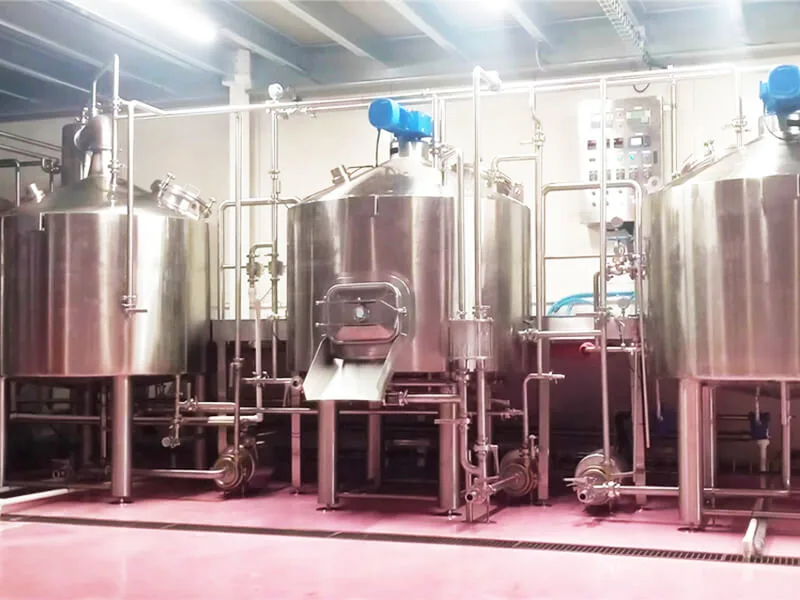
For restaurants, brewpubs, hotels and independent brewery startups, a 500L brewery system provides a practical balance between production capacity, floor space and product flexibility.
A well-designed 500L brewery is not simply a collection of brewing vessels. The brewhouse, fermentation tanks, cooling system, CIP system, controls and filling equipment need to work together as one production system.
For the Japanese market, equipment selection should also take into account limited production space, hygiene management, operational efficiency and the ability to produce multiple beer styles throughout the year.
This 500L craft brewery solution is designed around those requirements, providing a compact and scalable setup for small commercial breweries, brewpubs, hotels and restaurant-based breweries.
Why Choose a 500L Brewery System?
A 500L system is suitable for breweries that want commercial production capability without investing in a large industrial-scale brewery.
With a nominal brewing capacity of 500L per batch and a planned production schedule of one batch per day, the system can support approximately 330 brewing days per year.
The configuration is particularly suitable for businesses that want to:
- Operate a brewery inside a restaurant or brewpub
- Produce fresh beer for direct local consumption
- Develop several house beer recipes
- Test seasonal and limited-edition products
- Build a local craft beer brand
- Start with a manageable production scale and expand later
The relatively compact footprint also makes a 500L brewery easier to integrate into Japanese commercial properties where available floor space can be limited.
Brewery Capacity and Production Planning
The proposed production plan is based on a 500L brewing capacity per batch.
| 매개변수 | 구성 |
|---|---|
| Brewhouse capacity | 500L/batch |
| Planned production days | 330 days/year |
| Working schedule | 1 shift / 8 hours |
| Brewing frequency | 1 batch/day |
| Average fermentation period | Approximately 20 days |
| Total fermentation capacity | More than 10,000L |
| Fermenters | 500L × 10 + 1,000L × 5 |
| Bright beer tanks | 500L × 2 + 1,000L × 1 |
This configuration provides more than 10,000L of fermentation capacity, allowing the brewery to maintain continuous production while different batches are fermenting.
The combination of 500L and 1,000L fermenters also gives the brewery more flexibility.
Smaller tanks can be used for seasonal beers, experimental recipes and limited releases, while larger 1,000L tanks can handle core products with higher demand.
Brewhouse Configuration for Flexible Craft Brewing
The brewhouse is the core of the brewery and directly affects brewing efficiency, wort quality and production flexibility.
For this 500L brewery project, two practical configurations can be considered.
Two-Vessel Brewhouse
One option combines the mash and lautering functions in a mash/lauter tun, with a separate kettle/whirlpool vessel.
The configuration includes:
- 매시/라우터 툰
- 주전자/월풀 탱크
- Wort pump
- Plate heat exchanger
- Wort oxygenation system
- Brewing control system
This arrangement is compact and suitable for breweries where available space is a major consideration.
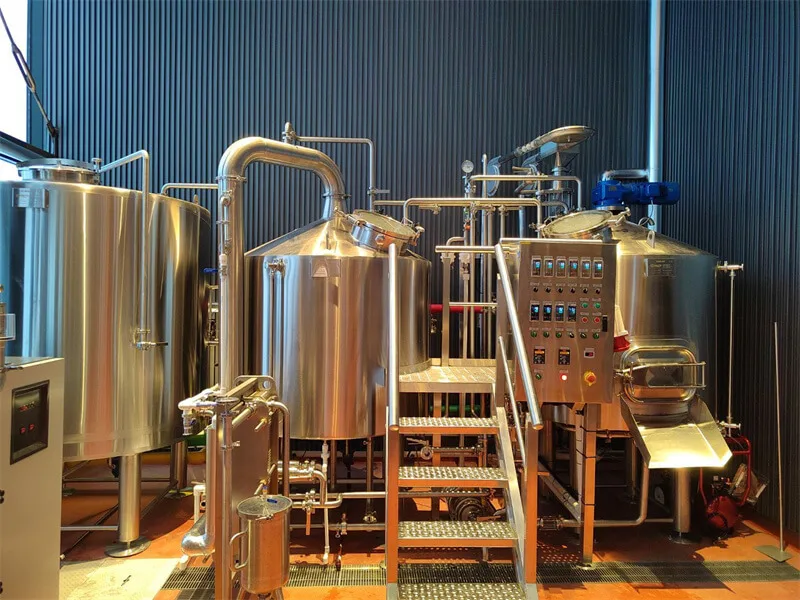
Two-Tank, Three-Vessel Configuration
Another option separates the wort clarification and whirlpool functions.
The system can be configured with:
- Mash/Lauter/Whirlpool Tank
- 끓는 주전자
- Dedicated process functions for lautering and whirlpooling
The choice between configurations should be based on the brewer’s recipes, brewing frequency, available space and desired level of process separation.
For Japanese brewpubs and small commercial breweries, equipment layout should be developed together with the building plan rather than treating the brewery as an isolated equipment package.
Compact Brewery Layout for Japanese Brewpubs
Space utilization is one of the most important considerations when installing a brewery in Japan.
A successful brewpub should create a clear relationship between the production area and the customer area without compromising food safety or operator safety.
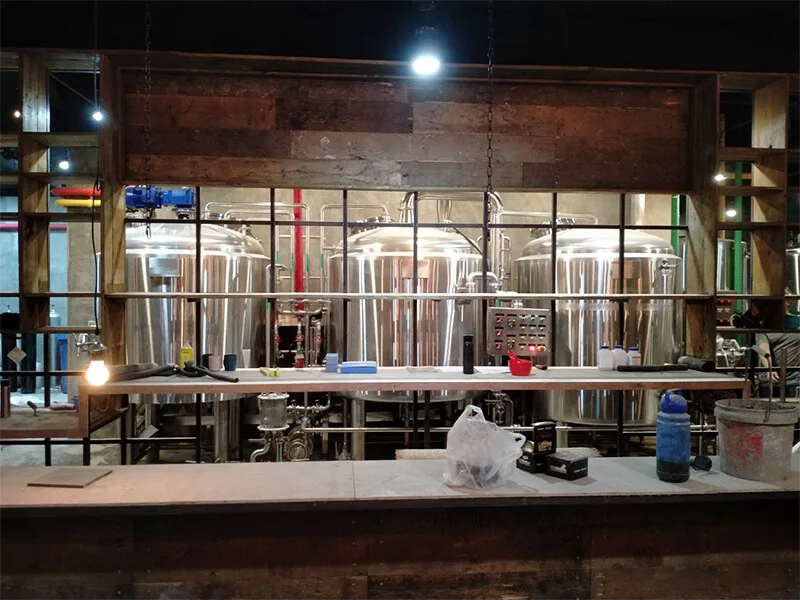
Open Brewery Concept
The brewing area can be positioned where customers can see the stainless steel brewing vessels through a viewing area or glass partition.
This allows the brewery itself to become part of the customer experience.
Instead of hiding the production process, the tanks, piping and brewing operations can contribute to the visual identity of the restaurant or taproom.
Separate Production and Customer Areas
Although visual interaction is valuable, production and customer areas should remain functionally separated.
The layout should provide dedicated areas for:
- Raw material storage
- 밀링
- Brewing
- 발효
- Cold storage
- CIP cleaning
- 패키징
- Finished beer handling
This arrangement helps improve hygiene management, operator safety and workflow efficiency.
Vertical Space Utilization
For Japanese commercial properties, available floor area can be more restrictive than building height.
Therefore, the brewery layout can make better use of vertical space where building conditions allow it.
Fermentation tanks, glycol equipment, piping and utility systems should be positioned according to the actual ceiling height, access routes and maintenance requirements.
A 3D layout should ideally be developed before manufacturing begins.
Brewing a Wide Range of Japanese Craft Beer Styles
A 500L brewery should not be designed around only one beer recipe.
The system can be used to produce a broad range of craft beer styles, including:
- Wheat beer
- IPA
- Pale Ale
- Stout
- Porter
- Pilsner
- Sour beer
- Fruit beer
- Saison
- Seasonal specialty beers
For Japanese breweries, recipe development can also incorporate local ingredients.
Examples include:
- Green tea
- Yuzu
- Japanese citrus
- Rice
- Soba
- Ginger
- Honey
- Coffee
- Local fruits
- Regional herbs and spices
This creates opportunities for breweries to develop beers with a stronger connection to local culture and regional agriculture.
Fermentation Capacity: More Than 10,000L
Fermentation capacity is often more important than brewhouse size when planning actual brewery output.
For this project, the fermentation system includes:
500L × 10 fermentation tanks
and
1,000L × 5 fermentation tanks
providing more than 10,000L of total fermentation capacity.
The approximately 20-day average fermentation cycle provides sufficient tank turnover for continuous production.
Why Use Different Fermenter Sizes?
Using different tank capacities gives the brewery greater flexibility.
For example, a 500L fermenter can be used for:
- Experimental beers
- Seasonal releases
- Low-volume recipes
- New product testing
- 한정판
The 1,000L tanks can be dedicated to high-volume flagship beers.
This is particularly useful for breweries that sell through both their own taproom and external distribution channels.
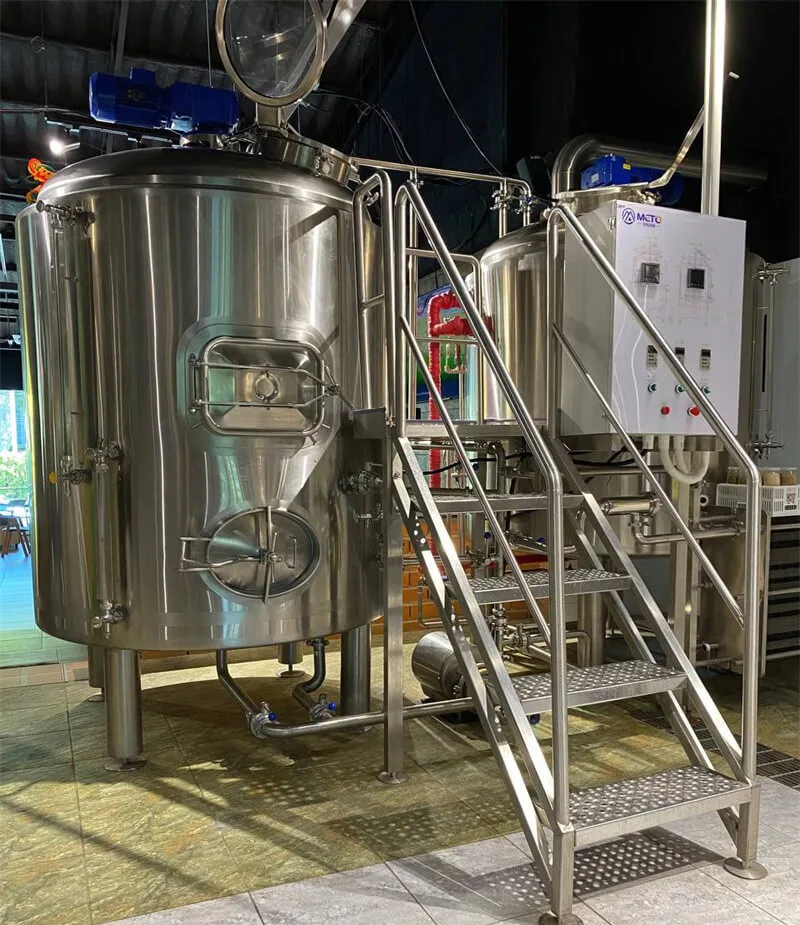
Stainless Steel Fermentation Tanks
The fermentation tanks should be designed around the brewery’s beer styles, fermentation temperatures and cleaning requirements.
Typical features can include:
- SUS304 stainless steel construction
- Conical fermentation bottom
- Cooling jacket
- Pressure-rated design
- 온도 제어
- CIP spray device
- Pressure gauge
- Safety valve
- Sample valve
- Carbonation capability where required
For breweries serving the Japanese food and beverage market, hygienic construction and easy cleaning should be considered during the initial tank design rather than added later.
Bright Beer Tanks for Packaging and Serving
The proposed cellar includes:
- 500L bright beer tank × 2
- 1,000L bright beer tank × 1
Bright beer tanks can be used for beer maturation, clarification, carbonation and temporary storage before packaging or serving.
For a brewpub, they can also provide additional flexibility for managing draft beer inventory.
Different tank sizes allow the brewery to manage products according to sales volume instead of forcing every beer into the same production cycle.
Cooling System for Stable Fermentation
Temperature stability is essential for consistent beer quality.
The proposed cooling system includes:
- 1,500L ice water/glycol tank
- 10 HP refrigeration unit
- Cooling circulation system
- Insulated process piping
The cooling system should be sized according to the actual fermentation capacity, wort cooling requirements, ambient temperature and expected production schedule.
For a 500L brewery, the cooling system should not be selected solely according to brewhouse volume.
The total thermal load created by multiple fermentation tanks can be significantly higher than the cooling requirement of one brewing batch.
Plate Heat Exchanger and Wort Oxygenation
After boiling and whirlpooling, wort needs to be rapidly cooled to the appropriate fermentation temperature.
A 5 m² plate heat exchanger can be incorporated into the wort cooling system.
The plate heat exchanger provides efficient heat transfer while reducing the time required to bring wort down to fermentation temperature.
After cooling, controlled oxygenation can be carried out using a titanium oxygenation device before yeast pitching.
Accurate oxygenation is important because excessive or insufficient oxygen can affect yeast performance and fermentation consistency.
Malt Milling System
The proposed milling system uses a malt mill with a capacity of approximately 200 kg/hour.
The milling system should provide consistent particle size while avoiding excessive flour production.
For a small commercial brewery, the mill should be positioned close to the raw material handling area while maintaining a logical connection to the brewhouse.
Dust control and cleaning access should also be considered during installation.
CIP Cleaning System
Cleaning is one of the most important parts of brewery operation.
The proposed configuration includes a mobile CIP cleaning pump, allowing operators to clean tanks, piping and process equipment using circulating cleaning solutions.
A practical CIP workflow may include:
- Pre-rinse
- Caustic cleaning
- 중간 헹굼
- Acid cleaning when required
- Final rinse
- Sanitization
The exact cleaning procedure should be established according to the brewery’s process, cleaning chemicals and equipment materials.
For Japanese breweries, the CIP system should be designed with easy access, clear piping identification and efficient drainage.
PLC-Based Brewery Control System
The brewery can be equipped with a PLC-based control system for monitoring and managing key brewing parameters.
Typical control points include:
- Tank temperature
- Heating
- Pump operation
- Valve operation
- 냉각
- Fermentation temperature
- Process timing
- Alarm management
A properly designed control system can reduce operator workload and improve repeatability between batches.
However, automation should follow the brewer’s actual process rather than simply adding more functions.
For a 500L craft brewery, a semi-automatic or automatic control system can often provide a good balance between process control and hands-on brewing.
Steam Heating System
The proposed brewhouse uses a steam heating system with a steam boiler.
Steam heating offers several advantages for commercial craft brewing:
- Even heat distribution
- Precise process control
- Reduced risk of localized scorching
- Suitable for repeated brewing
- Flexible integration with other process equipment
The boiler capacity should be calculated based on the brewhouse heating load, heating time, local utility conditions and applicable Japanese regulations.
Electrical requirements, boiler installation, ventilation and safety systems should also be confirmed before equipment production.
Packaging Options for a Small Japanese Brewery
Packaging should be selected according to the brewery’s sales channels.
The proposed project can support multiple packaging formats, including:
Glass Bottle Filling
Glass bottles remain suitable for craft beer brands that emphasize premium presentation and local retail sales.
Can Filling
Cans provide a lightweight packaging option and are convenient for distribution, take-away sales and online channels.
Keg Filling
Kegs are particularly suitable for:
- Brewpub draft systems
- Restaurants
- Bars
- Local events
- Wholesale distribution
A brewery can combine these packaging formats instead of relying on a single package type.
From Brewpub to Local Craft Beer Brand
A 500L brewery can serve as more than an on-site beer production system.
It can become the production center of a local craft beer brand.
A typical development path could be:
Brewpub → Local Distribution → Seasonal Releases → Retail Packaging → Regional Brand
The initial 500L capacity provides enough flexibility to test the market without immediately committing to a large industrial brewery.
Once demand becomes stable, additional fermenters, bright beer tanks, packaging equipment or a larger brewhouse can be added according to actual sales data.
Engineering Considerations for Installation in Japan
A brewery designed for the Japanese market should be reviewed against the actual installation environment before manufacturing.
Important considerations include:
Building Access
The equipment dimensions should be checked against:
- Entrance dimensions
- Elevator capacity
- Stairways
- Loading routes
- Ceiling height
- Equipment installation area
유틸리티
The project should confirm:
- Electrical power supply
- Water supply
- 배수
- Steam supply
- Ventilation
- Cooling requirements
Hygiene and Drainage
The brewery floor should provide appropriate drainage and allow easy cleaning around tanks and process equipment.
Piping should be arranged to minimize dead legs and unnecessary horizontal sections wherever practical.
Local Compliance
Electrical, pressure vessel, steam boiler and building requirements should be reviewed according to the actual installation location and applicable Japanese regulations.
The final engineering package should therefore be developed based on the customer’s site conditions rather than relying solely on a standard equipment drawing.
A Complete 500L Brewery Solution
A complete 500L brewery project can include:
| 시스템 | Main Equipment |
|---|---|
| 밀링 | 200 kg/h malt mill |
| 양조장 | 500L mash/lauter + kettle/whirlpool system |
| Heat exchange | 5 m² plate heat exchanger |
| Oxygenation | Titanium oxygenation device |
| Yeast handling | 5L SUS304 yeast dosing tank |
| Spent grain | Spent grain collection tank |
| 발효 | 500L × 10 + 1,000L × 5 |
| Bright beer | 500L × 2 + 1,000L × 1 |
| 냉각 | 1,500L cooling tank + 10 HP chiller |
| Control | PLC 제어 시스템 |
| CIP | Mobile CIP cleaning pump |
| Steam | Steam boiler |
| 패키징 | Bottle, can and keg filling options |
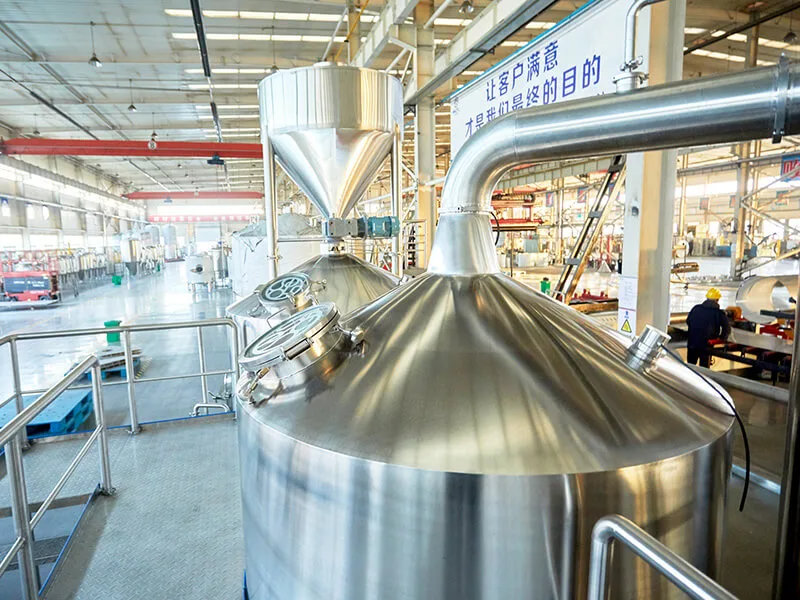
The objective is not simply to supply individual machines, but to create a coordinated production system from milling and brewing through fermentation, maturation, cleaning and packaging.
Why Work With an Experienced Brewery Equipment Manufacturer?
A successful brewery project requires more than manufacturing stainless steel tanks.
The equipment supplier needs to understand the relationship between:
- Brewing recipes
- Production capacity
- Fermentation turnover
- Cooling load
- CIP procedures
- Packaging requirements
- Site limitations
- Utility conditions
- Future expansion
For overseas brewery projects, engineering communication is equally important.
Drawings, equipment specifications, piping layouts, electrical requirements and installation instructions should be confirmed before production.
For Japanese customers, the equipment design can be adapted to the available site, planned beer production and preferred level of automation.
Build Your 500L Craft Brewery in Japan
A 500L brewery provides an attractive starting point for entrepreneurs, restaurants, hotels and brewpubs looking to produce their own craft beer.
With a properly planned brewhouse, more than 10,000L of fermentation capacity, dedicated cooling, PLC control, CIP cleaning and flexible packaging options, the system can support both on-site beer sales and local distribution.
The key is to design the brewery around the actual production plan, available space and future business model rather than simply selecting equipment by tank volume.
If you are planning to build a 500L craft brewery, brewpub or small commercial brewery in Japan, METO can provide equipment design, manufacturing and turnkey brewery solutions based on your site conditions and production requirements.