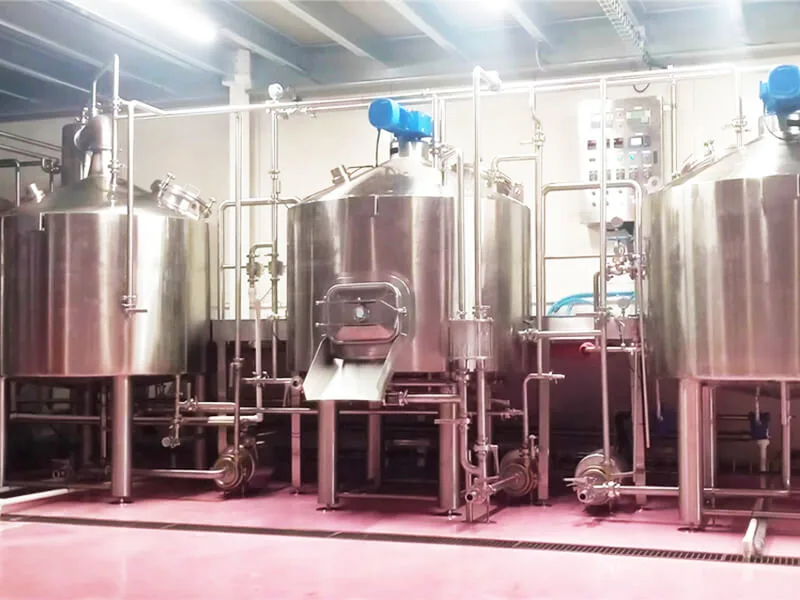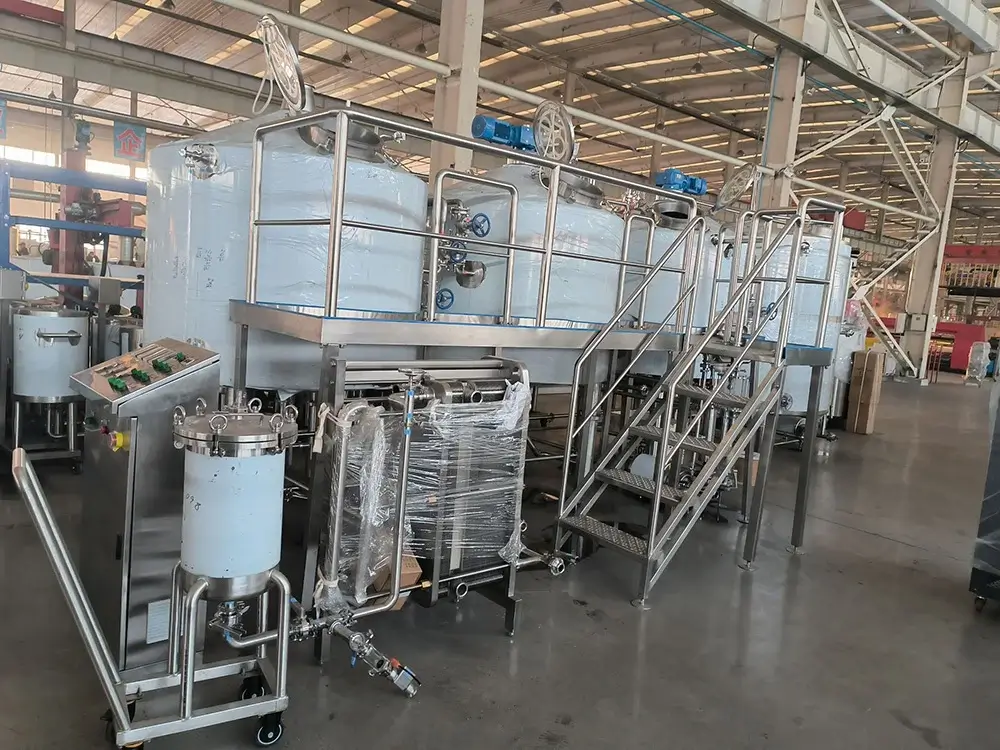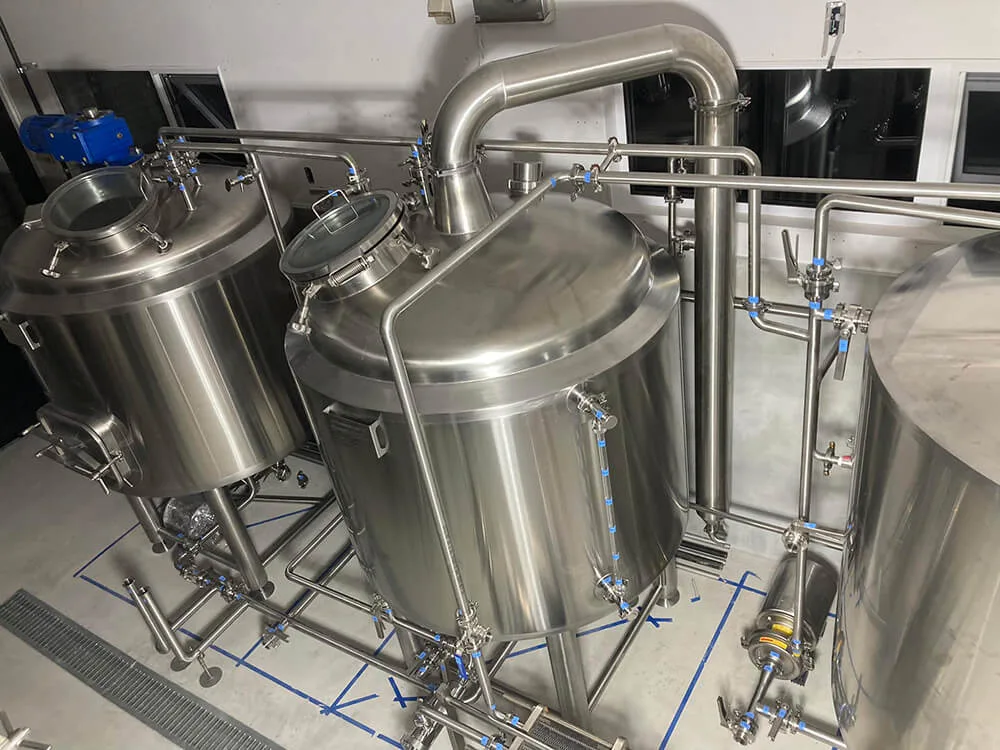
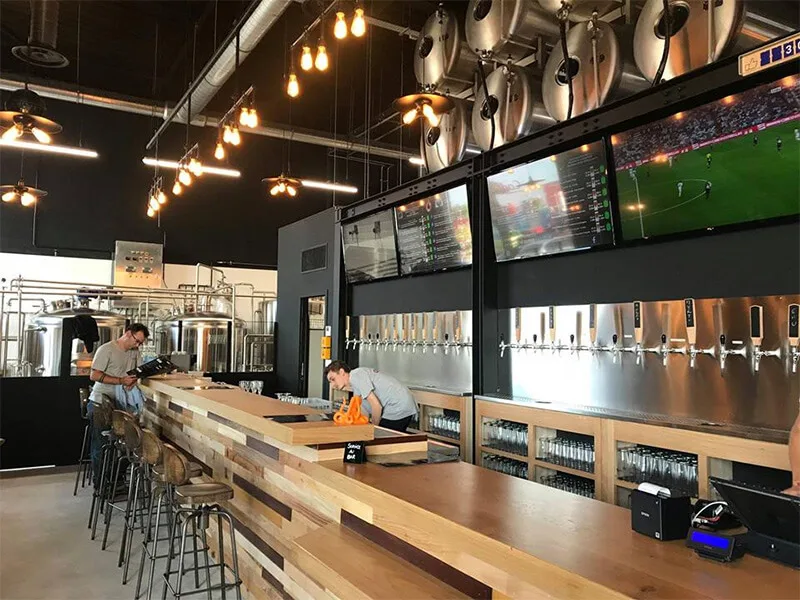
In the booming craft beer industry, how to meet the growing market demand without sacrificing the core pillars of quality control, production flexibility, and brand uniqueness? For numerous start-up and expanding microbrewery restaurants, 300L to 500L brewery equipment has emerged as the golden choice for large-scale upgrading, perfectly balancing production capacity, cost-effectiveness, and operational flexibility. Large-scale industrial equipment consumes excessive resources, while small-scale equipment limits development space. This medium-sized brewery equipment is specifically designed for sustainable expansion, helping microbrewery restaurants achieve efficient and healthy development, as well as lightweight and steady capacity expansion. The following is a complete article framework, covering core arguments, practical insights, and implementation suggestions, tailored to the reading needs of microbrewery operators, managers, and industry enthusiasts.
I. Introduction: The Dilemma of Large-Scale Development for Modern Microbrewery Restaurants
First, we point out the unique challenges faced by microbrewery restaurants in capacity expansion. Large commercial breweries focus on mass production, while microbrewery restaurants need to balance two core needs: first, providing fresh and high-quality on-tap beer for in-store customers to create an immersive bar experience; second, meeting the order growth from off-sale channels such as kegged beer and take-out bottles/cans. Most restaurants initially choose 100–200L small-scale equipment but soon encounter development bottlenecks: either insufficient production capacity to meet in-store customer flow and local wholesale orders, or blind purchase of industrial-grade large-scale equipment, resulting in idle space, soaring labor costs, and loss of flexibility in formula research and small-batch trial brewing.
II. Why 300–500L Equipment Is the Ideal Choice for Microbrewery Restaurant Expansion
2.1 Reasonable Capacity Ratio, On-Demand Production to Eliminate Waste
The capacity is highly adaptable and precisely matches market demand: 300L brewery equipment is suitable for brewing a variety of niche craft beers, stably ensuring in-store supply; 500L brewery equipment is more suitable for restaurants with higher customer flow and can undertake small-scale off-sale businesses such as kegged supply to local catering stores. Actual capacity reference: affected by evaporation loss and beer sediment, a 300L equipment can produce about 250–280 liters of finished beer per batch, with one batch brewed per week, reaching an annual output of 13,000 liters; a 500L equipment can produce 420–470 liters of finished beer per batch, with an annual output of about 22,000 liters. This capacity perfectly fits the operation scale of microbrewery stores, neither losing customers due to insufficient capacity nor causing raw material waste due to overproduction.
2.2 Compact and Efficient Space Utilization, Suitable for Compact Operating Venues
Most microbrewery restaurants are located in urban business districts, catering storefronts, or basements with limited space, so equipment footprint becomes a core consideration. 300–500L brewery equipment mostly adopts stacked and double-tank modular design, optimizing space utilization to the maximum. In contrast, large-scale equipment above 1000L requires a dedicated workshop of over 5,000 square feet, which is completely inconsistent with the venue conditions of small and medium-sized microbrewery restaurants.
2.3 Controllable Investment Cost, Short Payback Period and Lower Risk
Microbrewery restaurants generally have limited capital budgets, and return on investment directly determines long-term operational stability. Compared with industrial-grade large-scale equipment, 300–500L brewery equipment has a lower initial investment threshold. After comprehensively calculating the overall holding cost, including hidden expenses such as equipment installation, compliance approval, and venue renovation, the payback period of this series of medium-sized equipment is stably 18 to 36 months.
2.4 Flexible and Controllable Brewing, Adhering to Handmade Craftsmanship While Scaling Up
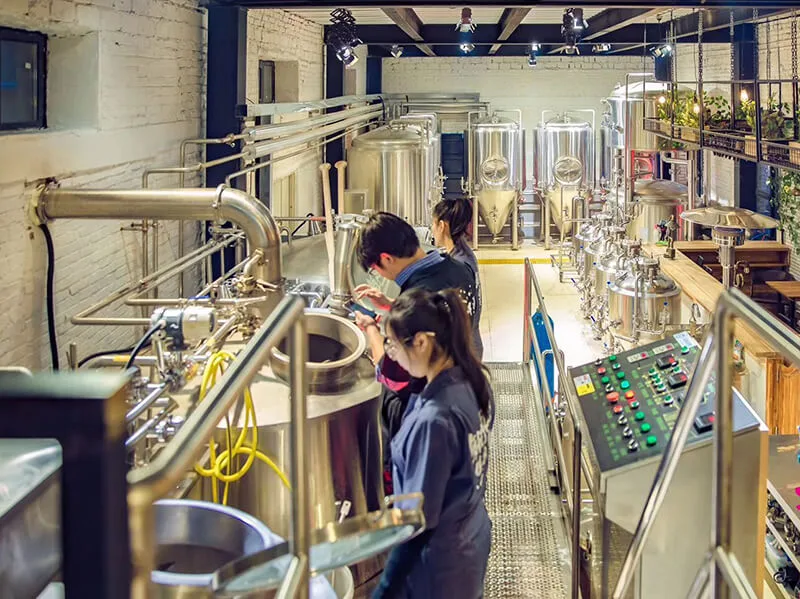
Innovative flavors and characteristic beer styles are the core competitiveness of microbrewery restaurants, while large-scale mass production equipment often sacrifices R&D flexibility. 300–500L brewery equipment supports small-batch trial brewing, seasonal limited editions, and R&D of niche characteristic beers (hazy IPA, stout, sour beer, etc.), while stably mass-producing core best-selling beer styles. Industrial equipment requires ultra-large batch production to dilute costs, while medium-sized equipment can test new formulas at low cost, continuously update the beer list, and retain core customers. Equipped with a semi-automatic control system, it can not only retain the artisanal craftsmanship of brewers’ manual adjustment but also reduce human operation errors, balancing quality and efficiency.
III. 300–500L Equipment Empowers Restaurant Growth: Practical Capacity Expansion Solutions
Beyond the theoretical level, we share practical operation strategies to expand revenue channels and accumulate brand reputation with the help of medium-sized equipment:
3.1 Expand Fermentation System, Lay the Core of Capacity Upgrade
The upper limit of brewing capacity depends on fermentation and storage capacity. Restaurants can add fermenters of the same specification, 1000L large integrated brewing tanks, and bright beer storage tanks as needed to support filling and off-sale needs. Capacity conversion reference: a set of 500L brewing equipment matched with 5 fermenters can achieve a monthly capacity of 5,000 liters, fully meeting the needs of in-store supply + kegged supply to multiple local catering stores. Modular incremental upgrade does not require overall replacement of the production line, greatly reducing transformation risks and shutdown losses.
3.2 Upgrade Cold and Hot Circulation System, Improve Overall Brewing Efficiency
After capacity improvement, the temperature control system is likely to become a production bottleneck. Most small restaurants initially adopt electric heating; when upgrading to 300–500L brewery equipment, replacing with a steam heating system has significant advantages: faster heating speed, higher saccharification efficiency, and more stable temperature control, perfectly suitable for medium and large batch brewing. Simultaneously upgrading the low-temperature glycol refrigeration unit, cold water tank, and plate heat exchanger can shorten the brewing interval, support multiple batches of production per day, and easily cope with the peak order season. At the same time, it optimizes the energy consumption structure, reduces long-term electricity costs, and improves overall profit space.
3.3 Moderate Intelligent Automation, Reduce Labor Costs and Stabilize Beer Quality
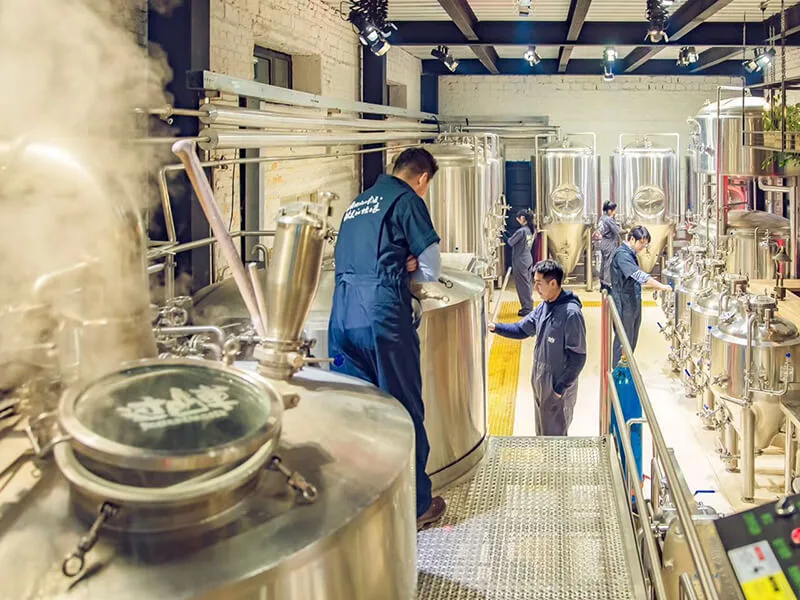
Labor cost is one of the main expenses of microbrewery restaurants, and large-scale operation is likely to increase the team’s burden. 300–500L brewery equipment can be equipped with a semi-automatic/full-automatic control system to accurately lock the saccharification temperature, unify brewing standards, and reproduce classic formulas. The basic PLC intelligent control system can realize single-person multi-station operation, alleviate the labor pressure in the peak season, avoid taste fluctuations caused by manual operation, ensure the consistent quality of each batch of beer, and consolidate brand trust. In contrast, purely manual small-scale equipment is highly dependent on the brewer’s personal experience, making it difficult to standardize beer quality.
3.4 Expand Revenue Channels, From Single In-Store Dining to Local Distribution
Relying on the stable capacity of 300–500L brewery equipment, restaurants can break the profit limitation of relying only on in-store consumption and enter the local alcohol wholesale track. A set of 500L brewery equipment, on the premise of ensuring sufficient in-store inventory, can stably supply kegged fresh beer to 5 to 10 local bars and restaurants. Equipped with a simple small filling production line (2–5 heads), it can launch bottled and canned take-out beer, expanding online and offline retail channels without investing in a large packaging workshop. Diversified revenue models effectively reduce the impact of the off-season customer flow and achieve steady performance growth.
IV. Core Notes for Upgrading to 300–500L Equipment
Avoid common misunderstandings in upgrading and transformation, select models scientifically, and implement smoothly:
4.1 Accurately Evaluate Current and Long-Term Capacity Needs
Before upgrading, comprehensively analyze the store sales volume, wholesale consultation volume, and three-year development plan: if focusing on in-store dining experience and niche trial brewing, 300L brewery equipment is preferred; if planning to deepen local distribution and expand off-sale orders, 500L brewery equipment is the optimal solution. Avoid blind advanced procurement. A 2024 industry survey pointed out that breweries with over-equipped large-scale equipment generally have problems of insufficient equipment utilization and high operating costs.
4.2 Strictly Control Equipment Material and Workmanship, Ensure Long-Term Durability
Equipment material and craftsmanship directly determine beer quality, service life, and maintenance costs. Fermenters and bright beer tanks should adopt industry-standard 304 stainless steel; core components of the cleaning system that come into contact with acidic cleaning agents should be upgraded to 316 food-grade stainless steel. It is required that the equipment adopts precision argon arc welding and inner wall electrolytic polishing (roughness less than 0.8 microns) to inhibit bacterial growth and meet food safety production standards. High-quality brewery equipment can have a service life of 15 to 25 years, greatly reducing later replacement investment.
4.3 Plan Venue Renovation and Supporting Facilities in Advance
Replacing 300–500L brewery equipment usually requires simultaneous venue renovation: anti-corrosion epoxy flooring, drainage system, water and electricity gas line upgrading, ventilation and smoke exhaust transformation, etc. In particular, the steam heating system needs supporting ventilation facilities, safety interlock devices, and compliance approval, which are hidden costs that are easily overlooked. It is recommended to reserve 10%–15% of the total budget as contingency funds to deal with sudden transformations and construction delays.
4.4 Strengthen Team Skill Training, Adapt to the New Production Model
Automated equipment and large-batch brewing processes put forward higher requirements for the professional capabilities of operators. Conduct targeted skill training to help the team proficiently master equipment operation, daily maintenance, and quality control processes, avoid major losses such as beer spoilage and equipment failure, and ensure the smooth progress of the capacity expansion plan.
V. Conclusion
For microbrewery restaurants in the expansion period, 300L–500L brewery equipment is not just a “capacity upgrade tool”, but a “sustainable growth engine” that balances quality, cost, and flexibility. It accurately solves the core pain points in the large-scale process of microbrewery restaurants—it not only solves the dilemma of insufficient capacity of small-scale equipment and inability to support off-sale expansion but also avoids the disadvantages of high investment, lack of flexibility, and poor venue adaptability of large-scale industrial equipment, perfectly fitting the core demand of most microbrewery restaurants for “balancing craftsmanship and profitability, and expanding steadily”.
In terms of core advantages, this specification of brewery equipment eliminates raw material and resource waste with a reasonable capacity ratio, adapts to the limited space of urban restaurants with a compact design, reduces operational risks with controllable investment costs and a short payback period, and retains the artisanal nature of craft beer with a flexible brewing model. These four advantages together constitute its core competitiveness of “golden adaptation”. In actual operation, by expanding the fermentation system, upgrading cold and hot circulation equipment, conducting moderate automated transformation, and expanding revenue channels, microbrewery restaurants can fully release the growth potential of this equipment, realize diversified development from single in-store dining to local distribution, and consolidate brand competitiveness.
At the same time, microbrewery restaurants need to avoid common misunderstandings during the upgrading process: accurately evaluate capacity needs to avoid blind procurement, strictly control equipment quality to ensure long-term operation, plan venues and supporting facilities in advance to avoid hidden costs, and strengthen team training to ensure efficient use of equipment. Only by doing a good job in the whole-process planning of model selection, transformation, and operation can 300L–500L brewery equipment truly become the core support for empowering growth, helping microbrewery restaurants achieve dual improvement of quality and scale in the fierce industry competition, and take a sustainable path of large-scale development.
Contact Meto today to learn more about our brewery solutions and find the brewery equipment for your brewery.