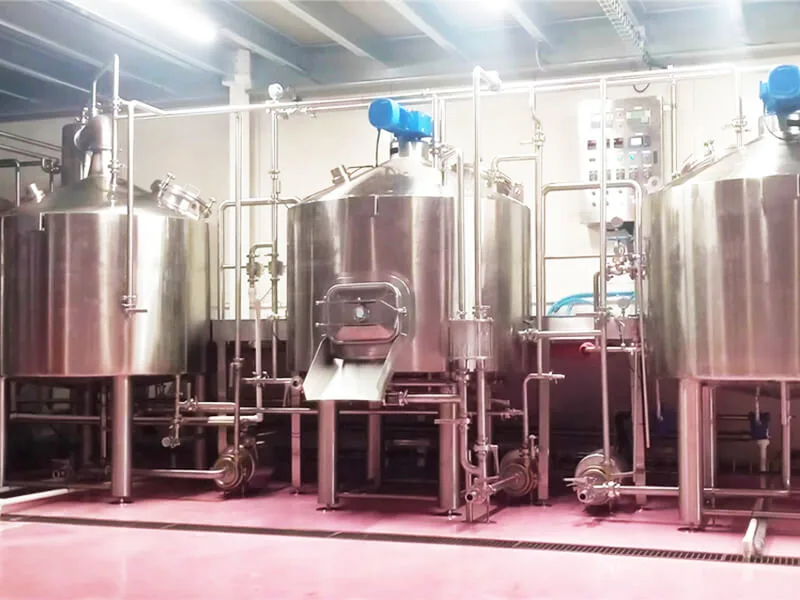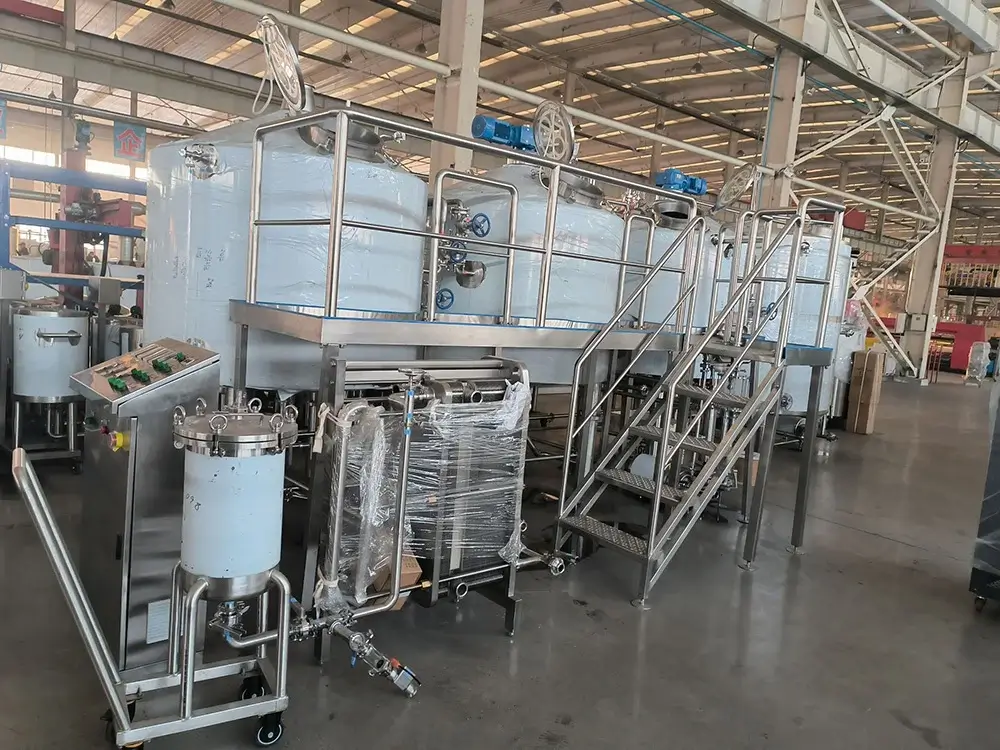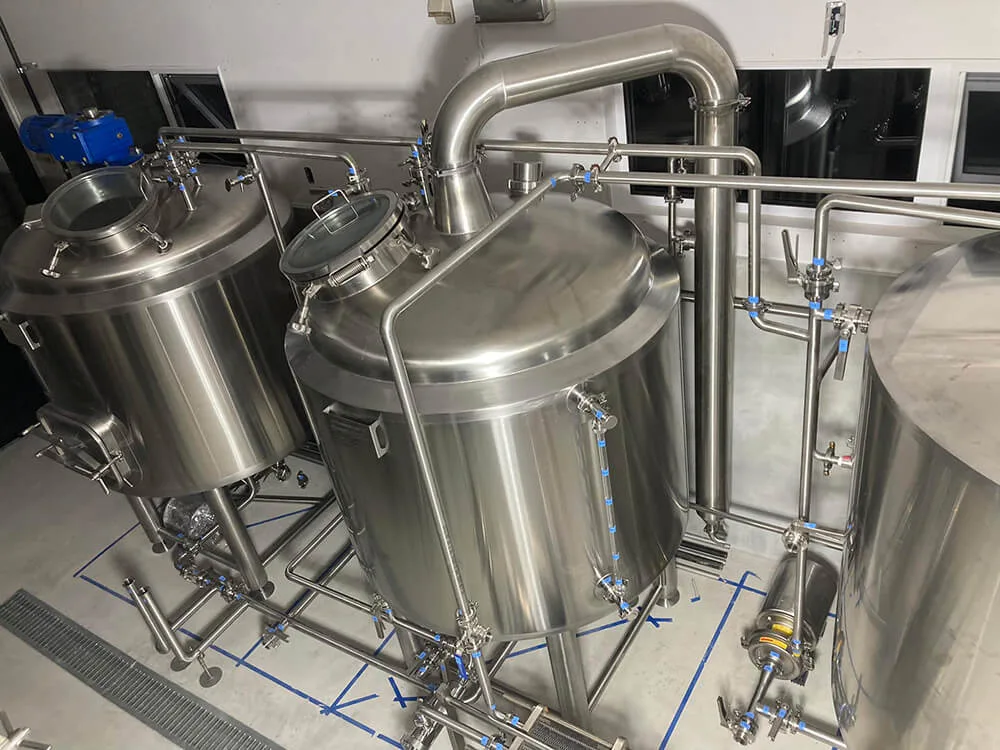
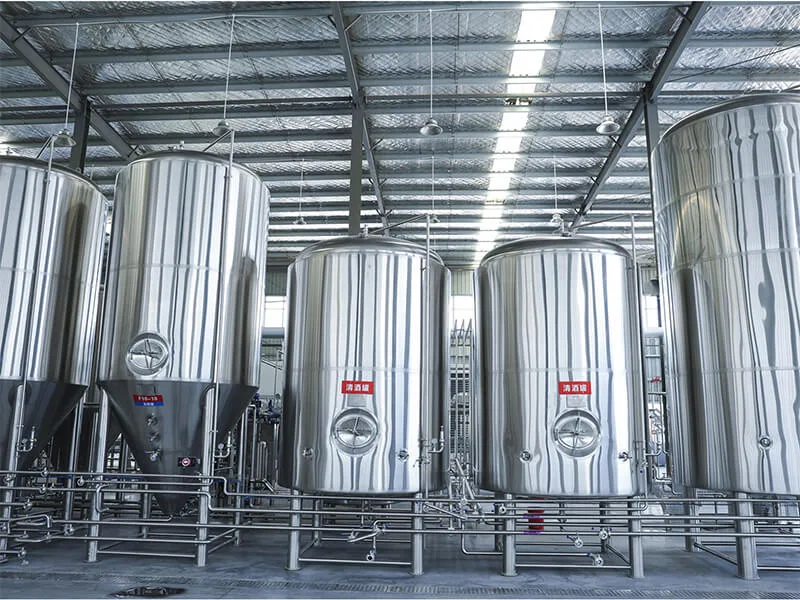
For beer brewing, the completion of fermentation is not the end, but the start of flavor finalization. Many brewers overlook a key piece of equipment — the Bright Beer Tank (BBT).
It acts as a constant-temperature conditioning vessel in the later stage of beer production, directly determining final beer taste, flavor stability and shelf life. In this article, we break down the core value of bright beer tanks, covering flavor protection, capacity planning, temperature management and professional cleaning routines. This practical guide serves small craft breweries and large commercial breweries alike.
1. Why Bright Beer Tanks Are Critical for Beer Flavor Protection
Once primary fermentation finishes, beer still contains suspended yeast, protein particles and unstable flavor compounds. Filling directly at this stage causes cloudiness, off-flavors and short shelf life.
The BBT provides a sealed, controlled post-conditioning environment to stabilize beer and lock in original flavor, with three key benefits:
Oxygen Isolation Prevents Oxidation
Delicate beer aromas from hops and malt degrade quickly when exposed to oxygen. Oxidation creates stale, cardboard-like or sour notes that ruin batch quality.
Fully sealed and pressure-rated, bright beer tanks minimize oxygen intake. Controlled internal pressure also preserves natural carbonation, keeping beer fresh and consistent across batches.
Natural Sedimentation Delivers Smooth, Clear Beer
Residual yeast and fine organic particles create haze and harsh secondary tastes. Inside the bright beer tank, beer rests undisturbed, letting solid impurities settle to the tank bottom naturally.
The result is clear, clean-tasting beer with a smooth mouthfeel. Gentle tank conditioning also balances overall flavor distribution.
Post-Ripening Balances & Refines Taste
Fresh fermented beer contains unbalanced compounds, including diacetyl and harsh esters. Slow, stable conditioning inside the BBT allows unwanted compounds to break down, while desirable flavors merge and mature.
This quiet aging process refines overall complexity and greatly improves long-term flavor stability.
2. How to Select BBT Capacity & Quantity Based on Brewery Output
Sizing bright beer tanks correctly ensures smooth production flow, avoids bottlenecks and prevents unnecessary equipment investment. Always match total BBT volume to your fermentation output, filling schedule and beer style range.
Small Craft Breweries | Under 1 Ton Daily Output
Small-batch, multi-style brewing requires flexible, compact equipment.
- Recommended setup: 1–2 units of 500L – 1000L vertical bright beer tanks
- Material: Food-grade 304 stainless steel
- Planning tip: One main tank for regular production, one backup tank for style switching and emergency turnover to avoid cross-contamination.
Medium Breweries | 1–10 Tons Daily Output
Steady production and fixed fermentation cycles demand reliable buffer capacity.
- Recommended tank size: 5000L – 10000L vertical BBT
- Rule of thumb: Total bright beer tank volume should cover 3–4 fermentation batches
- Extra tip: Add one small buffer tank for test batches or special limited styles.
Large Commercial Breweries | Over 10 Tons Daily Output
High-speed filling lines require large-volume, high-efficiency storage solutions.
- Recommended design: Large vertical or horizontal bright beer tanks
- Capacity standard: Total BBT volume equals 3–5 times daily production
- Upgrade option: Automated temperature and pressure control systems for mass production consistency.
Key Selection Tip
Flavor-sensitive styles such as IPA, fruited beer and sour beer require dedicated small-capacity tanks to avoid cross-contamination. Lager styles with long cold conditioning cycles need extra BBT numbers for extended storage.
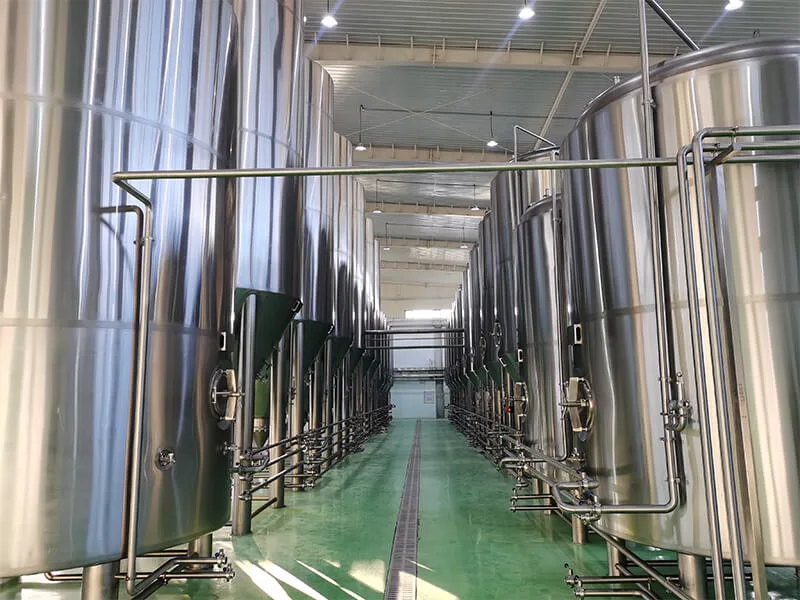
3. Temperature Control: The Key to Consistent Beer Quality
Temperature stability inside the bright beer tank directly impacts aroma retention, carbonation levels, bacteria control and final taste balance. Even minor temperature fluctuations can create noticeable flavor defects.
Why Precise Temperature Control Matters
- Suppresses harmful bacteria and wild yeast growth
- Maintains stable CO₂ solubility to avoid over-carbonation or flat beer
- Preserves fragile hop aromas and fresh malt character
- Accelerates diacetyl reduction for cleaner, smoother lagers
Standard Temperature Range by Beer Style
- Lager Beer: 0°C – 2°C for long cold conditioning
- Ale Beer: 2°C – 6°C to preserve fruity and floral notes
- IPA & Special Craft Beer: 0°C – 4°C for maximum hop freshness
- Draft Beer: 4°C – 8°C for short-term fresh service
Best Practices for BBT Temperature Management
- Choose jacketed tanks with insulated walls for uniform cooling
- Install high-precision sensors for real-time temperature monitoring
- Keep the tank room at a stable ambient temperature
- Avoid direct sunlight and sudden environmental temperature changes
4. Professional Cleaning & Sanitation for Bright Beer Tanks
Poor tank sanitation is a leading cause of off-flavors, cloudiness and batch spoilage. Regular, thorough cleaning eliminates organic residue, yeast buildup and bacteria to protect beer purity.
Core Cleaning Principles
Follow the standard sequence: rinse → deep clean → sanitize → final rinse. Pay close attention to dead zones, including tank bottoms, valves, sampling ports and piping connections.
Cleaning Methods for Different Brewery Sizes
Small Breweries | Manual Cleaning Process
- Fully drain leftover beer and rinse the tank with fresh water
- Circulate warm alkaline solution to remove protein and yeast deposits
- Rinse completely to eliminate chemical residue
- Apply food-grade sanitizer for full tank disinfection
- Drain, ventilate and dry before next use
Medium & Large Breweries | CIP Automated Cleaning
Modern breweries rely on CIP systems for efficient, repeatable results:
- Pre-rinse to remove loose sediment
- Hot alkaline circulation for organic soil removal
- Intermediate fresh water rinse
- Acid circulation to eliminate mineral scale
- Sanitizer cycle for full microbial control
- Final sterile water rinse and draining
Regular Maintenance Rules
- Fully clean and sanitize after every batch
- Perform deep descaling and sanitation every 3–5 cycles
- Sanitize again if tanks remain idle for more than 24 hours
- Avoid abrasive tools that scratch stainless steel surfaces
Conclusion
Bright beer tanks are far more than simple storage vessels. They act as your final flavor defense line, refining taste, locking in aromas and ensuring every batch stays stable and high-quality.
Choosing the right tank size, maintaining strict temperature control and following standardized cleaning procedures will greatly improve your overall beer quality and production efficiency. For any commercial brewery, investing in well-designed bright beer tanks is a simple, effective way to enhance product competitiveness.
Contact Meto today to learn more about our brewery solutions and find the brewery equipment for your brewery.