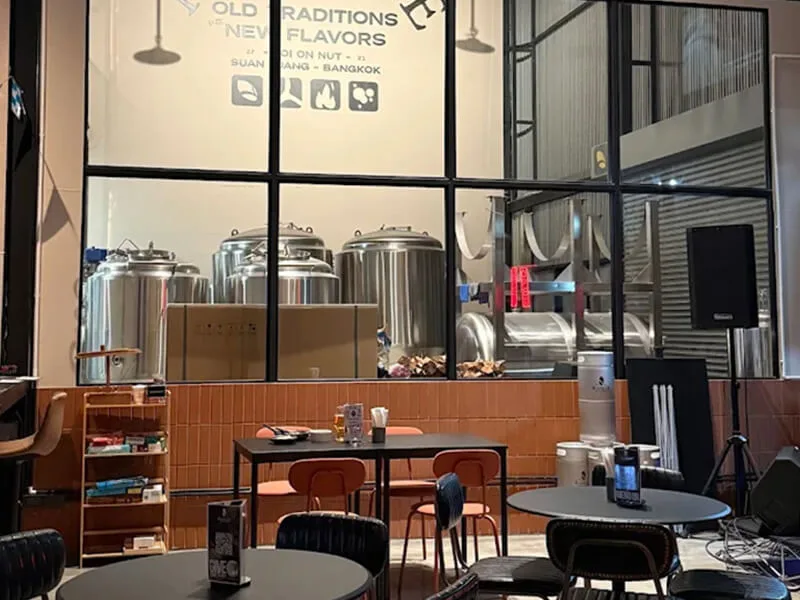
An on-site brewery bar allows customers to enjoy freshly brewed beer in the same location where it is produced. This business model combines brewing operations with a bar, restaurant, or hospitality venue, creating opportunities to serve house-made beer and develop a distinctive customer experience.
However, building an on-site brewery requires more than installing a brewhouse. The equipment must support the entire process, from malt preparation and wort production to fermentation, cooling, beer storage, and dispensing.
For brewery owners, choosing the right equipment means balancing production capacity, available space, operating costs, and expected beer sales. As a brewery equipment manufacturer, METO helps customers plan brewing systems around their production requirements, facility conditions, and business goals.
This guide explains the essential equipment for an on-site brewery bar and how to coordinate each stage of the process.
1. Start with a Suitable Brewhouse System
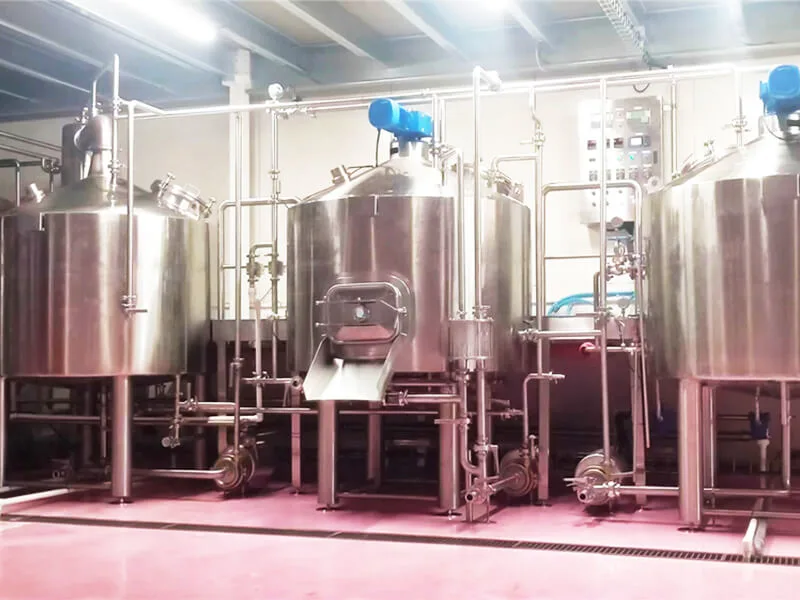
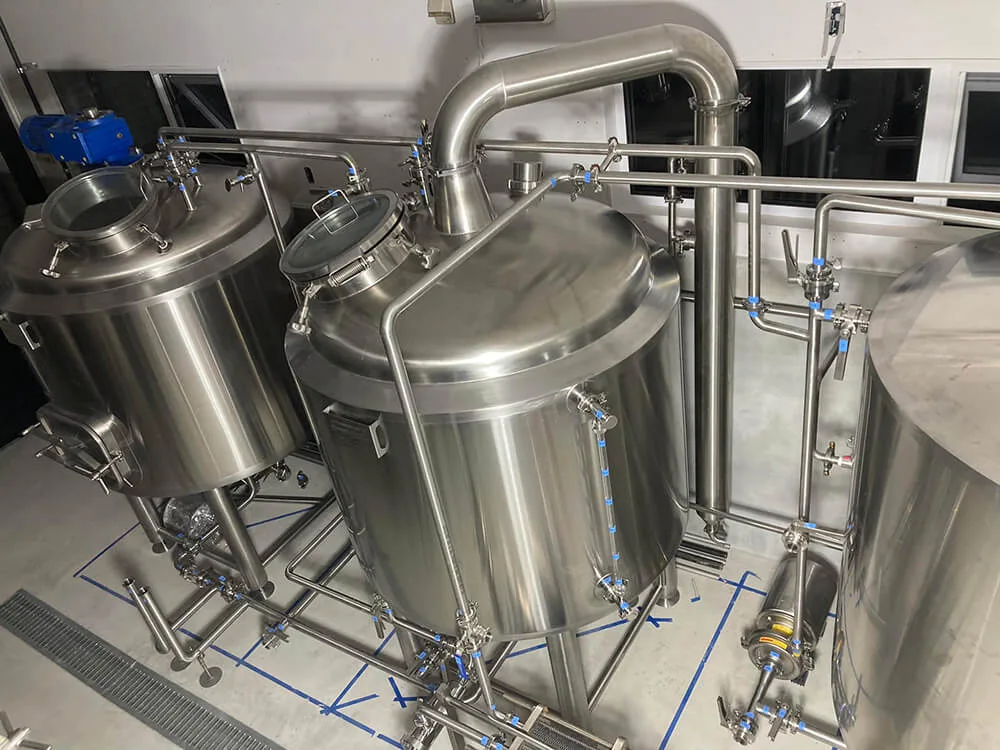
The brewhouse is the starting point of beer production. It converts malt, water, hops, and other ingredients into wort, which is then cooled and transferred to fermentation tanks.
A typical brewhouse system may include the following equipment:
- Moulin à malt
- Cuve de brassage
- Agir plus
- Cuve de brassage
- Whirlpool vessel
- Échangeur de chaleur pour moût
- Brewing pumps, valves, and piping
- Hot water tank and other utility vessels, as required
Not every brewery needs a separate vessel for each process. Smaller on-site brewery bars may use a compact system with combined vessel functions to reduce the equipment footprint. Larger operations may choose a multi-vessel configuration to support a more flexible brewing schedule.
When selecting a brewhouse, consider batch capacity, brewing frequency, beer styles, and the time available for daily operations.
A 300L system may suit a small bar or pilot brewery. A 500L system can provide additional flexibility for venues offering several house beers, while a 1000L system may be appropriate for operations with higher demand or plans to supply packaged beer.
These capacities are starting points rather than fixed business categories. The final selection should be based on forecast sales, brewing frequency, fermentation capacity, and available space.
2. Plan Fermentation and Beer Conditioning Equipment
After wort production, the cooled wort enters fermentation tanks, where yeast converts fermentable sugars into alcohol and carbon dioxide.
Fermentation capacity has a direct effect on how much beer the brewery can produce over time. A large brewhouse cannot deliver its full production potential if too few fermentation tanks are available or if the tanks remain occupied for extended periods.
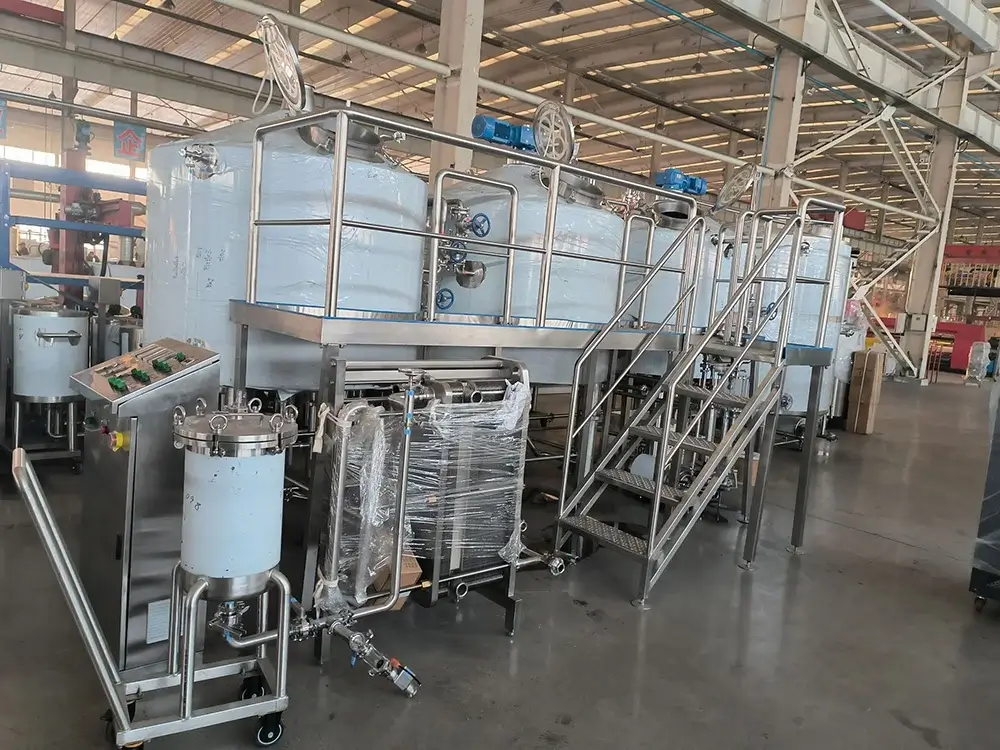
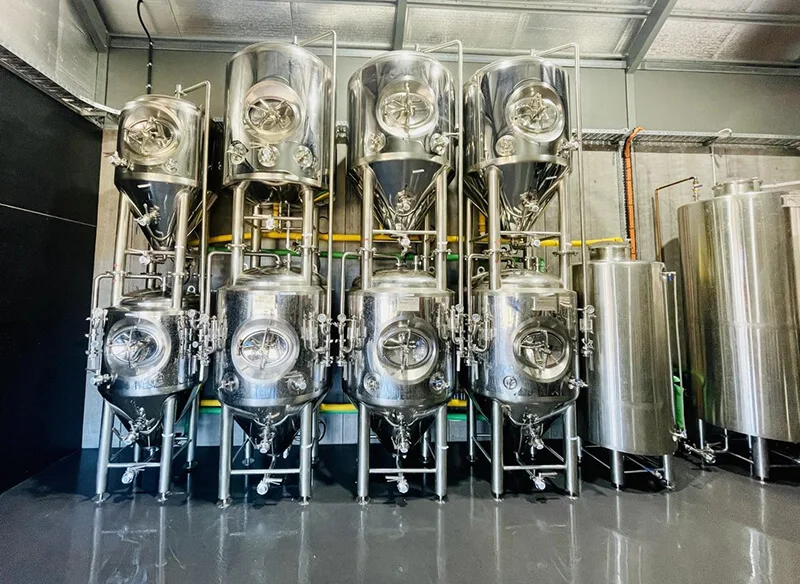
Cuves de fermentation
Fermentation tanks are among the most important investments in an on-site brewery. Their quantity, working volume, and configuration should match the planned brewing schedule and beer portfolio.
Key selection factors include:
- Tank capacity and working volume
- Nuance d'acier inoxydable
- Cooling jacket and insulation design
- Working and design pressure
- Finition de la surface interne
- CIP cleaning provisions
- Temperature monitoring and control
Different beer styles may require different fermentation and conditioning periods. A brewery offering lagers, ales, seasonal beers, and specialty recipes should account for these differences when planning tank capacity.
Cuves à bière brillantes
Bright beer tanks may be used to hold beer after fermentation for conditioning, clarification, carbonation, or temporary storage before serving.
They can help separate fermentation operations from the bar’s serving schedule. For example, beer can be transferred to a suitable bright beer tank while a fermentation tank is prepared for the next batch.
Not every on-site brewery requires separate bright beer tanks. The decision depends on the brewing process, storage requirements, available space, and serving arrangements.
3. Choose the Right Glycol Cooling System
Temperature control is essential during fermentation and beer conditioning. A glycol cooling system typically supplies chilled glycol to tank jackets through an insulated piping network.
A complete cooling arrangement may include:
- Refroidisseur à glycol
- Glycol reservoir or buffer tank, where required
- Glycol circulation pumps
- Insulated distribution piping
- Temperature sensors and control components
Cooling capacity should be calculated according to the number and size of tanks, fermentation activity, required temperature ranges, ambient conditions, and expected simultaneous cooling demand.
The system must also account for future production plans. Adding fermentation tanks without checking the existing cooling capacity can lead to inadequate temperature control during peak operation.
For an on-site brewery bar, cooling design should consider both production requirements and the route from beer storage to the serving area.
4. Install a Suitable CIP Cleaning System
Cleaning is essential for maintaining brewery hygiene and reducing the risk of contamination. A clean-in-place (CIP) system circulates cleaning solutions through compatible tanks, pipelines, and equipment without requiring complete disassembly.
Depending on the brewery’s size and process, a CIP system may include cleaning tanks, pumps, valves, hoses or fixed piping, and provisions for different cleaning solutions.
The cleaning system should be designed around the equipment that needs to be cleaned, the required flow rates, cleaning sequence, and whether several vessels must be cleaned independently.
Brewery operators must also follow appropriate cleaning and sanitation procedures, including chemical concentration, temperature, contact time, rinsing, and verification.
When planning the equipment package, make sure that CIP requirements are considered from the beginning rather than added after the tanks and piping have been installed.
5. Add Beer Storage and Draft Dispensing Equipment
Brewing good beer is only part of the process. The finished beer must reach the customer in suitable condition.
The serving system should be designed around the number of taps, beer styles, distance between storage tanks and taps, and the expected volume of sales.
Draft Beer Dispensing System
A draft beer system may include:
- Beer taps and dispensing faucets
- Beer lines and fittings
- Gas supply and pressure regulators
- Suitable cooling equipment
- Keg couplers or tank connections
- Drip trays and serving accessories
The system must maintain suitable temperature and pressure throughout dispensing. Incorrect pressure, warm beer lines, or poor cleaning practices can contribute to foaming, inconsistent pours, and beer quality problems.
Where beer is served directly from fermentation or bright beer tanks, the vessels and connections must be suitable for the intended dispensing arrangement and operating conditions.
Kegging and Packaging Equipment
Some brewery bars serve all their beer on-site. Others sell takeaway beer or supply nearby restaurants, shops, and events.
For these businesses, additional equipment may be required, such as a keg washer, keg filling equipment, or a small canning or bottling line.
Packaging equipment should be selected according to sales channels and expected demand. A small bar may not need a full packaging line, while a growing business may benefit from planning suitable space and utilities for future expansion.
6. Consider Water Treatment and Malt Handling
Auxiliary equipment is easy to overlook during the initial planning stage, but it can affect the daily operation of the brewery.
Water Treatment
Water is a major ingredient in beer, and its composition influences the brewing process and final beer characteristics.
Depending on the local water supply, the brewery may need filtration, treatment, or mineral adjustment equipment. The appropriate solution should be determined from a water analysis and the requirements of the intended beer styles.
Water treatment should also be considered for cleaning and other brewery utility needs where relevant.
Malt Milling and Handling
Malt handling equipment may include a mill, storage containers, conveyors, and dust management provisions.
The design should consider how malt is delivered, where it is stored, how often it is milled, and how it reaches the brewhouse.
For a brewery bar with limited floor space, a well-planned ingredient handling area can help maintain an orderly workflow and reduce unnecessary material movement.
7. Integrate Automation and Process Controls
A brewery control system helps operators monitor and manage key brewing operations. Depending on the system configuration, controls may cover vessel temperatures, pump operation, valve sequences, and other process functions.
Automation options range from basic manual controls to PLC-based systems with touchscreen interfaces.
For an on-site brewery bar, the appropriate level of automation depends on production volume, staffing, process complexity, and budget. A compact system may not need the same level of automation as a larger commercial brewery.
When comparing equipment packages, ask which functions are automated, which operations require manual intervention, and whether the control system can accommodate the intended production process.
Controls should be designed as part of the overall equipment system so that vessels, pumps, sensors, and other components work together correctly.
8. Design the Layout from Brewing to Serving
A well-planned layout connects the production area with the serving area while allowing enough room for cleaning, maintenance, and safe movement.
Before finalizing equipment dimensions and positions, review:
- Available floor area and ceiling height
- Floor drainage and ventilation
- Water, electrical, and heating utilities
- Equipment delivery and installation access
- Tank maintenance clearance
- Ingredient and chemical storage
- Keg handling and finished beer storage
- Distance between beer tanks and serving taps
The brewery layout should also consider the workflow between brewing, fermentation, conditioning, and dispensing.
For example, locating fermentation and storage tanks close to the relevant process connections may simplify piping installation. However, the final design must also provide appropriate access for operation, cleaning, and maintenance.
For projects built inside existing bars, restaurants, or commercial buildings, the site should be checked before equipment specifications are finalized. Building restrictions and utility capacity can affect the suitable brewhouse size and system configuration.
9. How to Choose the Right Equipment Package
A complete equipment package should be based on the intended production process rather than on a list of individual vessels.
Avant de demander un devis, veuillez vous munir des informations suivantes :
Expected beer sales: Estimate average daily sales, peak demand, and seasonal changes.
Beer styles: Identify the main products and consider their fermentation and conditioning requirements.
Production schedule: Define the expected number of brewing batches per day or week.
Fermentation capacity: Estimate the number and working volume of tanks needed to support the schedule.
Serving requirements: Decide whether beer will be dispensed directly from tanks, transferred to bright beer tanks, or packaged for off-site sales.
Facility conditions: Confirm the available space, utilities, drainage, ventilation, and equipment access.
Future expansion: Consider whether additional tanks, taps, or packaging equipment may be needed later.
These details help the equipment manufacturer recommend a configuration that matches the brewery’s operational needs.
When comparing quotations, check whether each package includes the brewhouse, fermentation tanks, cooling system, CIP equipment, pumps, piping, controls, installation, and commissioning. The exact scope varies by supplier, so all inclusions and exclusions should be confirmed in writing.
10. Why Work with METO for On-Site Brewery Equipment?
METO is a brewery and distillery equipment manufacturer with capabilities covering equipment design, research and development, manufacturing, installation, commissioning, and after-sales support.
The company provides brewing equipment for different production scales, from compact systems for small brewery bars to larger configurations for commercial brewing operations.
Depending on the project, an equipment package can include brewhouse vessels, fermentation tanks, glycol cooling, CIP cleaning equipment, pumps, piping, and control systems.
METO can work with customers to evaluate the relationship between brewhouse capacity, fermentation volume, cooling requirements, site conditions, and the intended serving model.
Each project should be configured according to its actual process requirements and confirmed technical specifications. This helps buyers understand the complete equipment scope before making an investment.
Foire aux questions
What equipment is needed for an on-site brewery bar?
A typical setup includes a brewhouse system, fermentation tanks, a cooling system, CIP cleaning equipment, and draft beer dispensing equipment. Depending on the process and business model, it may also require bright beer tanks, water treatment, malt handling, and packaging equipment.
What is the best brewing capacity for a brewery bar?
A 300L, 500L, or 1000L system may be suitable depending on sales volume, brewing frequency, fermentation time, available space, and expansion plans. The capacity should be selected after estimating actual demand rather than relying on the venue size alone.
Does an on-site brewery bar need bright beer tanks?
Not always. Some operations dispense beer from suitable fermentation tanks, while others use bright beer tanks for conditioning, carbonation, or storage before serving. The choice depends on the production and dispensing process.
Is a glycol chiller necessary for a brewery bar?
A glycol cooling system is commonly used to control fermentation temperatures in jacketed tanks. Additional cooling may be needed for beer storage or dispensing, depending on the system design and distance between tanks and taps.
Can brewing and serving equipment be supplied as one package?
Yes. A brewery equipment manufacturer can design a package that coordinates brewing, fermentation, cooling, cleaning, and dispensing equipment. Buyers should confirm the exact supply scope, including installation and commissioning, before placing an order.
Conclusion
Building an on-site brewery bar requires a coordinated equipment system that supports every stage of production, from brewing and fermentation to storage and serving.
The right equipment configuration depends on expected beer sales, brewing frequency, fermentation capacity, facility conditions, and the planned serving model. By considering these factors together, brewery owners can avoid mismatched equipment and develop a more practical production workflow.
METO provides customized brewery equipment solutions for brewpubs, brewery bars, and commercial brewing projects. Contacter METO to discuss your planned capacity, beer styles, facility layout, and equipment requirements.