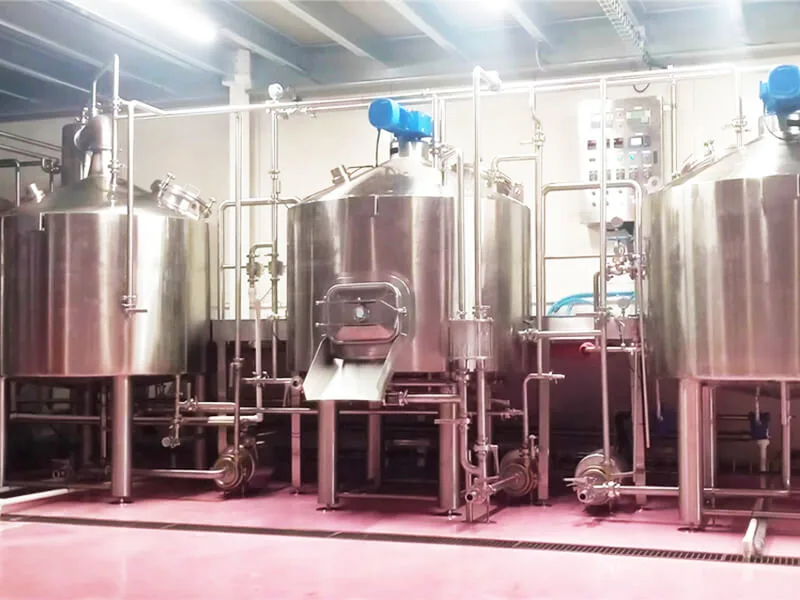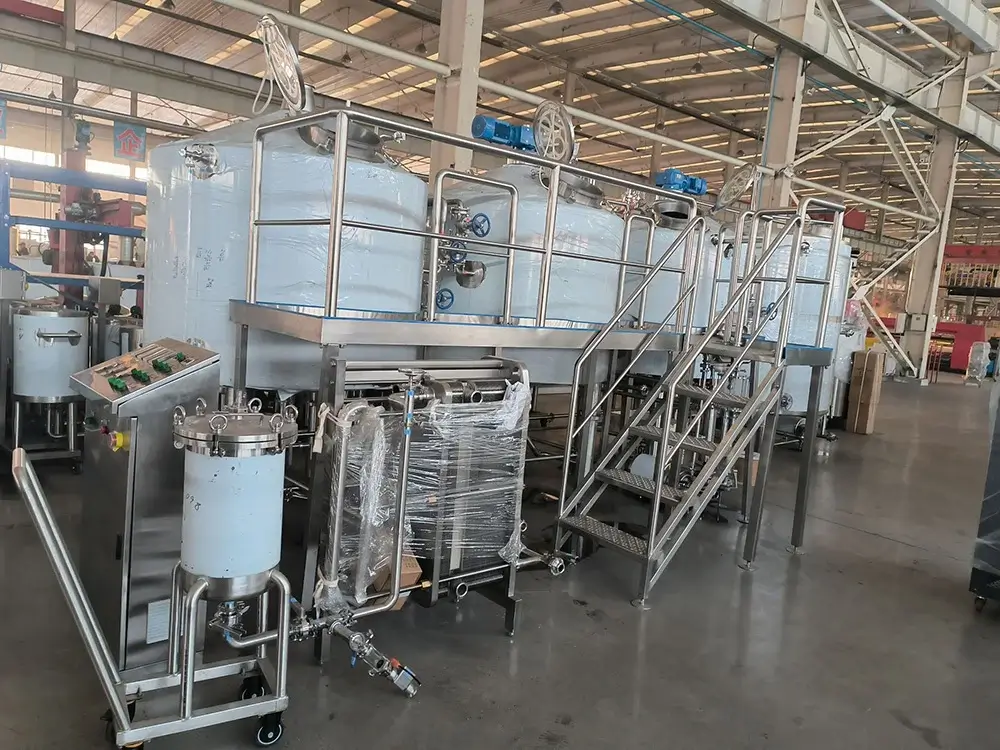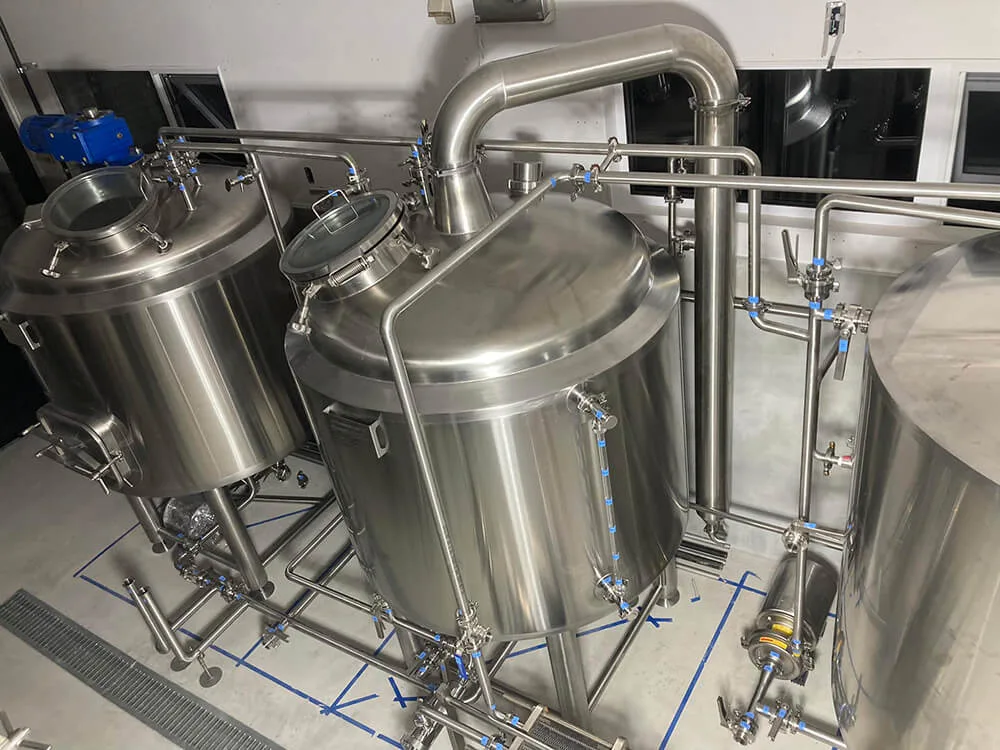
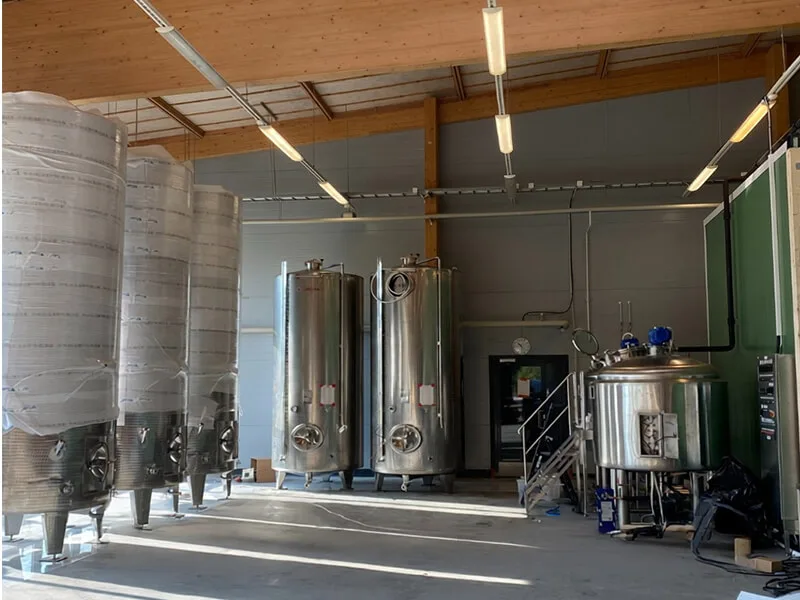
Designing a 1000L kombucha production system requires more than selecting a 1000L fermentation tank. A reliable commercial kombucha line must connect tea preparation, sugar dissolution, cooling, fermentation, flavoring, storage, cleaning, and packaging into one coordinated process.
The right equipment configuration depends on production volume, fermentation time, product recipe, temperature requirements, carbonation method, packaging format, and future expansion plans.
For a new kombucha producer, the main objective is to build a system that provides stable fermentation, hygienic operation, efficient cleaning, and enough flexibility for different flavors and production schedules.
What Does a 1000L Kombucha Production System Mean?
A 1000L kombucha system generally refers to a production line designed to process approximately 1000 liters per batch or per production cycle. However, the actual output depends on the process design.
The system may be designed for:
- 1000L tea preparation per batch
- 1000L primary fermentation per batch
- 1000L finished kombucha per batch
- Multiple fermentation batches per day
- Continuous or semi-continuous production
These are not always the same.
For example, a 1000L fermentation tank may not produce 1000L of packaged kombucha after losses from filtration, flavoring, transfer, carbonation, and filling. Therefore, the equipment should be sized according to the required finished product volume rather than only the nominal tank capacity.
Step 1: Define the Production Target
Before selecting equipment, the producer should determine the target output and production schedule.
Parmi les questions importantes, on peut citer :
- How many liters of kombucha are required per day?
- How many batches will be produced per week?
- What is the average fermentation time?
- Will the system produce one flavor or several flavors?
- Will the kombucha be still or carbonated?
- What packaging format will be used?
- Is future expansion expected?
For example, a producer targeting 1000L of finished kombucha per day may need more than one fermentation tank if the fermentation cycle lasts several days.
The basic planning relationship is:
Required fermentation capacity = Daily production × Average fermentation time
If the daily production target is 1000L and the average fermentation period is 7 days, the producer may need approximately 7000L of available fermentation working capacity, subject to the actual production schedule and tank working volume.
Step 2: Tea Preparation and Water Treatment
Tea preparation is the first major process in kombucha production.
The system may include:
- Brewing tank
- Chauffe-eau
- Tea extraction tank
- Sugar dissolving tank
- Filtration unit
- Transfer pump
- Système de régulation de la température
The brewing tank should be designed for the selected tea type, brewing temperature, extraction time, and batch volume.
Depending on the recipe, the producer may use black tea, green tea, white tea, herbal ingredients, or a blended tea base. Different ingredients may require different extraction conditions.
Water quality is also important. The water used for kombucha production should be suitable for food production and consistent from batch to batch. Water treatment may be required depending on the local water supply.
A well-designed tea preparation system helps control:
- Tea strength
- Sugar concentration
- Brewing temperature
- Extraction time
- Batch consistency
- Transfer temperature
Step 3: Sugar Dissolving and Mixing
Sugar must be evenly dissolved before fermentation begins.
A dedicated mixing tank can improve consistency and reduce the risk of undissolved sugar entering the fermentation process.
The tank may include:
- Agitator or mixing system
- Heating jacket
- Capteur de température
- Sanitary inlet and outlet
- Spray ball or CIP connection
- Level indicator
The mixing system should be selected according to the viscosity of the liquid and the type of ingredients used.
For a standard kombucha process, the tea and sugar solution should be cooled to a suitable inoculation temperature before the starter culture and SCOBY are added.
Step 4: Cooling Before Fermentation
The tea solution must be cooled before fermentation. Excessive temperature can damage the culture and affect fermentation performance.
A cooling system may include:
- Échangeur de chaleur à plaques
- Système de refroidissement au glycol
- Cooling water circuit
- Capteurs de température
- Sanitary transfer piping
- Régulation automatique de la température
For a 1000L system, cooling capacity should be calculated according to:
- Batch volume
- Starting temperature
- Target fermentation temperature
- Cooling time
- Température ambiante
- Production frequency
- Heat exchanger efficiency
If several batches are produced each day, the cooling system must be able to handle repeated cooling cycles without becoming a production bottleneck.
Step 5: Select the Kombucha Fermentation Tanks
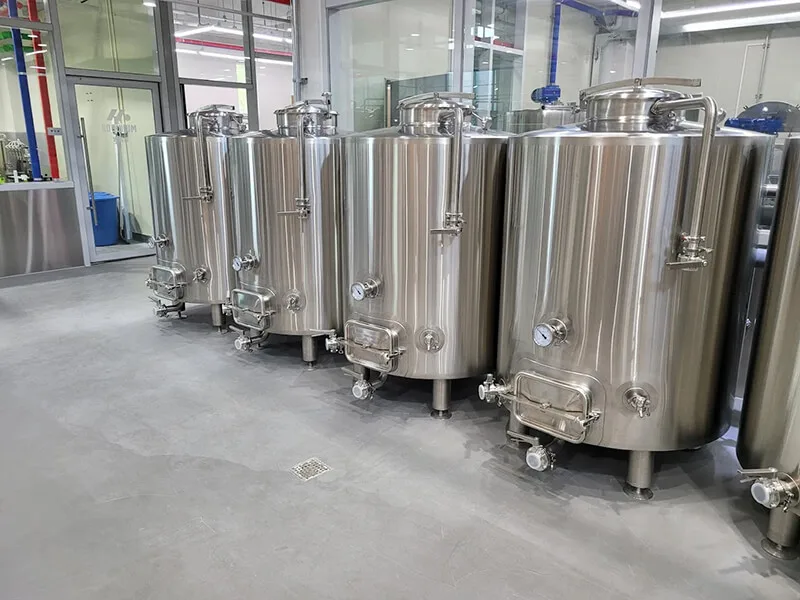
Fermentation tanks are the core equipment in a commercial kombucha production system.
The tank configuration should be based on the recipe, fermentation time, production volume, and cleaning requirements.
Important tank specifications include:
Tank Material
Food-contact surfaces are commonly manufactured from stainless steel such as SUS304 or SUS316L, depending on the product and cleaning requirements.
The internal surface should be smooth, hygienic, and easy to clean. Welds should be properly finished to reduce product residue and contamination risks.
Tank Capacity
The nominal tank volume should not be confused with working volume.
A 1000L tank may require additional headspace depending on the fermentation process, foam formation, culture activity, and product characteristics.
When comparing suppliers, confirm:
- Volume total
- Volume de travail
- Headspace
- Dimensions du réservoir
- Inlet and outlet design
- Drainage
- Cleaning connections
- Temperature control options
Contrôle de la température
Kombucha fermentation is sensitive to temperature. A cooling jacket or other temperature-control solution can help maintain a stable fermentation environment.
The control system should allow operators to monitor and adjust the fermentation temperature according to the recipe.
Conception hygiénique
A suitable kombucha fermentation tank may include:
- Sanitary manway
- CIP spray ball
- Sanitary valves
- Capteur de température
- Vanne de prélèvement
- Sight glass where required
- Adjustable feet
- Sloped bottom or suitable drainage
- Insulation when necessary
The tank design should support easy cleaning and minimize dead legs in the piping system.
Step 6: Plan Fermentation Capacity
The number of fermentation tanks depends on the relationship between batch size and fermentation time.
For example, a producer using 1000L fermentation tanks may choose:
- Several 1000L tanks for standard production
- Smaller tanks for experimental flavors
- Larger tanks for high-volume products
- Separate tanks for different recipes
A producer with a 7-day fermentation cycle may need more tanks than a producer with a 3-day cycle.
The production plan should also include:
- Tank filling time
- Durée de fermentation
- Sampling
- Réglage de la saveur
- Transfer time
- Cleaning and sanitation
- Calendrier de conditionnement
It is often better to install a practical initial number of tanks and reserve space for additional tanks rather than overinvesting at the beginning.
Step 7: Flavoring and Secondary Processing
After primary fermentation, the kombucha may be transferred to a flavoring or blending tank.
Common ingredients include:
- Fruit juice
- Fruit puree
- Herbs
- Spices
- Natural flavors
- Botanical extracts
- Additional sugar or sweetener
A flavoring tank should provide controlled mixing without damaging sensitive ingredients.
Depending on the product, the system may also require:
- Fine filtration
- Blending tank
- Holding tank
- Transfer pump
- Contrôle de la température
- Sampling system
Different flavors may require separate processing procedures. The equipment should therefore be flexible enough to support product development and seasonal recipes.
Step 8: Carbonation and Bright Tank Storage
If the kombucha will be sold as a carbonated beverage, the production line may require a carbonation or bright tank.
A bright tank can be used for:
- Product holding
- Carbonatation
- Final temperature control
- Flavor stabilization
- Packaging preparation
The tank design must match the required working pressure and local regulations. Pressure-rated equipment should be selected according to the actual operating conditions and applicable standards.
For still kombucha, a non-carbonated holding tank may be sufficient. For carbonated kombucha, the system may require a carbonation stone, pressure control, safety valve, and suitable sanitary fittings.
Step 9: CIP Cleaning System
Cleaning and sanitation are essential for kombucha production because the product contains active cultures, sugars, acids, and other ingredients that may leave residues in tanks and pipes.
Un système CIP peut comprendre :
- Cuve CIP
- Cleaning solution tank
- Rinse water tank
- Pompe CIP
- Dispositifs de pulvérisation
- Conduites de retour
- Vannes
- Contrôle de la température
- Panneau de commande
The CIP system should be designed according to the number and size of tanks, piping length, cleaning chemicals, and required cleaning sequence.
The cleaning procedure may include:
- Product recovery or pre-rinse
- Warm water rinse
- Alkaline cleaning
- Rinçage intermédiaire
- Acid cleaning when required
- Rinçage final
- Sanitization
The actual chemicals, temperatures, and cleaning times should be confirmed through the producer’s sanitation procedures and product requirements.
Step 10: Control System and Instrumentation
A 1000L kombucha production system can be operated manually, semi-automatically, or through a PLC control system.
A suitable control system may monitor:
- Température du réservoir
- Durée de fermentation
- Vitesse de mélange
- Niveau de liquide
- Fonctionnement de la pompe
- Système de refroidissement
- CIP sequence
- Carbonation pressure
- Alarm conditions
For small production facilities, a semi-automatic system may provide a balance between investment and operating flexibility.
For larger commercial production, PLC automation can improve repeatability, reduce manual operation, and support production records.
The automation level should be selected according to labor availability, production volume, recipe complexity, and future expansion plans.
Step 11: Packaging Equipment
The packaging system should be selected before finalizing the production layout.
Common kombucha packaging formats include:
- Glass bottles
- PET bottles
- Aluminum cans
- Kegs
- Bag-in-box containers
The packaging line may include:
- Bottle or can rinser
- Filling machine
- Capping or seaming machine
- Étiqueteuse
- Date coder
- Conveyor
- Packing system
Carbonated kombucha may require a filling machine designed for carbonated beverages. The filling method should match the product pressure, container type, shelf-life requirements, and expected production speed.
Step 12: Layout and Utility Planning
A 1000L kombucha production system should be arranged according to the process flow:
Water and Tea Preparation → Sugar Mixing → Cooling → Fermentation → Flavoring → Carbonation or Holding → Packaging
The layout should provide:
- Clear product flow
- Easy operator access
- Sufficient maintenance space
- Sanitary drainage
- Accès pour le nettoyage
- Short and hygienic piping routes
- Space for future tanks
- Safe electrical installation
- Suitable ventilation
Utilities may include:
- Food-grade water
- Electricity
- Cooling water or glycol
- Compressed air where required
- Drainage
- Cleaning water
- Heating source
- Ventilation
The building should be checked before equipment production to confirm door sizes, floor loading, ceiling height, drainage, and installation access.
How METO Can Help Design a 1000L Kombucha System
A suitable kombucha production line should be designed around the complete process rather than a single fermentation tank.
METO can help configure the relationship between:
Tea Preparation → Sugar Mixing → Cooling → Fermentation → Flavoring → Carbonation → CIP → Packaging
The final equipment configuration depends on:
- Target finished production
- Taille du lot
- Durée de fermentation
- Tea recipe
- Product flavors
- Carbonation requirements
- Packaging format
- Niveau d'automatisation
- Services disponibles
- Projets d'expansion futurs
Request Your Kombucha Production Configuration
A 1000L kombucha system can be designed in different ways depending on the required production schedule and product characteristics.
Avant de demander un devis, veuillez vous munir des informations suivantes :
- Target daily or weekly output
- Required batch size
- Durée moyenne de fermentation
- Number of kombucha flavors
- Still or carbonated product
- Méthode d'emballage
- Desired automation level
- Destination country
- Espaces disponibles dans les bâtiments
- Future expansion plan
Planning a 1000L kombucha production project? Envoyer METO your target output, fermentation time, product type, and packaging requirements. Our engineers can recommend a suitable tank configuration, cooling system, CIP system, and complete production layout.